Winning Cross-Country Landing Page Template
Stride is a bento grid landing page template built for trail running equipment brands that earn trust through data. The design leads with hard performance numbers, a rotating product hero, and a three-step fit consultation booking flow. Every section moves visitors from technical proof to confident action, making it a sharp tool for running brands targeting serious trail runners and ultra-distance racers.
by Rocket studio
Quick summary
Stride is a precision-engineered landing page template for trail running gear brands. It pairs a Stats-First Impact layout with a Ruby and Chrome color system to convert performance-focused visitors into booked fit consultations. The bento grid design leads with oversized race data, builds trust through race-proven proof cells, and closes with a three-step scheduling flow that earns every click.
Who this template is for
This template is built for running brands that speak the same language as their customers: watts, grams, and vertical kilometers. It suits teams who want a professional site that feels like a carbon-plated sole under stadium floodlights, not a lifestyle mood board.
- Trail running gear and footwear brands targeting ultra-distance racers, UTMB qualifiers, and fell runners
- Running equipment businesses offering personalized fit services or gait consultation booking
- Performance outdoor brands wanting a modern, data-led website that showcases technical product authority
What problem this template solves
Most running brand websites try to sell adventure with wide-angle mountain shots and vague taglines. Serious trail runners trust numbers over scenery. This template solves the gap between what elite runners need to see and what most landing page designs actually show them.
- Generic layouts bury product data behind lifestyle imagery, losing data-obsessed visitors before the first scroll
- Booking flows on most sites feel disconnected from the product story, reducing confidence and lowering conversion
- Building a professional, high-interactivity website from scratch takes weeks; this template gives teams a complete, ready-to-deploy starting point
What you get with this template
This template delivers a complete single-page layout built around a Stats-First Impact architecture. Every section is structured to move visitors from curiosity to confirmed booking through a rhythm of clinical data, race-day proof, and clear calls to action.
- A full bento grid landing page with an asymmetric cell layout, animated hero section, and sticky booking call to action bar
- A three-step fit consultation scheduler covering consultation type selection, date and time picking, and race goal entry
- A secondary product conversion path with a race day kit grid for visitors who prefer to browse before booking
Feature list
This template includes a focused set of design and layout features drawn directly from its competition-edge brief. Each feature serves the single goal of turning informed trail running visitors into booked clients.
Stats-First Bento Grid Layout
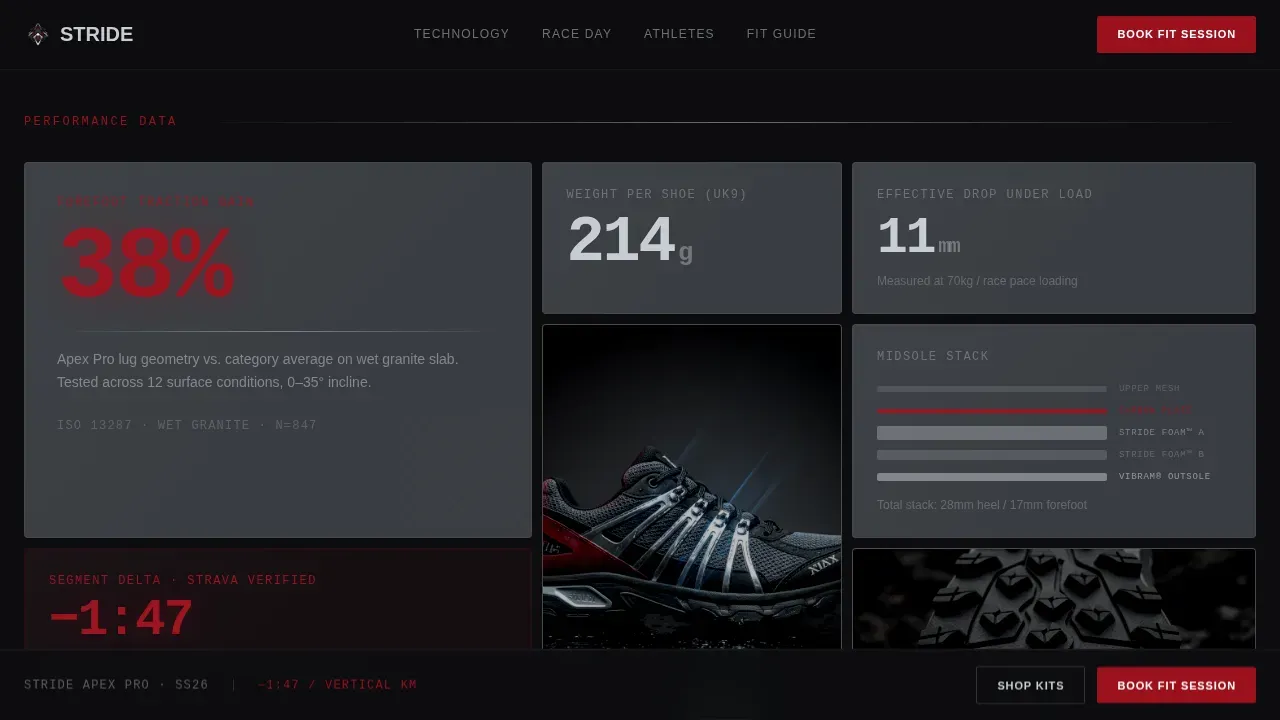
The bento grid is the backbone of this landing page. Each cell leads with an oversized, bold performance number before any supporting description arrives. Cells are asymmetric: large hero cells carry flagship stats like traction percentage and shoe weight, while smaller companion cells display grip-pattern close-ups and midsole cross-section images. The layout creates a rhythm that rewards visitors who read every figure.
Rotating Product Hero Section
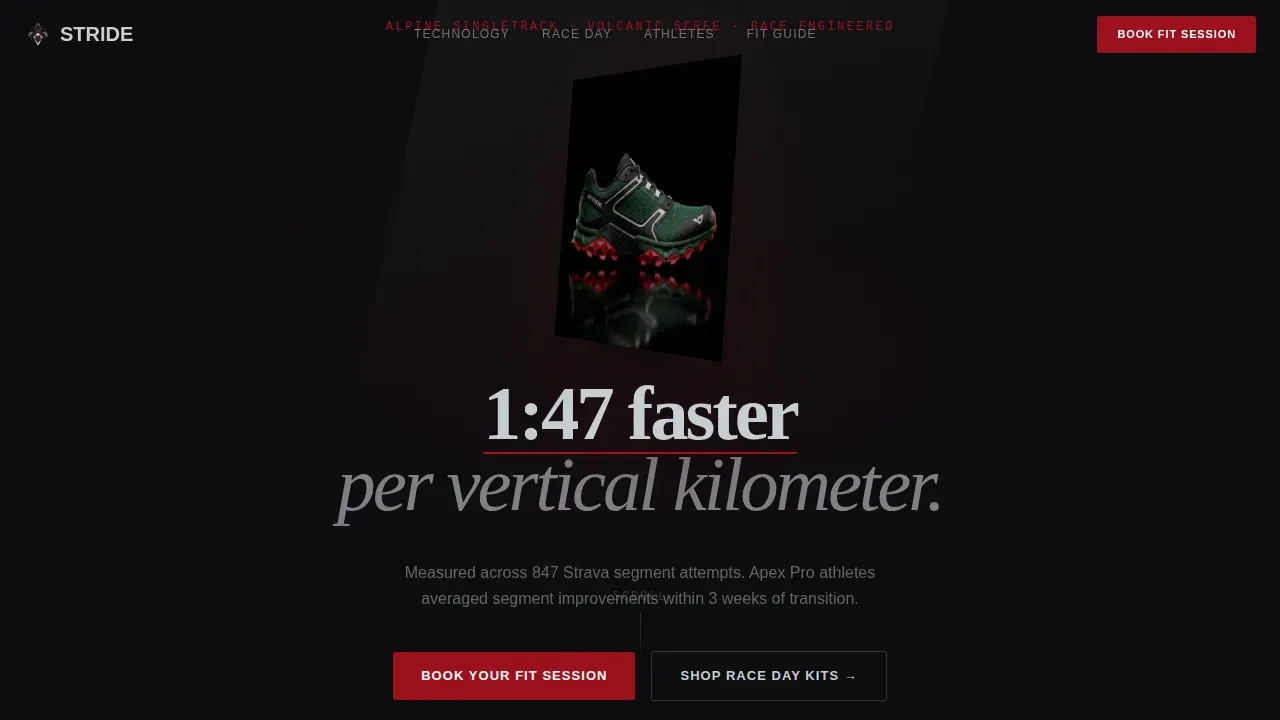
The header opens on a near-black background with a single trail shoe rotating slowly in the center frame. Hard directional lighting catches chrome hardware and reflective heel details. A single ruby accent line underscores the headline stat. No background scenery, no lifestyle imagery: just the running product, isolated and precise, building confidence before the grid loads below.
Three-Step Fit Consultation Booking Flow
The primary conversion path is a booking scheduler modal that opens from the sticky call to action bar. Step one lets visitors select their consultation type: road-to-trail transition, ultra prep, or shoe rotation planning. Step two shows available date and time slots. Step three collects the visitor's name and primary race goal. Simple, friction-reduced, and designed to complete in under two minutes.
Race Proof Section with Athlete Testimonials
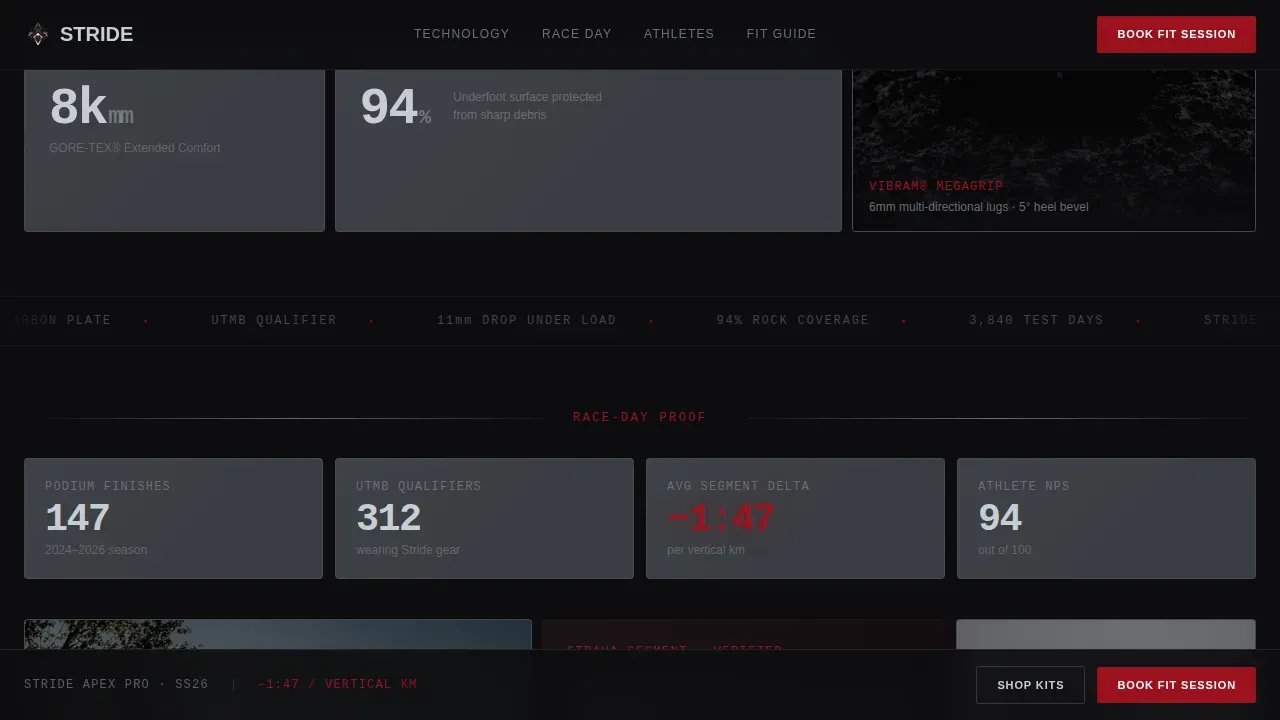
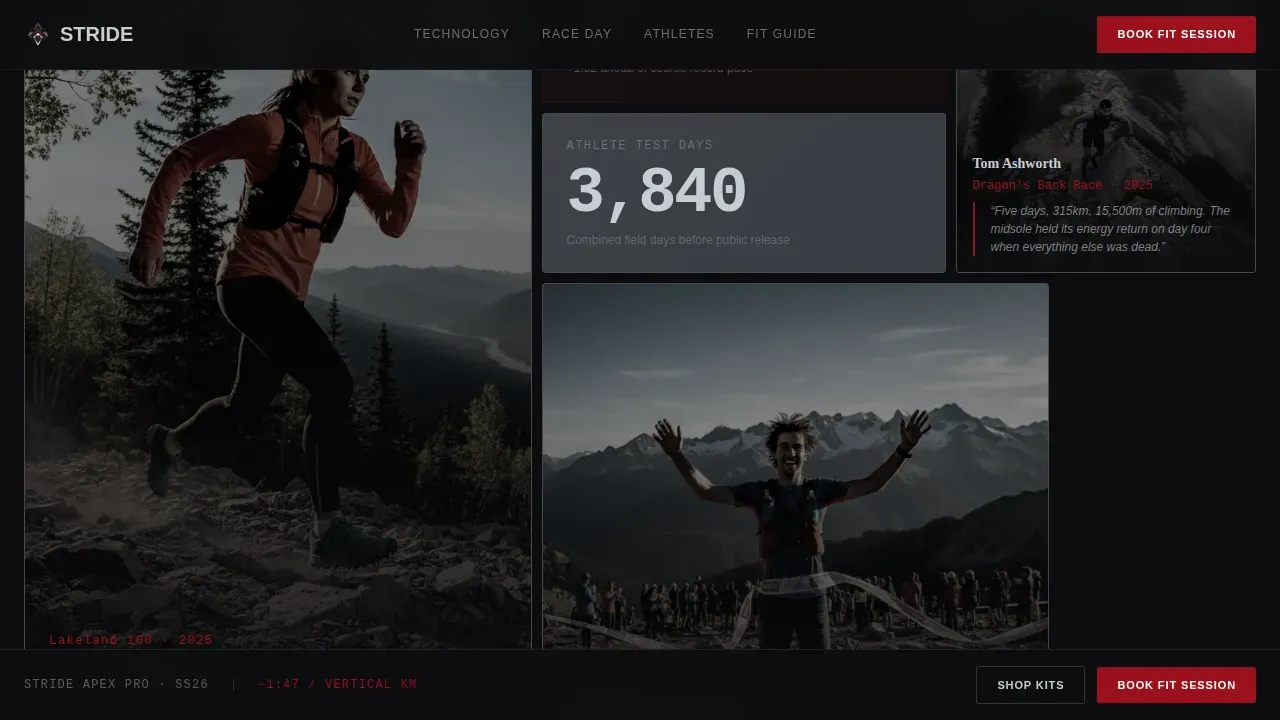
As visitors scroll deeper into the landing page, the bento grid shifts from product data to race-day evidence. This section includes segment screenshot cells, podium finish callouts, and micro-loop athlete testimonials drawn from real race results. The pattern moves from clinical to visceral and back again, building the kind of community credibility that data alone cannot deliver.
Secondary Shop Path for Race Day Kits
Not every visitor is ready to book a consultation. The template includes a secondary conversion lane: a product grid showcasing race day kits for visitors who want to explore and purchase directly. This path sits below the primary booking call to action, giving the site two clear routes to revenue without diluting the main message.
Ruby-Accented Sticky Call to Action Bar
A sticky bar pins the primary "Book Your Fit Session" call to action to the bottom of the viewport after the first scroll. It uses ruby on black for maximum visual contrast, appearing only where the eye must go. The bar stays in view throughout the site, keeping the booking path visible no matter how deep into the trail running data a visitor travels.
Page sections overview
| Section | Purpose |
|---|---|
| Hero with Rotating Shoe | Introduces the brand with a dramatic product reveal and a ruby-accented headline stat |
| Stats Bento Grid | Displays oversized performance numbers across asymmetric cells with product detail images |
| Race Proof Cells | Builds credibility through segment screenshots, podium finishes, and athlete testimonials |
| Fit Session Call to Action | Drives bookings through a three-step scheduler modal with consultation type and date selection |
| Shop Race Day Kits | Provides a secondary product grid for visitors ready to purchase directly |
| Linear Footer | Closes the site with a clean single-row footer pattern |
Design & branding system
The template uses a Ruby and Chrome color system designed to feel technical and unforgiving. The palette draws from the visual language of carbon-plated running shoes under stadium floodlights, where every element either recedes into the background or demands attention.
- Dominant background in deep blackout (#0D0D0F), polished chrome silver (#C8CDD3) for data typography and divider lines, and cold asphalt gray (#3A3D42) for card surfaces within the bento grid
- Arterial ruby (#9B111E) used sparingly as the single high-voltage accent on calls to action and live stat callouts, appearing only where the visitor's eye must land
- Typography system pairing DM Sans for data labels, Fraunces for editorial headlines, and JetBrains Mono for all stats and numerical display values
Mobile & speed optimization
The template is built desktop-first, reflecting the habits of its target audience: runners who study Strava segment splits and elevation profiles on large screens. A mobile fallback layout ensures the site remains usable across every device without sacrificing its visual identity.
- Desktop-first layout prioritizes the full bento grid experience, with breakpoints that gracefully stack cells for smaller screens
- Static bento grid sections use server-rendered components to keep the page responsive, while the scheduler modal and scroll-triggered animations are handled client-side
- Sticky call to action bar adapts across screen sizes, keeping the booking path reachable on any device
How this template helps you convert
The entire landing page is structured around a single conversion goal: booking a free twenty-minute gait and terrain consultation. Every design decision serves that goal, from the first ruby stat in the hero to the final step in the booking scheduler.
- The Stats-First bento layout builds technical authority early, giving visitors the confidence to trust a fit recommendation before they have spoken to anyone. Oversized numbers like traction percentage, shoe weight, and effective drop under load do the convincing before any sales message arrives.
- The Race Proof section shifts from product data to human evidence, using segment screenshots and podium results to show that the running gear performs in real race terrain. This social proof answers the question every serious trail runner asks: does this actually work when the sun rises on race morning and the trail turns technical?
- The three-step booking scheduler reduces friction to its minimum. Simple fields, a clear path through consultation type and date selection, and a focused race goal entry step complete the journey. Visitors who are not ready to book can take the secondary path to the shop, so no momentum is lost.
Other information about this template
This template is a great example of how a performance running brand can use a no-code platform to launch a professional, high-interactivity site without writing custom code from scratch. No-code tools allow users to deploy landing pages quickly, and pre-built templates like this one can get a project live in hours rather than weeks. AI-powered platforms can further speed up the customization process, letting non-technical users adapt design, copy, and layout without backend development skills.
- The Stride Competition Edge Trail Running Landing Page Template is designed for running brands that want to lead with technical data and convert trail running visitors through a scheduled consultation model
- The design style suits brands operating in rugged outdoor terrain markets, from fell running communities in the UK to international ultra-distance racing circuits
- This template supports localization for English UK and international audiences, using metric measurements and references appropriate for European trail running events
- The bento grid layout is a great example of how ideas from data-visualization design can enhance a product website by making every number feel like a headline
- Trail running benefits such as fitness, wellness, and mental well-being can be woven into testimonial cells to appeal to a wider community of runners, from beginners taking their first walk off the pavement onto forest trails to seasoned athletes preparing for multi-day fastpacking adventure
- The template can be shared across social media platforms to drive traffic directly to the landing page booking flow, helping brands grow their client base and reach runners who are actively exploring gear options before their next training block
- Trees, open terrain, and the spirit of nature adventure are implicit in the brand world this template creates, even without literal landscape imagery in the design
- Brands can use the product grid section to showcase running shoes, apparel, and accessories, giving visitors a complete view of available services and race day kit options
- A dynamic image treatment in the hero section creates a strong first impression that builds confidence and sets the competitive mindset before the visitor reads a single word of body copy
- The template is an inspiring starting point for any running brand ready to leap beyond generic website themes and build a site that matches the energy of the sport itself
Theme
Competition Edge
Creative direction
Stats-First Impact
Color system
Ruby & Chrome
Direction
Booking/Scheduling
Page Sections
Asymmetric Stats-first Bento Grid
Animated Rotating Product Hero
Three-step Fit Consultation Scheduler
Race Proof and Testimonial Cells
Sticky Ruby Call to Action Bar
Secondary Race Day Kit Product Grid
Related questions
Can I customize the booking scheduler steps in this template?
Is this template suitable for a brand selling trail running shoes and gear?
Do I need coding experience to launch this landing page?
How does the bento grid handle trail running performance data?
Can the race proof section be adapted for event promotion or community content?