PTSD Care Booking Website Template
Steadfast is a hub-and-spoke landing page template built for PTSD caregiver support services. It guides visitors through five structured chapters covering nervous system education, trigger recognition, communication scripts, and crisis planning, then earns the booking with a sequenced scheduling form and a PDF lead-capture path for visitors who need more time.
by Rocket studio
Quick summary
Steadfast is a single-page coaching template designed for services that support people who love someone with post-traumatic stress disorder (PTSD). It uses a chapter-by-chapter scroll experience to teach, build trust, and move the right visitor toward booking a guidance session. The tone is calm and structured, warm enough to feel personal, clinical enough to feel credible.
Who this template is for
This template is built for practitioners, coaches, and educators who work with the caregiving side of PTSD. If your audience is not the person with PTSD but the person living beside them, this page was designed for that exact conversation.
- Coaches and counselors offering structured caregiver support programs
- Mental health educators running psychoeducation modules for partners, parents, or friends of veterans and trauma survivors
- Solo practitioners who need a polished, trust-first landing page that earns bookings without a hard sell
What problem this template solves
Most coaching pages lead with credentials and pricing. That approach loses the exhausted caregiver who arrived at 2 a.m. with a specific, unanswered question. This template solves the trust gap by teaching first and converting second.
- Visitors lack a framework for what they just experienced, so the page gives them one before asking for anything
- Generic health service pages do not speak to the caregiver's specific role, leaving them feeling unseen and unaddressed
- A standard booking form without context produces anxiety, not action; this template earns each click through structured guidance content
What you get with this template
You get a complete, five-chapter landing page layout that walks the visitor from confusion to confidence and then to a session booking. Every element is designed to reflect the steady, educational tone that caregivers need to trust a service.
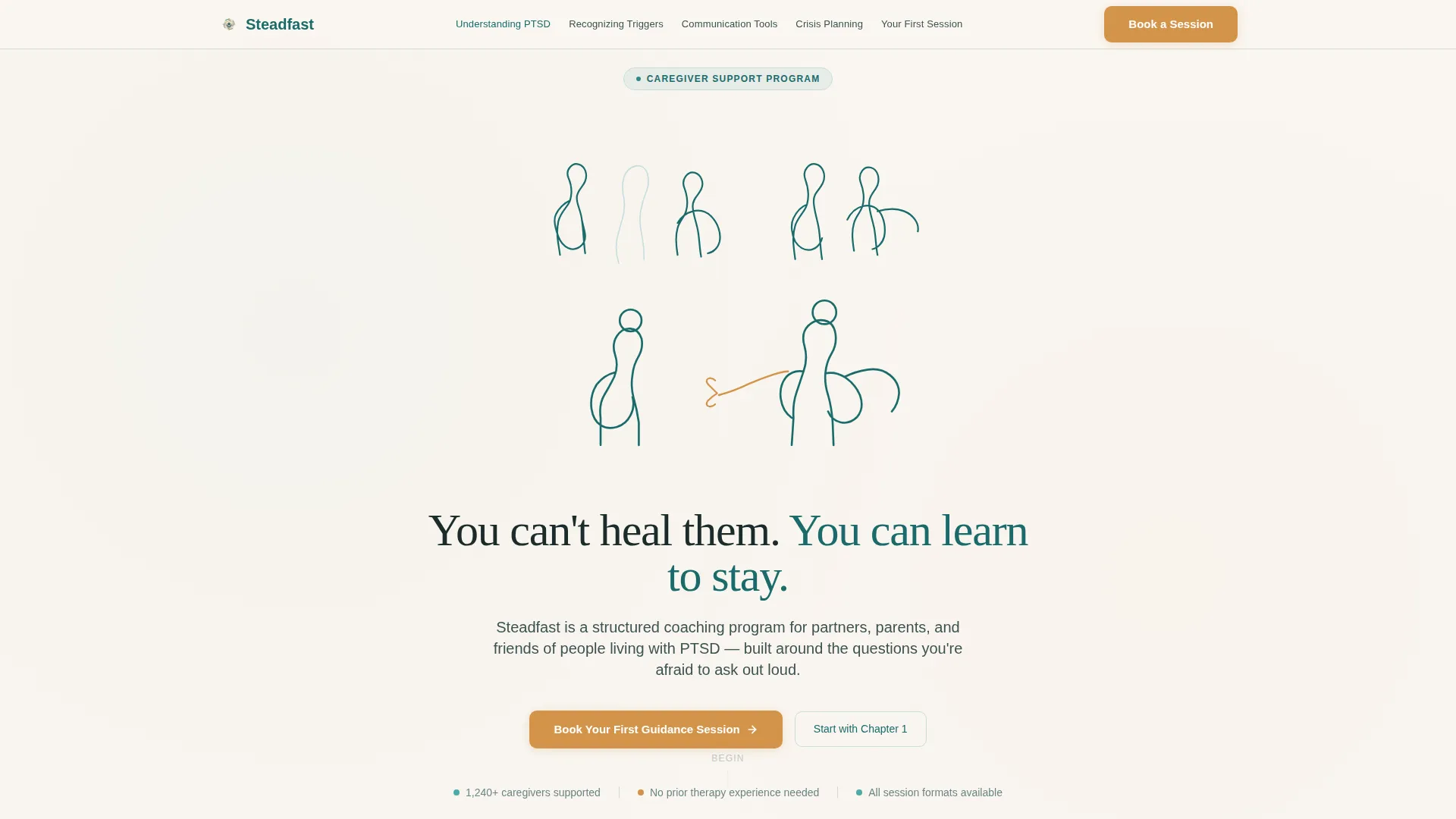
- A self-drawing SVG line-art hero animation with a fade-in headline, plus a fixed anchor navigation bar linking to all five chapters
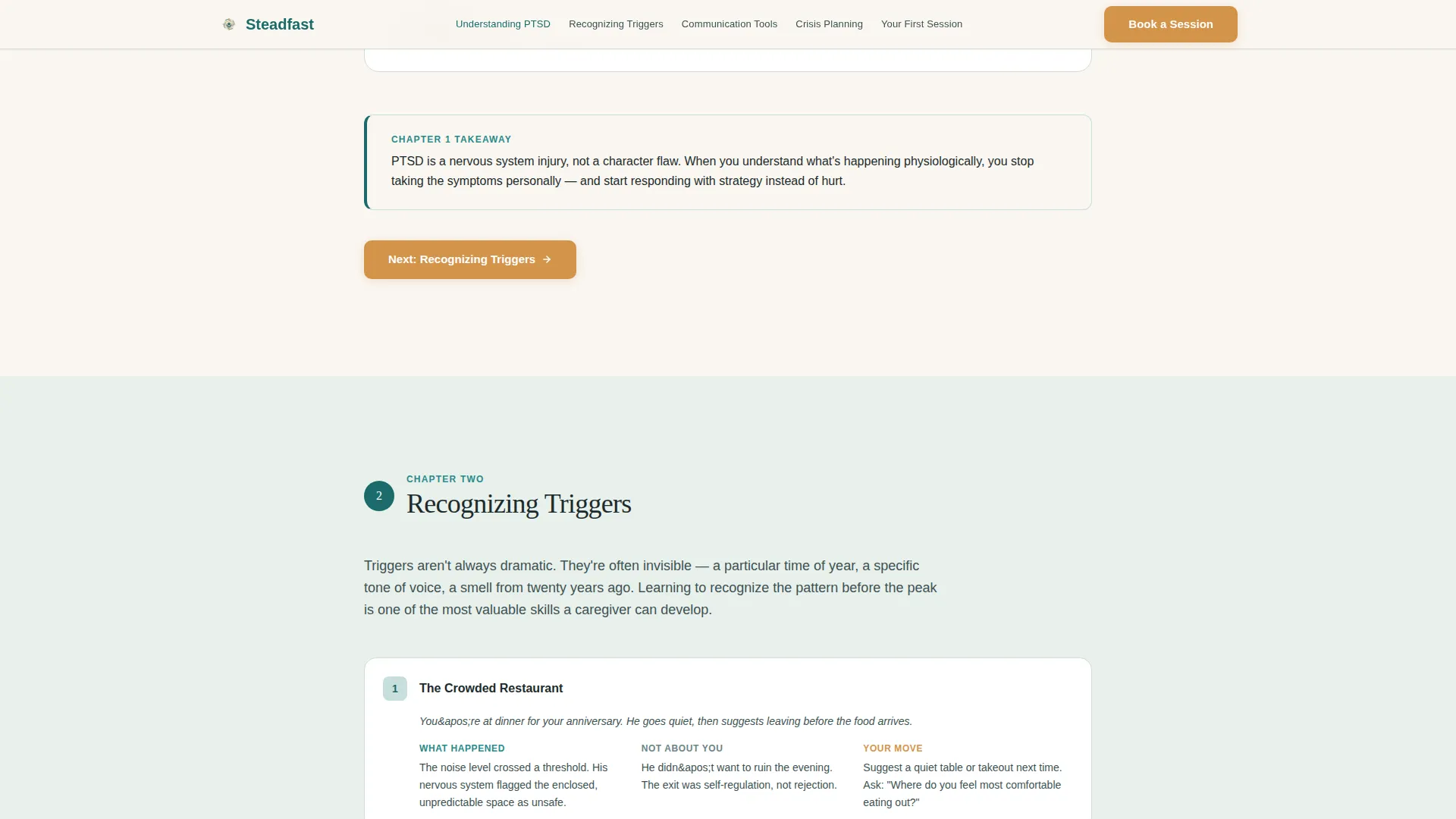
- Four educational spoke sections covering PTSD and the nervous system, trigger identification, communication scripts, and household crisis planning, each closing with a takeaway card and an amber call-to-action prompt
- A final booking spoke with a sequenced three-step scheduling form and a secondary PDF lead-capture path for visitors who are not ready to book
Feature list
This template is built around specific functional and design decisions drawn directly from the caregiver coaching brief.
Self-Drawing Hero Animation
A single continuous SVG line traces two human figures across the parchment header background. The animation completes in four seconds with no photography and no faces, conveying proximity without pressure. The headline "You can't heal them. You can learn to stay." fades in below.
Fixed Anchor Navigation
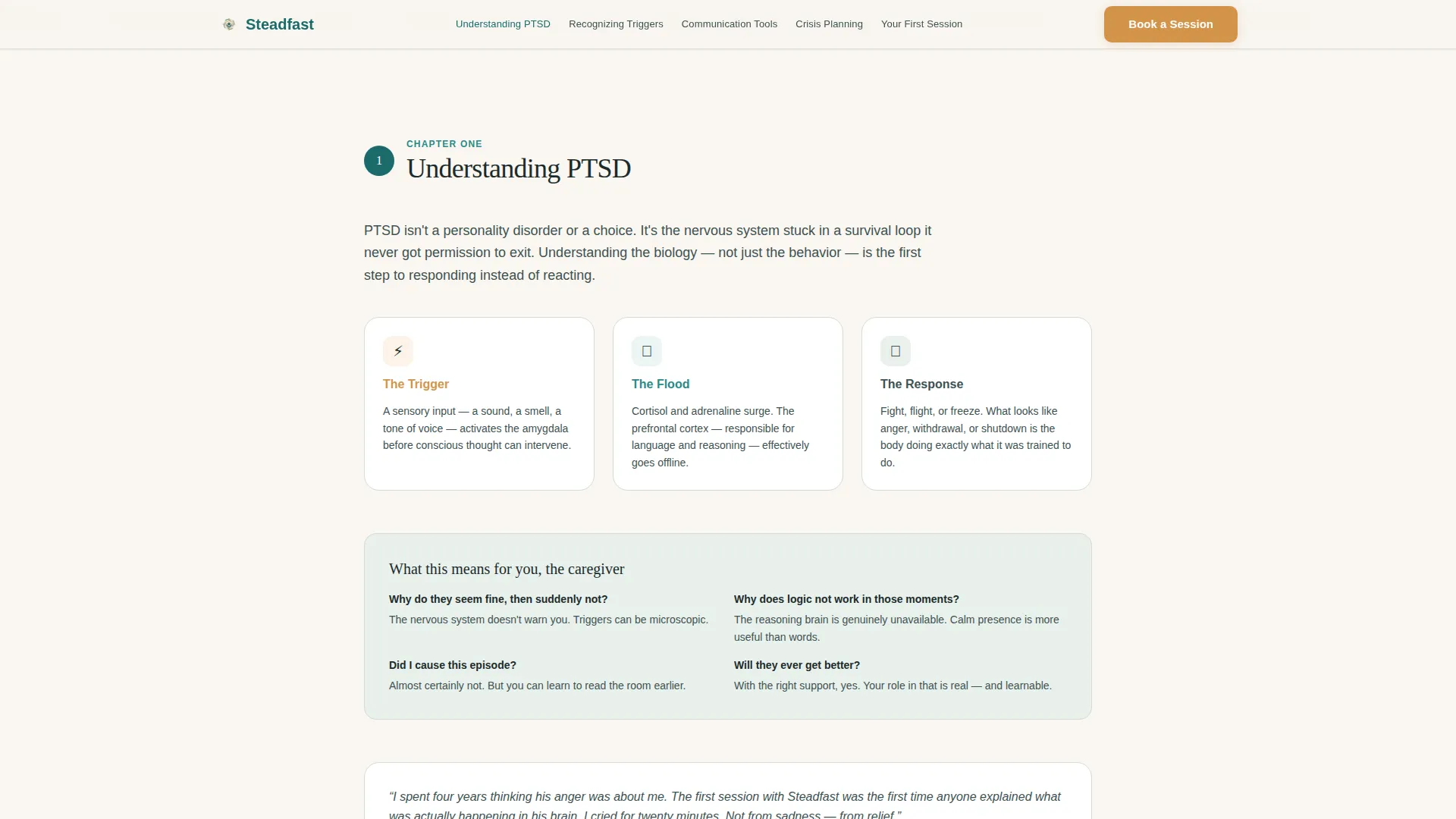
A persistent top navigation bar links to all five chapters: Understanding PTSD, Recognizing Triggers, Communication Tools, Crisis Planning, and Your First Session. Visitors can jump directly to the chapter most relevant to their moment without losing their place.
Chapter-Based Scroll Structure
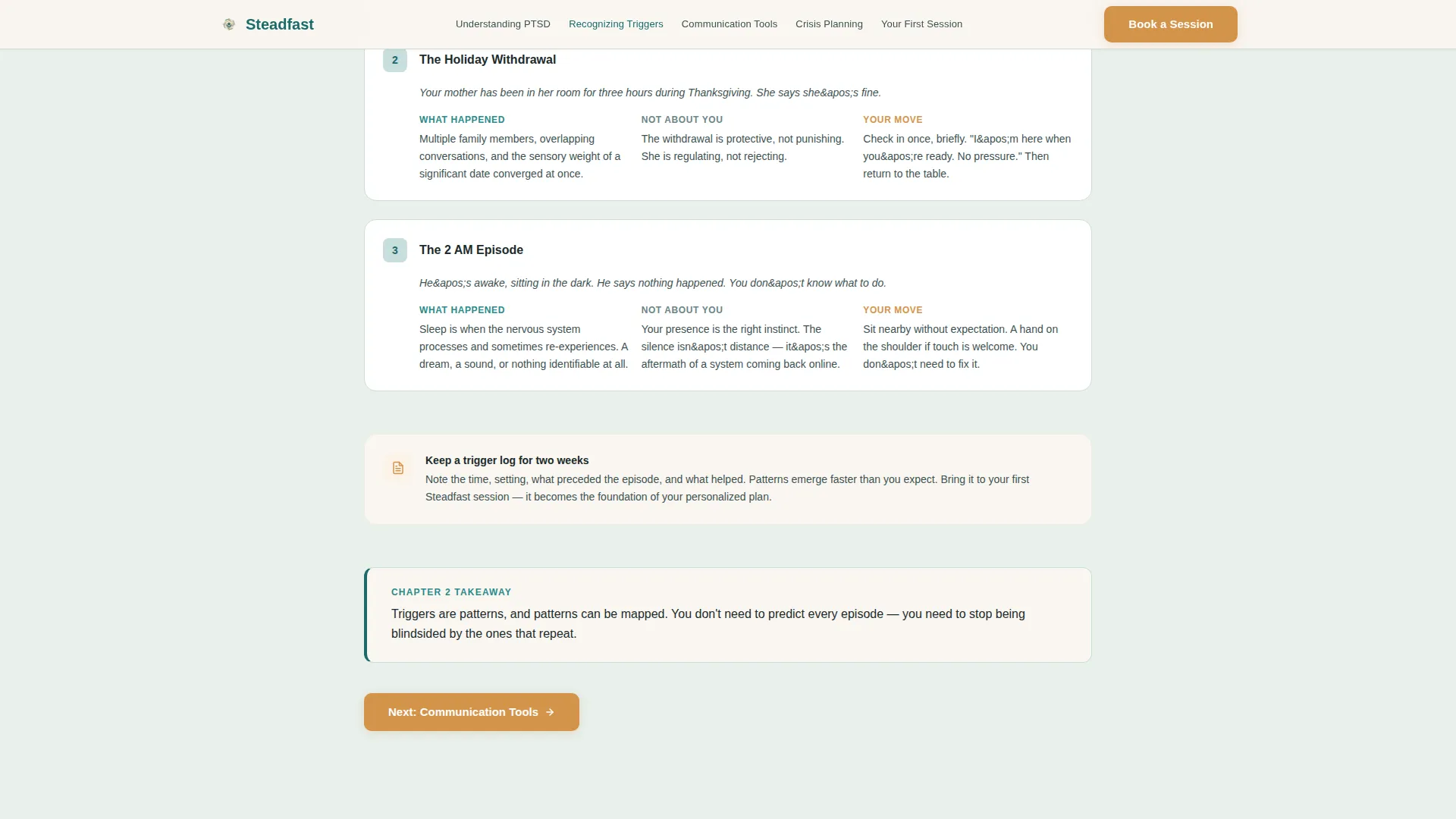
Each of the four educational chapters is numbered and formatted like a page in a guided workbook. Chapters include simple diagrams, real scenario examples, formatted do/don't communication scripts, and a household crisis plan walkthrough. Each chapter closes with a single takeaway card.
Sequenced Booking Form
The final spoke presents a three-step scheduling form. It asks the visitor's relationship to the person with PTSD, how long they have been in a caregiving role using a slider input, and their preferred session format. The sequence feels conversational, not clinical.
PDF Lead-Capture Path
A secondary conversion path sits alongside the booking form. Visitors who are not ready to book can download the Caregiver Starter Guide by entering only their email address. This keeps hesitant visitors inside the funnel without pressure.
Amber Call-to-Action System
Amber accent elements appear only on calls to action and progress markers throughout the page. The restrained use of this color trains the eye to recognize action prompts quickly, so the booking prompt at the end of each chapter always reads as the natural next step.
Page sections overview
| Section | Purpose |
|---|---|
| Hero with Animation | Establishes tone, draws the visitor in with line-art animation and headline |
| Fixed Anchor Nav | Lets visitors jump to any chapter from anywhere on the page |
| Chapter 1: Understanding PTSD | Explains what PTSD does to the nervous system using simple diagrams |
| Chapter 2: Recognizing Triggers | Teaches trigger identification through real scenario example cards |
| Chapter 3: Communication Tools | Provides do/don't communication scripts with formatted phrasing |
| Chapter 4: Crisis Planning | Walks through building a household crisis response plan |
| Chapter 5: Book Your Session | Hosts the sequenced booking form and PDF lead-capture secondary path |
| Footer | Displays horizontal flow layout with supporting links and context |
Design & branding system
The visual identity follows an Educational Guide theme using a palette that feels like a well-worn journal on a counselor's desk. Every color choice serves a specific role in the page hierarchy.
- Deep therapeutic teal (#1A6B6A) carries headings and navigation anchors; soft sage (#E8F0EC) forms the resting body ground; warm parchment (#FAF6F1) separates teaching panels like workbook pages
- Quiet amber (#D4944B) is reserved exclusively for calls to action and progress markers, appearing only where action is needed
- Typography pairs DM Sans for body text and interface elements with Fraunces, a warm serif, for chapter headings, giving the page a structured yet approachable feel
Mobile & speed optimization
The template is built mobile-first, recognizing that caregivers most often reach for their phones during the difficult moments when support content matters most.
- The hero section uses an SVG path animation rather than heavy image assets, keeping the initial load light while still delivering an emotionally resonant visual
- Chapter images are set to load lazily as the visitor scrolls, so the above-the-fold experience remains fast regardless of device conditions
- Scroll-reveal animations on chapter sections and the amber glow effect on calls to action are handled at a medium animation weight, balancing expressiveness with smooth performance on mobile screens
How this template helps you convert
This template earns its conversions by doing the teaching work before the ask. The page structure mirrors the journey a caregiver actually takes, from confusion to understanding to action.
- The four educational chapters build genuine competence and credibility, so that by the time the visitor reaches the booking form, the service has already demonstrated its value through the content itself.
- The amber call-to-action prompt at the end of each chapter creates a gentle, repeated nudge toward booking without ever feeling pushy, and the secondary PDF path keeps hesitant visitors engaged rather than lost.
Other information about this template
This template works well for solo practitioners and small coaching practices that serve the mental health adjacent space. It does not require large photography libraries or complex backend systems to make an impact.
- The anonymized testimonial and session count metric areas provide social proof hooks that can be updated with real figures as the practice grows
- The footer follows a horizontal flow layout suitable for supporting links, contact information, and brief practice credentials
- The page is localized for English (United States) and requires no pricing or currency display in the lead-generation sections, making it easy to launch before a formal pricing structure is finalized
Theme
Educational Guide
Creative direction
Step-by-Step Guide
Color system
Teal Catalyst
Style
Hub & Spoke (Anchor Nav)
Direction
Booking/Scheduling
Page Sections
Self-drawing SVG Hero Animation
Fixed Anchor Navigation Bar
Five-chapter Workbook Layout
Sequenced Three-step Booking Form
PDF Lead-capture Secondary Path
Amber Call-to-action System
Related questions
Who is this template designed for?
Can I adjust the booking form if I only offer one session format?
What is the purpose of the PDF lead-capture path?
Does the template include social proof sections?
Is this template suitable for services supporting non-veteran caregivers?