Sensory-Safe Autism Spectrum Exercise Landing Page Template
Stim is a single-column landing page template built for a sensory-safe movement program serving autistic adults, parents of teenagers, and occupational therapists. It pairs an interactive sensory audit checklist with call-and-response program cards, a predictable session timeline, and a conditional sticky call-to-action bar. The Alpine Fresh color system and Organic Flow layout create a calm, low-stimulation browsing experience from the first scroll.
by Rocket studio
Quick summary
Stim is a focused, single-column landing page template designed for an autism spectrum exercise program built around sensory-safe movement. It opens with trust badges, guides visitors through a tappable sensory audit, and reveals program features that directly answer each identified pain point. The result is a page that earns trust quietly, one checkbox at a time, before asking for a single click.
Who this template is for
This template was built for fitness professionals, wellness practitioners, and clinic partners who serve the autism community. It works equally well for solo coaches, small studios, and occupational therapy practices that want a polished, conversion-ready page without writing from scratch.
- Autistic adults who run or plan to run sensory-informed movement programs for their community
- Parents researching structured physical outlets for teenagers who struggle in standard gym environments
- Occupational therapists seeking a movement partner page they can share alongside their own therapy sessions
What problem this template solves
Standard gym landing pages are built for neurotypical visitors. Flashing banners, loud copy, and unpredictable layouts create the same sensory overwhelm online that fluorescent lights create in person. Children with autism, autistic students, and adults who experience sensory processing difficulties deserve a page that respects how their nervous system works.
- Most fitness pages ignore sensory needs entirely, leaving autistic people to guess whether a program will actually feel safe
- There is no standard design pattern that addresses sensory processing challenges, predictable structure, and trust-building for this audience in one template
- Coaches and therapists spend hours writing custom pages that still miss the mark on tone, layout clarity, and low-stimulation visual design
What you get with this template
This template delivers a complete, single-page layout built for one clear purpose: turning a curious visitor into a confident click toward the schedule page. Every section has a defined role, and nothing is included that does not serve that role.
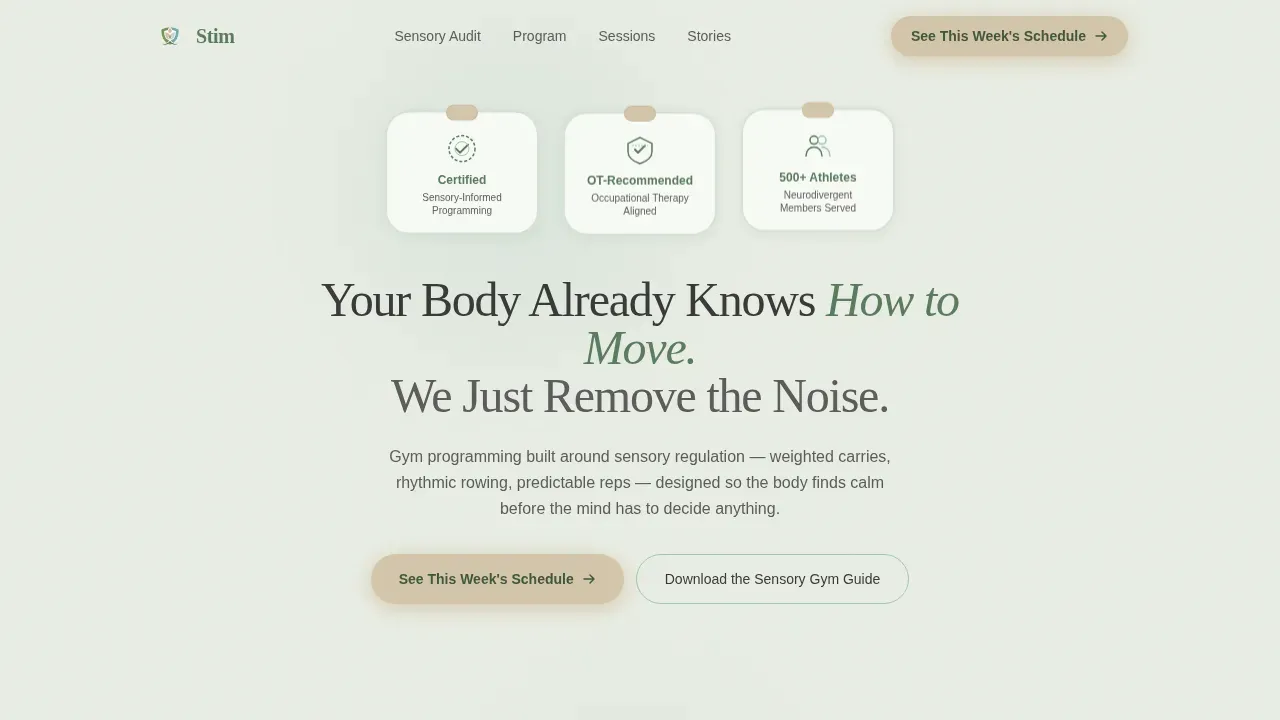
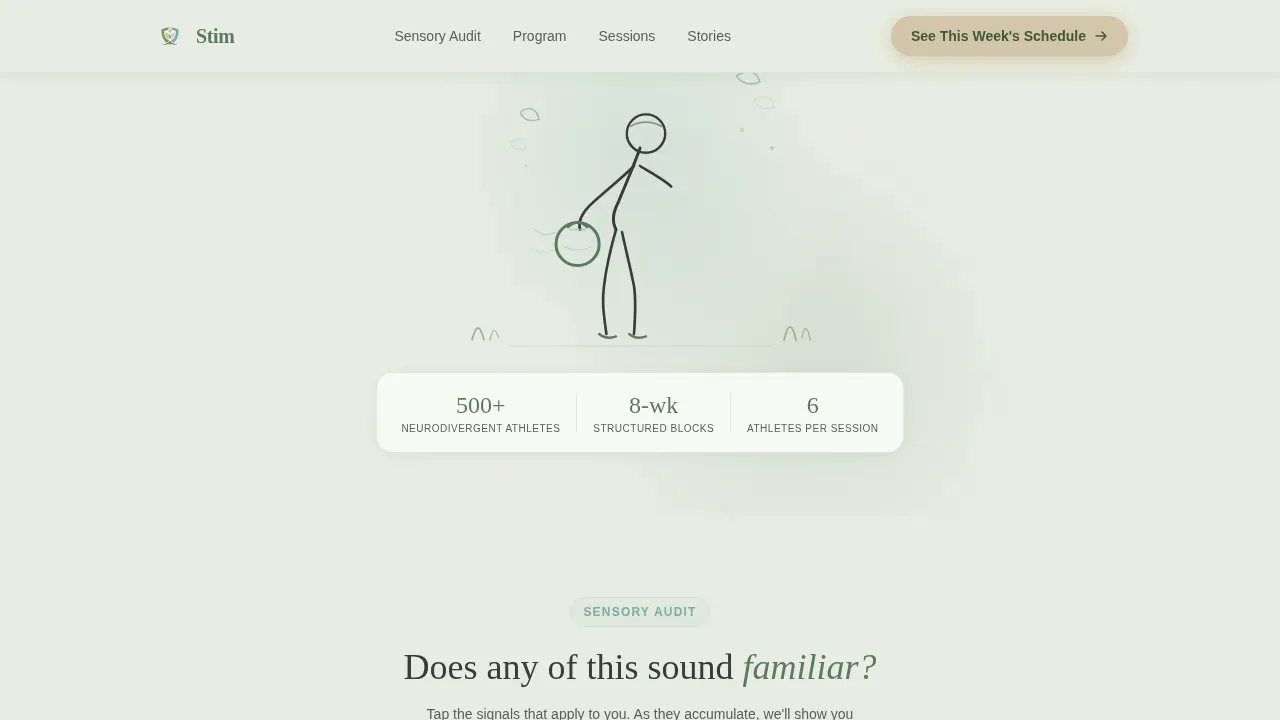
- A hero section with a trust badge row, organic illustration, and a headline tuned for sensory-avoidant readers
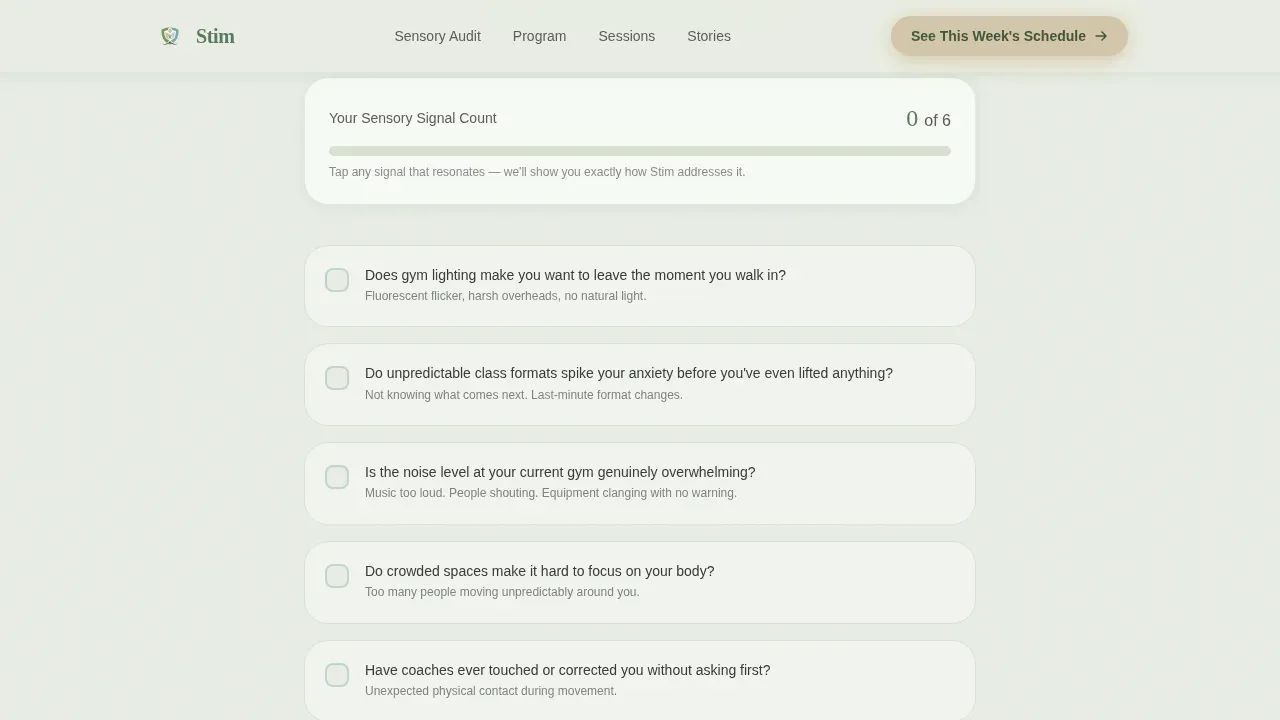
- A six-checkbox interactive sensory audit with a live tally counter and a conditional sticky call-to-action bar that appears after three checks
- Call-and-response program feature cards, a session timeline, three testimonial blocks, and a footer with social icons and centered copyright
Feature list
This template is built around six core capabilities drawn directly from the project brief. Each one serves a specific conversion or trust function.
Interactive Sensory Audit Checklist
Six tappable checkboxes present quiet yes-or-no questions to the visitor. Each check adds to a live tally counter. The rhythm is call-and-response: the visitor identifies a pain point, and the page immediately surfaces the program feature that answers it. This structure lets students with autism and other neurodivergent readers feel genuinely seen rather than marketed to.
Conditional Sticky Call-to-Action Bar
Once three or more boxes are checked, a sticky bottom bar appears with a clear, descriptive button labeled "See This Week's Schedule." The bar stays visible as the visitor scrolls, creating a low-pressure but persistent path to conversion. No form is required on this page; the click leads to a dedicated scheduling page where commitment happens.
Award Badge Trust Row
The header opens with a horizontal row of hand-drawn-style merit badges: "Certified Sensory-Informed Programming," "OT-Recommended," and "500+ Neurodivergent Athletes Served." These visual cues establish credibility before the visitor reads a single sentence of body copy. Trust is built through proof, not claims.
Predictable Session Timeline
A visual timetable shows visitors exactly how a session unfolds, step by step. This "what to expect" structure is essential for autistic individuals who experience anxiety around the unknown. Flexible pacing is emphasized throughout; every visitor can move through the page at their own pace without pressure.
Call-and-Response Program Cards
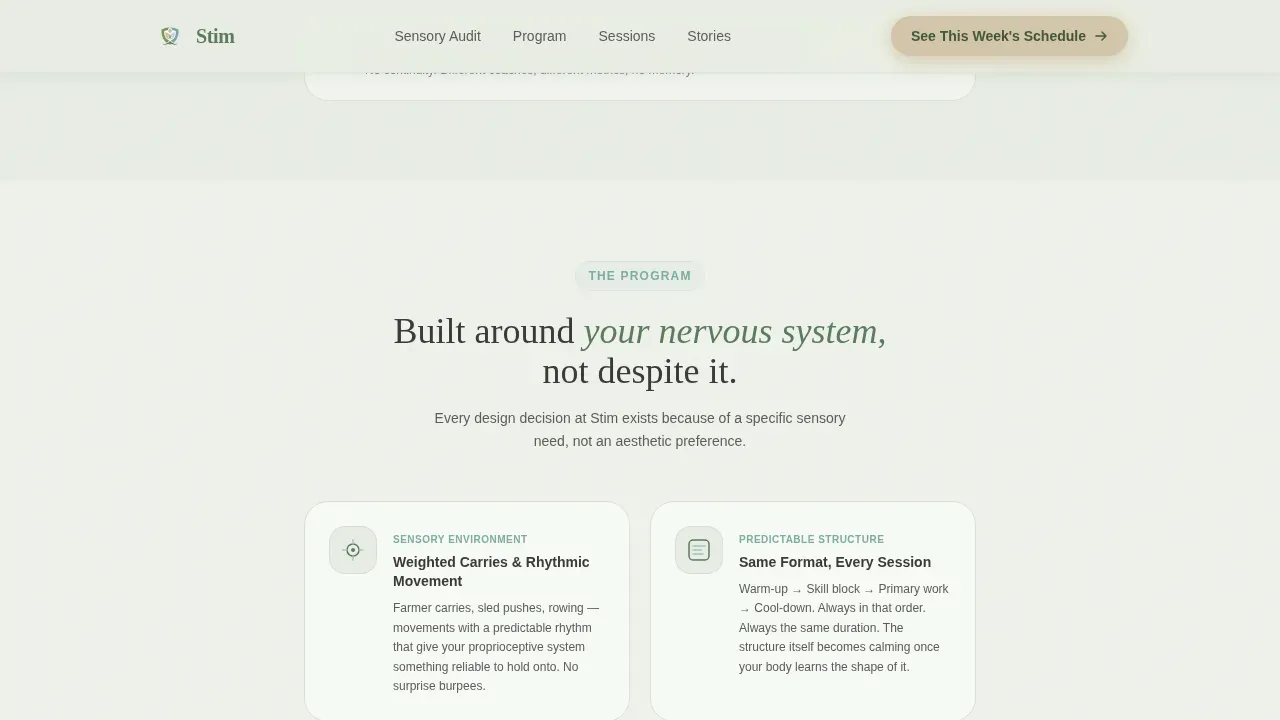
Each program feature card is paired directly with a specific pain point surfaced by the checklist. Cards cover predictable session structures, warm lighting protocols, noise-mapped facility zones, and coach communication cards. Related information is grouped into scannable blocks to reduce cognitive load and keep focus clear.
Alpine Fresh Single-Column Layout
The entire page follows a simple, consistent, and predictable single-column flow. Ample white space is used throughout to prevent the layout from feeling cluttered. Clear, legible fonts break text into small, digestible chunks. Visual aids use simple icons rather than relying solely on text, and no audio or video auto-plays anywhere on the page.
Page sections overview
| Section | Purpose |
|---|---|
| Hero with badges | Open with trust markers, headline, and organic illustration |
| Sensory audit checklist | Six interactive checkboxes build recognition and tally score |
| Program feature cards | Call-and-response answers for each checked pain point |
| Session feel timeline | Visual timetable shows predictable session structure |
| Testimonials and call to action | Three member stories and final schedule button |
| Footer | Social icons and centered copyright |
Design & branding system
The visual identity follows an Organic Flow theme using the Alpine Fresh color system. The palette was chosen specifically to create a low-stimulation, sensory-friendly browsing experience. Soft blues and greens anchor the design, evoking a quiet mountain trail rather than a commercial fitness brand.
- Soft pine (#5B7B5D) anchors section backgrounds; morning fog (#E8EDE4) holds open space generously; glacial stream (#A3C4BC) marks interactive states and progress indicators; warm birch (#D4C5A9) warms buttons and highlights; grounding charcoal (#3A3A38) keeps text legible without the harshness of pure black
- Typography pairs DM Sans for body text with Fraunces display serif for headlines, creating a nature-journal aesthetic that feels hand-crafted rather than corporate
- Illustrations are loose, organic line drawings rather than stock photography, keeping the page free of the social-pressure cues that can trigger anxiety for autistic readers
Mobile & speed optimization
This template is built mobile-first. Autistic users frequently browse on phones in low-stimulation environments, and the single-column flow adapts naturally to small screens without reordering or hiding content.
- Spring-reveal animations and checkbox interactions are implemented as Client Components, keeping static content fast while preserving the interactive audit experience
- The single-column layout avoids horizontal complexity, reducing visual noise and keeping the scroll path linear and predictable on any screen size
- No audio or video auto-plays; any media controls are visible and clearly labeled so visitors always stay in control of their sensory input
How this template helps you convert
This template converts through recognition, not pressure. Every design decision is aimed at making the visitor feel understood before they are asked to do anything.
- The sensory audit checklist builds a personal tally of pain points. As checks accumulate, matching program features appear in sequence. The visitor does not need to read a wall of copy; the page self-personalizes around their specific experience of sensory processing challenges.
- The conditional sticky call-to-action bar appears only after genuine engagement. A visitor who has checked three boxes has already self-identified as a strong fit. The "See This Week's Schedule" button arrives at exactly the right moment, with a secondary "Download the Sensory Gym Guide" path for visitors who need more time before committing.
Other information about this template
This section covers additional context that may be useful for educators, therapists, and classroom practitioners exploring the broader sensory landscape this template was designed within.
- Sensory rooms use sensory equipment to create a controlled, sensory-focused environment. They are common in schools, hospitals, and community centers. A well-designed sensory room can serve people of all ages and support individuals with developmental delays or multiple disabilities.
- Sensory rooms can promote self-organization and provide a calming area for individuals with sensory processing challenges. A well-structured sensory room helps manage sensory overwhelm and stress, which is why the Stim template mirrors those principles in its page layout.
- Sensory tools can include fidget toys, visual timers, and tactile toys to support students with sensory needs. Fidget toys are a well-known sensory tool for helping children with autism stay regulated and focused during classroom or therapy sessions.
- Sensory bins can encourage independent play and provide a straightforward sensory experience for children with autism. They engage all five senses and are easy to create with simple materials like shaving cream, sand, or water. Adding food coloring or finger paint can make sensory bins more engaging for kids who respond to visual stimuli.
- Sensory activities can enhance cognitive development and functional skills in children with autism. Children with autism benefit from sensory play because it helps them cope with reactions to various sensory stimuli. Regular sensory breaks help children recharge and regain focus during classroom activities.
- Building an obstacle course can provide proprioceptive input and help children with autism develop body awareness. Movement activities like jumping on a trampoline can help children regulate their emotions and energy levels. Movement breaks woven into daily routines support the ability to self regulate across different settings.
- Sensory-friendly classrooms aim to reduce sensory overload for students with sensory processing needs. Noise-canceling headphones can help students maintain focus in a sensory-friendly classroom. Regulated lighting and noise management strategies create a quieter learning environment for sensitive students. Flexible seating options help students with autism who need movement and sensory input throughout the school day.
- Creating a sensory-friendly classroom can promote a sense of community and comfort for all students. Teachers who teach students sensory integration techniques alongside academic content help the whole class build self regulation skills. Students learn better when their sensory processing needs are acknowledged and addressed.
- Sensory activities can be tailored to the special interests of children with autism. This helps engage students more deeply and makes learning feel relevant and fun. When students with autism feel safe, they are more likely to build social skills and connect with peers in structured settings.
- Incorporating sensory activities into a special education classroom can help students with autism engage more effectively in learning tasks. Students with autism often experience sensory processing difficulties that limit their ability to participate fully. Sensory-friendly environments help students feel more comfortable and capable, whether in a classroom, a gym, or a sensory room.
- Autism acceptance month is an important time for teachers, parents, and occupational therapists to introduce new sensory resources. Not all autistic people have the same sensory profile; sensory needs vary widely, and both sensory processing disorder and autism spectrum disorder present differently in every individual.
- Breathing exercises and calming music are low-cost tools that support emotional regulation and can be layered alongside any structured movement program. Children with sensory processing disorder may feel different emotions intensely or experience low energy that makes participation in standard activities difficult.
- Occupational therapists who recommend this template can use it to introduce the program to families during therapy sessions. Occupational therapy research supports structured movement as a complement to clinical work, particularly for autistic students with developmental delays or repetitive behaviors that respond well to rhythmic physical activity.
- Fine motor skills and body awareness both benefit from structured, predictable movement. Teachers and coaches can teach students these foundations by using visual cues, step-by-step instructions, and consistent session formats. Creating clear routines helps children with autism build confidence, improve fine motor skills over time, and reduce behavior challenges related to uncertainty.
Theme
Organic Flow
Creative direction
Checklist & Audit
Color system
Alpine Fresh
Style
Single Column Flow
Direction
Click-Through
Page Sections
Interactive Sensory Audit Checklist
Conditional Sticky Call-to-action Bar
Award Badge Trust Row
Predictable Session Timeline
Call-and-response Program Cards
Organic Flow Single-column Layout
Related questions
Who is this landing page template designed for?
Does this template include a booking or payment form?
Can occupational therapists use this template to promote a movement referral partnership?
How does the interactive checklist work?
Is this template suitable for programs that serve children as well as adults?