Soil & Water Conservation Specialist Professional Website Template
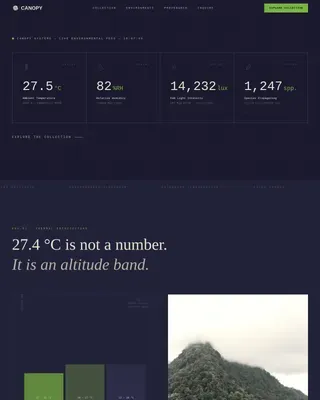
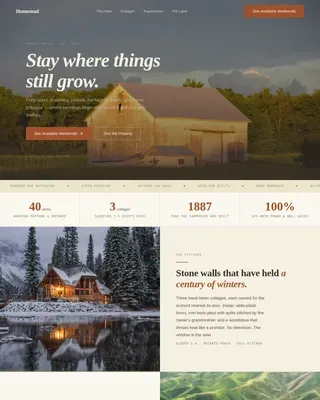
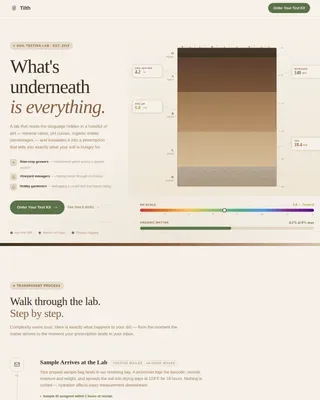
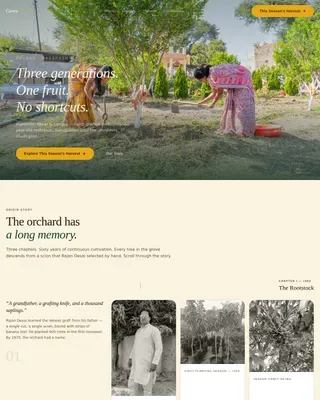
Stratum is a modular card-grid landing page built for soil testing laboratories. It guides visitors through the full journey from field extraction to certified report, using a disciplined Engineering Blueprint visual style and a Japanese Zen color palette. The page is designed to earn project inquiries from geotechnical engineers, civil contractors, environmental consultants, and developers who need bankable soil data.
by Rocket studio
Quick summary
Stratum is a single-page lead generation template for soil testing laboratories. It uses a modular card-grid layout to walk visitors through the physical journey of a soil sample, from borehole extraction to certified report delivery. The design is precise and grounded, built to win the confidence of technical buyers before they ever reach the inquiry form.
Who this template is for
This template is built for regional soil testing laboratories that serve a technical, professional client base. It speaks directly to buyers who read data before they read marketing copy.
- Geotechnical engineers specifying foundations and bearing capacity requirements
- Civil contractors bidding on highway and infrastructure projects who need turnaround certainty
- Environmental consultants and property developers who require certified reports to satisfy lenders or regulators
What problem this template solves
Technical service providers often lose credibility when their website looks generic. A soil testing laboratory needs a page that communicates precision, process, and proof, not just a list of services.
- Visitors leave without submitting an inquiry because nothing on the page reflects their specific project type
- A flat service list fails to show cause-and-effect value, leaving engineers unconvinced that the tests matter
- Developers and contractors cannot picture their own project in the offer, so they do not reach out
What you get with this template
You get a fully structured, single-page layout designed to move a technical visitor from first impression to form submission. Every section serves a distinct role in the conversion journey.
- A cinematic hero section with a lifestyle field photograph, a floating data badge, and a fade-in headline
- A modular tests grid that frames each soil test as a cause-and-effect narrative rather than a plain service item
- A three-card case study block and a dual-path lead generation form with a gated sample report download
Feature list
This section describes the core built-in capabilities of the Stratum template.
Cinematic Hero with Floating Data Badge
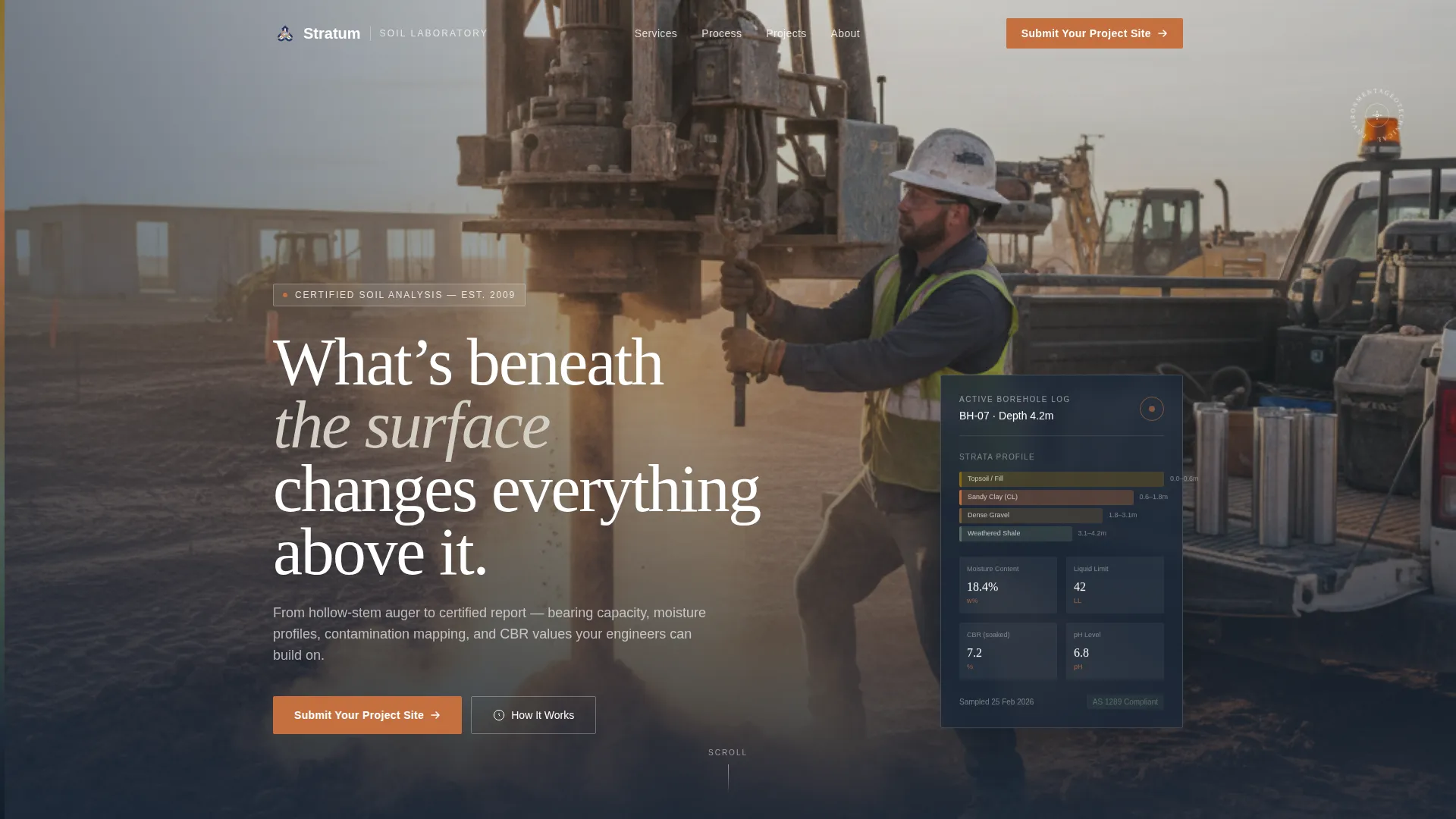
The header opens with a wide-frame lifestyle photograph of a field technician driving a hollow-stem auger into red-brown earth at ground level. A floating badge overlays key data points, and a single fade-in headline sets the editorial tone from the first scroll position.
Narrative Journey Section
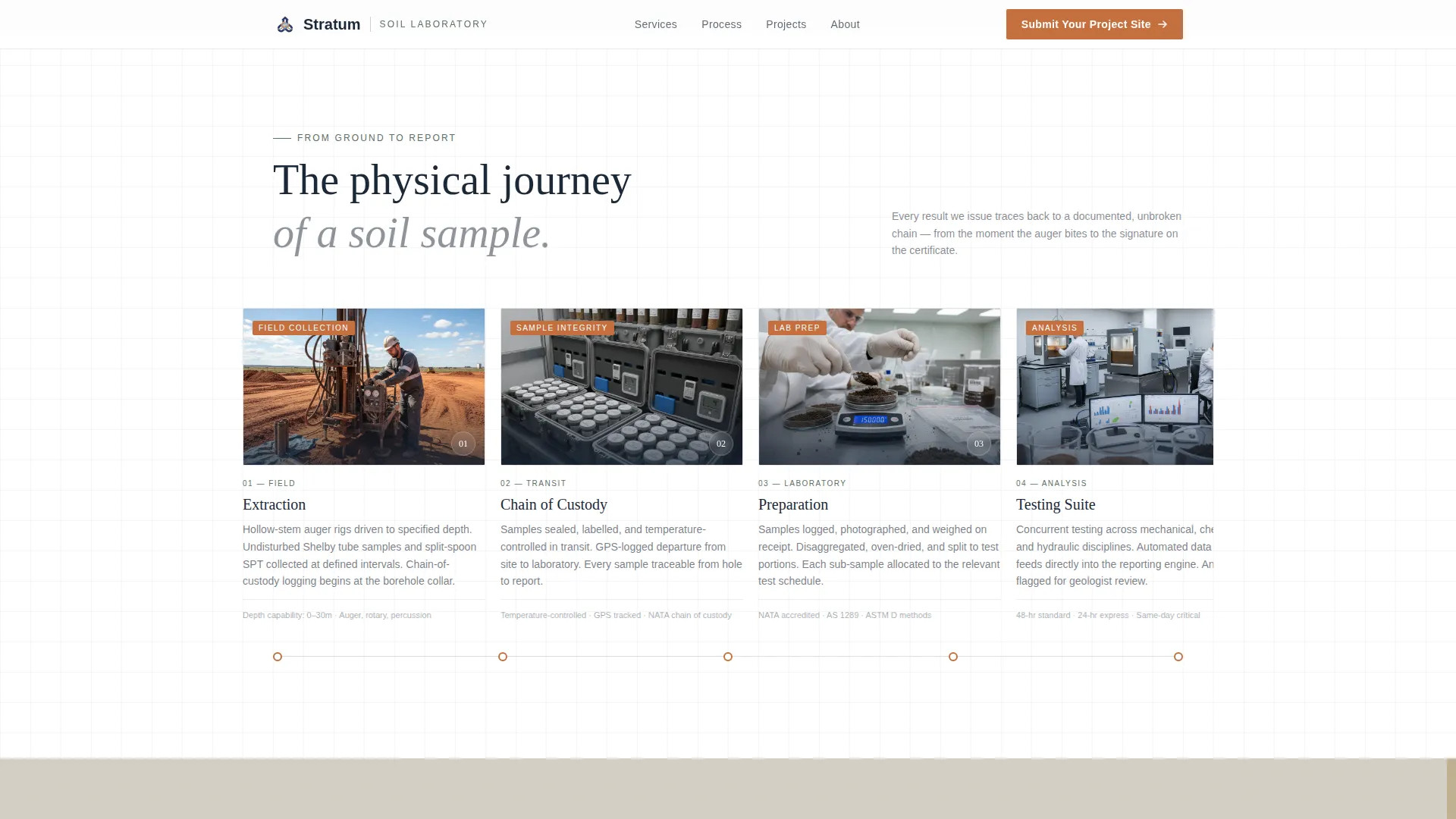
A horizontal scroll marquee and split-panel layout trace the physical path of a soil sample from field collection to laboratory analysis. The section uses sequential storytelling to hold attention and give technical visitors a clear picture of the full service process.
Asymmetric Tests Grid
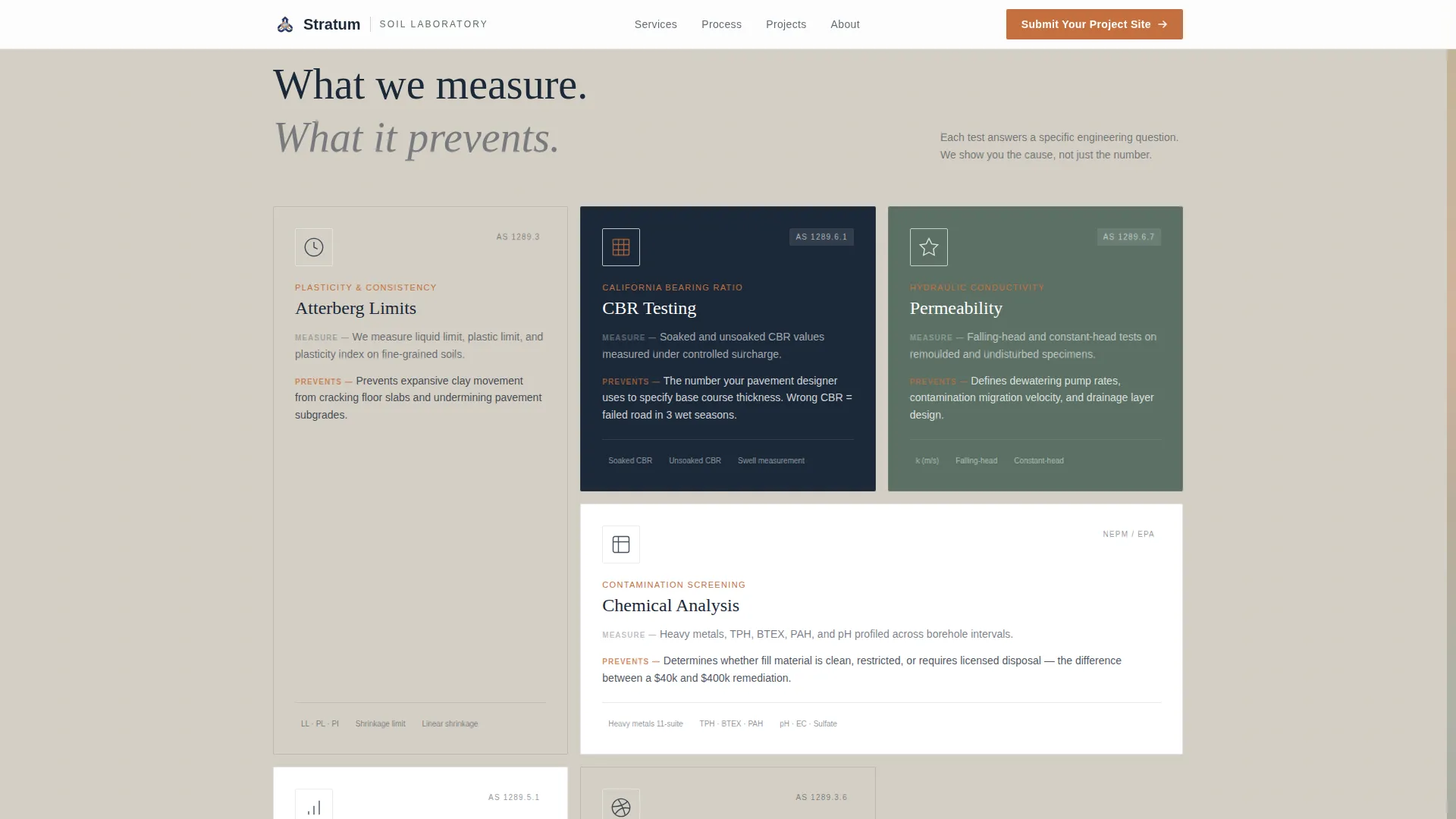
Each soil test, including Atterberg limits, California Bearing Ratio (CBR), permeability, and chemical analysis, is presented as an individual card module. Copy follows a cause-and-effect structure: what the test measures and what failure to measure it risks. Cards reveal on scroll with staggered animation.
Case Study Proof Cards
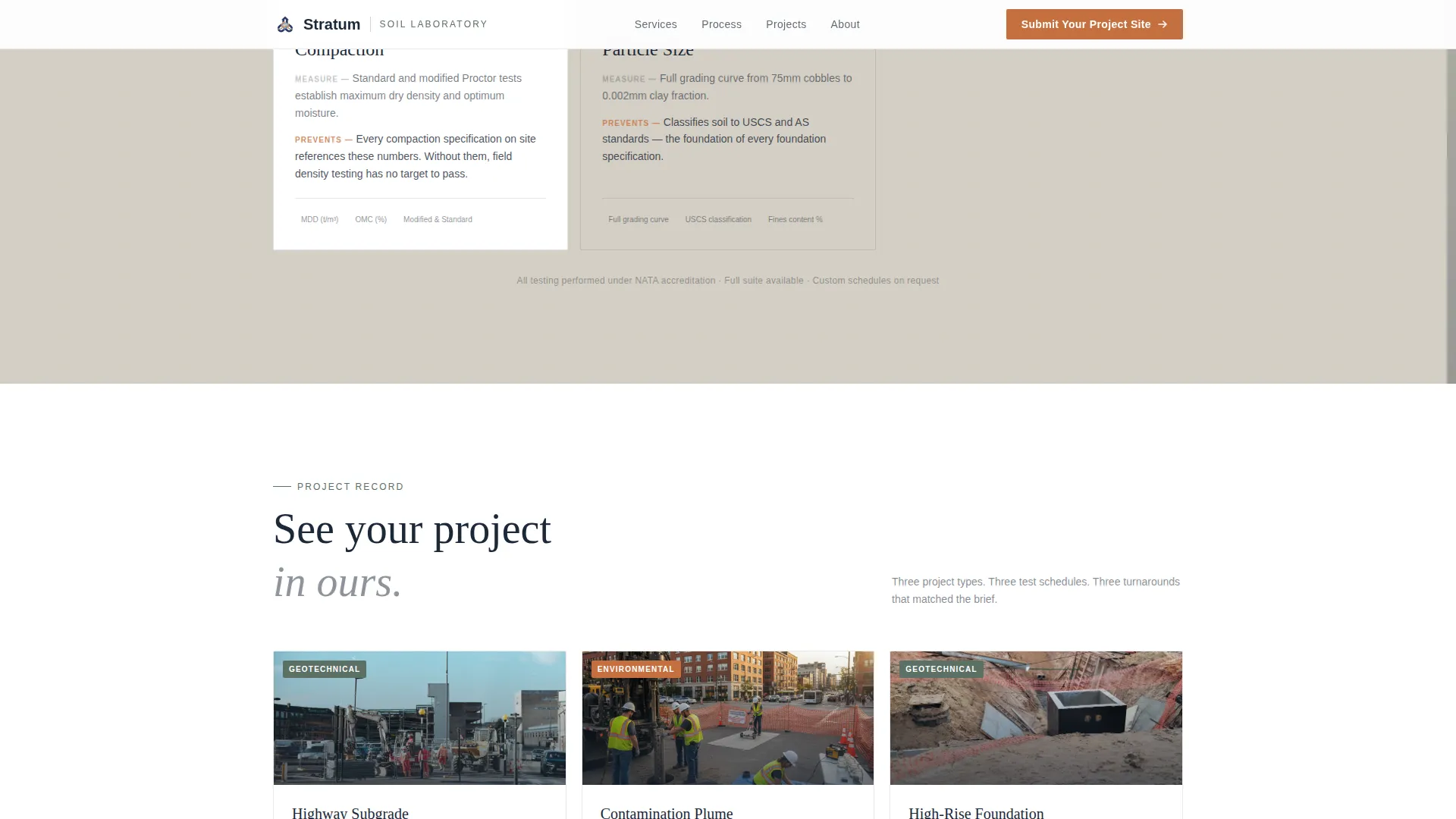
Three project-type cards sit directly above the lead generation form. Each card shows the project category, the test suite performed, and the turnaround time delivered. This placement lets visitors see their own project scenario before they reach the inquiry fields.
Dual-Path Lead Generation Form
The "Submit Your Project Site" form collects project location, anticipated borehole count, test category (geotechnical, environmental, or both), and preferred turnaround via a dropdown. A parallel path offers a downloadable sample report PDF gated behind an email field, giving visitors two clear ways to engage.
Scroll-Reveal Card Animations
Cards cluster with increasing density as the page progresses, mirroring the compounding nature of soil data. Scroll-triggered reveals, staggered entry, and a marquee ticker create a sense of controlled motion without overwhelming the technical tone.
Page sections overview
| Section | Purpose |
|---|---|
| Hero field shot | Open with cinematic authority and set the editorial tone |
| Journey narrative | Show the sample path from site to laboratory |
| Tests card grid | Present each test as a cause-and-effect argument |
| Case study cards | Provide project-specific social proof above the form |
| Lead gen form | Capture project inquiries and gated report downloads |
| Footer row | Deliver contact and navigation in a clean single row |
Design & branding system
The visual identity pairs Engineering Blueprint structure with a Japanese Zen color philosophy. Every element earns its place on the page, and whitespace is treated as a deliberate design choice rather than an absence of content.
- Four-color palette: deep indigo (#1B2838) for primary text and borders, warm gray (#D4CFC4) for alternating backgrounds, moss stone green (#5B7065) for accents, and kiln-fired clay (#C4703F) reserved for interactive states and call-to-action elements
- Typography pairing of Fraunces serif for headlines and DM Sans for body text and interface labels, giving the page the authority of a certified technical document
Mobile & speed optimization
The template is built desktop-first to match the workstation context of its primary users, geotechnical engineers and contractors reviewing specifications on large screens. It is also structured to remain fully usable on smaller devices.
- Modular card-grid layout reflows cleanly across viewport sizes without breaking the narrative sequence
- Server Components handle static sections to minimize JavaScript overhead, keeping interactive elements like the form, carousel, and hover states isolated to the components that need them
How this template helps you convert
Stratum earns inquiries by building trust through process transparency before the visitor reaches any form field.
- The scroll journey from field extraction to certified report gives technical buyers a concrete understanding of the service, reducing hesitation and pre-qualifying intent by the time they reach the form.
- Three case study cards placed directly above the lead generation form mirror real project types, so visitors recognize their own situation and feel confident submitting their details.
- The dual-path form, combining a direct project inquiry with a gated sample report download, captures visitors at two different stages of readiness, increasing the total number of usable leads per page visit.
Other information about this template
This template is part of a niche set of laboratory service pages designed specifically for the soil and ground investigation sector. It goes beyond a standard service brochure by structuring the entire page as a data-driven narrative.
- The layout supports both geotechnical and environmental testing workflows within a single unified page structure
- The footer follows a linear single-row pattern to keep the close of the page clean and uncluttered
- Animation intensity is set to medium: scroll reveals and staggered card entries add motion without distracting from technical content
- The page uses English language, United States Dollar (USD) pricing convention, and MM/DD/YYYY date format throughout
Theme
Engineering Blueprint
Creative direction
Movement & Cause
Color system
Japanese Zen
Style
Card Grid (Modular)
Direction
Lead Generation
Page Sections
Cinematic Hero with Floating Badge
Horizontal Scroll Journey Narrative
Cause-and-effect Tests Grid
Case Study Proof Cards
Dual-path Lead Generation Form
Related questions
Who is this template designed for?
What types of soil tests does the template feature?
Can I use this template for both geotechnical and environmental services?
How does the sample report download work?
Is this template suitable for a regional laboratory?