Middle Eastern Cuisine & Dining Professional Website Template
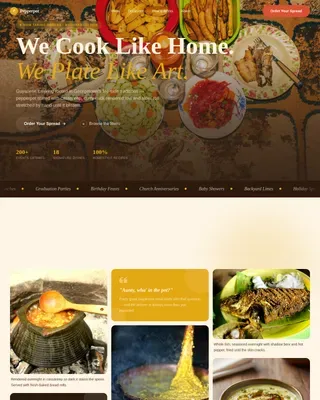
Sufra is a Gallery + Detail landing page built for an authentic Emirati restaurant. It guides visitors through a warm, sensory food journey, from a mosaic guest photo wall to full-bleed dish photography, before presenting a clean three-step reservation form. The Pastoral Calm design and Parchment & Rust color system make every scroll feel like an unhurried seat at a Friday family table.
by Rocket studio
Quick summary
Sufra is a single-page restaurant landing page designed to make visitors hungry before they ever reach the booking form. The template blends cultural storytelling with a gallery-first layout, guiding food-curious guests through starters, mains, and desserts before presenting a frictionless reservation call to action. Every design choice reflects the warmth, tradition, and hospitality of authentic Emirati cuisine.
Who this template is for
This template is built for restaurant owners and operators who want their food to do the selling. It suits businesses where the dining experience is rooted in culture, heritage, and communal cooking.
- Emirati restaurant owners and restaurateurs in Dubai and across the UAE who want to attract tourists, expat families, and local professionals
- Food and beverage operators hosting business dinners or celebration meals who need a polished, trust-building online presence
- Foodies and chefs launching a new restaurant concept rooted in regional culinary traditions and authentic recipes
What problem this template solves
Most restaurant landing pages feel generic. They show a logo, a phone number, and a static menu. That approach fails the moment a guest wants to feel something before they book. Sufra solves the disconnection between a rich dining experience and a flat online presence.
- Visitors arrive without context and leave without booking because nothing on the page made them hungry or curious
- Restaurateurs struggle to communicate the culture, warmth, and storytelling behind their cuisine in a single digital space
- Guests who discover the restaurant through street recommendations or hotel concierges need more than a list of dishes, they need a reason to commit to the table
What you get with this template
You get a fully structured, single-page layout that takes visitors on a visual and sensory journey through the restaurant's food and atmosphere. Every section is designed with intention, from the first photograph to the final call to action.
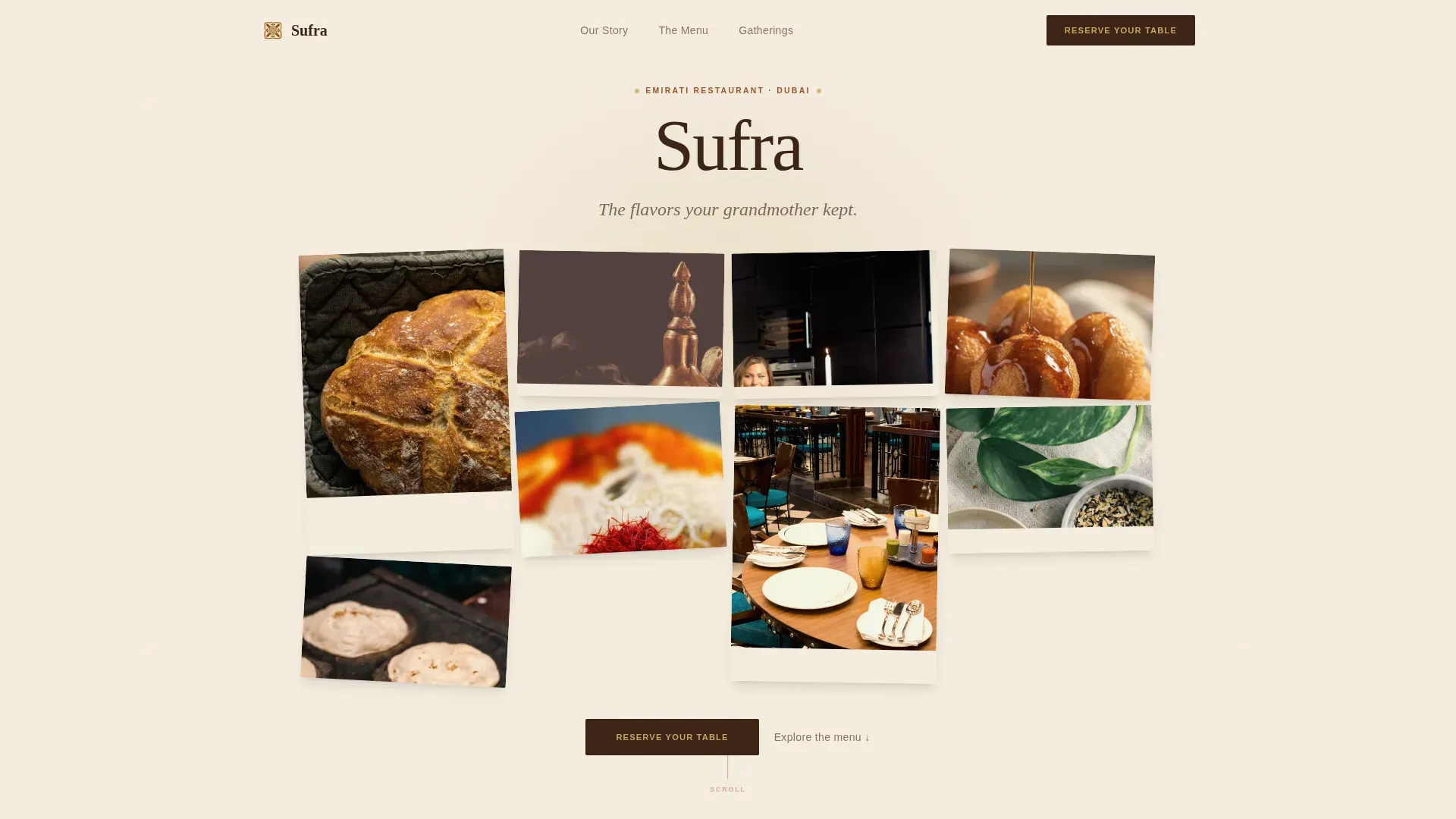
- A UGC Photo Wall header mosaic that presents real-feeling guest moments, paired with a "Reserve Your Table" call to action positioned above the fold
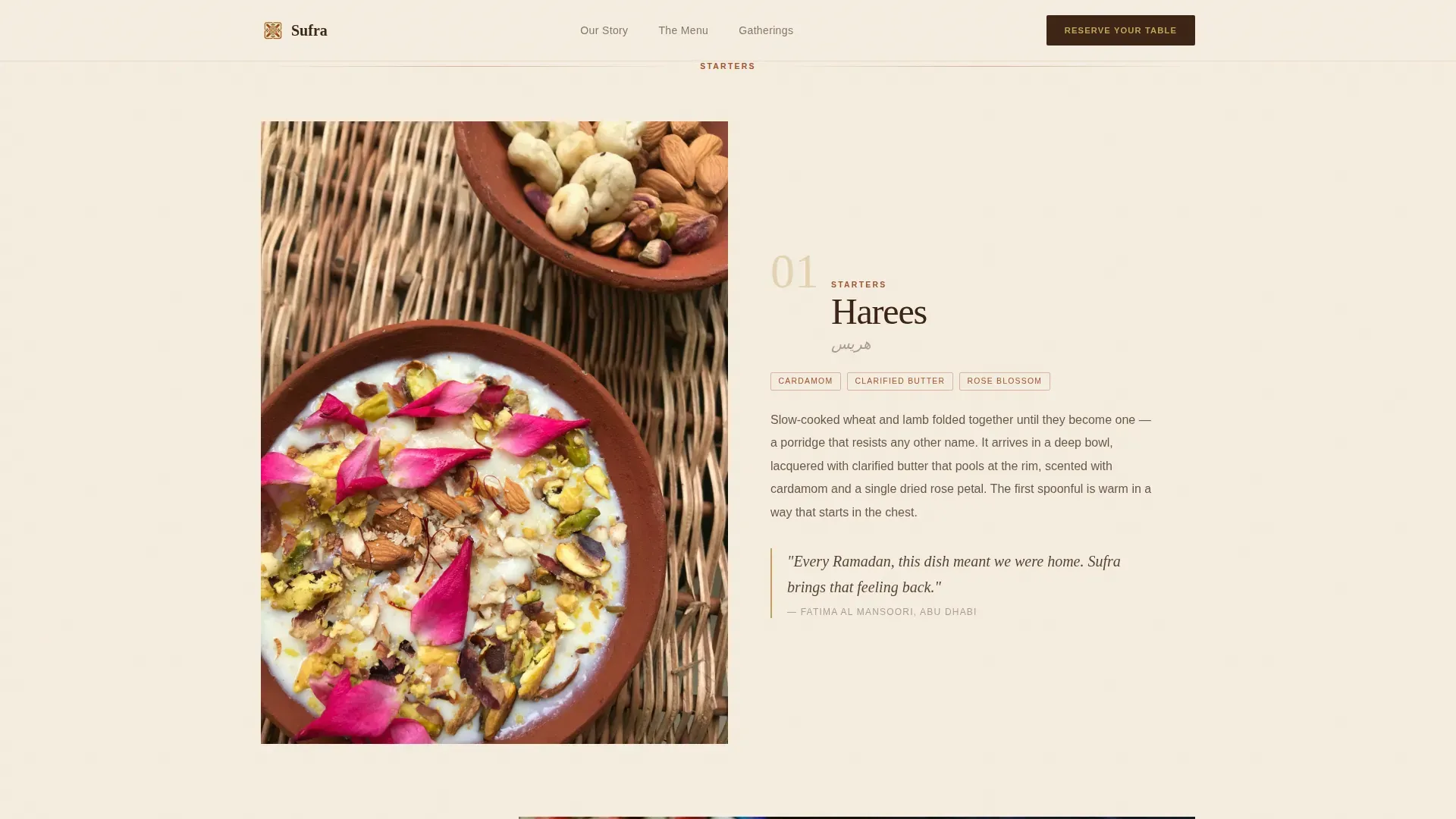
- Full-bleed dish photography sections for starters, mains, and desserts, each paired with sensory copy placeholders that guide trained chefs and writers to describe taste, aroma, and texture
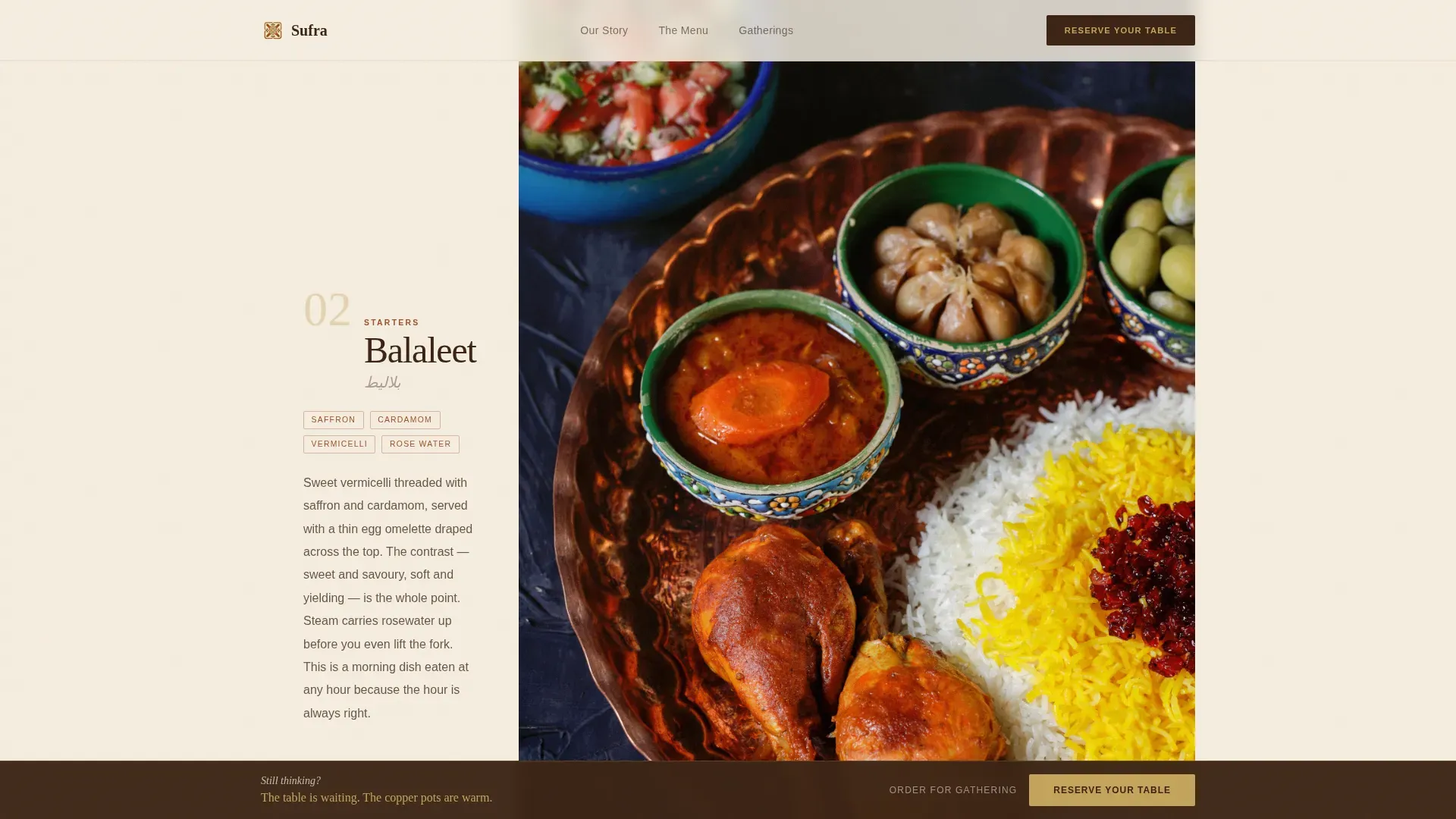
- A three-step reservation form collecting date, party size, and occasion type, plus a sticky footer call to action that appears after the third dish section
Feature list
This template includes a focused set of purpose-built components. Each one serves the restaurant's core goal: convert curious visitors into seated guests.
UGC Photo Wall Hero
The header is a warm-toned mosaic of guest photograph slots. Images are slightly grain-touched and warm-shifted to feel candid and real. The restaurant name sits centered in a restrained serif display font, with a single tagline line beneath it. A prominent "Reserve Your Table" button in brass on date-brown sits just below the mosaic so guests can sign up for a table from the very first scroll position.
Course-by-Course Dish Sections
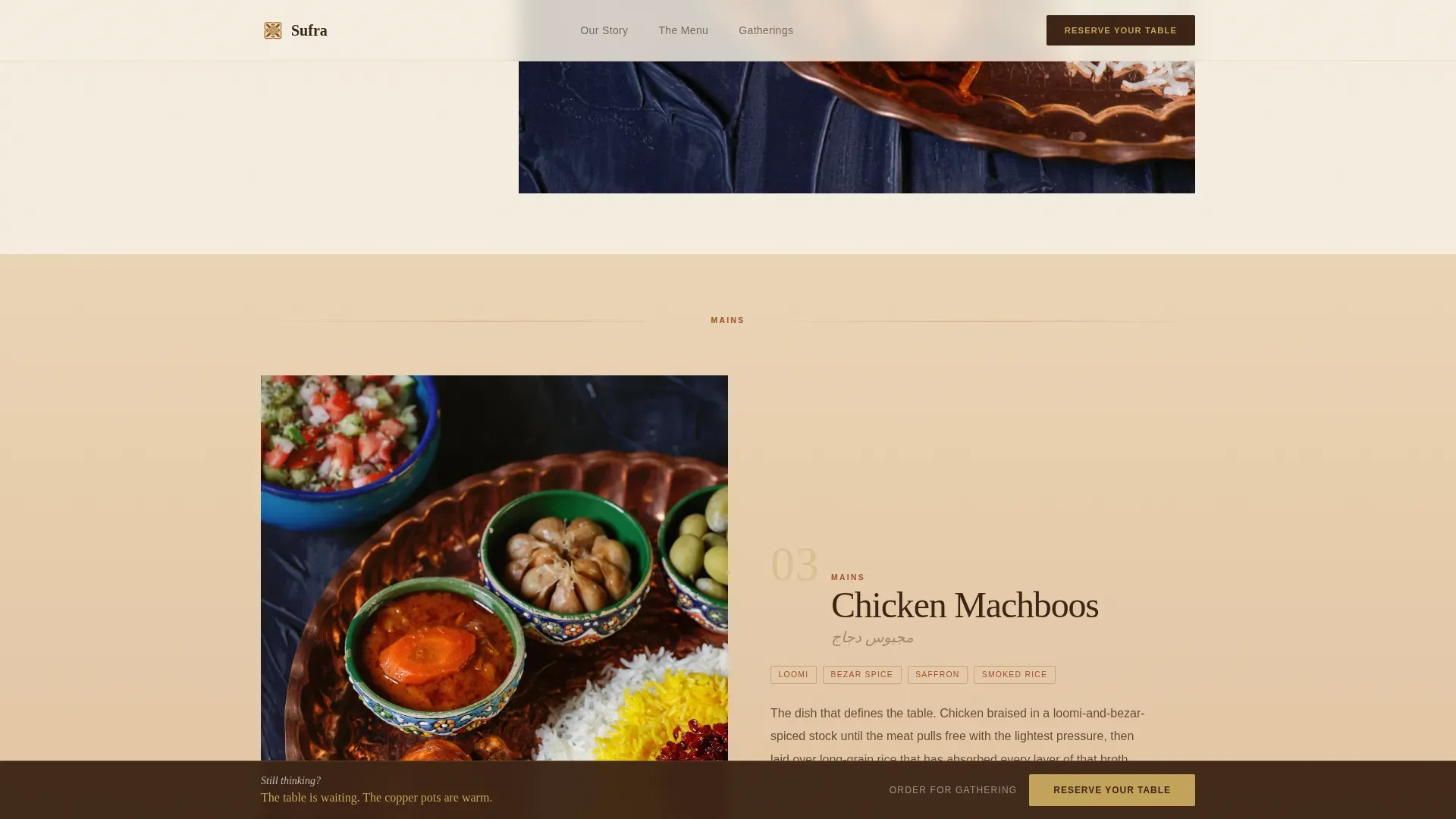
The page unfolds like a meal. Starters, mains, and desserts each occupy their own full-bleed section with space for a high-quality food photograph and a short sensory paragraph. The background shifts gradually from pale parchment through warming clay as the visitor scrolls deeper, visually drawing them further into the kitchen. Signature dishes such as Machboos, Harees, and Luqaimat are natural fits for these slots, letting chefs present their best recipes with full visual impact.
Three-Step Reservation Form
The booking section uses a clean, three-step form flow. Step one captures the date. Step two collects party size. Step three asks the guest to select an occasion: casual dinner, celebration, or business. This guided structure reduces friction and helps the restaurant host the right experience for every table. The form is styled to match the Parchment & Rust color system throughout.
Sticky Footer Call to Action
After the third dish section, a sticky footer element activates and follows the visitor for the remainder of their scroll. It displays the "Reserve Your Table" prompt persistently in brass, ensuring guests never have to search for the booking entry point. This single detail significantly supports the page's conversion goal without interrupting the food storytelling.
Secondary Catering Path
A clearly signposted secondary call to action links to a family-style catering menu described as "Order for Gathering." This path serves guests planning larger occasions and adds a second conversion route for the restaurant without cluttering the primary reservation flow.
Arc Split Footer
The footer uses an Arc Split layout: the restaurant logo and tagline sit on the left, while navigation links and social connections sit on the right. This gives the page a clean, professional close while keeping the brand's visual identity present to the very last pixel.
Page sections overview
| Section | Purpose |
|---|---|
| UGC Photo Wall | Opens with guest moments and the primary reservation call to action |
| Starters Dishes | Full-bleed food photography with sensory paragraphs on parchment background |
| Mains Dishes | Continues the course-by-course food journey on a warming clay background |
| Desserts & Sweets | Closes the food narrative on the deepest warm background tone |
| Reservation Form | Three-step booking form for date, party size, and occasion |
| Arc Split Footer | Logo, tagline, navigation links, and social media connections |
Design & branding system
The template follows a Pastoral Calm visual theme. The palette is grounded in the desert: warm, earthen, and unhurried. Every color choice reinforces the sense that this restaurant exists outside the rush of modern Dubai street food culture.
- Parchment (#F5EDE0) washes across all backgrounds; terracotta rust (#A0522D) marks section dividers and hover states; aged brass (#C4A35A) highlights reservation buttons; deep date-brown (#3B2314) anchors all body text
- Fraunces is used as the display serif for headings, lending a warm literary presence; DM Sans handles all body copy for clean readability
- A grain texture overlay and scroll-linked background warmth shift give the page a tactile, analog quality that reflects Emirati culinary traditions and the hand-crafted nature of the food
Mobile & speed optimization
The template is designed desktop-first, with careful mobile adaptation built into the gallery-heavy layout. The photo mosaic and full-bleed dish sections reflow cleanly for smaller screens without losing the sensory atmosphere that drives bookings.
- Staggered photo reveals and blur-placeholder loading keep the image-heavy experience feeling fast and intentional on all devices
- The sticky footer call to action adapts to mobile viewports, remaining visible and tappable without covering key content
- The three-step reservation form is touch-friendly, with large input fields and clearly labeled steps that work on any screen size
How this template helps you convert
Every structural decision in this template is built to guide visitors toward a reservation. The page earns the click by making the visitor hungry before presenting the form.
- The UGC Photo Wall immediately builds social trust. Guests see real moments from other diners before they read a single word of menu copy, which makes the restaurant feel lived-in and credible rather than staged.
- The course-by-course scroll creates desire progressively. By the time a visitor reaches the reservation form, they have traveled through starters, mains, and desserts. Skipping the booking at that point would feel like leaving the table early, an instinct the template deliberately cultivates.
- The sticky call to action removes every barrier to booking. Guests do not need to scroll back to find the form. The "Reserve Your Table" prompt stays present from the third dish section onward, so the moment a guest decides to book, the path is already in front of them.
Other information about this template
The Sufra authentic Emirati restaurant landing page template is built for the UAE food and beverage market, with English-language copy and Arabic dish names preserved throughout the layout. It is well suited to the Dubai dining scene, where foodies, tourists, and local community members explore restaurants through hotel concierge recommendations, word of mouth, and social discovery.
The template's storytelling approach draws on the broader culinary world of the Middle East. Emirati cuisine shares roots with the cooking of Lebanon, Iran, India, and Egypt, civilizations that historically shaped the spice routes of the region. Dishes prepared in the Emirati tradition often carry the flavor of saffron, cardamom, and slow-cooked lamb, alongside shared ingredients like olive oil and fresh parsley that connect the local table to a wider Mediterranean and east-facing food culture.
Karak chai, a national drink of the UAE made with black tea, cardamom, and evaporated milk, is an ideal closing note for the menus presented in the desserts section. Date syrup, known as dibs, is a common sweetener used across Emirati dessert recipes and pairs naturally with the luqaimat slot in the Sweets section. Signature items including Machboos, Harees, Luqaimat, and Karak tea are the dishes most likely to resonate with guests who visit hoping to discover something genuinely rooted in local tradition.
Restaurateurs who want to build community around their brand can use the template's inline testimonial slots to display guest opinions and star ratings alongside each dish section. Connecting social channels including Facebook, YouTube, and Pinterest to the footer helps diners continue the conversation after they leave the table.
- The template preserves Arabic dish names, AED currency references, and UAE-market context throughout
- Inline testimonial placements within dish sections allow guests to share five-star opinions that build trust for future visitors
- The "Order for Gathering" secondary path serves larger groups and makes the template useful for hosts planning celebrations, corporate tours, or family occasions
- Social media link slots in the Arc Split footer support connections to Facebook, YouTube, and Pinterest, extending the restaurant's reach beyond the landing page
- The template supports the UAE's growing fine dining and supper club scene, where trained chefs present seasonal menus and experimental courses to foodies seeking a more meaningful dining experience than a standard brunch
Theme
Pastoral Calm
Creative direction
Taste & Aroma
Color system
Parchment & Rust
Style
Gallery + Detail
Direction
Booking/Scheduling
Page Sections
UGC Photo Wall Hero Mosaic
Course-by-course Dish Sections
Three-step Reservation Form
Sticky Footer Call to Action
Inline Testimonial & Social Proof Slots
Arc Split Footer with Social Links
Related questions
Is this template suitable for a restaurant outside the UAE?
Can I showcase my own menu and recipes in this template?
Does the template include the three-step reservation form?
How does the UGC Photo Wall header work?
Who is the secondary 'Order for Gathering' path designed for?