Moroccan Meal Kit Delivery Landing Page Template
Tagine is a hero-dominant landing page template built for authentic Moroccan meal kit delivery services. It pairs a collage scrapbook hero with a Taste and Aroma scroll journey, a warm Sunset Gradient palette, and a three-step booking flow. Every section layers sensory detail to move curious home cooks from first impression to confirmed delivery night.
by Rocket studio
Quick summary
Tagine is a single-page landing page template designed for Moroccan meal kit delivery brands. It uses a full-viewport collage hero, a deliberate scroll narrative built around spice, technique, and table, and a sticky booking flow that converts visitors into weekly subscribers. The palette of harissa red, turmeric saffron, clay pink, and midnight kohl makes every scroll feel like dusk over Morocco.
Who this template is for
This template speaks directly to food brands, independent cooks, and entrepreneurs who want to sell a genuinely immersive Moroccan cooking experience online. It is built for businesses where authenticity is the product, not just the marketing claim.
- Moroccan meal kit founders who ship weekly boxes of spices, couscous, and fresh vegetables to home cooks
- Food entrepreneurs targeting curious home cooks tired of generic subscriptions who want to cook and eat something they cannot replicate from a supermarket shelf
- Expat-led food brands serving homesick Moroccans and food bloggers hunting delicious, shareable content rooted in the flavors of Morocco
What problem this template solves
Most food subscription landing pages look the same. They show a tidy box, a smiling family, and a generic headline. For a brand selling the saffron heat of a slow tagine or the satisfying weight of a brass pot lifted from the stove, that approach kills desire before it forms.
- Generic meal kit templates fail to communicate the sensory richness of Moroccan cuisine, leaving potential subscribers unconvinced that the dish they will cook is worth the commitment
- Visitors who cannot feel the warmth of the spices or picture the communal dinner table leave without booking, no matter how good the recipe cards are
- Brands without a purpose-built booking flow lose conversions because the path from appetite to confirmed order is too long or too clumsy on mobile
What you get with this template
You get a complete, single-page hero-dominant landing page template structured around one goal: turning sensory storytelling into confirmed weekly box bookings. The template includes every section, component, and interaction described below, ready to customize with your own content, spices, and story.
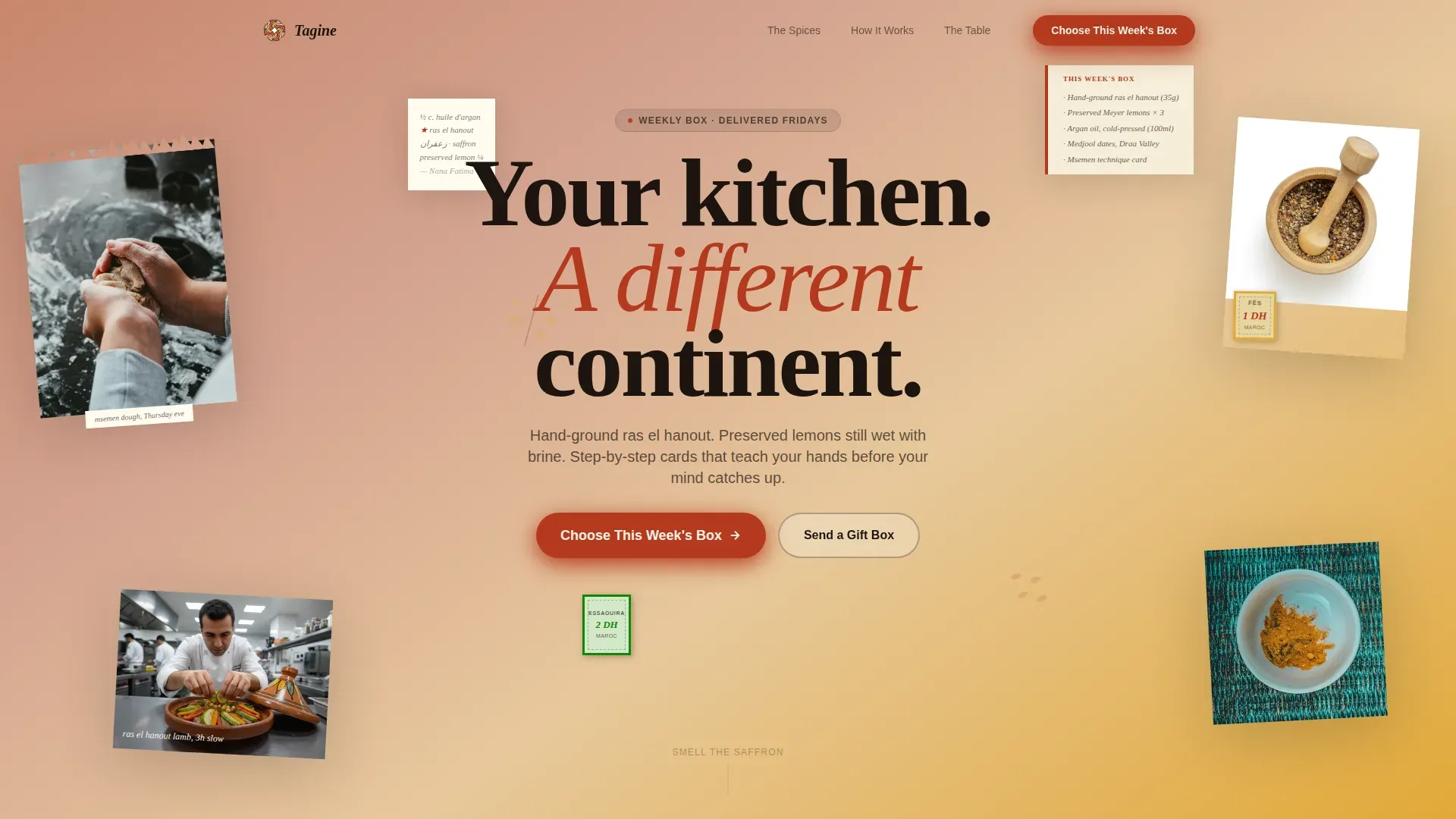
- A full-viewport collage scrapbook hero with overlapping rotated photographs, handwritten recipe fragments in French and Darija, postage stamps, and illustrated spice sprigs pinned at slight angles
- A four-section scroll narrative that moves from macro spice photography through hands-on technique clips, to a wide communal table, and finally into a three-step inline booking flow
- A sticky primary call-to-action bar that pins to the bottom of the viewport after the first scroll, plus a secondary gift box path with a date picker and personal note field
Feature list
The template is built with high interactivity, rich editorial design, and a clear conversion architecture. Every feature listed below comes directly from the template brief.
Full-Viewport Collage Hero
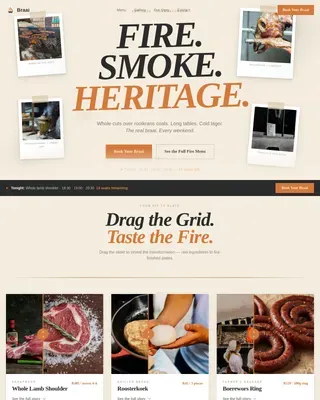
The hero fills the entire screen with torn-edge photographs of hands kneading dough, a brass mortar mid-grind, and a tagine lid lifted with steam curling upward. Handwritten recipe fragments appear in both French and Darija. Postage stamps from Fez and Essaouira overlap with a strip of butcher paper listing that week's box contents. Nothing is centered; everything looks touched and lived-in, like a kitchen counter after a long cook session, not before.
Taste and Aroma Scroll Architecture
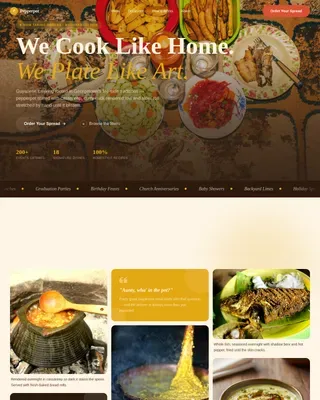
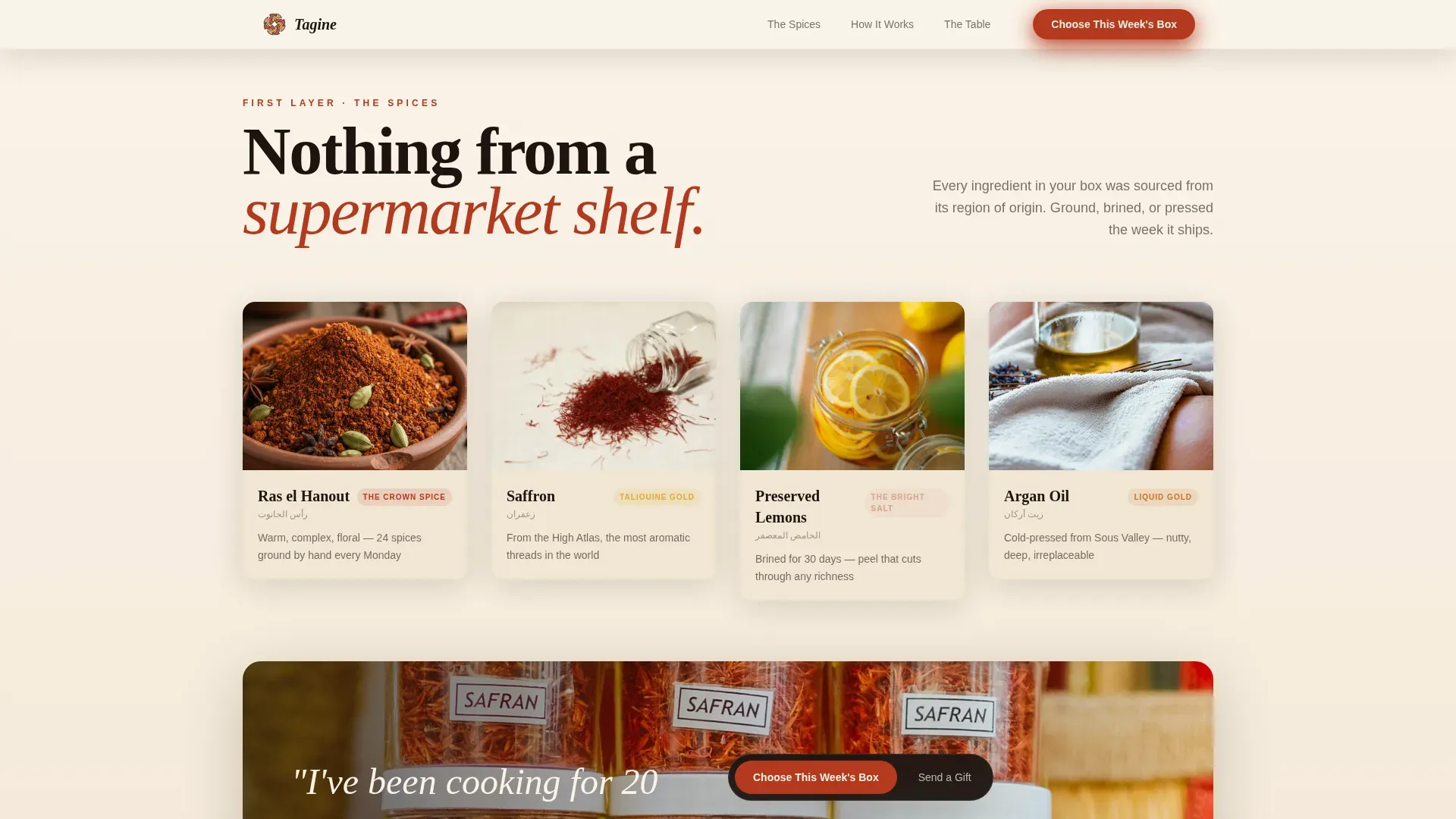
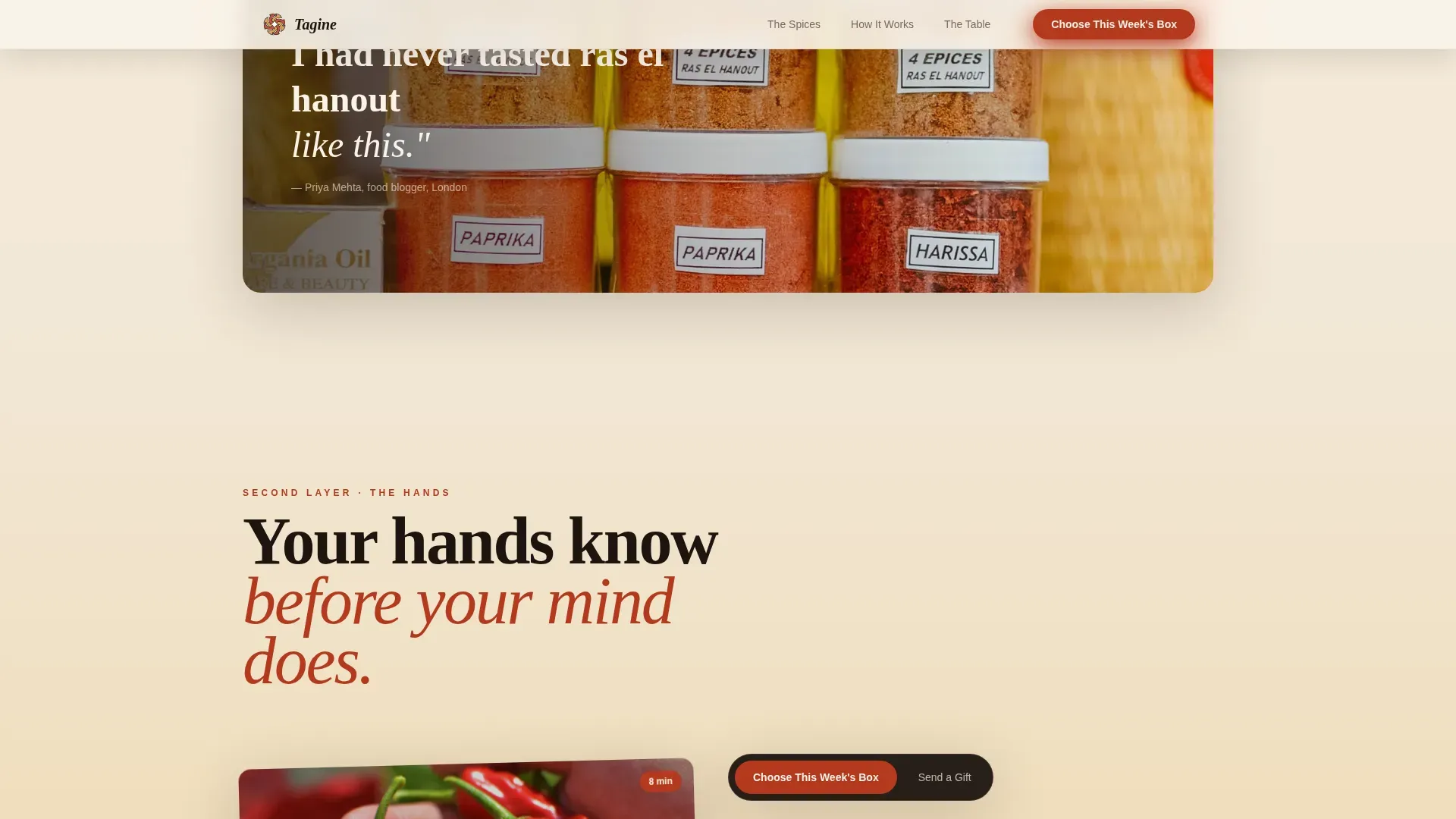
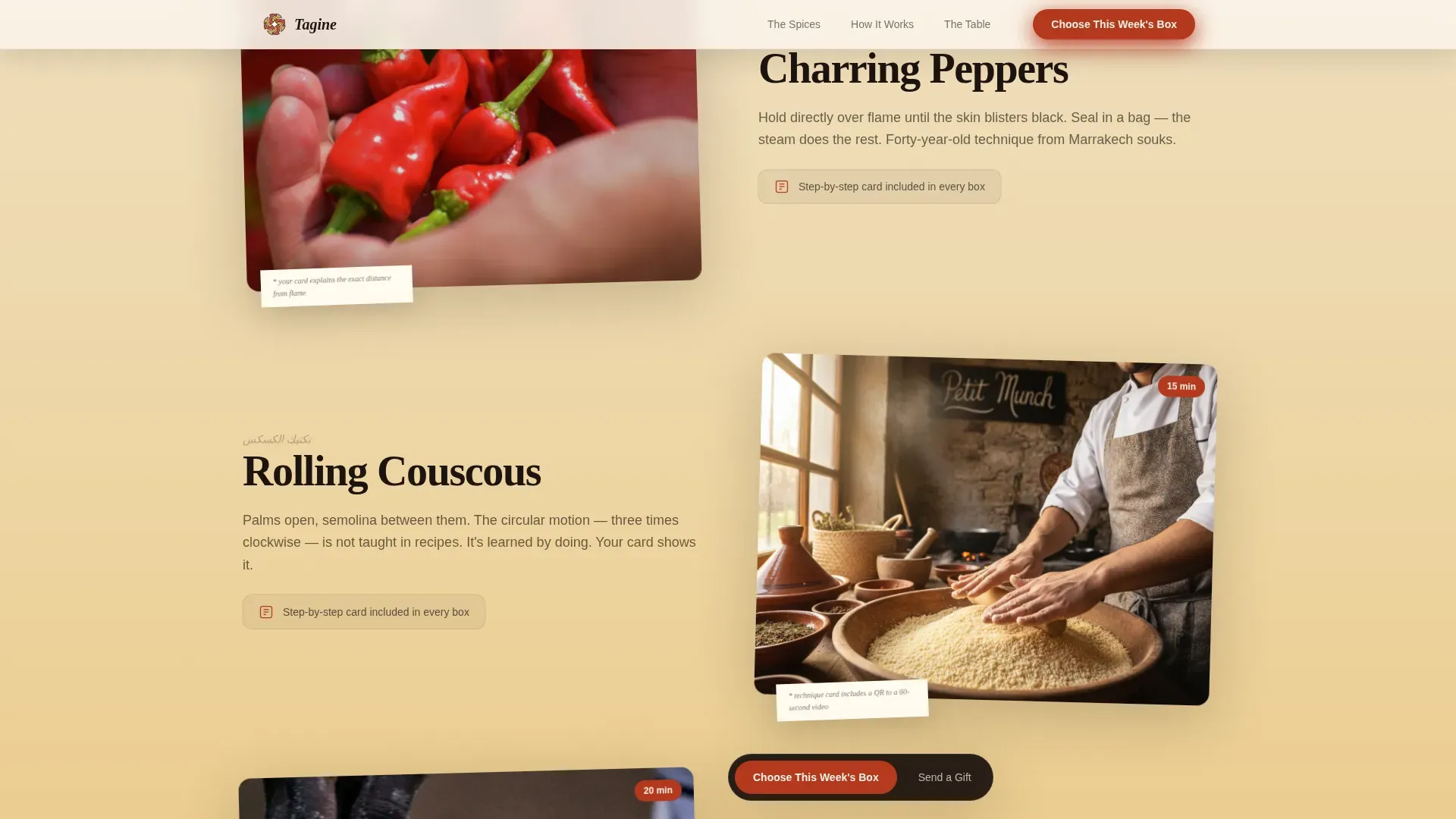
Four content sections each introduce one sensory layer of the Moroccan cooking experience. The spices come first, photographed macro on rough linen, with ingredient cards that reveal in warm detail. Next, process stills show hands charring peppers and rolling couscous between palms. Then a wide communal table appears, bread torn not sliced, warm amber light flooding the frame. Each section grows warmer in color and closer in camera angle as the visitor scrolls deeper, building real appetite before the booking form arrives.
Three-Step Inline Booking Flow
The primary call-to-action reads "Choose This Week's Box" and pins to the bottom of the viewport after the first scroll. Tapping opens a clean three-step flow: pick a delivery day from a visual calendar, select a box size for a couple or a family, and flag allergens using a tap-to-toggle grid. The flow is designed so visitors arrive at step one already imagining the meal; the form simply confirms the night.
Gift Box Secondary Path
A second conversion path lets visitors send a gift box to someone they love. The gift flow includes a date picker and a personal note field. This path supports seasonal gifting campaigns, food blogger collaborations, and expat gift purchases without adding visual noise to the primary booking journey.
GSAP Scroll Reveal Animations
The template uses high-animation GSAP scroll reveals, staggered element entrances, and CSS rotation to bring each collage layer and section transition to life. Elements drift in as the visitor scrolls, reinforcing the tactile, editorial feel of the brand without requiring any custom animation code from the user.
Social Proof Integration
The template includes a dedicated social proof zone with specific customer quote placeholders for a food blogger, an expat Moroccan, and a couple. Each quote slot supports a photo of the finished dish, so real customer results can sit directly in the page and show that the kit truly delivers on its promise.
Page sections overview
| Section | Purpose |
|---|---|
| Collage Hero | Establish sensory brand identity immediately |
| The Spices | Showcase premium ingredients with macro detail |
| The Hands | Demonstrate technique through process photography |
| The Table | Evoke communal warmth and finished dish desire |
| Booking Flow | Convert appetite into a confirmed delivery booking |
| Footer Split | Provide navigation and brand anchor links |
Design & branding system
The visual identity follows a Warm Artisan theme built on the Sunset Gradient color system. Every color choice is intentional: the palette feels like the last twenty minutes of light over Marrakech rooftops, everything gilded and warm enough to taste.
- Four core colors power the entire template: deep harissa red (#B5391E) for call-to-action buttons and hover states, turmeric saffron (#E2A832) for mid-scroll warmth, soft clay pink (#D4A28E) for background washes, and midnight kohl (#1C1410) for headlines and body text
- Typography pairs Fraunces, a high-contrast serif display face, with DM Sans for body copy, creating an editorial contrast that feels at home in a high-end food magazine
- Backgrounds scroll from clay pink into saffron as the visitor moves down the page, with harissa red firing on interactive elements like a pepper cracked open
Mobile & speed optimization
The template is built desktop-first with a strong mobile adaptation layer, reflecting the reality that food discovery and meal kit browsing happen frequently on smartphones. The booking flow, allergen toggles, date picker, and gift box path all adapt cleanly to touch interaction.
- Static content sections use server-rendered components for fast initial load, while the interactive booking flow runs as a client component to keep the form responsive and snappy
- The collage hero, scroll animations, and sticky call-to-action bar all adapt to smaller viewports without losing the tactile, lived-in editorial quality that makes the template convert
- The three-step booking flow is designed to be thumb-friendly on mobile, with large tap targets for the calendar, box-size selector, and allergen toggle grid
How this template helps you convert
High-quality, culturally rich visuals are the most critical driver of conversion when marketing an authentic Moroccan meal kit. This template is architected so every scroll builds desire before the booking form appears. By the time a visitor reaches the call-to-action, they have already imagined the meal.
- The collage hero captures brand essence immediately, leading with a finished-dish feeling rather than a product shot, so the visitor's appetite is engaged before a single word is read
- The Taste and Aroma scroll narrative layers spice, technique, and table sequentially, delivering a sensory journey that functions like a short video demonstration of the cooking process and the delicious results it produces
- The sticky "Choose This Week's Box" button and the clean three-step inline flow remove friction at the moment of decision, while the secondary gift box path opens an additional conversion route for visitors who arrive with gifting intent
Other information about this template
This template is purpose-built for the intersection of Moroccan food delivery and immersive editorial web design. The details below cover practical usage context, ingredient and recipe scope, and platform-level notes.
- The template is the tagine authentic moroccan meal kit delivery landing page template in this marketplace collection, specifically matched to the Moroccan Dining subcategory and the Moroccan Meal Kit Delivery niche
- Moroccan cuisine features a medley of spices and herbs that are key to every dish, and the template's ingredient card components are designed to showcase items like hand-ground ras el hanout, preserved lemons, hand-harvested saffron, cumin, turmeric, coriander seed, cinnamon, garlic, and parsley with the specificity they deserve
- The tagine is a North African dish named after the earthenware pot used to cook it; the slow simmer inside a tagine pot concentrates broth, softens meat, and melds spices into sauces that no shortcut can replicate
- Couscous is considered the most important traditional dish among the Maghreb people; it is a savory meat-and-vegetable stew spooned over grains of rolled semolina, and the traditional recipe often includes a sweet element such as raisins or caramelized onions alongside olives, chickpeas, tomatoes, and lemon wedges
- Stews served with couscous can involve lamb, chicken, fish, or vegetables, often flavored with spices like cinnamon and saffron; a pinch of saffron added early gives the broth a golden heat that no substitute can match
- Moroccan food also celebrates street-level dishes: brochettes of lamb served with a side dish of roast sweet potatoes, fresh tomatoes, and a garnish of parsley are a popular everyday eat across the country
- The recipe card components in the template can guide cooks through processes like how to peel and salt preserved lemons, how to squeeze lemon wedges over a finished tagine, how to stir spices into hot olive oil before adding onions and garlic, how to bring a pot to boil then reduce to a simmer, or how to use an oven versus a stove for slow cooking
- Sweet potatoes appear in multiple Moroccan recipes, both as a hearty vegetarian side and as a component inside a lamb or chicken tagine; the template's ingredient section supports the display of sweet potatoes and other root vegetables alongside chickpeas, apricots, tomatoes, onions, and fresh herbs
- The template supports vegetarian and vegan box variants; a vegetarian tagine built around sweet potatoes, chickpeas, tomatoes, veggies, olives, and a yogurt garnish is a delicious and complete dinner option
- The allergen toggle grid in the booking flow is designed to handle common allergens including those relevant to dishes containing pasta, rice, or wheat-based couscous
- Social proof components support photo reviews showing customers' finished dishes, from a slow-cooked pot of lamb to a plated couscous salad with fresh coriander and lemon wedges
- The footer uses a Pattern 7 Arc Browser Split layout with the logo and tagline on the left and navigation links on the right
- Cooking authority references, such as the influence of paula wolfert on bringing authentic Moroccan recipes to English-language readers, can be woven into editorial text blocks within the spice and recipe card sections to add credibility and depth
- The template is ideal for food entrepreneurs who want to launch quickly: it is production-ready out of the box, and customization options make it straightforward for non-technical founders to adapt the sections, colors, and copy to their own brand story
- Businesses in the UK can adapt the booking flow and pricing display for GBP, while the localization layer supports French and Darija decorative phrases across the hero and recipe cards
- The company launching with this template can position its box as an amazing alternative to restaurant dining at home, serving an audience that wants to cook and eat extraordinary Moroccan food without flying to Morocco to find it
Theme
Warm Artisan
Creative direction
Taste & Aroma
Color system
Sunset Gradient
Style
Hero-Dominant (90/10)
Direction
Booking/Scheduling
Page Sections
Full-viewport Collage Scrapbook Hero
Taste and Aroma Scroll Narrative
Three-step Inline Booking Flow
Gift Box Secondary Conversion Path
GSAP Scroll Reveal Animations
Social Proof with Photo Reviews
Related questions
Can I customize the weekly box contents and ingredient cards?
Does the booking flow support both couple and family box sizes?
Can I use this template to offer a gift box option?
Is the template suitable for a vegetarian Moroccan meal kit?
How does the template handle social proof?