Moroccan Cooking Class Landing Page Template
Tagine is a hero-dominant Moroccan cooking class landing page template built for immersive, booking-driven storytelling. It pairs a cinemagraph hero, sensory scroll sections, and an inline reservation flow to turn curious visitors into confirmed students. The Warm Artisan design, Citrus Burst palette, and sensory-first content structure make every class feel irresistible before a single seat is reserved.
by Rocket studio
Quick summary
Tagine is a single-page, hero-dominant landing page template designed for Moroccan cooking class studios that want to convert visitors through sensory storytelling. The page opens with a full-viewport cinemagraph hero, pulls visitors through five sensory scroll sections, and closes with an inline booking form and a gift-a-class flow. Every design decision serves one goal: get the visitor mentally seated at the table before asking them to reserve.
Who this template is for
This template is built for cooking class operators, culinary experience studios, and independent instructors who teach Moroccan food. It works especially well for businesses that lead with atmosphere and story rather than a plain class listing. If your offer is experiential and your audience books with their heart before their calendar, this template is the right fit.
Ideal users include:
- Home cook instructors and culinary educators who run small Moroccan cooking class sessions and want a high-impact page that matches the quality of their teaching
- Couples-night and date-night experience operators who need a page that communicates warmth, fun, and togetherness without feeling generic
- Corporate team-building facilitators who offer hands-on cooking alternatives to standard trust-fall activities, targeting groups of four to eight participants
What problem this template solves
Most cooking class pages look like event ticketing forms. They list a date, a price, and a location, and then ask visitors to commit before they feel anything. That gap between "I found this page" and "I want to be in that kitchen" is exactly where bookings are lost. Moroccan food culture is rich, tactile, and deeply sensory, and a flat page cannot carry that weight.
This template solves the commitment gap with a sensory-led scroll architecture. Visitors experience the class visually, aurally, and emotionally before the booking form ever appears. By the time the calendar opens, the visitor is not deciding whether to book. They are deciding which date.
Key problems this template addresses:
- The cold-page problem: visitors land, feel nothing, and leave without booking, because there is no atmosphere to pull them in
- The trust deficit: a visitor who has never attended your class needs social proof and sensory detail before they will commit money and an evening
- The gift-booking gap: many travelers and couples want to give a cooking experience as a gift, but most class pages offer no clear gift-purchase path
What you get with this template
You get a complete, ready-to-customize single-page layout purpose-built for a Moroccan cooking class business. The template includes every section needed to move a first-time visitor from curiosity to confirmed booking. Design tokens, typography pairings, animation cues, and interactive components are all pre-configured and consistent.
Everything included in the template:
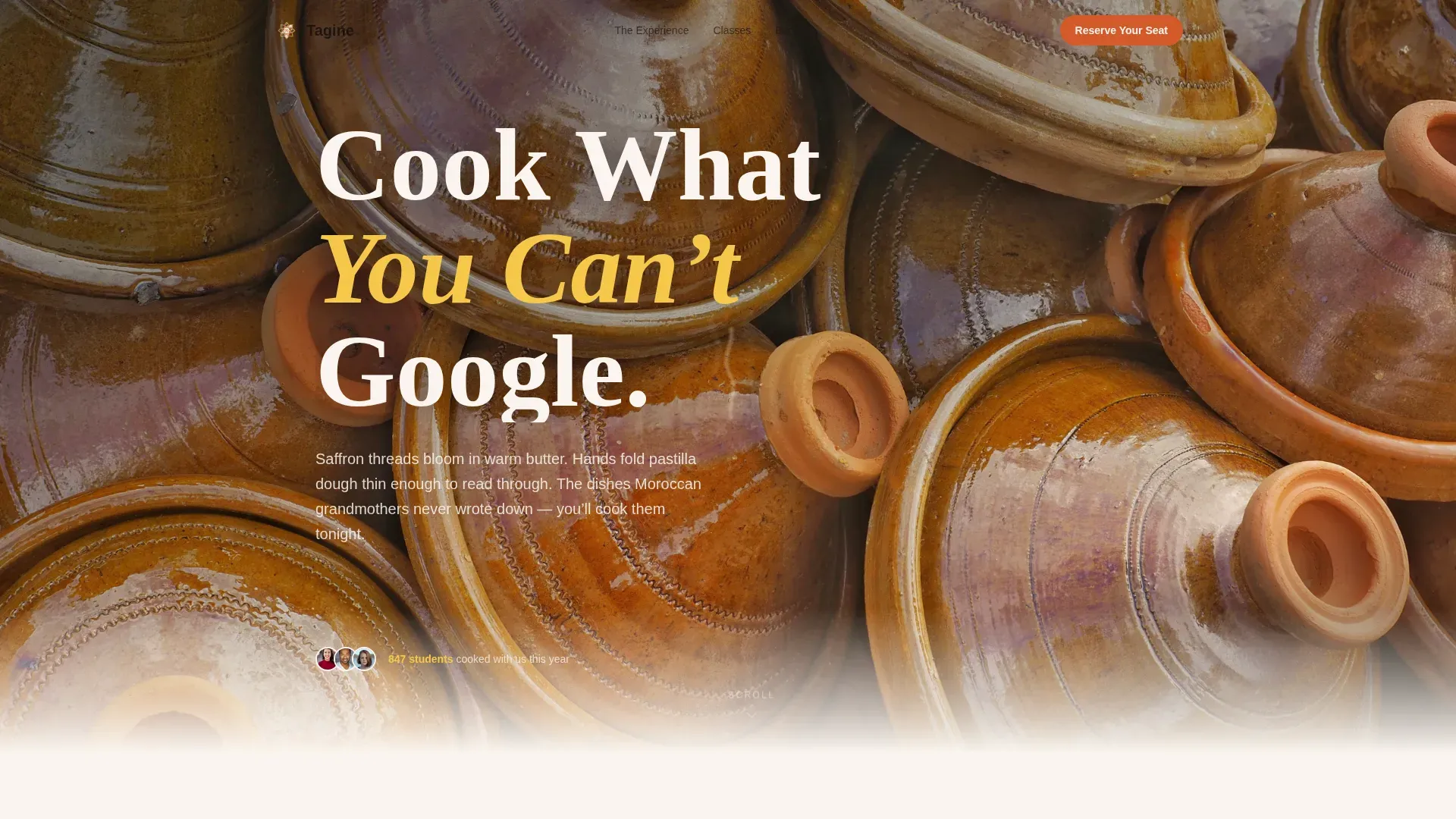
- A cinemagraph-style hero section filling ninety percent of the viewport, with a CSS steam animation, a hand-brushed script headline, and a floating "Reserve Your Seat" call-to-action button
- Five sensory content sections progressing through sight, sound, smell, touch, and taste, each designed to deepen emotional investment before the booking ask
- An inline booking flow with a calendar selector, a three-field reservation form covering name, group size, and dietary notes, plus a dedicated "Gift a Class" path with recipient details and a printable voucher
Feature list
This template is built from the ground up for Moroccan cooking class businesses that rely on atmosphere, trust, and sensory storytelling to drive direct bookings.
Cinemagraph Hero with CSS Steam Animation
The hero fills ninety percent of the viewport with a looping partial-motion scene: a copper pot of bubbling tagine, a hand hovering with a wooden spoon, ras el hanout scattered across a brass tray, and a torn round of msemen bread on linen. Only the saffron-tinted steam moves. That contrast holds the eye for the three seconds it takes the headline, "Cook What You Can't Google," to appear in staggered hand-brushed script. A floating "Reserve Your Seat" button in blood orange pins itself to the viewport after the hero scrolls past, so the booking path is always one tap away.
Five-Section Sensory Scroll Architecture
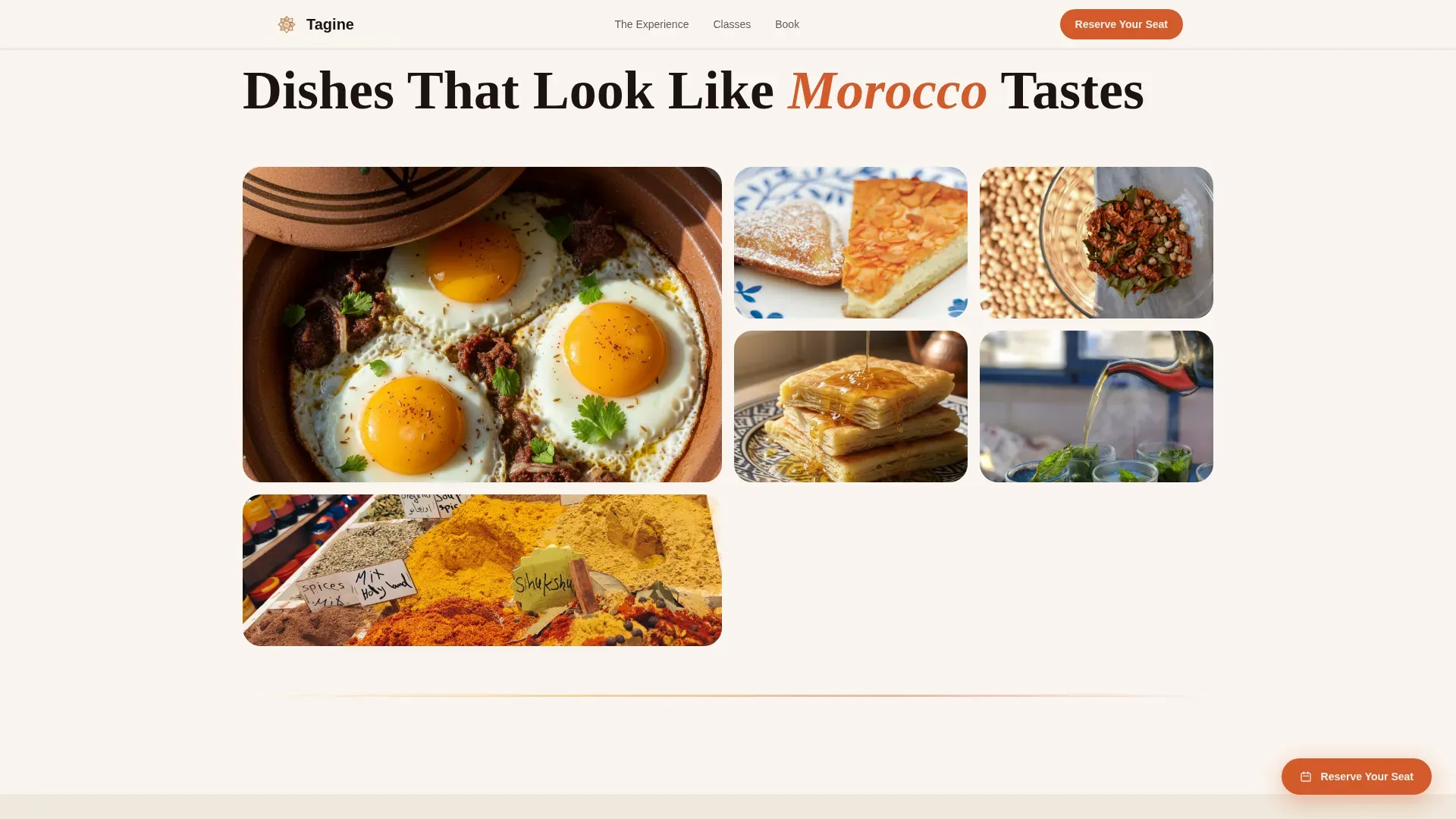
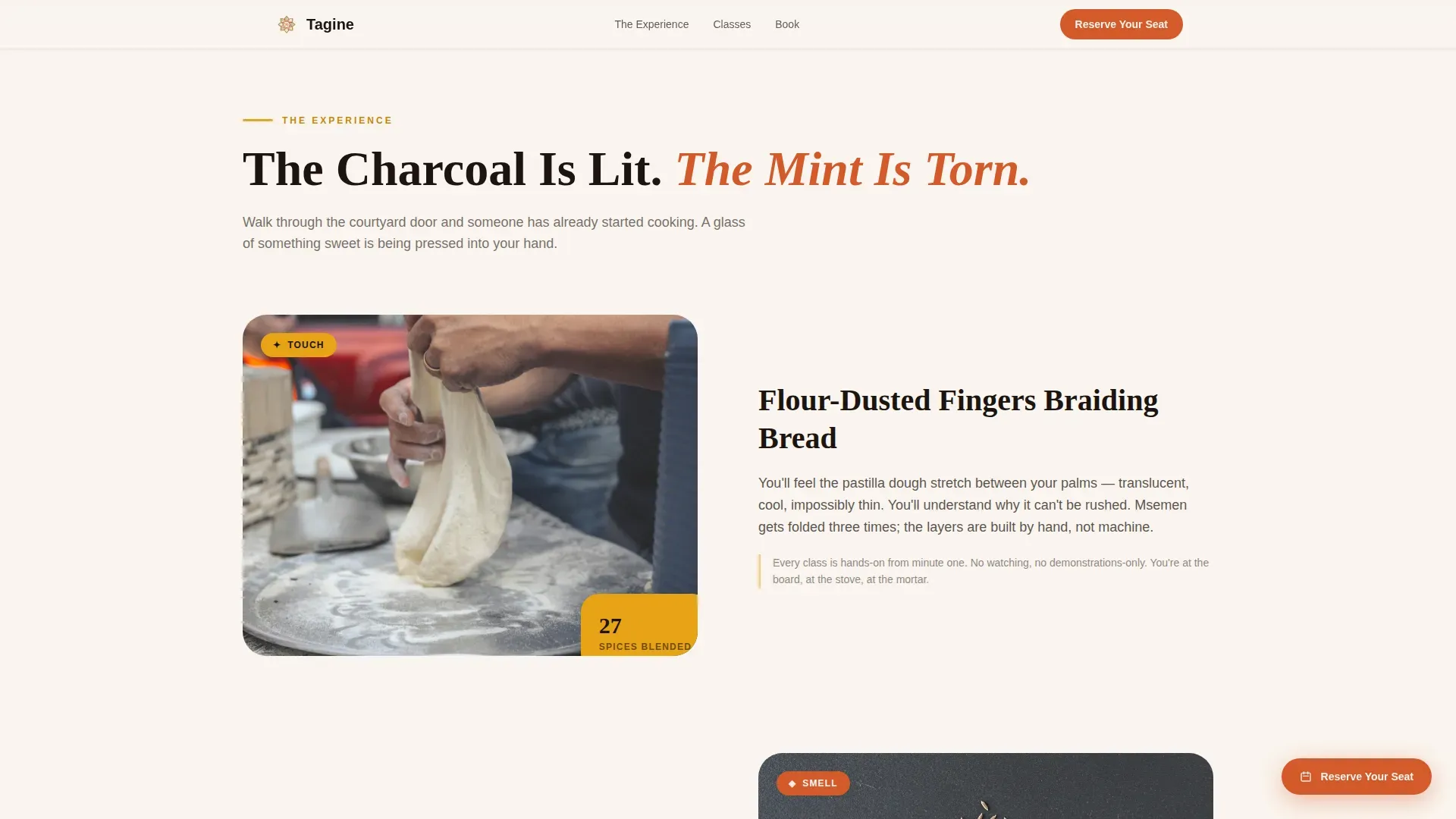
The page is structured around a deliberate sensory escalation that mirrors the experience of walking into a Moroccan kitchen. Sight arrives first through an asymmetric mosaic bento gallery of jewel-toned dishes and moroccan salads. Sound follows with a short embedded audio clip of mortar and pestle grinding moroccan spices. Smell is conveyed through ingredient close-up photography so tactile that visitors swear they catch cumin and cinnamon. Touch comes through hands-on cooking photography showing flour-dusted fingers braiding moroccan bread. Taste closes the sequence with a student testimonial describing a specific bite, such as the moment chicken tagine with preserved lemon and olives lands on the tongue. Each section transition wipes in warm gold, pulling the visitor deeper like courses arriving at a table.
Inline Booking Form with Calendar and Group Selector
The booking section presents an inline calendar showing available class dates. Below it sits a three-field form: a name field, a group size selector covering solo, couple, and group of four to eight, and a dietary note field. This structure lets visitors declare their needs at the point of booking, which matters for a class that must prepare authentic moroccan dishes for a range of dietary requirements. No redirect, no external booking widget jarring the experience.
Gift a Class Flow with Printable Voucher
A secondary booking path labeled "Gift a Class" sits alongside the main reservation flow. It switches the form to collect recipient details and generates a printable voucher. This feature directly captures the segment of visitors who arrive on the page intending to give a cooking experience as a gift rather than attend themselves, a meaningful share of the audience for any experiential moroccan food business.
Audience Bento Cards for Three Visitor Types
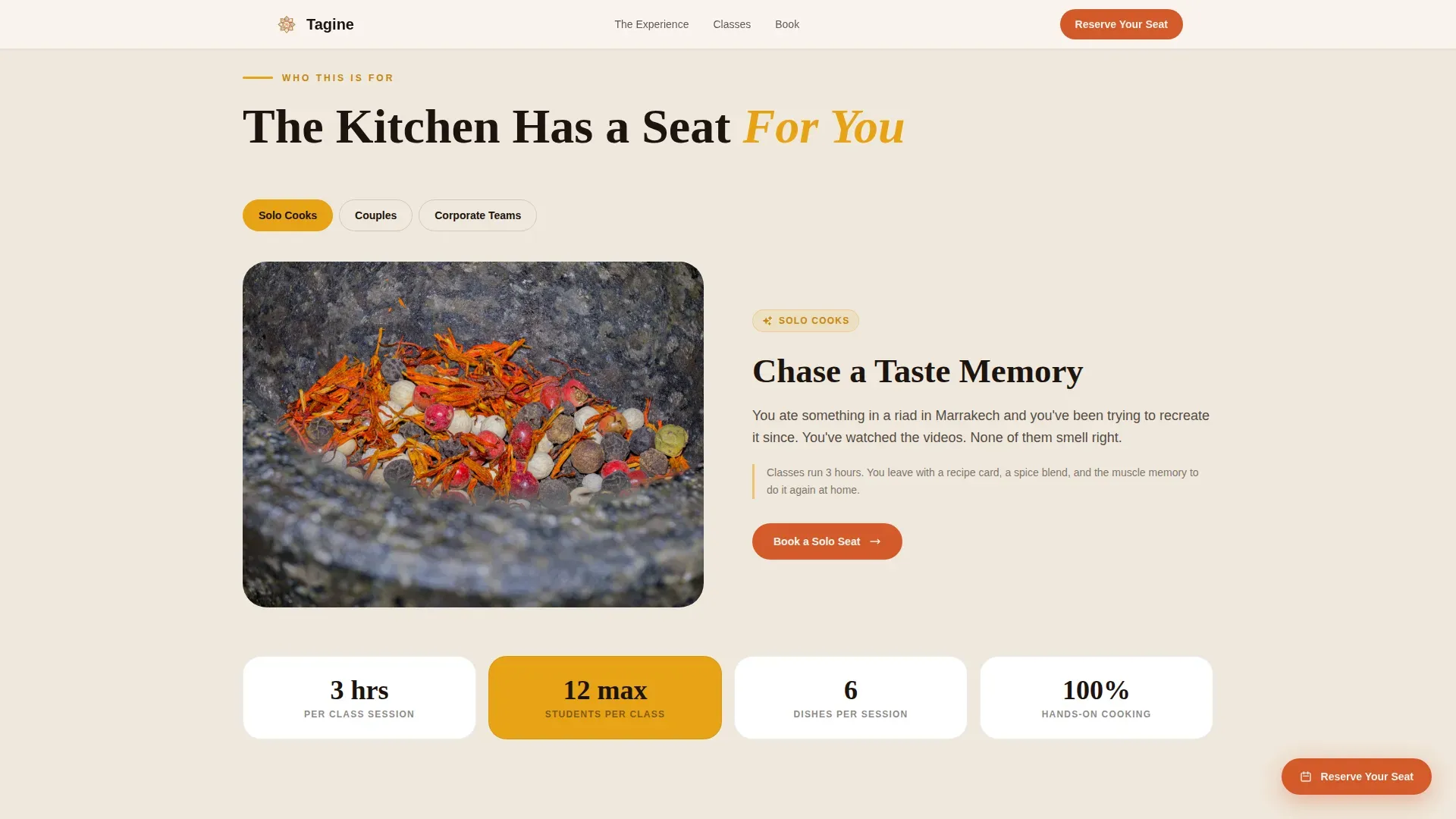
A dedicated "Who It's For" section presents three bento-style cards covering solo home cooks, couples seeking a fun date night, and corporate teams wanting a hands-on cooking alternative to standard team-building formats. Each card speaks directly to a visitor's specific motivation, reducing the mental effort of deciding whether the class is right for them.
GSAP Scroll Reveals and Gold Wipe Transitions
Scroll-triggered animations use GSAP to stagger line reveals and fade content into view as the visitor moves down the page. Section transitions wipe in with preserved lemon gold, creating a visual rhythm that echoes the pacing of a multi-course meal. The floating call-to-action button, the inline calendar modal, and the gift flow toggle are all handled as interactive client components, keeping the experience responsive and fluid.
Page sections overview
| Section | Purpose |
|---|---|
| Cinemagraph Hero | Hooks attention and anchors the floating booking call to action |
| Sensory Mosaic Gallery | Delivers sight-first dish photography to build appetite and desire |
| Who It's For Cards | Qualifies the three audience types and reduces decision friction |
| The Experience Sections | Uses alternating image and text to convey hands-on class atmosphere |
| Testimonials and Booking | Combines social proof with the inline calendar and reservation form |
| Gift a Class Flow | Captures gift buyers with a separate recipient and voucher path |
| Footer (Linear Single-Row) | Provides minimal closing links without distracting from the booking |
Design & branding system
The visual identity follows a Warm Artisan theme expressed through the Citrus Burst color system. Every color decision is grounded in the sensory world of moroccan cuisine: the palette feels like a hand-painted ceramic bowl filled with citrus segments and dusted with cinnamon, saturated and glowing as if backlit by late-afternoon sun through a kitchen window.
Core design tokens and choices:
- Citrus Burst palette: preserved lemon gold (#E8A317) dominates section accents and hover states; blood orange glaze (#D45A2B) marks every call-to-action button and pricing highlight; charred cumin black (#1C1410) anchors all body text; yogurt white (#FAF5EF) washes every background so the warmth breathes without heaviness
- Typography: Fraunces display serif handles all headline and display text, reinforcing the hand-crafted, artisan feel; DM Sans handles body copy and form labels, keeping the reading experience clean and approachable
- Motion and texture: CSS steam keyframes, GSAP scroll reveals, staggered line reveals, and gold wipe transitions work together to create a page that feels alive, unhurried, and full of warmth, much like moroccan hospitality itself
Mobile & speed optimization
The template is designed desktop-first to honor the immersive cinemagraph hero experience, and is fully responsive to mobile viewports. The layout adapts gracefully so that visitors booking on a phone still move through the same sensory flow and arrive at the same inline calendar without friction.
Optimization considerations built into the template structure:
- Static sections including the hero, gallery, audience cards, and experience blocks are built as server components, which keeps the initial render fast and the page feeling immediate
- The booking form, inline calendar modal, and gift flow toggle are isolated as client components, so interactive elements load without blocking the static content that surrounds them
- The floating "Reserve Your Seat" button is always visible after the hero, ensuring the booking path requires zero scrolling back on any device size
How this template helps you convert
This template is engineered to earn the booking click through emotional investment rather than pressure. Most class pages ask visitors to commit before they care. This template reverses that sequence entirely.
- Sensory immersion before the ask: The page takes visitors through five sensory stages, sight, sound, smell, touch, and taste, before the booking calendar ever appears. By the time the form is visible, the visitor is already imagining themselves in the kitchen, which makes the decision to reserve feel obvious rather than risky.
- Social proof placed at the point of commitment: Student testimonials with specific food and flavor descriptions appear directly above the booking form. A testimonial that describes a particular bite, such as the way a chicken tagine smells when the lid lifts, or how a piece of msemen bread tears apart in warm hands, is far more persuasive than a star rating, because it is sensory and concrete.
- Two booking paths for two buyer types: The "Reserve Your Seat" flow handles direct attendees while the "Gift a Class" flow captures gift buyers, two meaningfully different motivations that most single-form pages ignore entirely.
Other information about this template
This template is designed specifically for the tagine immersive moroccan cooking class landing page template use case, meaning it is not a generic food or restaurant template. Every section, color choice, and interaction pattern is tuned to the particular warmth and ceremony of moroccan food culture.
Additional context worth knowing before you use this template:
- Moroccan food and its traditions: Moroccan cuisine draws from Berber, Arab, and Mediterranean cultures, making it one of the world's most layered and nuanced cooking traditions. Moroccan food is often characterized by spices such as saffron, cumin, and cinnamon, and a single cooking lesson can open a deeper understanding of how those flavors are built in layers.
- The tagine vessel itself: A traditional tagine is a shallow clay vessel with a tall cone-shaped lid. The conical lid is important for moisture retention, allowing steam to circulate and condense back into the stew for depth of flavor. When you teach people the whole process of making tagine, including how to stack seasonal vegetables, chicken, preserved lemon, and olives correctly, they leave with knowledge that lasts far longer than a fun evening.
- What most classes cover: A typical moroccan cooking class runs for a few hours and walks participants through three to five dishes. These often include a traditional tagine, moroccan salads, moroccan bread such as msemen or khobz, and moroccan mint tea. Harira soup, a warming combination of lentils, chickpeas, tomatoes, and spices, is another dish frequently introduced in a cooking lesson. Couscous, the staple served alongside tagine in many moroccan family homes, rounds out a complete meal.
- The market visit dimension: Many moroccan cooking class formats begin with a market visit at a local souk, where participants select fresh produce, certain spices, and meats alongside knowledgeable hosts. If your class includes a stop at a fish market or local market, the template's experience sections can support that narrative with image and text alternation.
- Dietary accommodations: Classes for moroccan cooking typically last several hours and accommodate various dietary needs. Cooking classes can accommodate vegetarian, vegan, dairy intolerant, and gluten intolerant guests upon request. Some cooking classes also offer halal meat options. It is important to inform the class provider of any dietary needs at the time of booking. The template's dietary note field in the reservation form is designed exactly for this purpose.
- Audience insights: Many travelers who experienced moroccan food in Morocco return home wanting to recreate those flavors. Small groups of four to eight people create the most fun and intimate dynamic, where shared stories from a riad dinner or a medina market become part of the cooking conversation. The template is highly recommended for operators who want their page to reflect the gracious family warmth and moroccan hospitality that makes these classes memorable.
- Social proof and imagery: A key element for any moroccan cooking class page is the inclusion of social proof such as testimonials from past participants. High-quality photography of authentic moroccan dishes, from absolutely delicious chicken tagine to vivid moroccan salads with olives, is built into the template's gallery and experience sections. Every image placeholder is sized and positioned to show food as local life and local market energy, not studio product shots.
- Gift and seasonal context: A great introduction to moroccan culture as a gift is one of the most popular reasons people land on cooking class pages in the gifting season. The "Gift a Class" flow is purpose-built for this, with a printable voucher that makes the offering tangible and ready to present. Fresh fruit, warm spiced tea, and a feast shared with a lovely family of friends or a gracious family of colleagues are the images worth evoking in that flow.
Theme
Warm Artisan
Creative direction
Sensory Appeal
Color system
Citrus Burst
Style
Hero-Dominant (90/10)
Direction
Booking/Scheduling
Page Sections
Cinemagraph Hero with Steam Animation
Five-stage Sensory Scroll Sections
Inline Booking Form with Calendar
Gift a Class Flow and Printable Voucher
Audience Bento Cards for Three Visitor Types
GSAP Scroll Reveals and Interactive Components
Related questions
What types of cooking classes does this template support?
Can the booking form handle dietary requirements?
How does the Gift a Class flow work within the template?
Is this template suitable for a class that includes a market visit?
What makes this template different from a general food template?