Moroccan Fast Casual Restaurant Landing Page Template
Tagine is a Neo-Retro landing page for a Moroccan fast casual restaurant. It pairs a bold illustrated mascot, a modular flip-card menu grid, and a sticky cart drawer to turn hungry browsers into paying customers. Built for direct ordering, it includes a four-step combo builder, a catering inquiry form, and a free delivery progress bar, all wrapped in a fire-and-earth color system that feels like a vintage Casablanca poster.
by Rocket studio
Quick summary
Tagine is a single-page template built for a Moroccan fast casual restaurant that wants to sell food directly online. The layout uses a modular card grid, a winking chef mascot, and a sticky cart drawer to move guests from curiosity to order in one scroll. Every design choice signals real flavors, real fire, and real speed.
Who this template is for
This template suits any restaurant owner who runs a counter-service or fast casual operation and wants to convert page visitors into paying customers without friction.
- A Moroccan restaurant owner launching or refreshing their online ordering presence
- Food entrepreneurs making the move from phone orders to a direct digital storefront
- Catering operators who need a good place to capture headcount and date inquiries alongside a retail menu
What problem this template solves
Most restaurant landing pages feel like a static PDF. Guests scroll, find nothing to click, and leave. This template fixes that by putting ordering tools front and center from the first scroll.
- No clear path to order means lost sign-ups and abandoned carts
- Generic food photography fails to communicate authentic flavors or cultural context
- Catering inquiries get buried, making it hard for the restaurant owner to capture group business
What you get with this template
You get a fully structured, high-interactivity landing page designed for direct food sales. Every section is built and ready to customize.
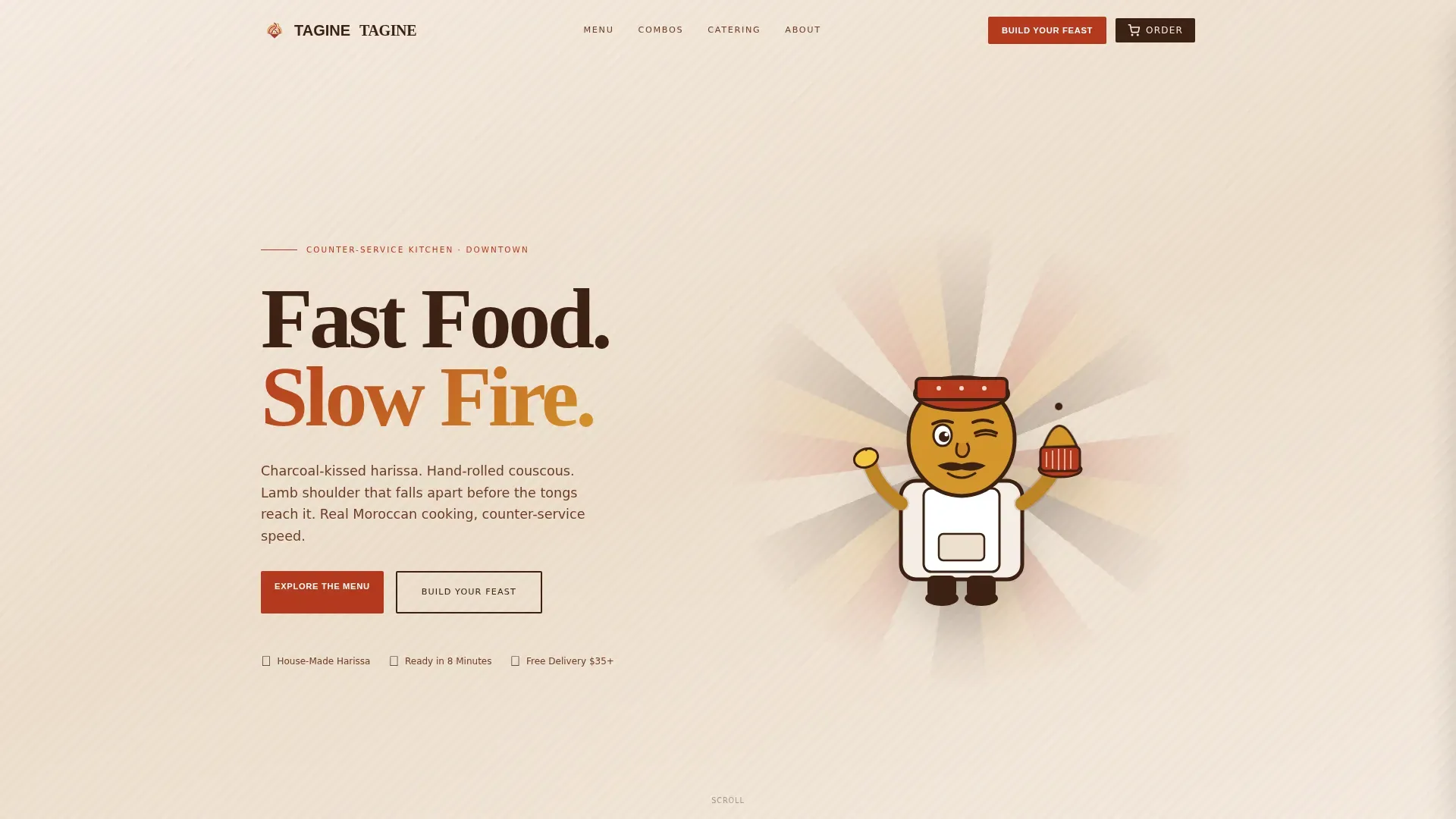
- An animated hero with a winking mascot, zellige tile burst, and CSS steam animation
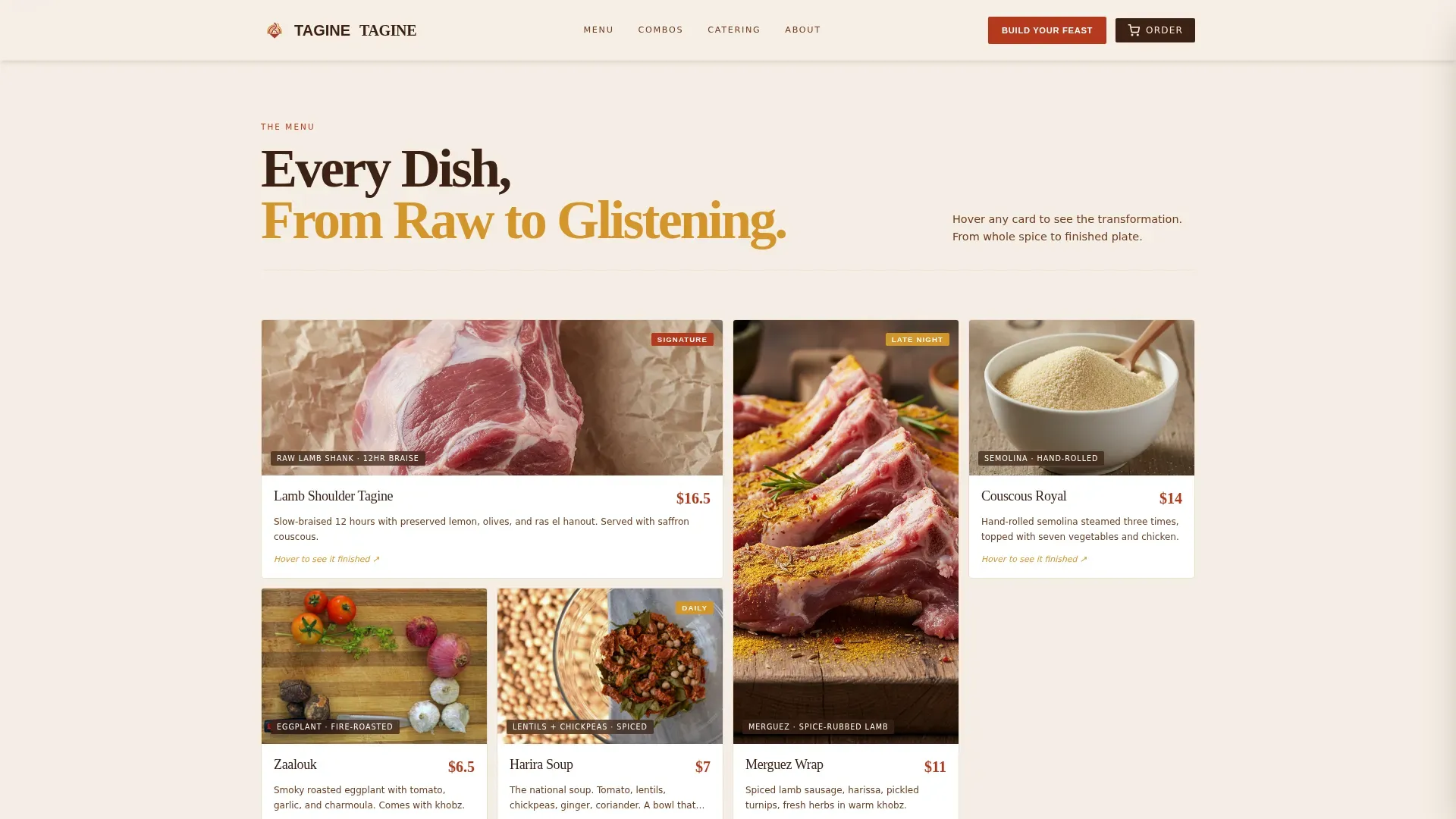
- A modular card grid with ingredient-to-dish flip cards and individual "Add to Order" buttons
- A four-step combo builder, a catering form, a sticky cart drawer, and a free delivery progress bar
Feature list
A paragraph introducing the core features: this template ships with a tightly coordinated set of interactive and visual components, each grounded in the direct-sales goal of turning a good browsing session into a completed order.
Animated Hero with Mascot
The header presents a flat-illustrated chef character in a traditional taqiyah cap, lifting a steaming tagine lid. A CSS animation raises the lid and releases an illustrated steam plume. Behind the mascot, a geometric zellige tile burst radiates in paprika and ochre. The headline "Fast Food. Slow Fire." lands in chunky retro display type.
Flip-Card Menu Grid
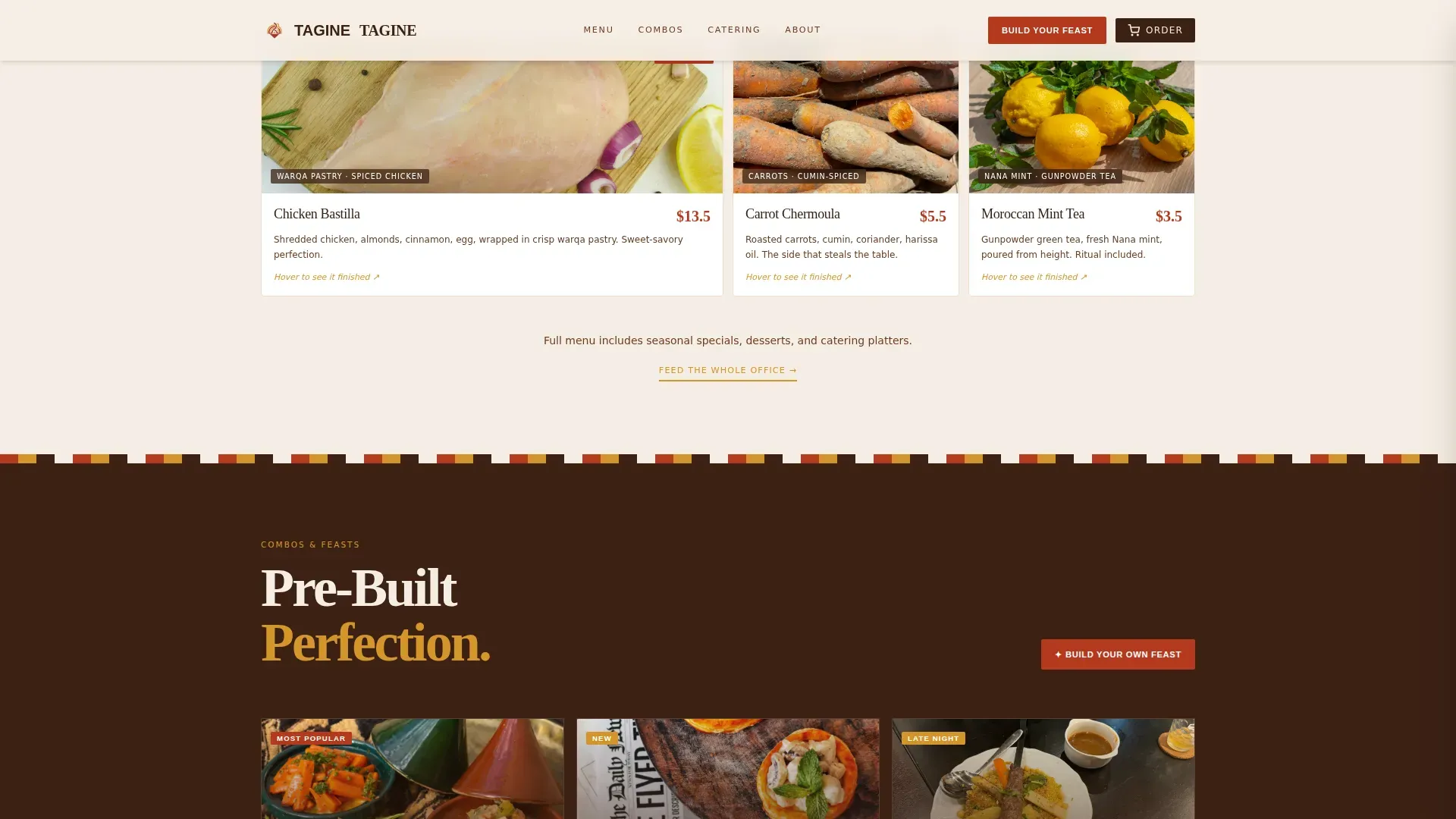
Each menu card shows a raw ingredient on one side and the finished dish on the other. Cards flip on hover or scroll trigger. Double-wide cards highlight signature dishes like slow-cooked lamb, while tight single cards handle sides and drinks. The grid scales naturally from individual items to combo meals to catering platters as visitors scroll deeper.
Sticky Cart Drawer with Progress Bar
A cart drawer slides in from the right, showing item count and running total at all times. A free delivery progress bar fills with ochre as the order total grows, creating quiet urgency to add one more side. The cart is always reachable without disrupting the browsing flow.
Four-Step Combo Builder
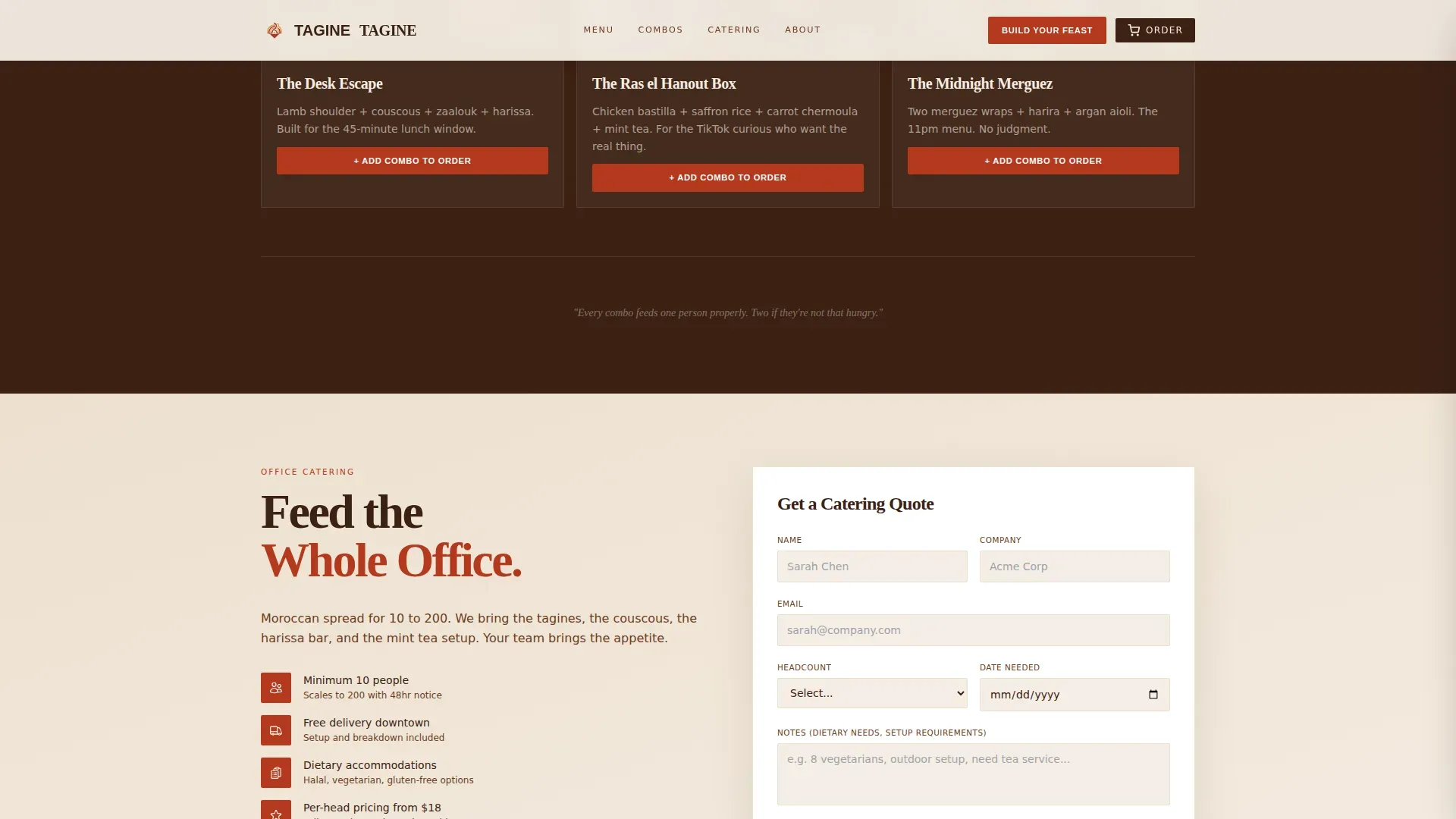
The "Build Your Feast" section lets guests pick a protein, a grain, two sides, and a sauce in four quick taps. The selector uses clear state management to confirm each choice before moving forward. It is designed for mobile-first use, where most ordering happens.
Catering Inquiry Form
The "Feed the Office" section includes headcount and date fields for group orders. It gives the restaurant owner a structured way to capture catering leads directly from the same page where retail customers are ordering.
Page sections overview
| Section | Purpose |
|---|---|
| Hero with Mascot | Introduces brand identity and headline |
| Menu Card Grid | Displays dishes with flip reveal and ordering |
| Combo Builder | Guides guests through a four-step meal selection |
| Catering Inquiry | Captures group order leads with date and headcount |
| Footer Linear | Closes the page with brand pattern |
Design & branding system
The visual identity is Neo-Retro, drawing from 1970s travel poster design. Contemporary Moroccan design principles shape the layout: clean modern aesthetics, high-contrast negative space for a breathable feel, and geometric tile motifs simplified into graphic line art. Traditional Moroccan tile patterns appear as zellige bursts rather than busy repeating wallpaper.
- Color system: smoked paprika red (#B5391E) and turmeric ochre (#D4952A) on a riad white (#F5EDE3) background, with charred clay (#3B2114) for depth
- Typography: Fraunces for display headings and DM Sans for body text, giving a hand-lettered precision to every menu label
- Earthy color palettes like terracotta and warm white run throughout, consistent with modern Moroccan restaurant branding trends
Mobile & speed optimization
The template is built mobile-first because ordering behavior is phone-dominant. The card grid, combo builder, and cart drawer are all designed to work cleanly on small screens with large tap targets.
- Client components handle the cart drawer, combo builder state, and progress bar interactivity
- Static sections like the hero and catering form are server-rendered for fast initial load
- Card animations and flip states are triggered by scroll and hover, not page load, keeping the experience smooth
How this template helps you convert
Every section is sequenced to reduce hesitation and increase order value for a fast casual food business.
- The hero creates immediate atmosphere, making guests feel the place before they read a single menu item, building the emotional sign-in that good restaurant branding requires
- The flip-card grid builds appetite and trust by showing raw lamb, whole vegetables, and fresh spices alongside the finished dish, connecting authenticity to the order button
- The combo builder and catering form close two separate revenue paths in one page, so no guest leaves without a clear next step to join the order flow
Other information about this template
This template was designed for a Moroccan fast casual restaurant context and reflects the cultural depth of the cuisine it represents. Tagines originated with the Berbers of Northern Africa, cooked in large terracotta pots over open flames, a tradition enjoyed across centuries. The dish is typically served with couscous and filled with meats, vegetables, and layered spices whose aromas define the experience. Mint tea is often enjoyed alongside, completing the meal.
Modern Moroccan restaurant branding incorporates minimalist aesthetics and earthy color palettes, and this template reflects those trends. Geometric motifs are presented cleanly rather than overwhelmingly. The layout gives each dish the space to be enjoyed visually before a purchase decision is made.
- The tagine fast casual moroccan restaurant landing page template is ready to customize with your own dish names, prices, and photography
- All rights to the template design belong to the license holder upon purchase, as specified in the platform's standard usage rights
- The restaurant owner can update menu cards, pricing, and the catering form without touching the animation or cart logic
Theme
Neo-Retro
Creative direction
Before/After Reveal
Color system
Fire & Earth
Style
Card Grid (Modular)
Direction
Direct Sales
Page Sections
Animated Mascot Hero Section
Flip-card Modular Menu Grid
Sticky Cart Drawer with Delivery Bar
Four-step Combo Builder
Catering Inquiry Form
Related questions
Can I add my own menu items and prices to this template?
Does the combo builder support different protein options?
Can I remove the catering section if my restaurant only does direct orders?
How does the free delivery progress bar work?
What makes this template visually different from a generic food landing page?