Handcrafted Slovenian Street Food Landing Page Template
Potica is a hero-dominant landing page template built for a Slovenian food truck offering wood-fired, grandmother-style recipes. With a nine-image mosaic hero, interactive before-and-after reveal sliders, a menu accordion with origin stories, and a pinned booking form, it converts event coordinators, wedding planners, and office managers into confirmed catering reservations.
by Rocket studio
Quick summary
The Potica template is a single-page, event-booking landing page designed for an artisan Slovenian food truck. It pairs a dramatic photo-grid mosaic with interactive before-and-after reveal sections, a menu accordion rich with dish origin stories, and a streamlined booking form. Every design choice serves one goal: turning browsers into catering clients.
Who this template is for
This template is built for food truck operators who want their online presence to feel as considered as the food they serve. It speaks directly to the people who book the truck and the people who fall in love with the food on arrival.
- Event coordinators and wedding planners who need a catering partner that stands apart from the usual options and delivers a full sensory atmosphere, not just a meal.
- Office managers and corporate event planners who want to reward their teams with something genuinely memorable, a dish they have never tasted but somehow already crave.
- Food truck owners and artisan catering operators who want a professional, visually compelling landing page without starting from a blank canvas.
What problem this template solves
Most food truck pages struggle to communicate flavor, culture, or emotion. They list a menu, post a phone number, and expect visitors to imagine the rest. For a truck serving rich, unfamiliar Slovenian food, that gap is even wider. Potential clients have likely never heard of žlikrofi or štruklji. They need to be transported before they commit.
- Generic catering pages fail to differentiate. This template gives a Slovenian food truck the visual and narrative depth it needs to compete with established catering brands and become the most interesting option in the room.
- Unfamiliar cuisine needs storytelling. The before-and-after reveal format walks visitors from raw ingredient to finished dish, building appetite and trust at the same time.
- Booking friction loses clients. The pinned call-to-action button and structured booking form reduce the steps between "I'm interested" and "I've submitted a request."
What you get with this template
This template delivers a complete, ready-to-deploy landing page built around six carefully sequenced sections. Every section has a defined purpose and a defined visual language. You are not assembling pieces, you are stepping into a finished room and rearranging the furniture to fit your brand.
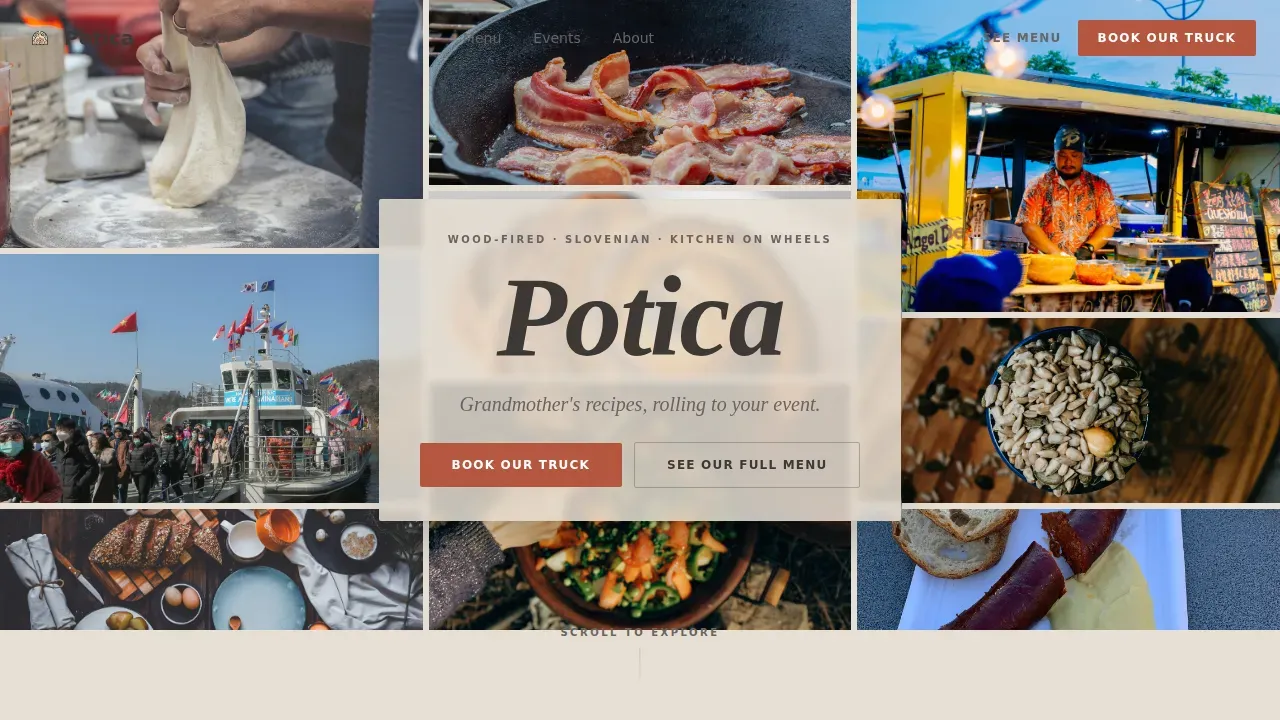
- A nine-image mosaic hero that fills ninety percent of the viewport with an asymmetric kitchen-pinboard layout, setting the visual tone before a single word is read.
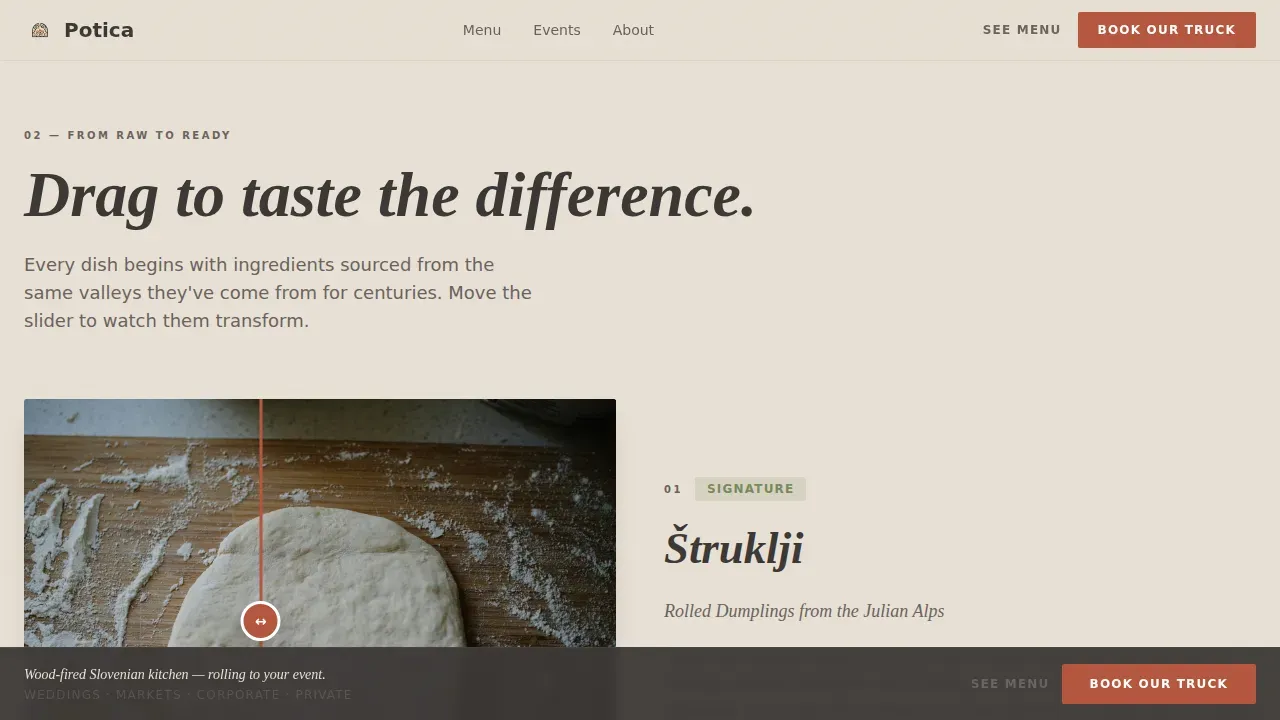
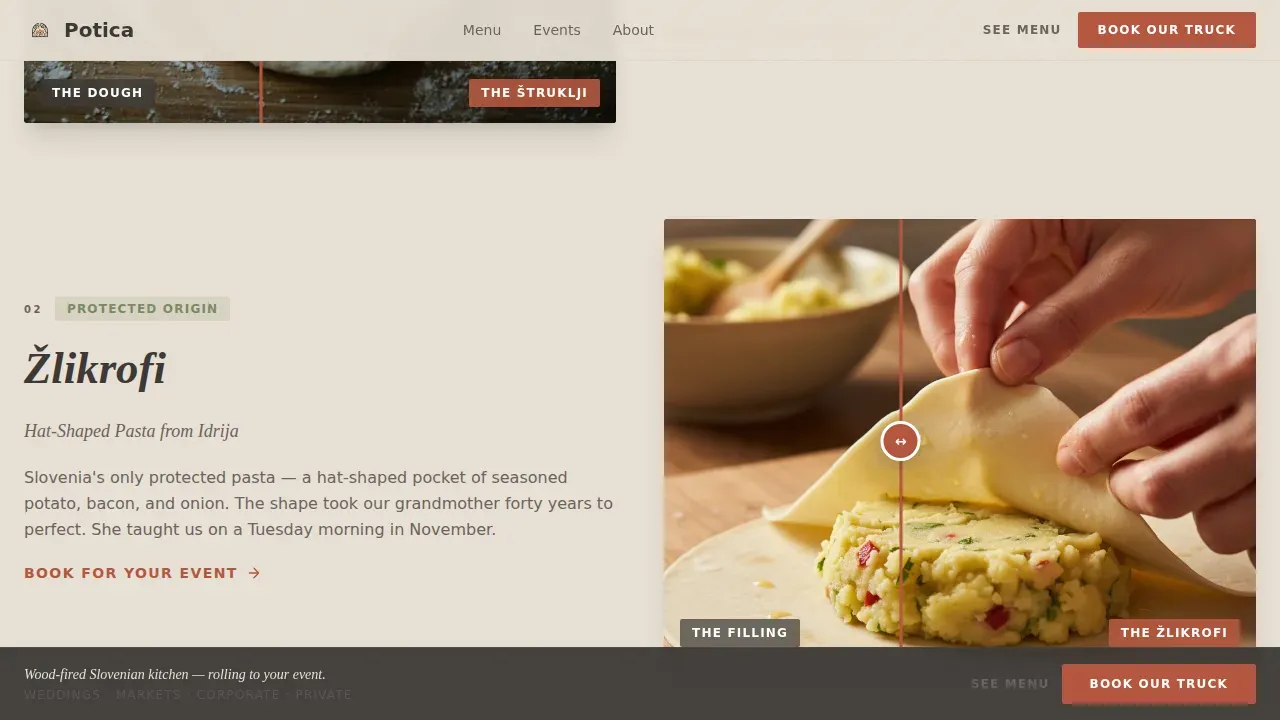
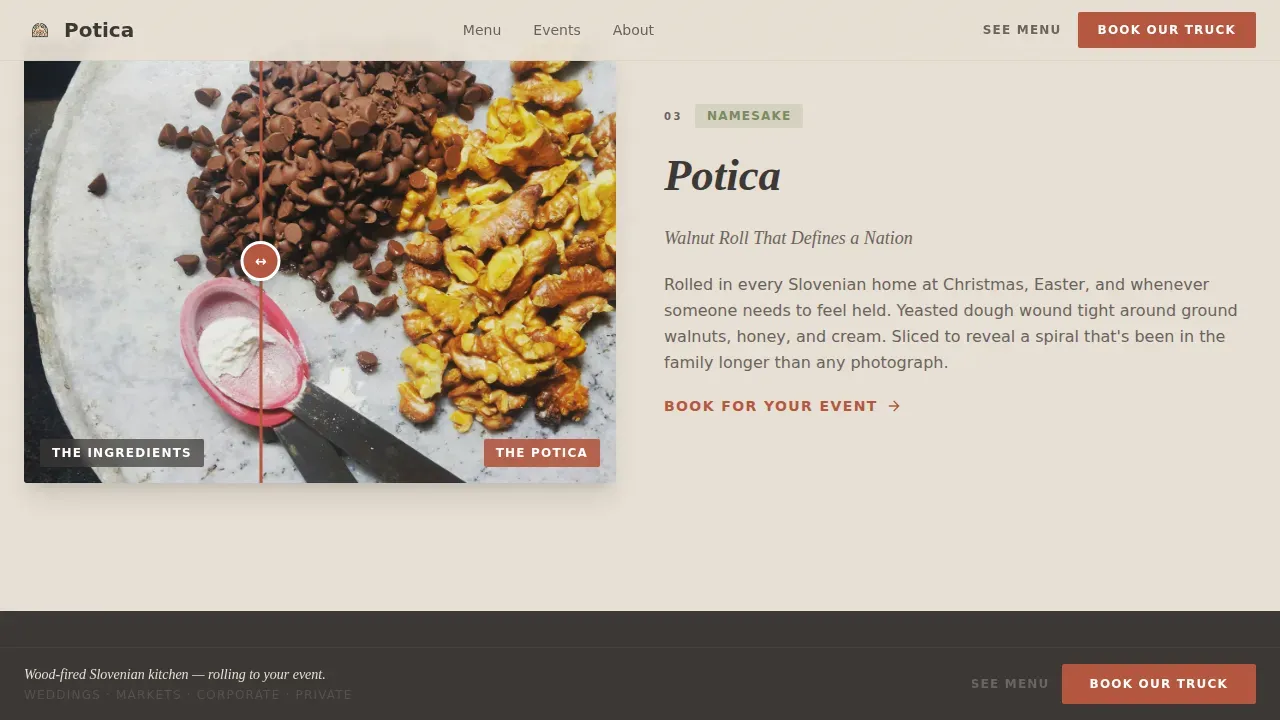
- Interactive before-and-after reveal sliders that show the transformation from raw Slovenian ingredients to finished dishes, then from empty venues to glowing event scenes.
- A menu accordion with origin stories that educates and delights visitors, gently routing browsers toward a "Reserve a Tasting" call-to-action at the base of each dish description.
- A structured booking form with an event-date field, a guest-count slider ranging from 20 to 500, an event-type selector, and a location input.
- A pinned "Book Our Truck" button that stays fixed at the bottom of the viewport after the first scroll, keeping the conversion path visible at all times.
- A minimal horizontal-flow footer that closes the page cleanly without competing with the primary booking objective.
Feature list
This template includes several built-in interactive and visual features derived directly from the design brief. Each one serves a specific role in moving a visitor from curious to committed.
Nine-Image Mosaic Hero
The hero section fills ninety percent of the viewport with a grid of nine unevenly cropped photographs arranged like a kitchen pinboard. Some images bleed to the edge of the frame; others float with generous limestone cream margins. The mosaic creates immediate visual richness. It establishes the texture and warmth of the food truck's identity before the visitor reads a single headline. Images are lazy-loaded to keep initial render fast.
Before and After Reveal Sliders
Two distinct reveal slider sequences are built into the page flow. The first shows the transformation of raw Slovenian ingredients, whole buckwheat grains, unrolled dough sheets, fresh cottage cheese, ground walnuts, soft flour, eggs, butter, milk, and fragrant herbs, into plated dishes like potica, štruklji, and žlikrofi. The second reveals empty event venues transforming into lit, catered celebrations. Visitors drag the slider themselves, which creates an active sense of discovery and investment in the story being told.
Menu Accordion with Origin Stories
The menu section uses an expandable accordion layout. Each dish entry includes a name, a brief cultural origin story, and a description of its key flavor and filling. The accordion keeps the page length manageable while allowing genuinely curious visitors to go deeper. A "Reserve a Tasting" call-to-action appears at the base of the accordion, offering a softer conversion path for visitors who are not yet ready to commit to a full booking.
Pinned Booking Form with Guest Slider
The booking form captures the four most important pieces of information a food truck operator needs: event date, guest count, event type, and location. The guest count input uses a slider control ranging from 20 to 500, which makes it fast and intuitive on mobile. The event-type selector covers markets, weddings, corporate events, and private gatherings. The form is framed by the persistent "Book Our Truck" call-to-action button pinned at the bottom of the viewport after the first scroll.
Testimonials and Event Type Badges
Social proof is woven directly into the menu section rather than isolated on a separate page. Guest testimonials appear inline alongside dish descriptions. Event type badges visually categorize the truck's experience across different booking contexts, helping each type of client see themselves reflected in the page without having to search for relevant information.
Minimal Horizontal Footer
The footer follows a clean horizontal-flow pattern that keeps the closing section of the page lightweight and uncluttered. It does not compete with the booking form or the pinned call-to-action. It closes the visual narrative of the page with quiet confidence, reinforcing the brand without distracting from conversion.
Page sections overview
| Section | Purpose |
|---|---|
| Mosaic Hero Grid | Establish visual identity with nine asymmetric food and event images filling ninety percent of the viewport |
| Before After Reveal | Show ingredient-to-dish and empty-venue-to-event transformations through interactive drag sliders |
| Menu Accordion | Educate visitors about Slovenian dishes with origin stories and guide browsers toward a soft tasting reservation |
| Events Transformation Reveal | Demonstrate the atmospheric impact of the food truck at real event settings using a second reveal slider |
| Booking Form | Capture event date, guest count, event type, and location through a structured, mobile-friendly form |
| Horizontal Footer | Close the page cleanly with minimal navigation and social links |
Design & branding system
The visual identity follows an Organic Flow theme rooted in the textures and pigments of a Karst hillside. Every color, typeface, and spacing decision reinforces the idea of a hand-thrown ceramic bowl sitting on a rough-hewn oak board, earthy, warm, and unmistakably intentional.
- Color system: Limestone cream (#E8E0D5) backgrounds, hearth charcoal (#3B3735) body text, smoked paprika (#B5563E) for accent elements and interactive controls, and fresh herb (#7A8B5E) as a secondary highlight for labels and supporting details.
- Typography: Fraunces serif for all display headings and the brand name, delivering an editorial warmth that pairs naturally with the farmhouse aesthetic; DM Sans for body copy and user interface elements, keeping forms and descriptions crisp and readable.
- Visual style: Organic, tactile, and farmhouse-editorial, the kind of design that feels pulled from a Slovenian grandmother's kitchen rather than assembled from a digital template library.
Mobile & speed optimization
The template is built mobile-first, which matters because event coordinators often browse catering options on their phones while standing in a venue space. Every interactive element, the mosaic, the sliders, the booking form, is designed to work with a thumb, not a mouse.
- Lazy-loaded images across the mosaic and reveal sections keep the initial page load light, preventing large photography assets from slowing the first impression.
- Smooth CSS scroll behavior and staggered reveal animations are handled at the stylesheet level, reducing JavaScript dependency for core transitions.
- The guest-count slider and booking form are sized and spaced for comfortable mobile interaction, minimizing input errors on smaller screens.
How this template helps you convert
This template treats conversion as a narrative arc, not a form at the bottom of a page. Every section advances the visitor's confidence and appetite before asking them to act.
- The mosaic hero creates immediate appetite and curiosity. It establishes the visual brand in seconds, compelling visitors to scroll deeper rather than bounce. No static hero image could create the same layered sense of richness.
- The before-and-after sliders build trust through transformation. Watching whole flour and fresh eggs become a golden slice of potica loaf, or an empty parking lot become a glowing evening market, makes the food truck's value proposition tangible and emotional rather than abstract and textual.
- The pinned "Book Our Truck" button removes friction at the moment of decision. It is always visible, always reachable, and always one tap away, whether the visitor is mid-scroll through the menu accordion or has just finished dragging the venue reveal slider.
Other information about this template
This section covers additional context about the food, the culture, and the operational realities that make this template a strong fit for any operator working in the Slovenian cuisine space.
Slovenian food is rooted in centuries of regional tradition. Recipes passed down through slovenian families carry flavors built on ingredients like ground walnuts, sweet dough, fresh cream cheese, cinnamon, honey, eggs, milk, soft butter, wheat flour, and fragrant herbs. Understanding these ingredients helps operators describe their menu in ways that speak to taste buds that have never encountered this cuisine before.
Potica is the flagship dish of Slovenian baking. It is a traditional pastry made from a thin, leavened sweet dough that is carefully rolled and stretched by hand, then filled with a rich mixture and baked into a distinctive spiral loaf. The most classic recipe uses ground walnuts blended with sugar, milk, butter, vanilla, eggs, and a touch of cinnamon. Other beloved fillings include poppy seeds mixed with honey, tarragon with cream cheese, pine nuts, or even savory fillings like bacon. There are over 80 known filling variations, and slovenian families typically have their own cherished recipe passed down across generations.
The dessert and pastry tradition in Slovenia is substantial. Potica is closely tied to easter and christmas celebrations, but it can be enjoyed year-round. A warm slice of walnut potica served alongside a cup of coffee is a deeply familiar comfort for anyone raised in this culinary tradition. The loaf can also be dusted with powdered sugar and served at room temperature, making it flexible enough for formal catering settings or casual family gatherings. Some operators pair a slice with a small scoop of vanilla ice cream for a modern presentation that surprises and delights at events.
Beyond potica, the food truck menu includes main dishes like carniolan sausage (also known as kranjska klobasa), a beloved typical slovenian food with a protected designation of origin. Štruklji are rolled dumplings made from a soft wheat dough with a savory or sweet filling, ricotta, cottage cheese, or fruits, boiled or baked and served warm. Žlikrofi are small, pinched pasta dumplings filled with a smooth mixture of potatoes, bacon, onion, and herbs, often finished with a brown butter sauce. These main dishes give the menu real depth and make the food truck a credible centerpiece for any catering event, not just a dessert stop.
For operators, sourcing high-quality ingredients is essential. Partnerships with local suppliers help ensure fresh vegetables, dairy, and meat arrive on schedule. The menu should reflect seasonal variations in ingredient availability, particularly for fresh fruits, herbs, and vegetables that change with the fall and spring harvests. Live schedules and location mapping help regular customers find the truck at markets and festivals, and social media keeps the community engaged between events. Understanding local regulations and permits is also a necessary part of running the truck legally across different jurisdictions.
The template supports the kind of storytelling that builds brand value over time. The "Our Story" narrative woven into the menu accordion section gives visitors a sense of the heritage and care behind each dish. Embedding guest testimonials directly in the menu section serves as social proof that the food holds up at real events. A clear call-to-action on every section guides visitors naturally toward booking without pressure. Online pre-order capability for whole loaves of potica, particularly for holiday orders around easter and christmas, can also be layered in as an additional revenue path.
Traditional recipes for typical slovenian food were developed over generations to reflect what each country and region had available: wheat and buckwheat flour, root vegetables like potatoes, local dairy, foraged herbs and herbal remedies from alpine meadows, cured meats, and local wines from the wine-growing regions of Primorska and Štajerska. These are not fusion dishes or reimagined classics. They are the real thing, and the template is built to communicate exactly that.
The potica artisan slovenian food truck landing page template is designed for operators who take their food seriously and want their digital presence to match. A perfect atmosphere begins before the truck even arrives at a venue, it begins the moment a potential client lands on the page and feels the warmth of the design, the texture of the photography, and the confidence of the booking experience. This template creates that atmosphere from the first scroll to the final tap on "Book Our Truck."
Using appetizing warm colors, large and readable Fraunces display type, and high-quality photography of each dish, the template reflects the recommendation that a specialized artisan food truck landing page should combine rustic warmth with a clean, modern, and mobile-friendly structure. A food truck landing page should include customer testimonials to build trust, a clear menu with dish descriptions to educate new visitors, and a direct call-to-action that makes booking feel easy. This template delivers all three in a single cohesive design.
- Great for food trucks serving slovenian food at harvest festivals, corporate courtyards, wedding receptions, and weekend food markets across the Pacific Northwest region.
- The perfect place to start for any catering operator who wants a landing page that feels as handcrafted as the food coming out of the kitchen.
- Ideal for operators who want to showcase the whole family of Slovenian dishes, from savory main courses to sweet pastries, without overwhelming the visitor with too much information at once.
- Supports the unique experience of Slovenian cuisine by leading visitors through a visual narrative that builds appetite, trust, and emotional connection before presenting the booking form.
- The template's editorial warmth and tactile design make it a great place to establish a lasting brand impression for a food truck that competes not on price but on character and craft.
Theme
Organic Flow
Creative direction
Before/After Reveal
Color system
Warm Stone
Style
Hero-Dominant (90/10)
Direction
Event Registration
Page Sections
Nine-image Mosaic Hero Grid
Before and After Reveal Sliders
Menu Accordion with Origin Stories
Pinned Booking Form with Guest Slider
Inline Testimonials and Event Badges
Related questions
Can I customize the menu accordion to reflect my own Slovenian dishes and recipes?
Does the before-and-after reveal slider work on mobile devices?
How does the pinned 'Book Our Truck' button work?
Is this template suitable for a food truck that also sells whole loaves of potica for holiday pre-orders?
What typography and colors does this template use?