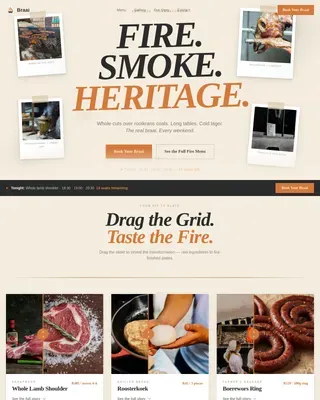
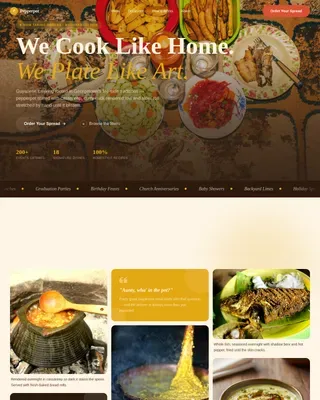
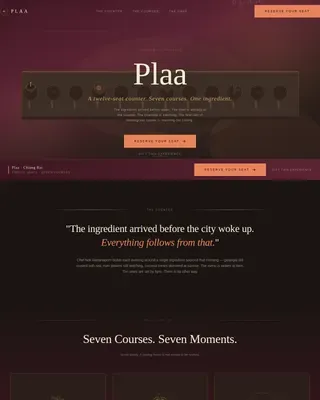
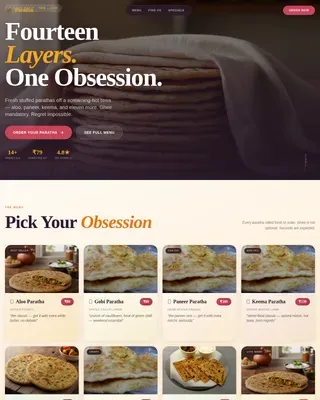
Luxe Minimal Natural Wine Maker Landing Page Template
Terroir is a gallery and detail landing page template built for small-lot natural wine makers. It pairs cinematic vineyard photography with a sticky booking bar and a three-step tasting reservation flow. The Desert Rose color system and editorial typography create an immersive, unhurried atmosphere that turns curious visitors into confirmed guests before they ever reach the footer.
by Rocket studio
Quick summary
Terroir is a Luxe Minimal gallery and detail landing page designed for artisan wine makers who sell direct to consumers. It leads with a full-bleed lifestyle photograph, guides visitors through place-led gallery clusters, and closes every scroll session with a prominent "Reserve Your Tasting" call to action. The template earns the booking by making visitors feel they have already arrived.
Who this template is for
This template is built for winery owners and small-estate producers who want their online presence to feel as considered as the wine itself. It serves the full range of buyers a natural wine maker attracts, from Saturday regulars to city sommeliers driving out for allocation access.
- Natural wine makers and small-lot estate producers ready to take direct bookings online
- Winery owners and their team who want polished design without a lengthy custom build
- Wine enthusiasts, connoisseurs, and sommeliers looking to discover authentic producers and reserve a tasting session
What problem this template solves
Most wine landing page options force producers into generic layouts that could belong to any brand in any region. They fail to communicate the sense of place that is the actual unique selling point of a natural wine estate. Visitors bounce before they ever feel the pull of the vineyard story.
- Generic winery templates strip out the depth and specificity that makes small-lot wine worth seeking out
- Disconnected booking flows make it hard for guests to schedule a tasting, costing the estate real revenue
- Flat design examples give no sense of the estate as protagonist, so the story never lands
What you get with this template
You get a complete, production-ready gallery and detail landing page that puts the estate front and center. Every section is structured to deepen the visitor's connection to the wine's origin before asking for anything in return.
- A full-bleed cinematic hero, a sticky three-column wine gallery with sliding detail panels, a neighborhood community section, an allocation list signup, and a structured footer
- A three-step booking modal with date picker, experience selector (Terrace Tasting or Cellar Walk), and a name plus party size form
- An allocation list path that lets visitors sign up with just an email and a zip code, keeping the ask small and the access valuable
Feature list
A concise paragraph introduces each built-in capability below. Every item reflects what the template brief explicitly describes.
Full-Bleed Cinematic Hero
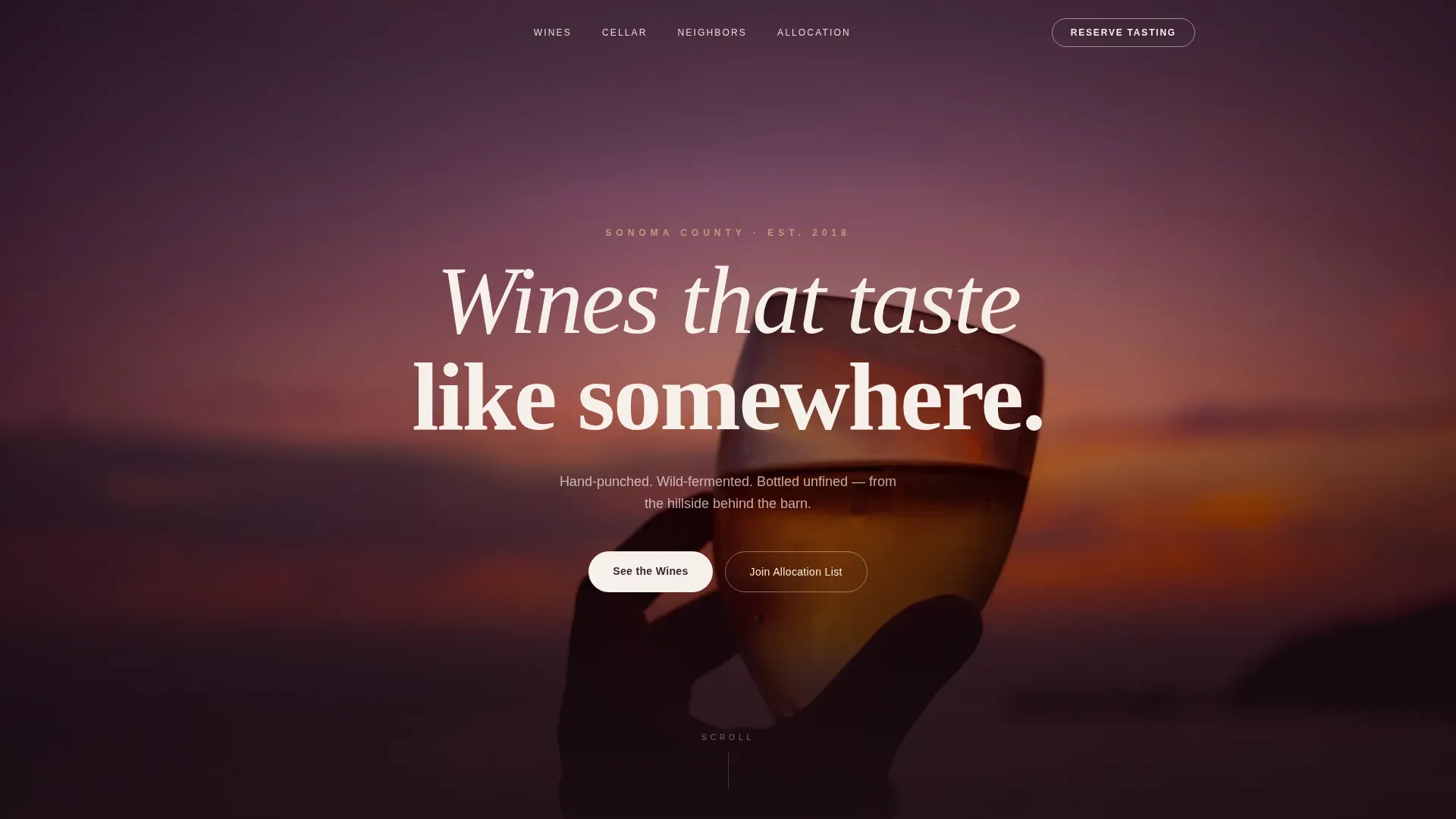
The hero fills the entire viewport with a single lifestyle photograph. A clip-path reveal animation brings the headline in as the user scrolls, and a scroll indicator nudges visitors downward. The estate image does the talking before a single word of copy appears. Following best practice for digital terroir imagery, this slot is designed for a specific vineyard landscape or winemaker portrait rather than a generic bottle shot.
Sticky Three-Column Wine Gallery
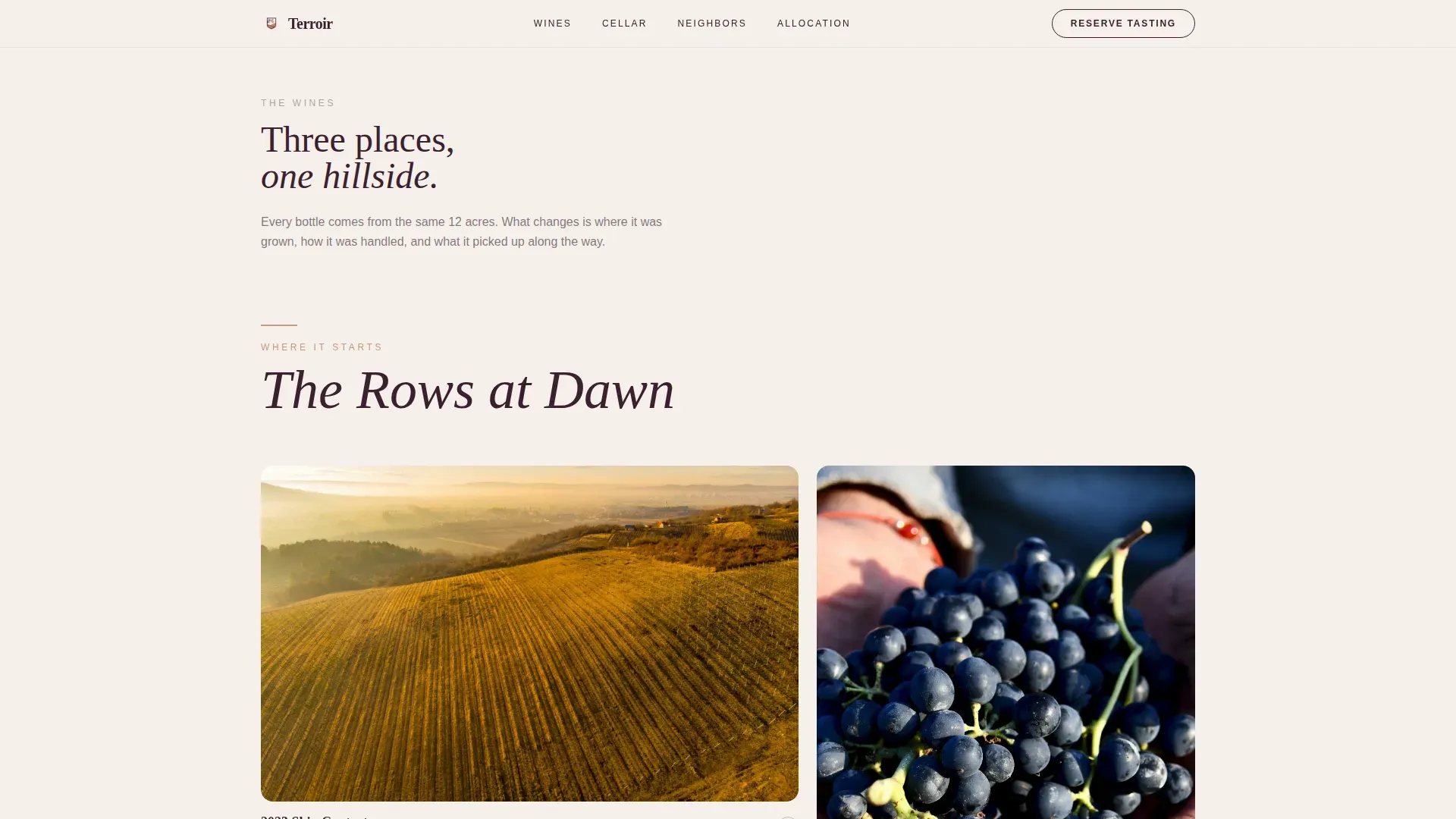
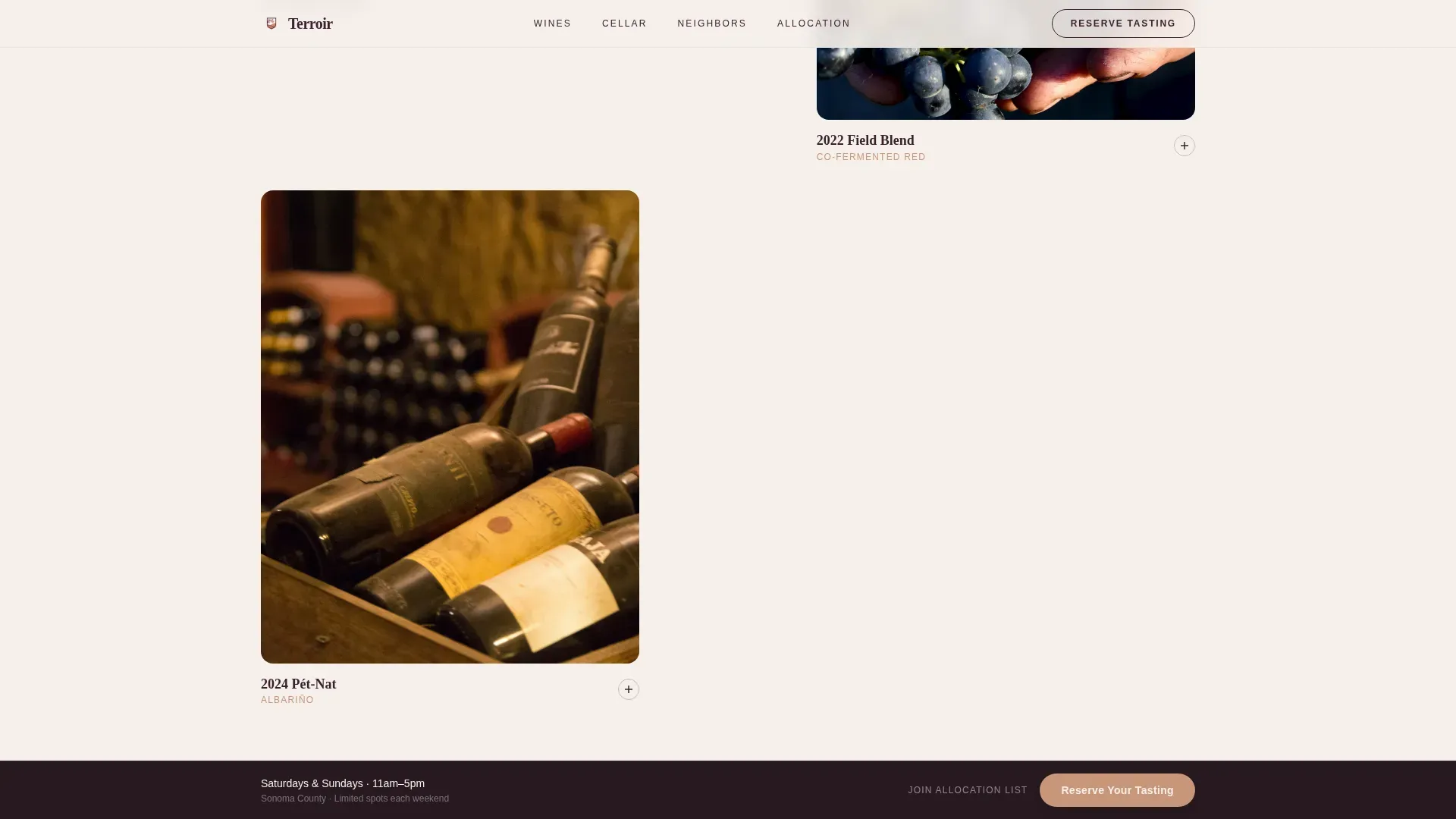
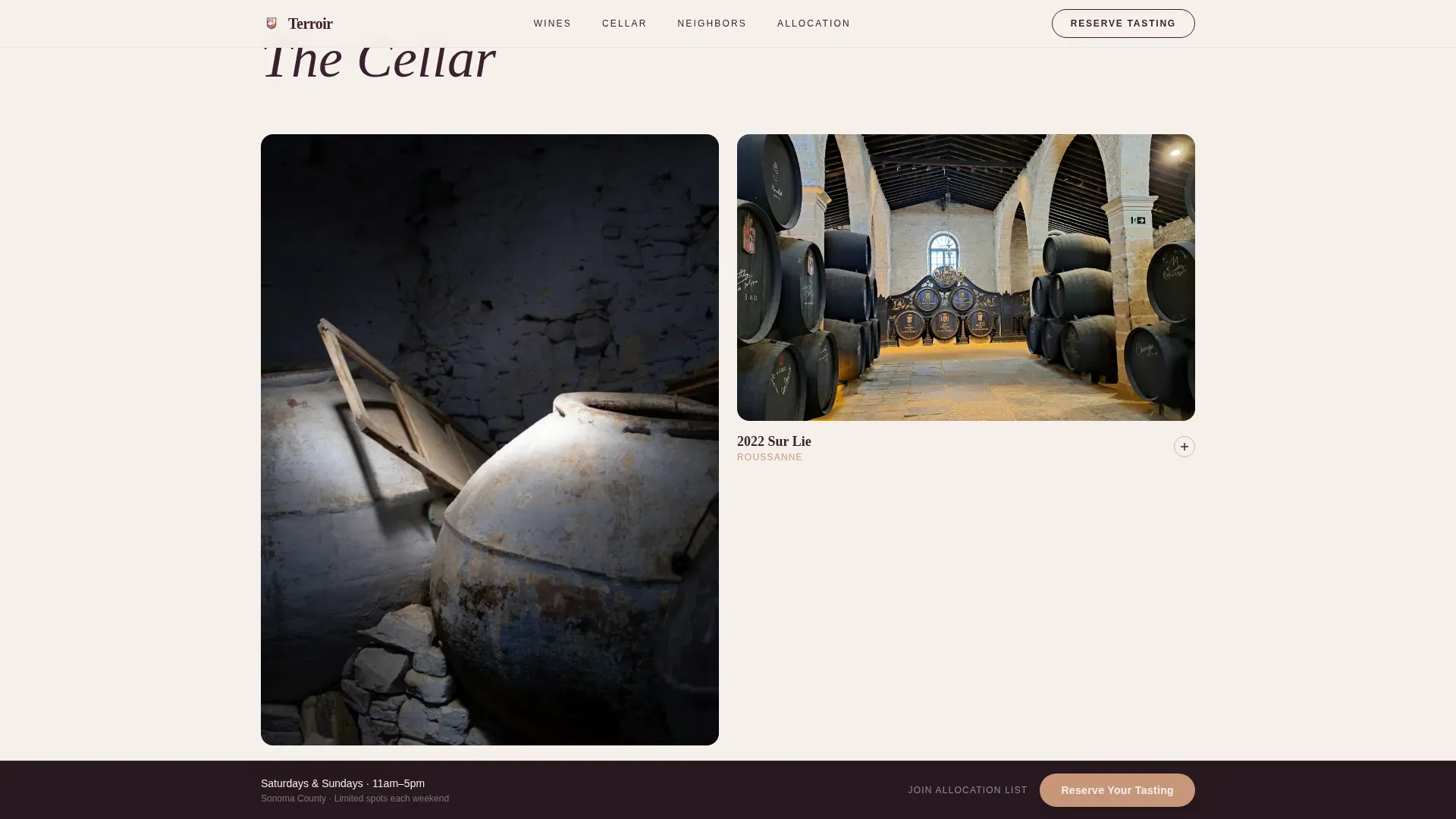
Three gallery clusters represent distinct places: the vine rows at dawn, the cellar with its oak and amphora, and the patio where bottles are opened and shared. Detail panels slide in beside each image, delivering a single paragraph and a vintage name written in a winemaker's voice. Professional bottle shots paired with honest tasting notes give wine aficionados the depth they are looking for, while the sticky layout keeps the overall structure clean.
Three-Step Booking Modal
A sticky bottom bar appears after the first gallery cluster and anchors the "Reserve Your Tasting" call to action. Clicking opens a focused three-step flow: choose a date from an available calendar, select between Terrace Tasting or Cellar Walk, then enter name and party size. The call to action is bold and consistent with the minimalist style throughout the page, matching the fact that instant online booking tops the list of essential features for winery websites.
Neighborhood Community Section
A bento-layout section highlights local collaborators: the cheesemaker, the ceramicist who throws the tasting cups, and the baker who arrives on Saturdays. This section deepens the vineyard story by widening the neighborhood around the estate. It creates emotional engagement that no generic wine landing page template can replicate.
Allocation List Signup
A secondary conversion path lets visitors join the allocation list with only an email address and a zip code. Ambient imagery keeps the background warm while the form stays minimal and focused. This gives sommeliers and serious wine enthusiasts a clear route to access without interrupting the tasting journey.
Desert Rose Color System and Editorial Typography
The page uses a four-tone Desert Rose palette: sun-bleached terracotta, dried petal pink, deep vine shadow, and raw linen white. Fraunces serif headlines balance with DM Sans body and user interface text, establishing the clean, sophisticated typography hierarchy that high-end wine estate websites require. The color schemes and type choices reflect the essence of the brand without borrowing from overused winery clichés.
Page sections overview
| Section | Purpose |
|---|---|
| Cinematic Hero | Opens with vineyard lifestyle shot and animated headline reveal |
| Wine Gallery Clusters | Three sticky columns covering rows, cellar, and patio |
| Sliding Detail Panels | Vintage description and winemaker-voice copy beside each image |
| Neighborhood Bento | Highlights local food and craft collaborators around the estate |
| Allocation List | Email and zip code signup with ambient background imagery |
| Sticky Booking Bar | Persistent tasting reservation prompt after first gallery cluster |
| Three-Step Modal | Date, experience type, and guest details for booking confirmation |
| Structured Footer | Logo, tagline, and navigation links in a split layout |
Design & branding system
The visual identity balances warmth and restraint in equal measure. High-resolution imagery and elegant typography signal luxury through generous whitespace rather than decoration, and a calm, balanced color palette enhances the refined aesthetic throughout.
- Desert Rose palette: terracotta (#C9967B) for section dividers and hover states, vine shadow (#3B2030) for headlines and navigation, petal pink (#D4A5A5) for card backgrounds and pull quotes, linen white (#F5F0EB) for open margins
- Fraunces serif for display headlines and Luxe Minimal storytelling moments; DM Sans for body copy and all user interface elements
- Earthy, muted color schemes with a single warm accent, consistent with best-practice recommendations for restrained winery palettes
Mobile & speed optimization
The template is built desktop-first with graceful mobile adaptation so that reservation forms, wine lists, and directions stay fully functional on smaller screens. Mobile optimization is essential for winery websites, because many guests schedule a tasting visit while away from a desk.
- Responsive layout adjusting all gallery clusters, booking modals, and allocation forms for smaller viewports
- Server Components handle static sections; Client Components isolate animations, keeping the interactive booking flow snappy on mobile devices
- GSAP ScrollTrigger powers clip-path reveals and parallax layers without blocking the core content that visitors need first
How this template helps you convert
This wine landing page is designed around a single conversion principle: make the visitor feel they have already visited before the booking form appears. Every section builds that feeling in sequence.
- The hero draws visitors in with a specific, unhurried vineyard photograph and a headline that arrives on scroll, creating immediate emotional pull and a sense of place that generic design examples never achieve.
- The gallery and detail panels let guests savor the estate story at their own pace, delivering enough vineyard story and tasting detail that the booking call to action feels like a natural next step rather than a hard sell.
- The sticky booking bar and allocation list work together as a complete conversion system: one path for guests ready to schedule, one for wine lovers who want to protect their access to future bottles before committing to a visit.
Other information about this template
This section covers additional context useful for winery owners, wine enthusiasts, and producers exploring their online options.
- The terroir luxe minimal natural wine maker landing page template sits in the Food and Beverage category under the Winery and Wine subcategory, with a design direction focused on Local and Neighborhood storytelling
- Professional winery templates like this one typically cost far less than a fully custom build; custom winery website templates start around $500 to $2,000, while templates deliver polished layouts without the custom price tag
- Winery owners and their team can use this template to quickly build and launch a production-ready site without extensive coding knowledge, focusing energy on the vineyard story rather than the background build
- The template structure supports custom sections for events, media appearances, and wine club membership, consistent with what fine wine producers need to highlight across a full season
- Clear navigation guides visitors to the wine collection details, tasting room reservations, and cellar club access, keeping essential information like pricing, shipping policies, and frequently asked questions in the footer
- Wine connoisseurs and aficionados expect professional tasting notes and transparent pricing alongside the estate description; this template provides information slots for varietal details and vintage origin in every gallery panel
- The neighborhood section is designed to highlight authentic collaborators and protect the winery's identity against generic storytelling, focusing on what is not added to the wine as the core "natural" ethos
- Napa and other high-profile wine regions demonstrate that the best performing wine estate websites showcase vineyard photography beautifully while making it easy to book a tasting or join a mailing list; this template follows those design examples closely
- Working closely with a photographer to capture specific soil or landscape shots is recommended for the hero slot, since a landscape image of the actual estate outperforms a generic bottle in communicating terroir authentically
- Display reviews from sommeliers or publications in the gallery detail panels to build trust; social proof and accolades help sommeliers and wine enthusiasts comment on and share the page, improving organic engagement
- Security for the booking form and allocation list is the responsibility of the hosting platform and any payment processor the winery team connects; the template provides the front-end structure only
- Beer and other beverage producers in adjacent categories can adapt the gallery and booking structure, though the color system and copy direction are optimized specifically for wine estate storytelling
Theme
Luxe Minimal
Creative direction
Local & Neighborhood
Color system
Desert Rose
Style
Gallery + Detail
Direction
Booking/Scheduling
Page Sections
Full-bleed Cinematic Hero with Reveal Animation
Sticky Three-column Wine Gallery
Three-step Tasting Reservation Modal
Neighborhood Community Bento Section
Allocation List Signup with Ambient Imagery
Desert Rose Palette and Editorial Typography System
Related questions
Can I use this template without a professional photographer?
How does the three-step booking flow work?
Can I add wine collection details and pricing to this template?
Is the allocation list signup separate from the booking flow?
Can this template support events and harvest dinners?