Specialist Prairie Style Architecture Professional Website Template
Prairie is a storybook landing page template built for geometric joinery furniture designers. It guides visitors through a chapter-by-chapter origin story, from prairie farmhouse roots to finished white oak and walnut pieces. The landing page design earns trust through craft narrative, then converts with a Joinery Field Guide download offer. Bold typography, animated geometric illustrations, and a dramatic Void and Violet color system make every scroll feel intentional.
by Rocket studio
Quick summary
Prairie is a single-page furniture landing page template built for artisan designers who sell through story. It follows an origin story structure, chapter by chapter, moving visitors from inspiration to the workshop to the finished pieces. The primary goal is earning a Joinery Field Guide download. Every design decision reflects prairie geometric joinery values: horizontal harmony, rectilinear forms, and visible craft.
Who this template is for
This landing page is made for furniture designers and makers whose work has a point of view. If your pieces argue with the walls they sit beside, this template gives that confidence a home on screen.
- Geometric joinery furniture designers who sell direct to collectors and design-literate buyers
- Architects and interior designers sourcing statement furniture for their own projects
- Artisan studios offering commission services or downloadable craft resources
What problem this template solves
Generic furniture landing pages bury the craft under product grids. They give visitors no reason to care before asking them to buy. This landing page flips that sequence.
- Visitors arrive at a landing page that leads with story, not a product catalog
- The design builds trust gradually so the call to action feels earned, not forced
- A clear value proposition around joinery craft sets this furniture work apart from mass-market alternatives
What you get with this template
You get a full storybook landing page with six narrative chapters, two conversion touchpoints, and a complete visual design system. The layout uses generous white space so the furniture can work as art on screen.
- Six full-page chapter sections flowing from hero to origin story to workshop to portfolio
- Two Joinery Field Guide sign-up forms placed at the midpoint and footer of the landing page
- A no-gate Lookbook call to action that lets visitors browse the collection without friction
Feature list
This landing page template is built around a small set of well-considered tools, each chosen to serve the furniture design story.
Giant Headline Hero Section
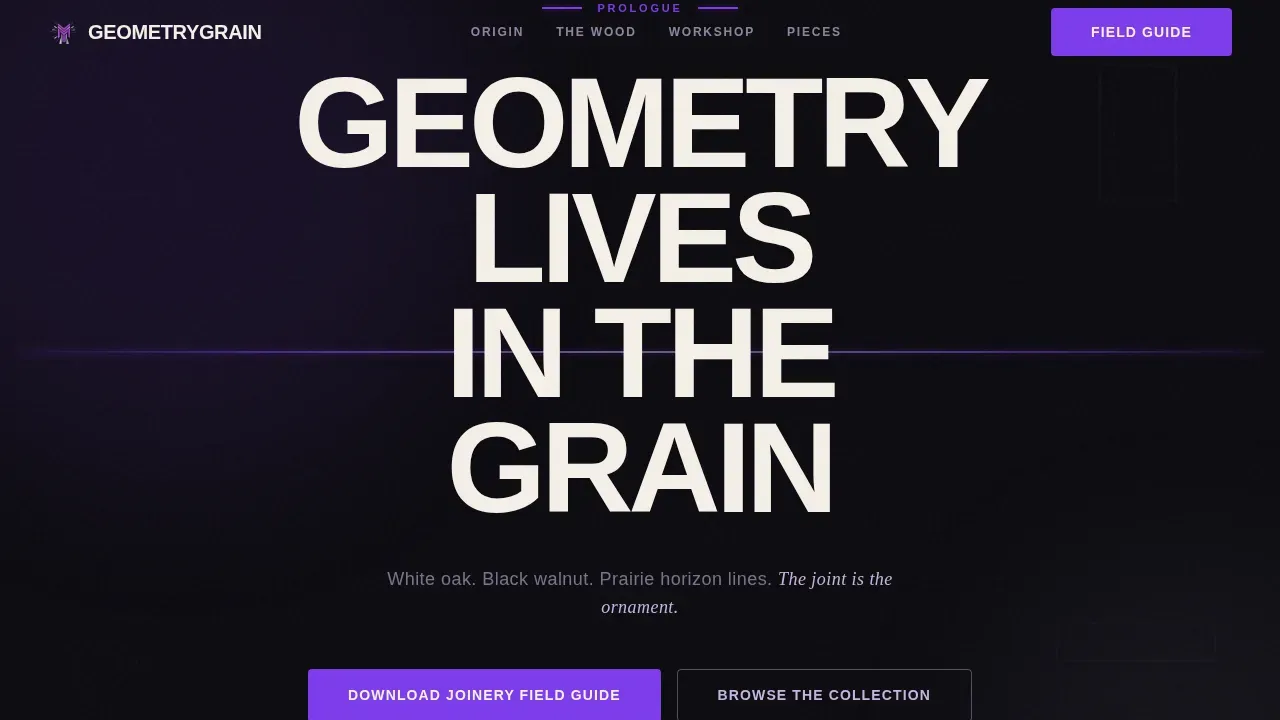
The hero fills eighty percent of the viewport with bold DM Sans typography at 900 weight. A thin violet rule runs through the midline like a prairie horizon. No image competes with the type. The headline itself is the craft statement.
Chapter-by-Chapter Origin Story Flow
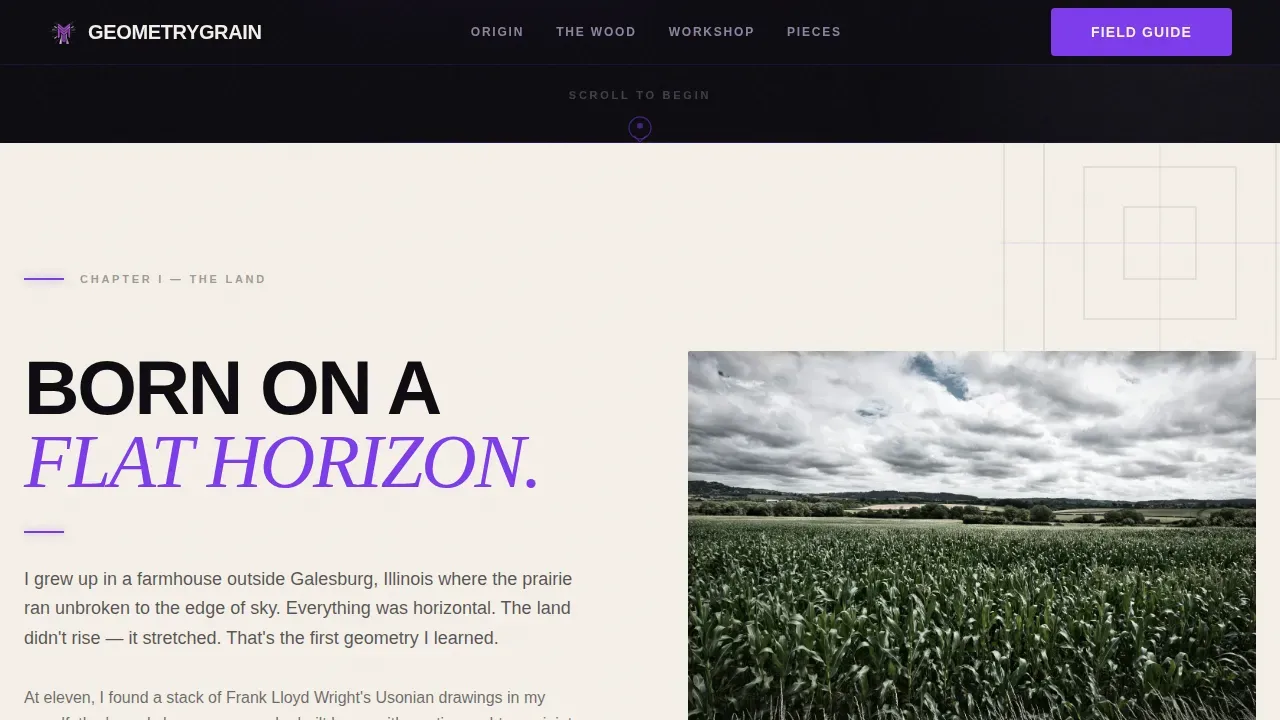
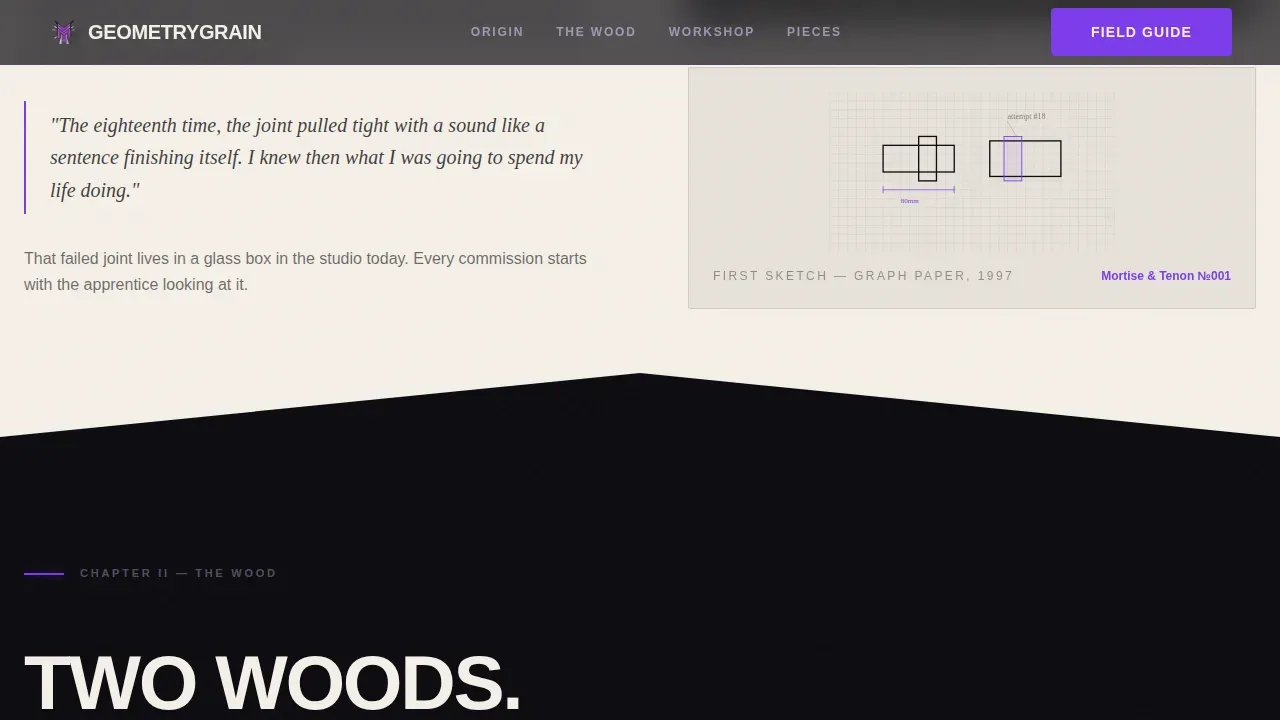
Six full-page sections act as narrative chapters: the land, the obsession, the wood, the workshop, the pieces, and the footer. Backgrounds alternate between void black and oak cream to signal each page turn. This structure guides visitors from awareness to interest to action in a logical, trust-building way.
Animated Geometric SVG Transitions
Geometric line illustrations animate between chapters using GSAP ScrollTrigger reveals. Triangles nest into rectangles; rectangles stretch into table silhouettes. These transitions teach visitors how prairie geometry works without a single word of explanation.
Joinery Field Guide Conversion Forms
Two simple sign-up forms appear at the workshop chapter midpoint and again at the footer. Each form asks for first name and email only. The clean, prominent form design makes it easy for visitors to sign up without friction.
Staggered Portfolio Bento Grid
The pieces chapter displays the furniture collection in a staggered bento grid layout on a void black background. High-resolution joinery detail images give visitors a clear view of the craft. A secondary Lookbook call to action sits inside the grid for visitors not ready to sign up.
Testimonial and Craft Vocabulary Social Proof
Architect testimonial quotes and specific joinery terminology work as trust signals throughout the landing page. Social proof woven into the story feels more credible than a reviews block dropped at the end.
Page sections overview
| Section | Purpose |
|---|---|
| Hero Typography Chapter | Establish brand voice with giant headline and violet horizon rule |
| Origin Story Chapter | Draw visitors into the designer's personal history and craft obsession |
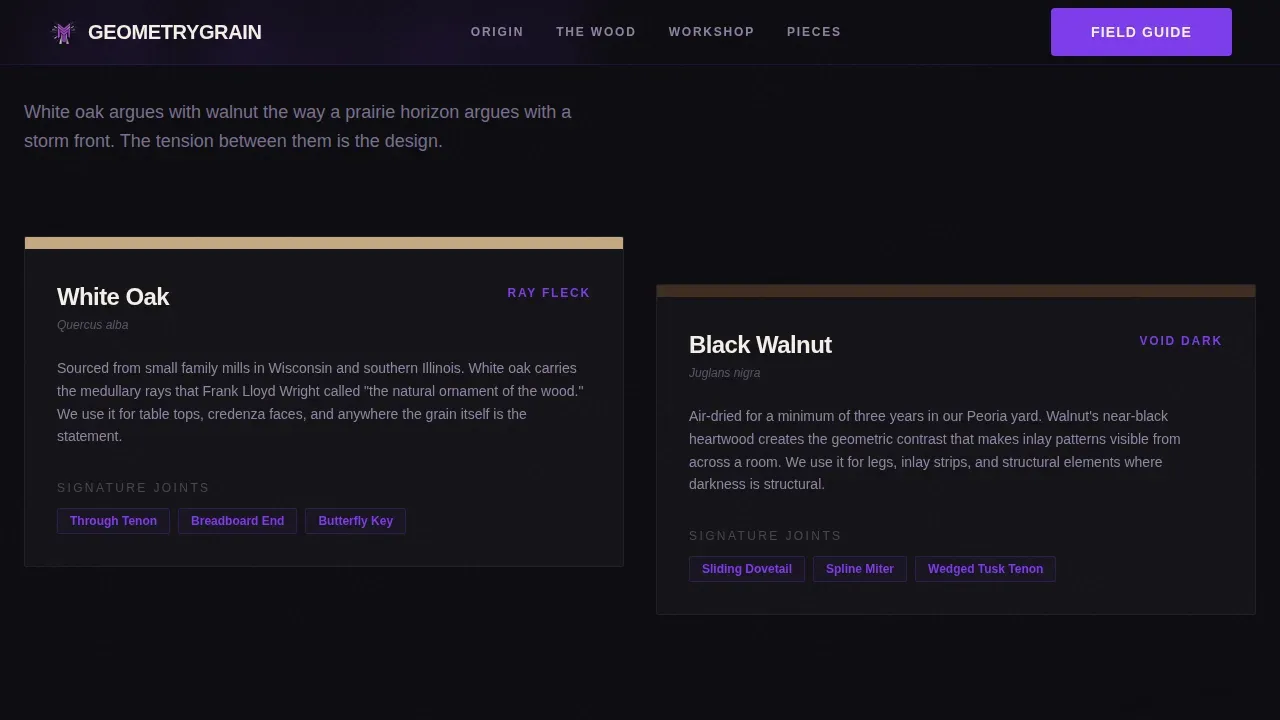
| The Wood Chapter | Present material philosophy with animated geometric inlay illustrations |
| Workshop and Form | Show joinery process details and present the Field Guide sign-up |
| The Pieces Grid | Display the portfolio collection with a secondary Lookbook call to action |
| Footer Split | Reinforce the Field Guide offer with a second sign-up and contact information |
Design & branding system
The Void and Violet color system creates a landing page design that feels like a neon sign humming in a woodshop after midnight. Earth tones and muted neutrals carry the prairie warmth while electric violet sharpens every geometric accent.
- Colors: void black (#0B0A0F), electric violet (#7C3AED), dusty prairie lilac (#C4B5E0), and bleached oak cream (#F5F0E8)
- Typography: DM Sans at 900 weight for headlines, Fraunces italic serif for accent text
- Geometric SVG patterns animate on scroll; violet intensity increases with each chapter to guide the user's eye forward
Mobile & speed optimization
This landing page is designed desktop-first to match how design-literate buyers and architects typically browse. Mobile-responsive design ensures a good experience across all devices.
- Layouts reflow cleanly for tablet and phone screen sizes
- Server Components handle static content while Client Components manage GSAP animations
- Performance optimization keeps the landing page loading quickly so visitors stay engaged regardless of traffic source
How this template helps you convert
The landing page earns its conversion by proving craft fluency before it ever asks for an email address.
- The origin story build trust chapter by chapter, so visitors arrive at the sign-up form already convinced the Joinery Field Guide is worth their information.
- The secondary Lookbook path gives visitors who need more time a clear, no-pressure way to stay in the project without leaving the page.
Other information about this template
This prairie geometric joinery furniture designer landing page template sits inside the Architecture and Design category, under the Prairie Style Architecture subcategory. It is one of the more design-intensive templates in this niche, built for studios that want their landing pages to do serious storytelling work.
- The landing page design follows the Frank Lloyd Wright principle of horizontal harmony, using wide image containers and horizontal banding throughout
- Conversion rates on furniture landing pages can vary based on traffic source and offer type; the dual call-to-action layout supports testing different entry points
- Users can adapt the color system, chapter copy, and form placement to match their own studio identity and services
- The template rights are included with your platform subscription; review your plan for full usage details
- Feedback from early users helped shape the chapter pacing and the placement of the second sign-up form
Theme
Playful Geometric
Creative direction
Origin Story
Color system
Void & Violet
Style
Storybook/Full-Page
Direction
Content/Resource
Page Sections
Giant Headline Hero with Violet Rule
Six-chapter Storybook Layout
GSAP Scrolltrigger Animations
Dual Joinery Field Guide Sign-up Forms
Staggered Bento Portfolio Grid
Craft Vocabulary Social Proof
Related questions
Does this template work for furniture designers who do not offer a downloadable guide?
Can I change the color system to match my own studio branding?
How does this landing page keep visitors who are not ready to sign up?
Is the animated geometric transition between chapters required?
What is included in the landing page and how many pages does it cover?