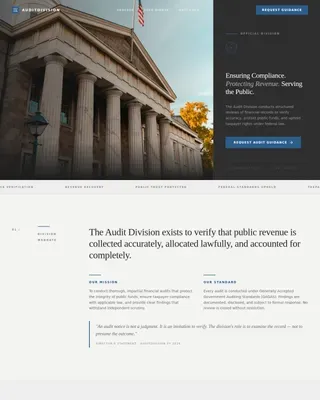
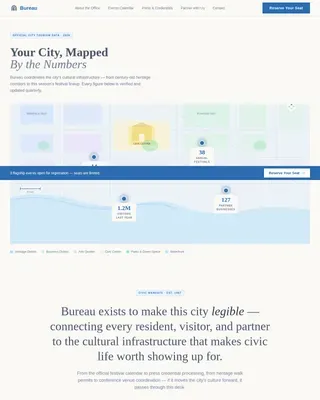
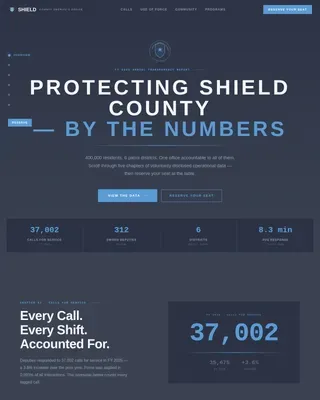
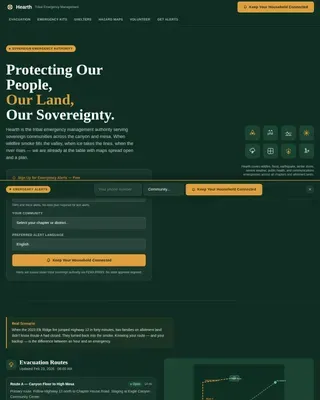
Transportation Government Professional Website Template
This split-screen landing page template is built for tribal transportation authorities that raise funds for rural public transportation services. It combines a signal-yellow stats wall with a scrolling audit structure, letting donors see exactly where each dollar goes. The design uses a muted Community Hearth palette and presents operational realities as honest, checkable progress toward real funding goals.
by Rocket studio
Quick summary
This is a donation and fundraising landing page built for tribal transit programs serving remote rural areas. The 50/50 split-screen layout opens with oversized operational metrics and a cinematic transit photograph. As visitors scroll, a checklist-style audit reveals real funding gaps, cost-tied donation presets, and a secondary path for grant writers to download the full operational report.
Who this template is for
This template is designed for tribal government organizations and tribal transit service operators that need to raise funding transparently. It also serves grant writers and institutional donors who need project information before they commit resources.
- Tribal transportation authorities managing public transportation across rural areas and reservation roads
- Grant writers and tribal council members seeking current information on service gaps and eligible projects
- Individual donors who want to know the exact dollar amount their contribution covers
What problem this template solves
Running a reliable transit system on tribal lands is genuinely hard. Geography spreads riders across vast service areas. Many communities have no alternative to the bus. Funding from federal sources is competitive, and some tribes prefer not to work through state-level programs to receive federal funds. A weak fundraising page loses both emotional donors and institutional grant writers.
- It is difficult to show individual donors and grant programs the real costs behind each route
- Tribal transit programs often lack a transparent public-facing document that converts institutional interest into actual grant funds
- Visitors who cannot quickly see what their gift covers tend to leave without acting
What you get with this template
This template delivers a fully structured fundraising landing page that works for both individual donors and institutional applicants. Every section is purpose-built to move visitors toward funding while maintaining the honest, data-led tone that communities and grant reviewers trust.
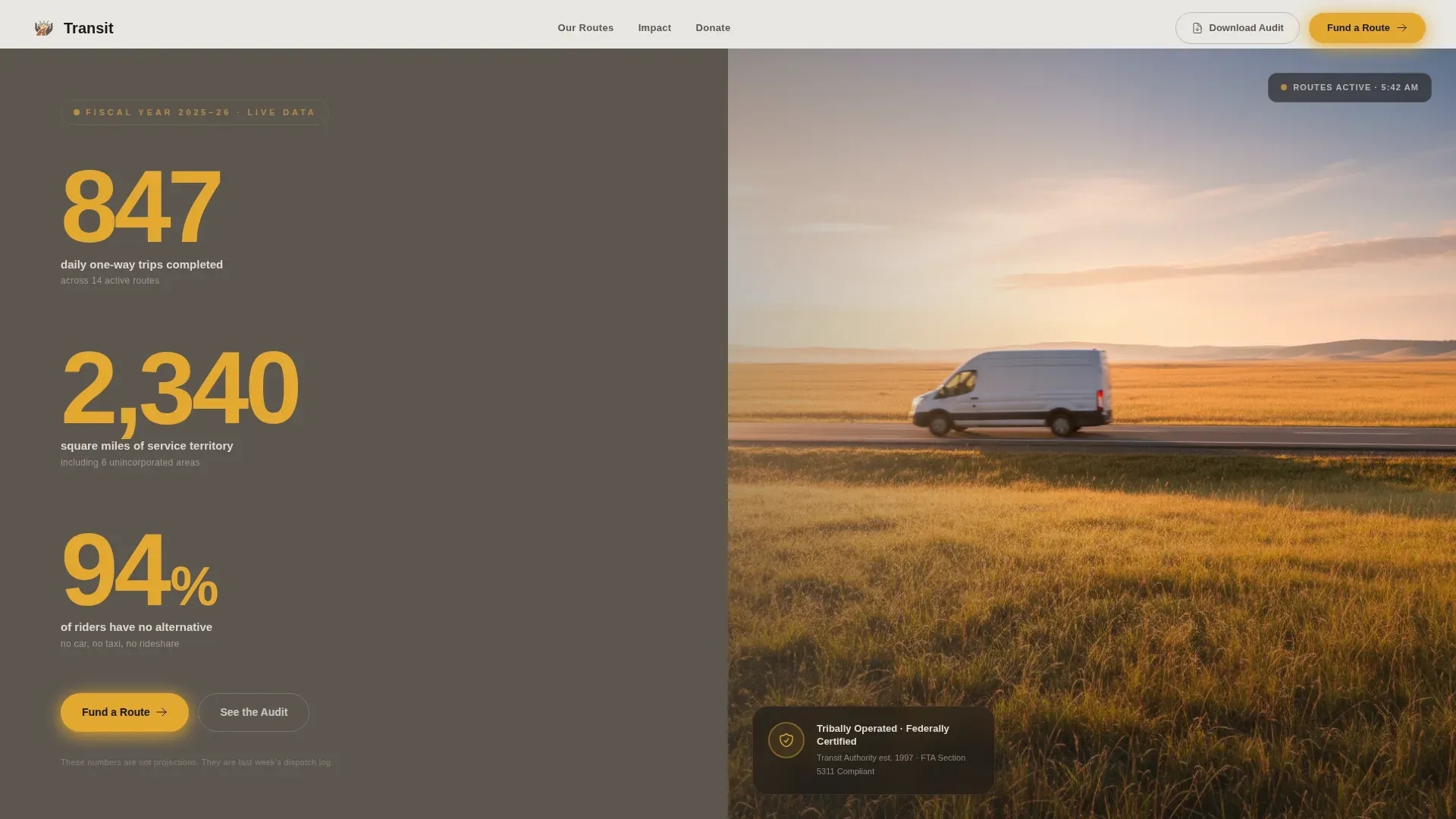
- A split-screen hero with a live stats wall, a cinematic transit photograph, and a primary "Fund a Route" call to action
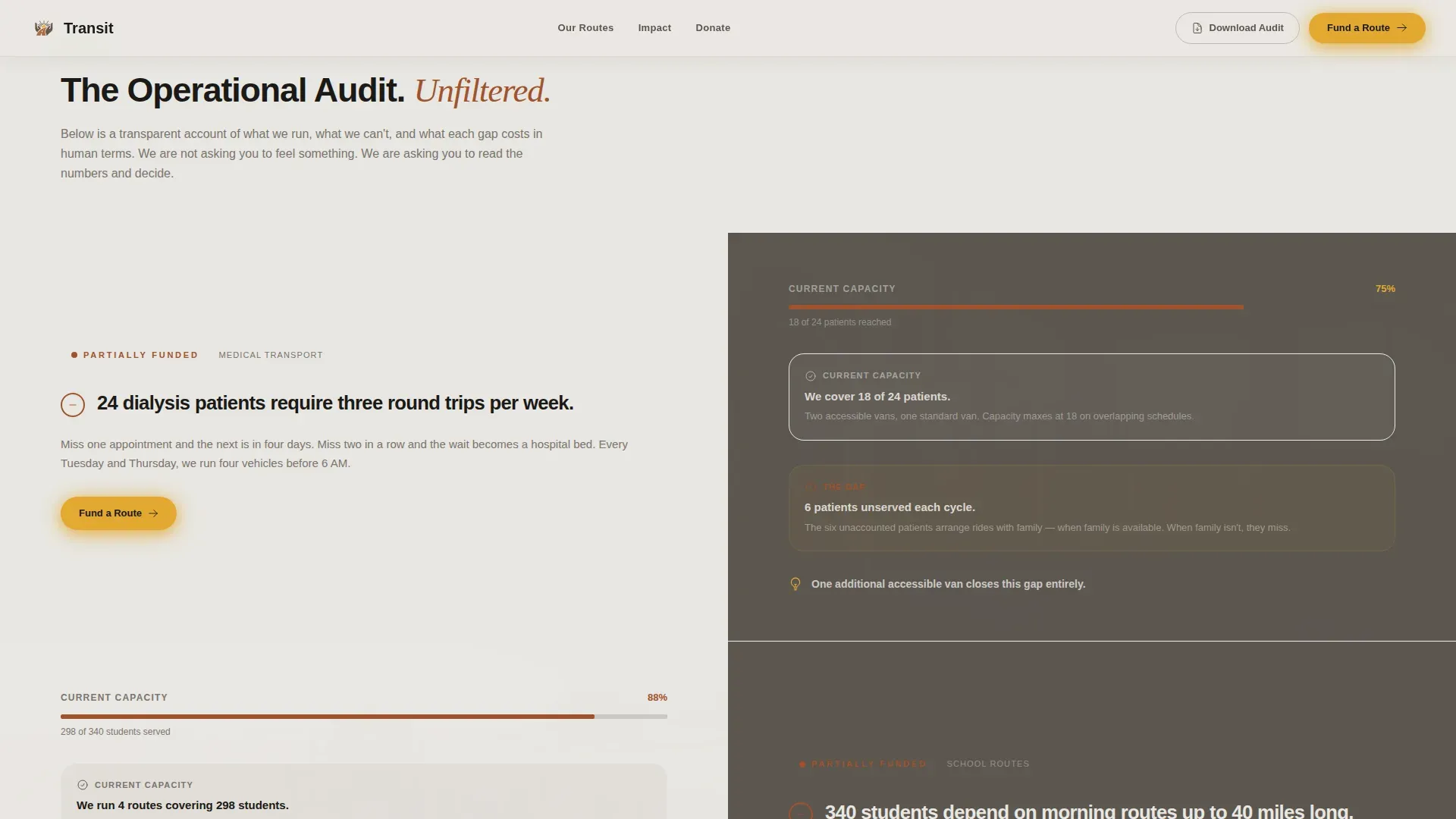
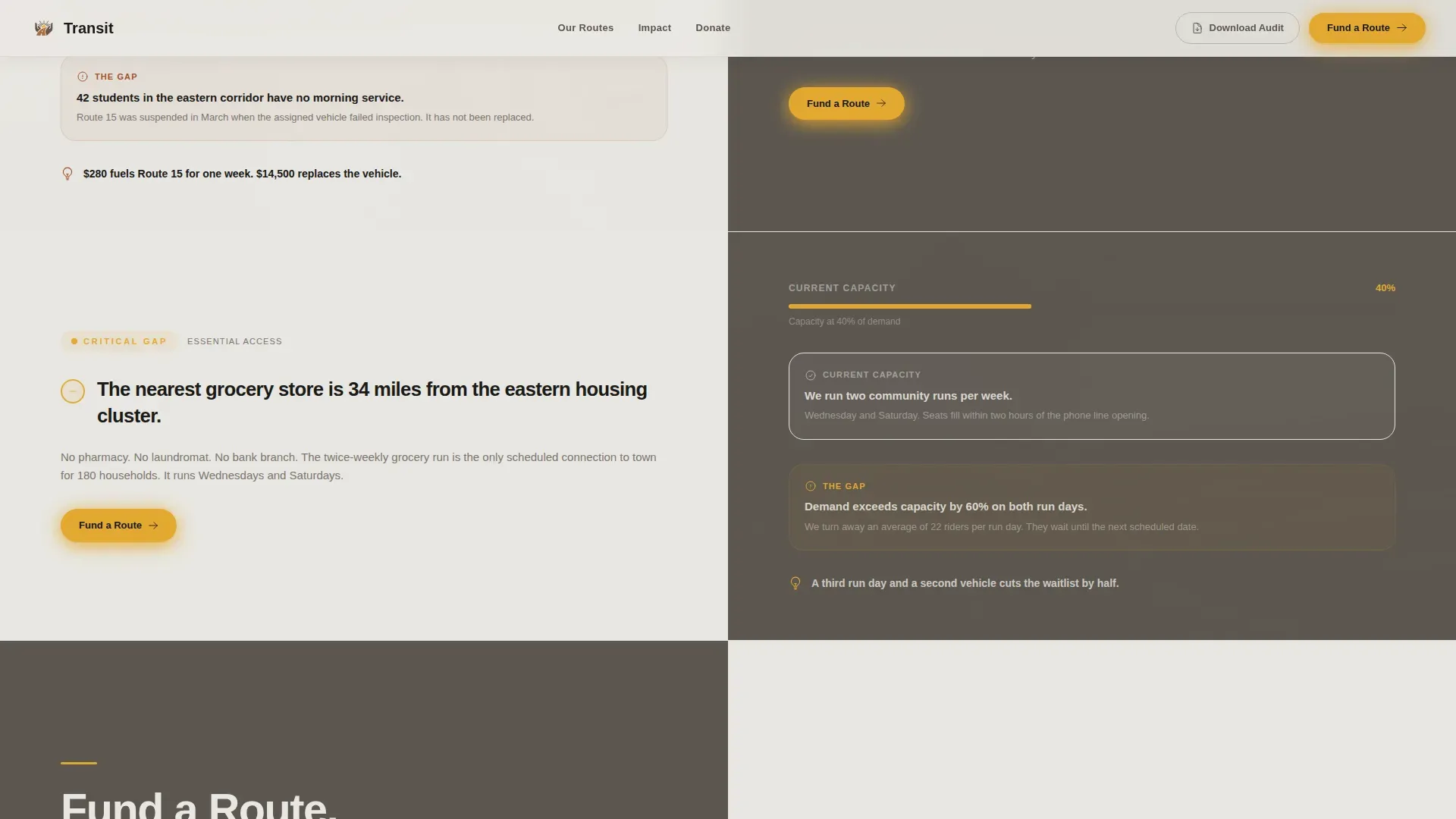
- A scrolling checklist audit with progress bars tied to real operational gaps, from dialysis trips to vehicle replacement
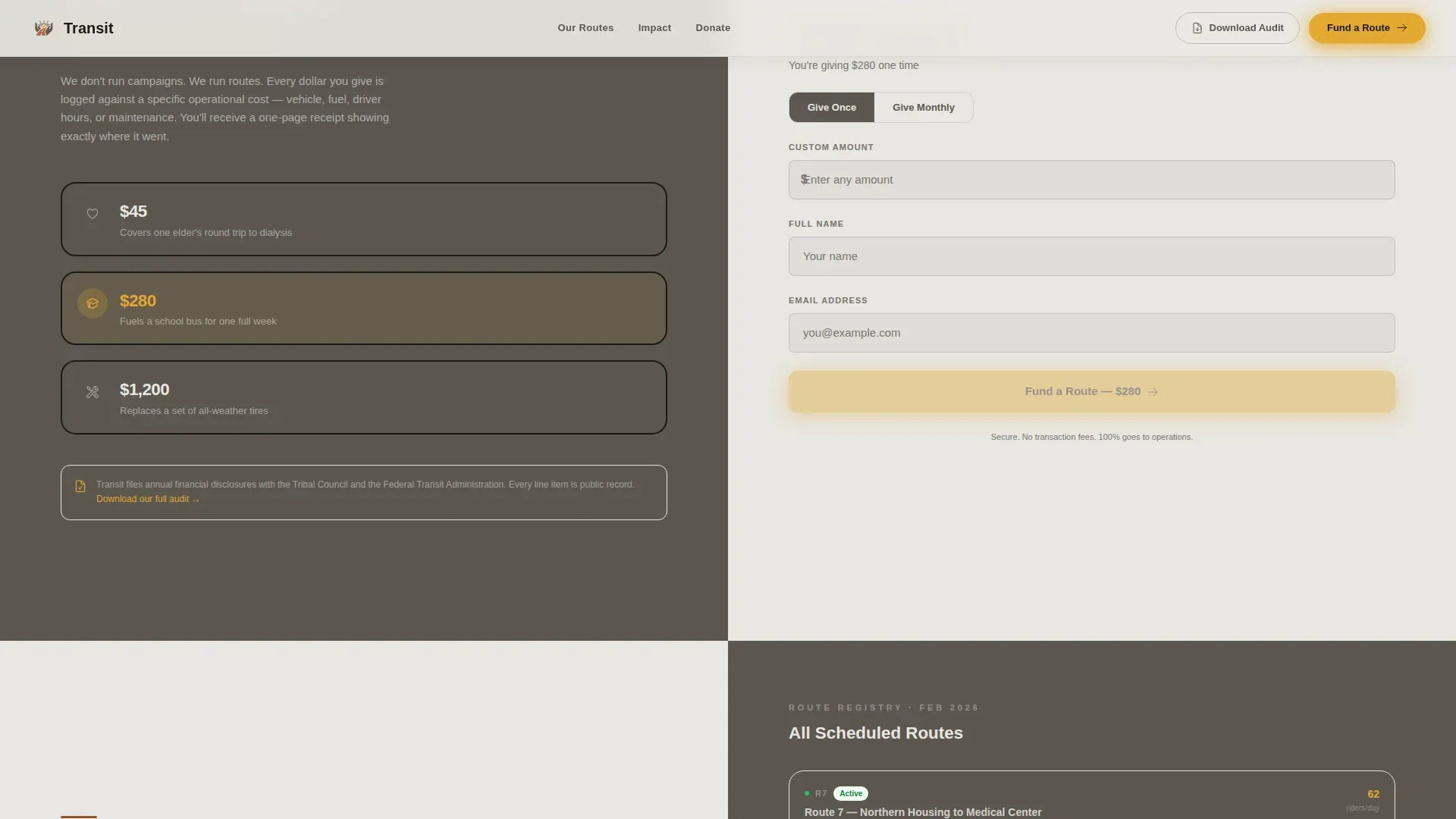
- A donation form with three cost-tied preset amounts, a custom entry field, and a secondary "Download Our Audit" path for institutional donors
Feature list
This template includes purpose-built components drawn directly from the brief. Each one serves a specific role in building donor confidence and driving action.
Split-Screen Stats Hero
The header divides into two equal panels. The left side stacks three oversized operational numbers in signal-yellow against a deep woodsmoke gray background. The right side holds one cinematic photograph of a transit van on a reservation road. No competing headline is needed because the numbers carry the full weight of the message.
Scrolling Checklist Audit
Each scroll section presents one operational reality as a checklist item. The left panel states a specific need, such as the number of patients requiring weekly round trips. The right panel shows current capacity, the funding gap, and a progress bar filling toward the goal. This structure lets visitors audit the tribal transit service the same way a grant reviewer would.
Cost-Tied Donation Form
The donation form offers three preset amounts, each linked to a real operating cost. Examples include covering one elder's round trip, fueling a school bus for a week, or replacing a set of all-weather tires. A custom field sits below the presets for larger gifts. This specificity helps donors trust that their contribution reaches a defined purpose.
Audit Download Path
A secondary call to action lets grant writers and tribal council members pull the full operational report as a downloadable document. This converts institutional visitors through transparency rather than emotion, giving them the project information and cost breakdowns they need before initiating a formal grant application.
Service Territory Route Map
A dedicated section presents a visual map of the service area, showing active routes, coverage gaps, and key destinations such as medical facilities and schools. Visual data helps stakeholders understand geographic diversity across the territory and identify where additional operating funds are most needed.
Community Impact Profiles
Anonymous rider profiles appear throughout the page, grounding the operational data in human experience. Profiles describe grandmothers traveling to dialysis, teenagers who would otherwise drop out, and parents commuting to swing shifts across remote rural roads. This section can also highlight coordination with local healthcare providers and senior services.
Page sections overview
| Section | Purpose |
|---|---|
| Split-screen hero | Stats wall plus transit photograph |
| Checklist audit | Scrolling operational gap review |
| Donation form | Cost-tied preset amounts and custom field |
| Audit download | Institutional donor conversion path |
| Route territory map | Service area and coverage gap visual |
| Footer row | Contact and navigation links |
Design & branding system
The visual identity follows a Community Hearth theme using the Cloud Canvas color system. Every color choice is functional, not decorative. The palette feels like a wool blanket on a bench seat: muted, durable, and warm without sentiment.
- Colors: overcast sky white (#E8E6E1), woodsmoke gray (#5C5650), warm hearthstone brown (#A0522D), and signal yellow (#E2A832) reserved for calls to action and data highlights
- Typography: Bricolage Grotesque for sans-serif headings and interface labels, paired with Fraunces serif for body text and rider profile copy
- Section backgrounds alternate between soft white and deep gray, with hearthstone brown anchoring dividers and iconography
Mobile & speed optimization
The template is built desktop-first to serve grant writers who review documents on large screens. Full mobile support is included so that community members and riders, who may rely on smartphones as their primary internet access, can reach the donation form easily.
- Scroll-triggered animations using GSAP ScrollTrigger handle progress bar fills and staggered number counters without blocking page load
- Static sections use server-side rendering while the donation form and animated components load as client elements, keeping overall performance balanced
- High-contrast text against both white and gray backgrounds supports readability across screen sizes and lighting conditions
How this template helps you convert
The page is engineered to move two very different audiences: an emotional individual donor and a methodical institutional grant writer. Both paths are served without compromising either.
- The opening stats wall creates immediate credibility by presenting real operational numbers before any ask. Visitors understand the scale of the tribal transit program before they are invited to act, which reduces skepticism and raises the perceived legitimacy of the funding opportunity.
- The checklist audit structure escalates urgency gradually and honestly. Each section adds one more gap, building a cumulative case that feels like a transparent audit rather than a sales pitch. By the time a visitor reaches the donation form, they have already internalized the costs and are prepared to choose a preset amount that matches their capacity.
Other information about this template
This template is relevant to tribal transit programs that operate under federal funding frameworks. The following notes provide useful context for organizations that plan to use this page alongside a formal grant application process.
- Federally recognized Indian tribes and Alaska Native villages are eligible direct recipients and subrecipients for numerous Federal Transit Administration programs, including formula programs under Sections 5310 and 5311
- Tribal governments typically receive funds through the Tribal Transit Program, known as the TTP formula allocation, which the Federal Transit Administration publishes each year listing each formula recipient and the apportioned dollar amount
- Indian tribes applying for TTP funding must submit proposals through Grants.gov, complete the SF-424 Mandatory form and the Tribal Transit supplemental form, and certify specific categories in the annual Certifications and Assurances
- Tribes may choose to apply to become direct recipients of federal funds rather than routing resources through state programs; some tribes prefer this path because of their status as sovereign nations
- The Federal Transit Administration publishes a Notice of Funding Opportunity to inform eligible applicants about available funding; Tribal Transit Liaisons at regional offices are available to provide technical assistance and assist grant recipients through the process
- Eligible recipients must maintain an active SAM registration and demonstrate requisite legal and technical capacity to administer federal funds on behalf of their communities
- Successful applicants may be subject to a site visit and ongoing program management requirements including award management and compliance reporting
- The Rural and Tribal Assistance Pilot Program provides grant funds to eligible project sponsors for legal, technical, and financial advisors to assist with pre-development-phase activities; the Build America Bureau administers this discretionary program and the Infrastructure Investment and Jobs Act expanded its capacity
- Eligible projects under the following programs may include operating assistance, capital purchases, and route expansion; the United States Bureau of Indian Affairs, under the Department of Indian Affairs, also administers resources relevant to tribal transportation coordination
- A Tribal Memorandum of Understanding template, available through the Federal Transit Administration, helps tribes and their transit systems formalize agreements with local governments; the document outlines responsibilities, contact provisions, and terms for providing transportation services without waiving the sovereignty of either party
- This template can support coordination with other resources such as local health departments and senior services organizations, reinforcing partnerships that strengthen the case for continued federal funding
Theme
Community Hearth
Creative direction
Checklist & Audit
Color system
Cloud Canvas
Style
Split Screen (50/50)
Direction
Donation/Fundraising
Page Sections
Split-screen Stats Hero
Scrolling Checklist Audit
Cost-tied Donation Form
Audit Download for Grant Writers
Service Territory Route Map
Anonymous Community Impact Profiles
Related questions
Who are the eligible applicants for tribal transit funding programs?
What federal programs provide funding for tribal transit programs?
How does the scrolling checklist audit section work in this template?
Can grant writers and institutional donors use this template effectively?
Does the donation form support custom gift amounts?