Vibrant Community Space Landing Page Template
Hearth: Keep the Light On is a hero-dominant landing page built for grassroots mental health organizations. It opens with a mosaic #StillHere hashtag that assembles from real neighborhood photos, then walks visitors through intimate place-cards, tally-style proof points, and first-name testimonials. Every step of the page earns the donation before it asks for one.
by Rocket studio
Quick summary
Hearth: Keep the Light On is a single-page fundraising experience designed for community mental health organizers. It uses a Desert Rose color system, warm Southwest typography, and section-by-section storytelling to move block captains, school counselors, and grieving parents from first scroll to committed donor. The primary call to action, "Keep the Light On," appears above the fold and resurfaces throughout.
Who this template is for
This page was built for people who run neighborhood mental health work without a marketing team or a large budget. It speaks directly to organizers who find their community members through church basements, barbershop back rooms, and park benches, not press releases.
- Block captains, school counselors, and parents who have turned personal loss into a support circle
- Small nonprofit staff and volunteer team members who need a fundraising page they can launch today
- Community program leaders who want donors to feel like neighbors, not transaction recipients
What problem this template solves
Most nonprofit landing pages feel like brochures. They list services, state statistics, and ask for money before the visitor understands what the work looks like on the ground. That distance is the problem. When a person lands on a page and cannot find themselves in it, they leave.
- Donors do not find information that connects the gift to a real human outcome
- Volunteers cannot identify a clear path to join or start a circle in their own area
- Organizers lose community members because the page feels polished rather than present and personal
What you get with this template
This template provides everything a grassroots organization needs to run a focused, emotionally resonant fundraising page. The contents are structured to build trust before asking for action, so visitors walk away feeling like members rather than prospects.
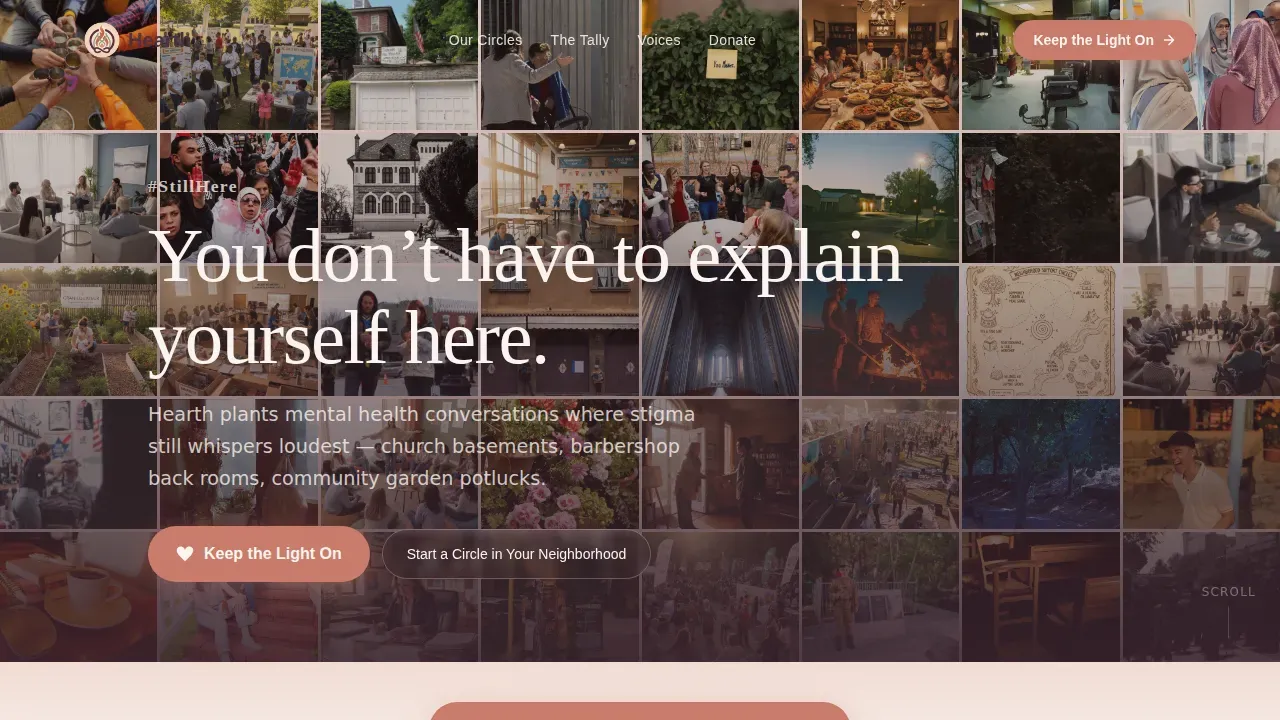
- A cinematic hero section with a mosaic #StillHere hashtag that assembles on page load from real neighborhood photo thumbnails
- A four-preset donation form with tangible outcome labels, a monthly giving toggle, and a "Start a Circle" secondary path for volunteers
- Five place-specific content sections that walk through the church basement, the park bench, the barbershop, the tally wall, and the voices of the circle
Feature list
This page is built around one idea: the gift should feel inevitable by the time the form appears. Every feature exists to create that experience, step by step.
Mosaic Hero with Hashtag Assembly
The hero fills ninety percent of the screen. A living #StillHere hashtag assembles itself from real neighborhood photo thumbnails as the page loads. Each image is warm-shifted to match the Desert Rose palette. The headline appears in deep dusk plum beneath the mosaic, quiet enough to feel handwritten. The "Keep the Light On" call to action floats at the hero's base in sun-warmed terracotta so visitors see it the moment they arrive.
Place-Card Neighborhood Sections
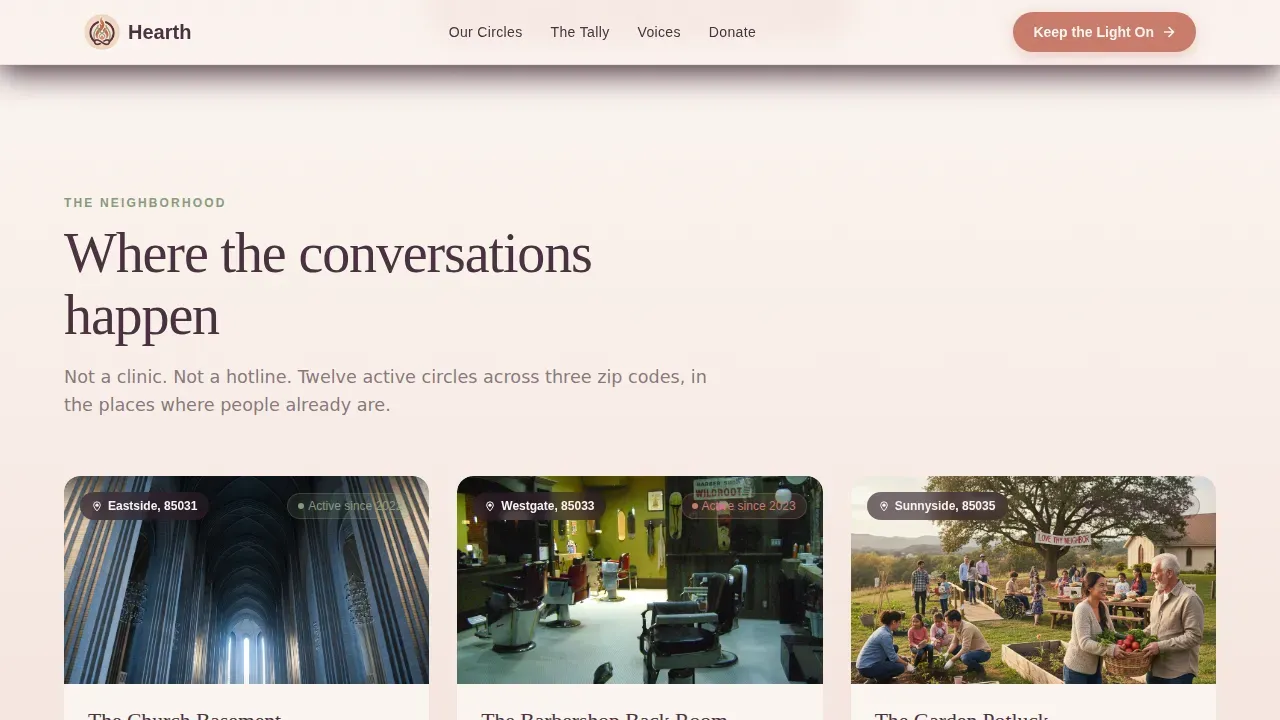
Scrolling past the hero feels like walking deeper into the neighborhood. Three specific place-cards cover the church basement where the first meeting happened, the park bench where a story is quoted in full, and the barbershop back room where the conversation started. Each card uses a vignette-style layout that makes the community's work feel located and real rather than generic.
Hand-Counted Tally Section
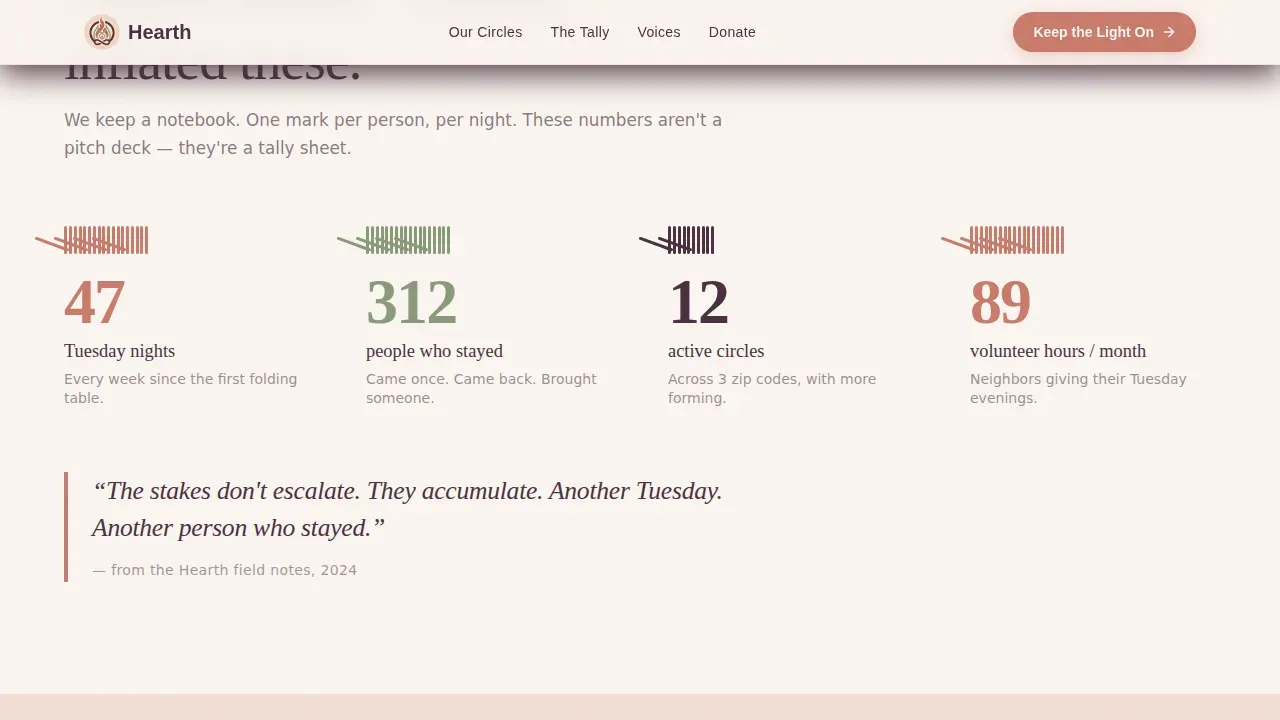
Numbers appear as tally marks rather than clean charts. "47 Tuesday nights. 312 people who stayed." The tally count-up animation runs on scroll, so each figure feels earned rather than presented. This section builds proof through intimacy, not volume, giving donors signs of genuine progress without resorting to crisis language.
First-Name Testimonial Wall
Testimonials are raw and unpolished. Each one carries only a first name and a neighborhood, no titles, no headshots, no corporate formatting. This design choice protects the dignity of each person who shared their story and makes the social proof feel like something overheard at a community table rather than manufactured.
Donation Form with Tangible Presets
The donation form offers four preset amounts tied to specific, real outcomes. "$20 covers one night's coffee and supplies." "$75 trains a new circle leader." A custom field and a monthly giving toggle let donors choose their own level of commitment. A secondary call to action, "Start a Circle," opens a volunteer path for visitors who want to give hours rather than dollars.
Persistent call to action Resurfacing
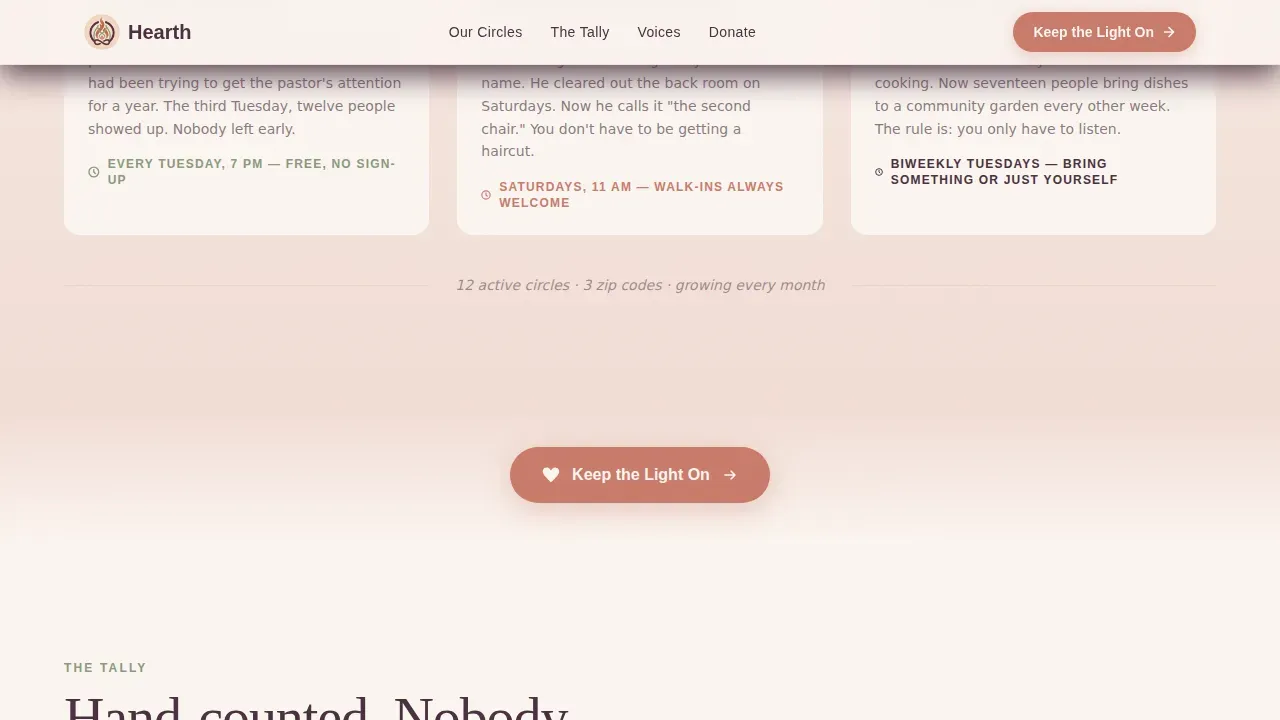
The "Keep the Light On" button does not appear once and disappear. It resurfaces after every second section as the visitor scrolls. By the time a donor reaches the form, they have seen the call to action multiple times in context. The page earns the gift across every section rather than relying on a single ask at the end.
Page sections overview
| Section | Purpose |
|---|---|
| Mosaic Hero | Assembles #StillHere hashtag from neighborhood photos; anchors primary call to action |
| The Neighborhood | Three place-cards covering church basement, park bench, barbershop |
| The Tally | Hand-counted tally marks showing meetings held and people reached |
| Voices from Circle | First-name testimonials with neighborhood attribution only |
| Donation Form | Four preset amounts, monthly toggle, and Start a Circle volunteer path |
| Footer | Logo left, essential links right, tagline anchoring the page |
Design & branding system
The visual identity follows a Community Hearth theme built on a Desert Rose color system. Every color choice was made to feel like a Southwest evening cooling down: clay pots still warm, dried flowers at the doorframe, a porch light left on.
- Terracotta (#C97B6B) carries all calls to action and emotional highlights; adobe (#F2DDD5) softens every background into something restful
- Dried sage (#8A9A7B) marks data points and proof sections; deep dusk plum (#4A3040) grounds all body text with weight that never shouts
- Typography pairs Fraunces serif for headlines, which reads warm and almost handwritten, with DM Sans for body copy, which stays clear and human at every age and reading level
Mobile & speed optimization
Close to 79% of landing page visits now come from mobile devices. Block captains and school counselors check their phones between meetings and during lunch hours. This page was designed mobile-first so that every section, every form field, and every call to action works cleanly on a small screen.
- Images are lazy-loaded to reduce initial page weight; CSS animations handle the mosaic assembly and scroll reveals instead of heavy JavaScript
- The donation form is kept intentionally minimal: four tappable preset buttons, one toggle, one custom field, so visitors can complete the action in under a minute
- A one-second delay in page load can reduce conversions by 7%, which is why scroll-triggered reveals and lightweight animation are prioritized over complex interactions
How this template helps you convert
This page does not manufacture urgency. It builds belonging. By the time a visitor reaches the donation form, they have walked through the neighborhood, heard the voices, and seen the tally. The ask feels like staying, not giving.
- The primary call to action and value statement appear above the fold immediately, so visitors understand the mission within seconds of arriving and can act without scrolling
- Preset donation amounts tied to real outcomes, such as coffee for one night's circle or training for a new leader, make each gift feel concrete and connected to a specific person rather than a general fund
- The "Start a Circle" secondary path captures volunteers who are not ready to donate but want to give their hours, expanding the program's reach without losing a single motivated visitor
Other information about this template
The Hearth: Keep the Light On community landing page template is built for organizations at the intersection of community care and grassroots action. It can be adapted for any city-based mental health initiative, neighborhood justice program, or peer support project that needs a warm, credible, donation-ready home online.
- No-code tools make it accessible to team members without programming knowledge, reducing the time required to implement and launch; non-technical staff can explore layout options and swap components without writing code
- The template supports customization across color levels, logo placement, and section contents, so organizations can set their own identity while keeping the core emotional structure intact
- Community landing pages built on this foundation can serve as a hub for events, education resources, employment support information, and other services as the program grows and the organization's mission expands
- Real-time tally displays and first-name social proof create a natural sense of community progress that encourages new visitors to join before the moment passes
- The logo appears in the footer alongside essential links, following an Arc Browser Split pattern that keeps navigation clean and uncluttered
- The template is well-suited for organizations working across issues of food security, children's wellbeing, community justice, and peer-led mental health; the design system can embrace a wide range of causes while keeping the neighborhood warmth intact
- Invitational calls to action, such as "Keep the Light On" and "Start a Circle," emphasize belonging over transaction, which research and best-practice guidance consistently identify as more effective for community-oriented fundraising pages
- Scroll-triggered animations and the mosaic hero assembly run at a speed that keeps the experience engaging without overwhelming older devices or slower connections
Theme
Community Hearth
Creative direction
Local & Neighborhood
Color system
Desert Rose
Style
Hero-Dominant (90/10)
Direction
Donation/Fundraising
Page Sections
Mosaic Hero with Hashtag Assembly
Place-card Neighborhood Sections
Hand-counted Tally Section
First-name Testimonial Wall
Donation Form with Tangible Presets
Persistent Call to Action Resurfacing
Related questions
Can I use this template if my organization is not focused on mental health?
Do I need coding skills to customize this template?
How does the donation form work?
Is the template mobile-friendly?
Can I adapt the template as my program grows?