Nonprofit Economic Equality Fundraising Landing Page
Uplift is a masonry-style nonprofit landing page built for economic equality fundraising platforms. It pairs documentary photography with a warm, data-honest layout to guide church organizers, corporate giving managers, and individual donors toward registering for an annual fundraising gala or contributing directly. Every section earns trust before asking for action.
by Rocket studio
Quick summary
Uplift is a single-page fundraising landing page designed for economic equality nonprofits. It opens with a full-bleed documentary photo, moves through a masonry grid of real family stories, and lands on a gala registration form with a secondary donate path. The layout balances emotional storytelling with dollar-level accountability so donors arrive at the conversion point already convinced.
Who this template is for
This template is built for mission-driven organizations that raise money by showing exactly where it goes. It works best when your donor audience includes people who give with both their heart and a spreadsheet.
- Church benevolence fund organizers allocating community giving budgets
- Corporate social responsibility managers preparing quarterly giving reports
- Retired individual donors who want tangible proof their contribution matters
What problem this template solves
Most nonprofit landing pages ask for trust before earning it. They lead with a donation button before explaining the work, or they bury the impact data where no one scrolls. That gap between ask and evidence is where donors drop off.
- Donors leave when they cannot trace their dollar to a real outcome
- Generic stock-photo designs undermine credibility with sophisticated giving audiences
- Registration forms that appear before context is established reduce event sign-ups
What you get with this template
You get a complete, single-page fundraising layout organized to move visitors from awareness to action in one focused scroll. Every section has a job, and no section wastes the visitor's attention.
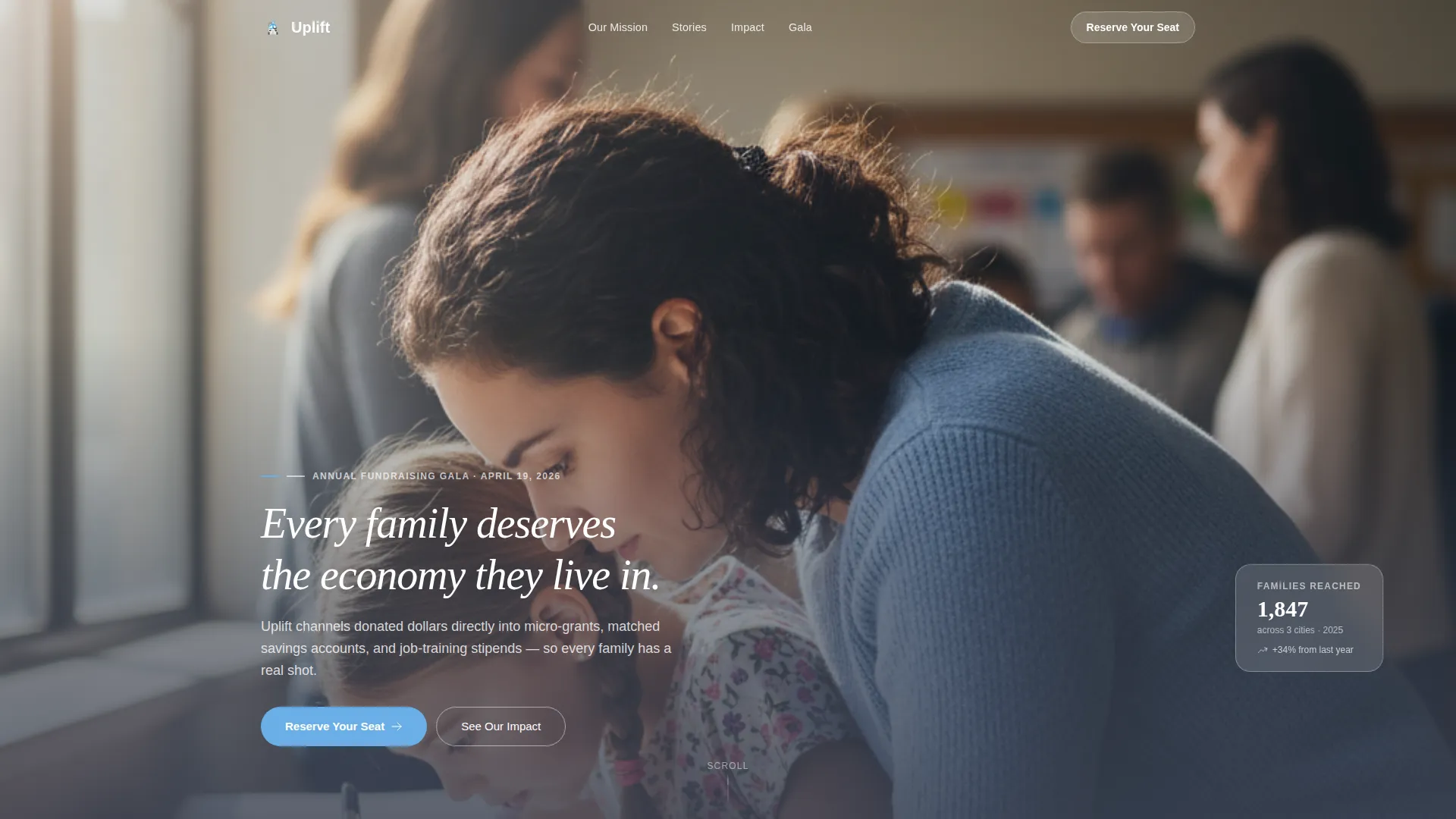
- A full-bleed documentary hero with a fade-in headline and floating impact stat card
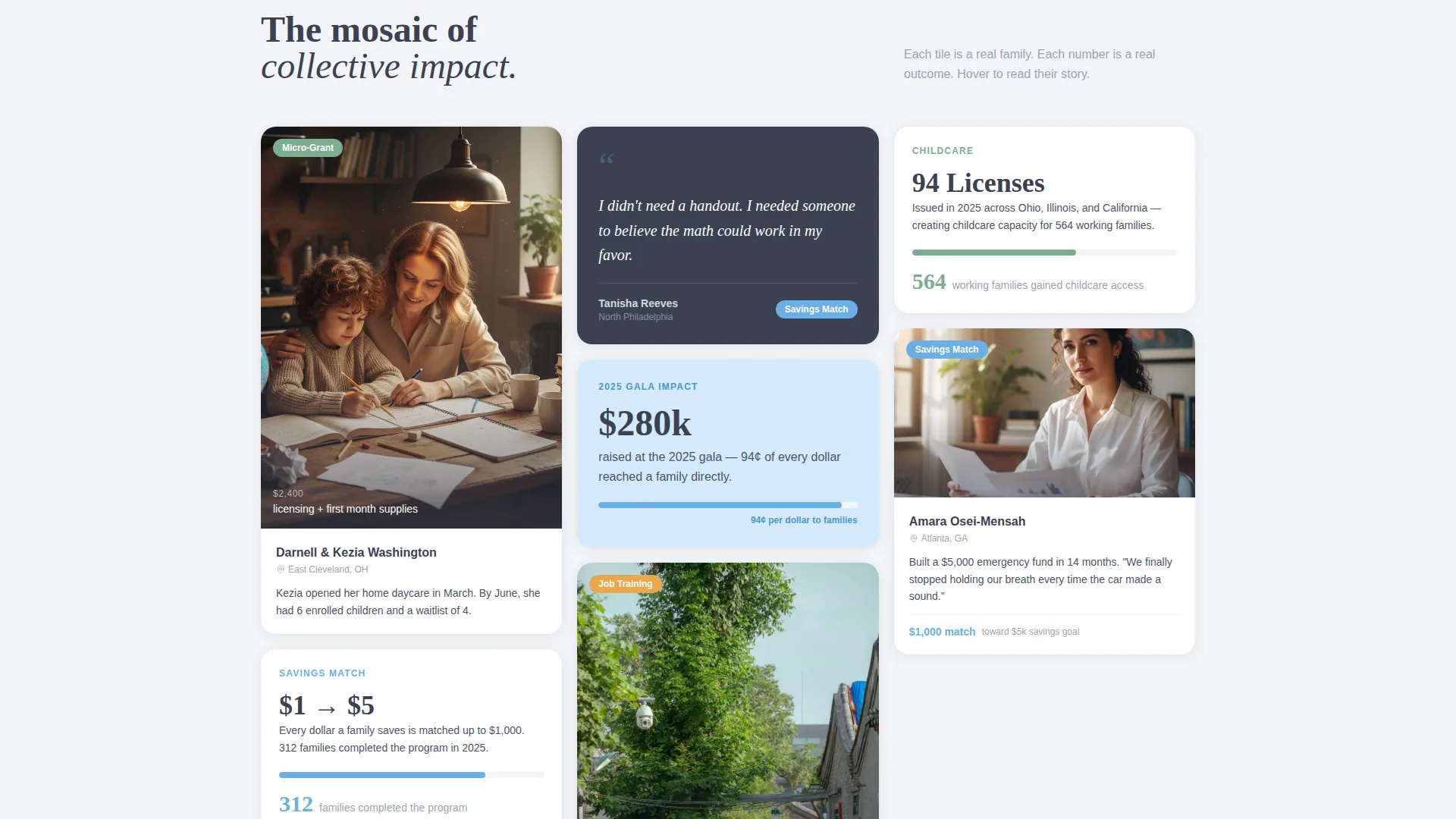
- A masonry story grid with photo-and-caption cards of varying heights for authentic narrative flow
- A gala registration form with guest stepper input, table preference dropdown, and a secondary donate path
Feature list
A paragraph introducing the feature set: The Uplift template is built around six core capabilities drawn directly from its brief. Each one serves a specific moment in the donor journey, from the first emotional impression through to the final registration click.
Full-Bleed Documentary Hero
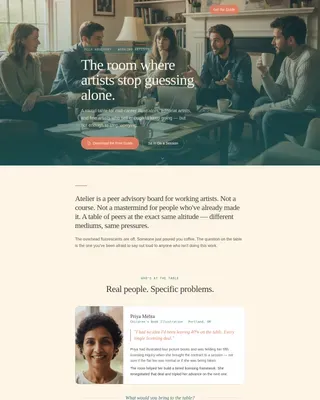
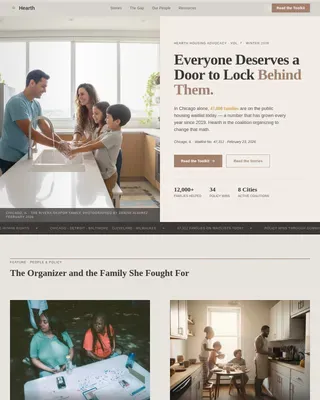
The header uses a full-bleed photo framed around a real, unposed moment. A fade-in headline overlays a soft gradient at the bottom of the image. A floating stat card anchors the scene with one stark data point before the visitor scrolls further.
Masonry Story Grid
The page's centerpiece is a Pinterest-style masonry grid of family story cards. Cards vary in height, alternating between intimate photo-and-caption tiles and wider data visualization cards. Staggered scroll-reveal animations bring each card in progressively so the grid feels alive rather than static.
Dollar-to-Outcomes Progress Bar
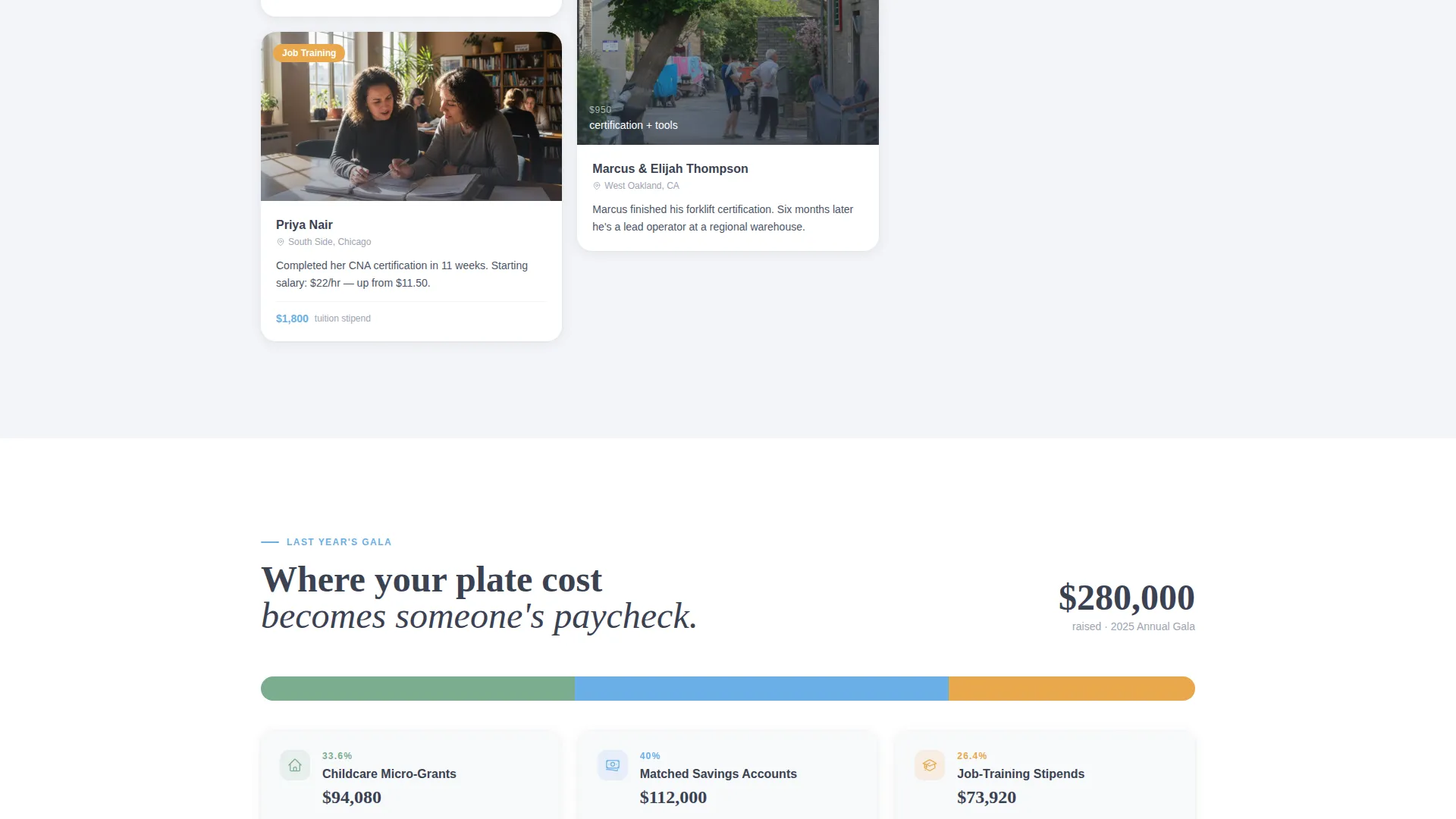
A horizontal progress bar breaks down last year's $280,000 raised into three specific outcome categories: childcare grants, matched savings accounts, and job-training stipends. An animated count-up effect plays as the bar enters the viewport, reinforcing accountability before the registration ask.
Gala Event Registration Form
The primary conversion section contains a structured registration form. Fields include full name, email address, a stepper input for number of guests, and a dropdown for table preference covering individual seat, half table, and full sponsor table options.
Secondary Donation Path
Visitors who cannot attend the gala are offered a clearly marked alternative: "Can't Attend, Donate Instead." A simple donation amount selector gives them a low-friction way to contribute without leaving the page or navigating elsewhere.
Mission Pull Quote Section
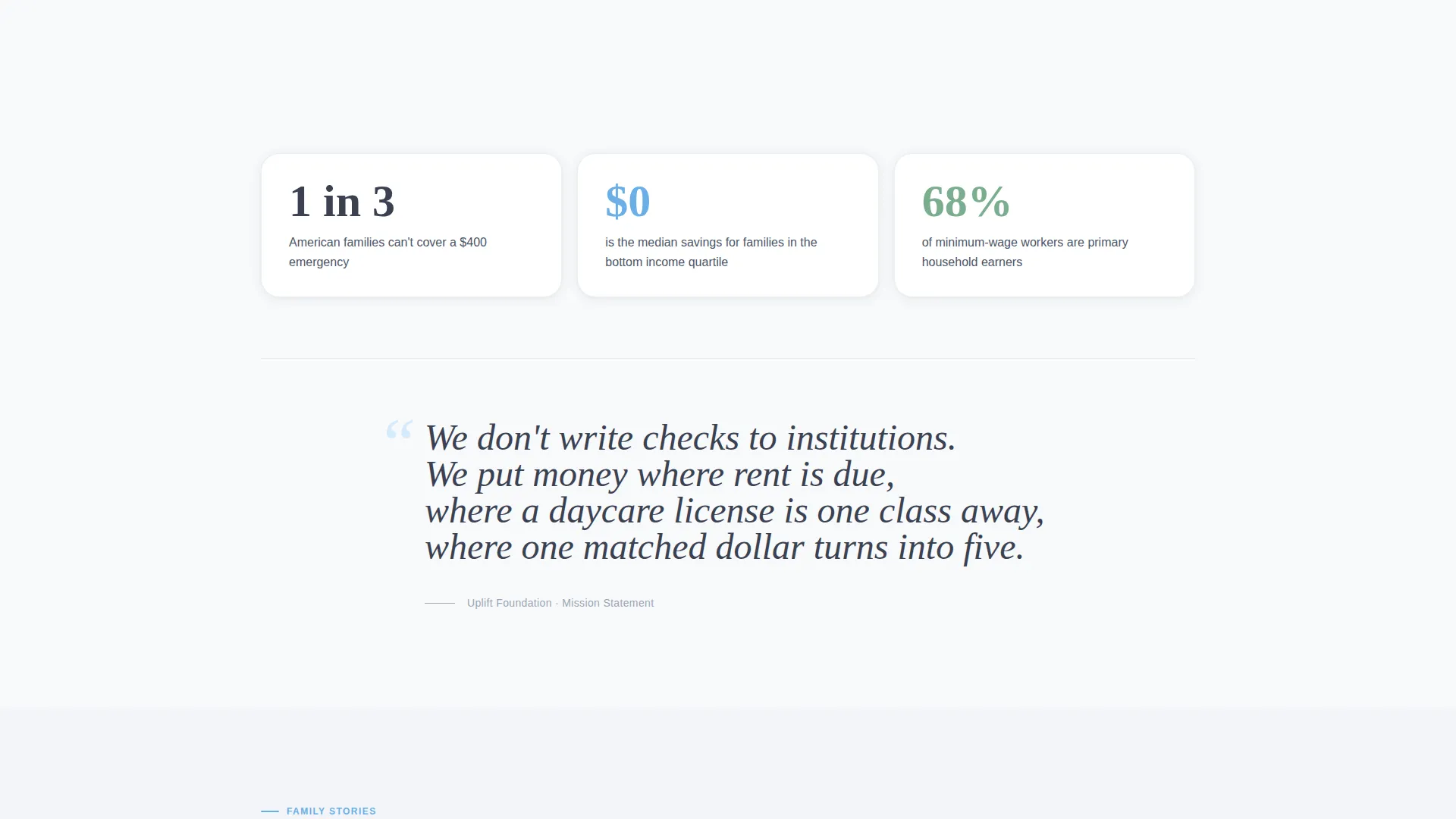
Between the problem stat card and the family story grid, a hand-lettered-style pull quote presents the organization's mission statement. Set in a serif typeface, it provides an emotional pause that links the scale of the problem to the human purpose of the work.
Page sections overview
| Section | Purpose |
|---|---|
| Hero photo header | Establish emotional context and credibility with documentary imagery and a fade-in headline |
| Floating stat card | Anchor the hero with a single data point that states the scale of the problem |
| Problem scale block | Present one stark statistic that frames why the organization exists |
| Mission pull quote | Deliver the organization's purpose statement in a visually distinct, serif-led format |
| Family stories grid | Build trust through varied-height masonry cards combining photos, captions, and outcome data |
| Dollar breakdown bar | Show exactly how last year's $280,000 in gala proceeds was distributed across three programs |
| Gala registration form | Capture attendee details including guests and table preference via a structured interactive form |
| Secondary donate path | Offer a direct donation option with an amount selector for visitors not attending the event |
| Footer row | Close with a clean single-row footer consistent with the page's warm, minimal design |
Design & branding system
The Slate and Sky color system is built to feel serious enough to trust and warm enough to believe in. Every color choice traces back to the template's Family First theme, where the goal is kitchen-table comfort alongside institutional credibility.
- Weathered charcoal (#3B4252) anchors text blocks and grounding headers for strong readability
- Open-sky blue (#6AAFE6) drives all interactive elements including buttons and progress bar fills
- Dawn white (#F8F9FB) backgrounds the page and heather gray (#9BA4B4) acts as the mortar between masonry cards
- DM Sans handles all body text for clarity, while Fraunces serif leads the hero headline and pull quote sections
Mobile & speed optimization
The template is designed desktop-first, with deliberate attention to how the masonry grid collapses gracefully on smaller screens. Interactive components use client-side rendering only where needed, keeping the rest of the page lean.
- Masonry grid is structured to collapse cleanly from multi-column to single-column on mobile viewports
- Static layout sections use server-side rendering while form and animation components run client-side
- Scroll-triggered animations including card reveals and the progress bar count-up are lightweight and threshold-based
How this template helps you convert
The page is architected to earn trust in sequence before presenting the registration form. Visitors do not encounter the ask until they have absorbed the problem, the mission, the human stories, and the financial accountability.
- The hero establishes emotional connection and drops a data point that makes the problem undeniable before the visitor reads a single word of body copy.
- The dollar-to-outcomes bar shows exactly where last year's gala funds went, so the registration form arrives with built-in proof that a plate cost becomes a real family outcome.
- The secondary donate path ensures no motivated visitor leaves without a conversion option, even if the gala date or travel does not work for them.
Other information about this template
This template is a strong fit for annual fundraising galas, community action evenings, and giving campaign launch pages where accountability storytelling is central to donor engagement. It is particularly well-suited to organizations working in economic mobility, family stability, and workforce development causes.
- The layout supports United States localization with USD currency, MM/DD/YYYY date formatting, and domestic event registration context
- Animation intensity is set to medium, using fade-in on scroll, staggered card reveals, and a progress bar count-up that feels intentional without being distracting
- The single-row linear footer keeps the page exit clean and consistent with the overall warm, minimal visual identity
- The template is built as a single-page layout, not a multi-page website, making it focused and fast to deploy for time-sensitive campaign windows
Theme
Family First
Creative direction
Vision & Mission
Color system
Slate & Sky
Style
Masonry/Pinterest
Direction
Event Registration
Page Sections
Full-bleed Documentary Hero Header
Masonry Family Story Grid
Dollar-to-outcomes Progress Bar
Gala Event Registration Form
Secondary Donate Path
Mission Statement Pull Quote
Related questions
Who is the primary audience this landing page is built for?
Can I use this template for a direct donation campaign instead of an event?
What interactive components are included in the registration form?
How does the masonry grid handle family story content?
Is the dollar breakdown section editable for different campaign totals?