Cancer Recovery Care FAQ & Common Questions Website Template
The Thrive gentle cancer recovery exercise landing page template is a single-column, frequently asked question-driven layout built for post-treatment cancer survivors, caregivers, and survivorship nurses. It opens every conversation with honesty, leads with clinical context, and earns trust before asking for anything. Calm Arctic White design, sage-green calls to action, and a structured scroll flow make it both reassuring and conversion-ready.
by Rocket studio
Quick summary
This template gives wellness programs a ready-made landing page that speaks directly to cancer survivors navigating life after treatment. Built around real questions survivors ask, it guides visitors from fear to confidence before presenting a single call to action. The design is clean, the copy structure is deliberate, and every section earns the next scroll.
Who this template is for
This template is designed for health and wellness professionals who support cancer patients through movement-based recovery. It fits programs that prioritize safety, gentleness, and clinical credibility.
- Post-treatment exercise programs targeting survivors cleared by an oncologist but uncertain where to begin
- Survivorship nurses and oncology care providers who want a program page they can confidently recommend
- Wellness studios and fitness professionals offering gentle, oncology-informed group fitness classes or exercise classes
What problem this template solves
Cancer survivors face a unique challenge when they try to return to physical activity. Standard fitness pages feel aggressive, fast, and built for people whose bodies feel nothing like theirs. This template solves that gap.
- It answers fears about fatigue, surgery sites, and physical limitations before asking for a name or email
- It gives cancer patients a calm, trustworthy path into a recovery program without feeling overwhelmed
- It helps programs demonstrate health credibility to both survivors and the healthcare professionals who support them
What you get with this template
You get a fully structured, single-column flow landing page that guides visitors through an emotionally intelligent scroll experience. Every section is designed to reduce stress and build confidence at the right pace.
- A giant centered hero headline with an animated sage underline and a scroll-invitation arrow
- A sequential frequently asked question section that moves from physical safety to identity and hope, with space for testimonials, clinical evidence, and movement modification illustrations
- Two conversion paths: a lead-capture form for a free starter guide and a session-finder field with zip code input
Feature list
This template includes purpose-built sections and design components drawn directly from the source brief.
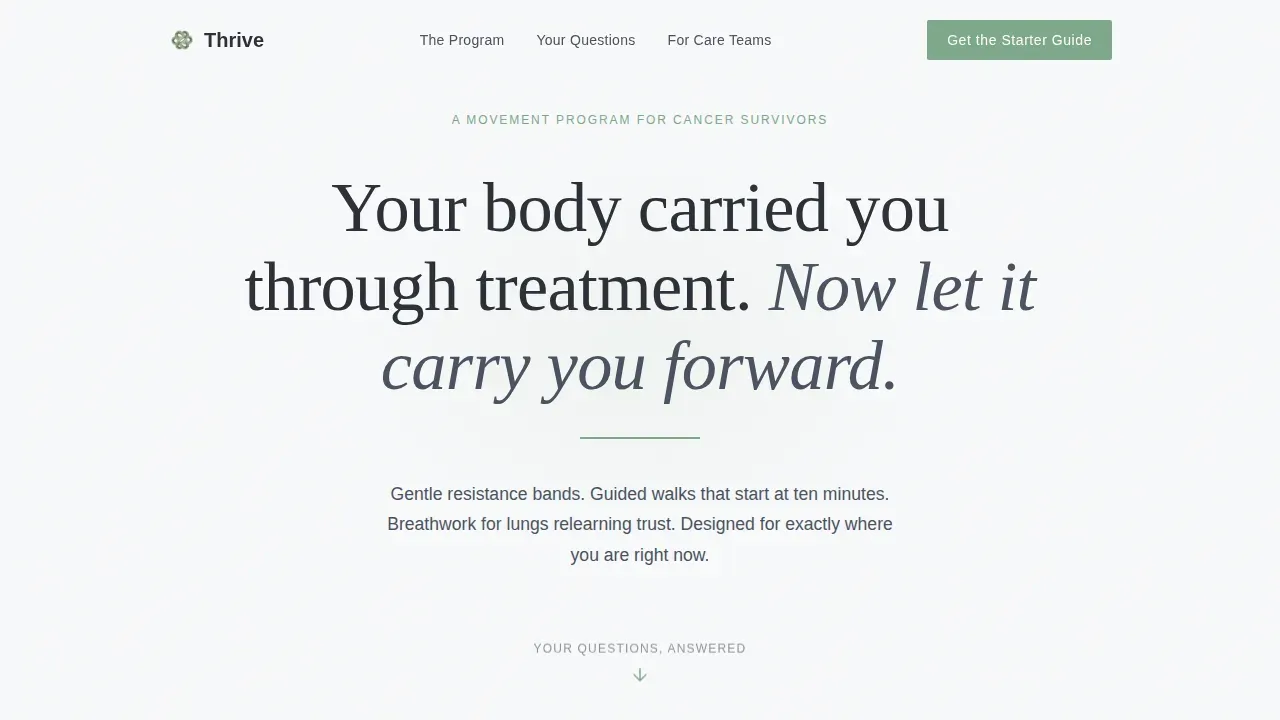
Giant Centered Hero Headline
The hero opens with a single full-width headline in generous whitespace. No image, no video. Just clear, breathing type on an Arctic White background with a thin sage-green line that extends on load. A subtle scroll arrow invites movement without pressure.
frequently asked question-Driven Scroll Flow
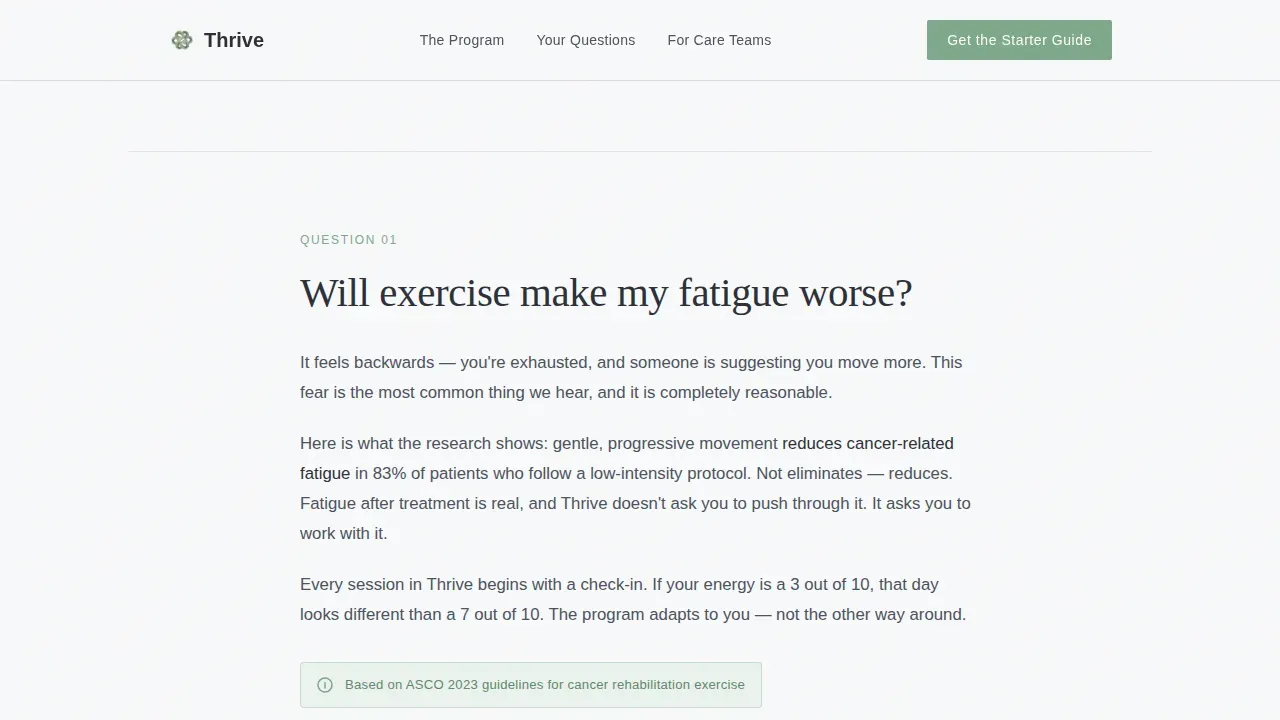
The page unfolds as a series of questions cancer survivors actually ask. Each question becomes a section header. The sequence escalates from physical safety, such as concerns about fatigue and surgery sites, through identity and confidence, arriving finally at hope. This structure lets visitors feel heard before they are asked to act.
Embedded Testimonial and Evidence Blocks
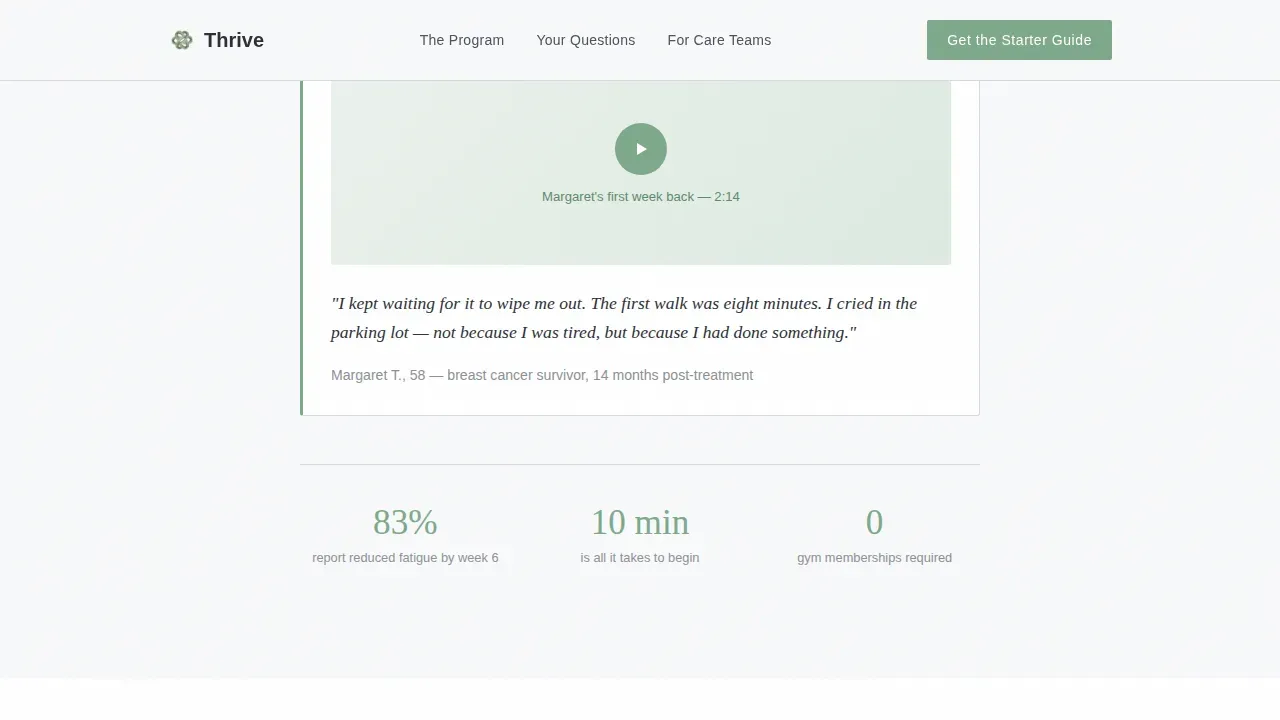
After the first frequently asked question, space is built in for a participant testimonial card and clinical evidence citations. Testimonials from other cancer survivors are crucial for building trust in a recovery program, and this template makes room for both a personal voice and a clinical reference in the same scroll.
Lead Capture Call to Action
Placed after the third frequently asked question question, once trust is established, a soft form asks only for a first name and email in exchange for a free downloadable starter guide. The timing is deliberate. The form appears when the visitor has already received real value from the page.
Session Finder Call to Action
After the final frequently asked question, a secondary conversion path appears with a simple zip code field. Visitors who want in-person support can connect with a session near them without navigating away. This keeps the page useful for survivors at every stage of their journey.
Movement Modification Illustrations
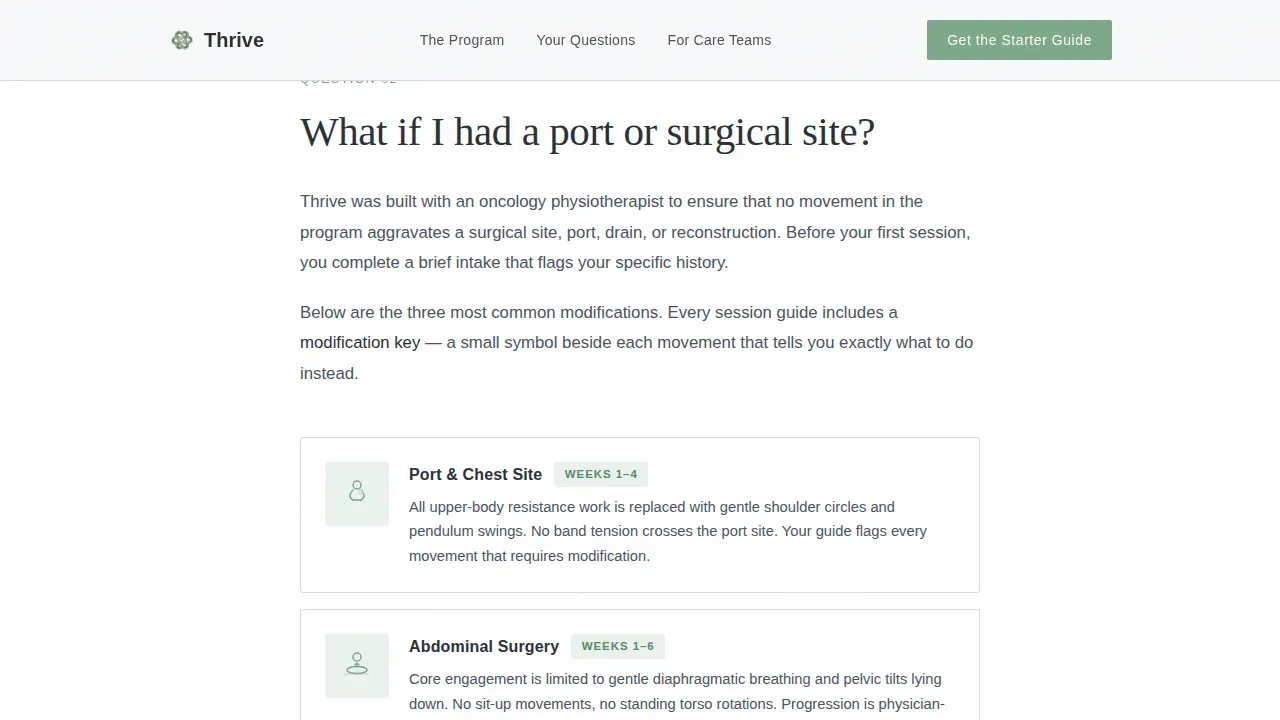
The second frequently asked question section, covering surgery and port concerns, includes space for simple line-drawn illustrations of movement modifications. These visuals support cancer patients who need to see safe options for their body before they feel confident enough to begin.
Page sections overview
| Section | Purpose |
|---|---|
| Hero Headline | Opens with emotional resonance and scroll invitation |
| frequently asked question One: Fatigue | Addresses exercise and energy fears with clinical support |
| frequently asked question Two: Surgery Sites | Shows safe movement modifications for post-surgery bodies |
| Lead Capture Form | Offers a free starter guide after trust is built |
| frequently asked question Three to Five | Deepens credibility, identity, and sense of hope |
| Session Finder Field | Connects survivors to nearby exercise classes |
| Minimal Footer | Closes cleanly with program contact and links |
Design & branding system
The Organic Flow visual theme creates a clinical-warm environment that feels safe and human at once. The layout uses generous whitespace and soft dividers to reduce cognitive load, which is essential for a cancer wellness page serving visitors in vulnerable moments.
- Color system: Arctic White (#F8F9FA) as the dominant background, birch gray (#D6DAE0) for dividers and secondary text, living sage (#7EA88B) for buttons and progress indicators, and quiet charcoal (#2C3038) for body copy
- Typography: Fraunces serif for headlines to give warmth and weight, paired with DM Sans for body text to keep readability high and stress low
- Animation: A sage underline extends slowly on hero load, scroll reveals use a gentle stagger, and the scroll arrow fades as the visitor moves down the page
Mobile & speed optimization
This template is built with a mobile-first approach because caregivers and cancer survivors often search for support resources at night on a phone. The layout adapts cleanly to smaller screens without losing its calm, structured feel.
- Single-column flow means the reading and scroll experience is natural on any screen size, from phone to desktop
- Static sections use server-rendered components for fast initial load, while animations and form interactions are handled client-side for smooth, reliable performance
How this template helps you convert
Every design and content decision in this template is made to earn the visitor's trust before asking for anything. The page is structured so that each answered question functions as a small permission granted.
- The frequently asked question-driven structure resolves the most common fears cancer patients hold, including concerns about fatigue, surgery, radiation recovery, and physical readiness, so visitors arrive at the call to action already reassured
- The lead capture form appears only after three full frequently asked question sections, meaning visitors have already received clear value before they see a field to fill in
- The session finder gives a second, lower-commitment path for visitors who are not yet ready to download, keeping the conversion range open for survivors at different stages of readiness
Other information about this template
This template is designed for programs that share a mission of supporting cancer survivors to navigate and thrive at every stage of their journey. It is helpful for fitness and health professionals who want to prepare a credible, gentle first impression for a population that needs clear guidance and emotional honesty.
- The layout can support programs that include yoga, guided relaxation, breath work, resistance band training, and low-impact walking routines, all methods recommended for post-treatment rehabilitation
- It suits programs that want to help cancer patients improve balance, regain mobility, build core strength, and maintain energy levels safely throughout recovery
- The Sarasota Memorial Thrive Program, the Heal and Thrive membership model, and similar evidence-based programs are well-matched to this template structure, which accommodates nutrition guidance, group fitness classes, and wellness counseling references in the frequently asked question and body sections
- Providers who want to connect survivors with resources, offer a free starter guide, and eventually move visitors toward a paid membership or scheduled exercise classes will find the two-call to action structure well-suited to that funnel
- The page is also a strong fit for programs that serve women recovering from cancer surgery and for beginners who have never exercised in a structured setting before treatment
Theme
Organic Flow
Creative direction
FAQ-Driven
Color system
Arctic White
Style
Single Column Flow
Direction
Content/Resource
Page Sections
Faq-driven Scroll Narrative
Animated Hero Headline Section
Dual Conversion Path Layout
Movement Modification Illustration Space
Testimonial and Evidence Block
Minimal Single-column Flow Design
Related questions
Who is this landing page template built for?
What sections does the template include?
Can I adapt the frequently asked question questions for my specific program?
Does the template support two different calls to action?
Is this template suitable for beginners who have never used a structured fitness program?