Specialist Chocolate & Confectionery Portfolio & Case Study Website Template
The Wagashi Luxe Artisan Confectionery Gallery Landing Page Template is a single-page gallery built for Japanese wagashi artisans. It blends a twelve-tile photo mosaic hero, scroll-linked craft documentary, and a persistent sliding cart into one hushed, deliberate experience. Seasonal urgency, tasting-card product panels, and an inline gift form guide every visitor from appreciating the craft straight to placing an order.
by Rocket studio
Quick summary
This template gives a hand-pressed wagashi atelier a gallery landing page that feels as considered as the confections it sells. A twelve-tile photo mosaic opens the experience. A day-in-the-life scroll narrative builds trust. A persistent cart and gift form close the sale. Every design decision serves one purpose: turning quiet admiration into a completed order.
Who this template is for
This template is built for artisan food makers and specialty shops that need their online presence to match the quality of what they create. It suits businesses where the craft story is as important as the product itself.
- Tea ceremony practitioners and specialty wagashi shops sourcing seasonal higashi
- Boutique gift retailers and hotel concierges curating premium welcome boxes
- Design-conscious shop owners who want a gallery-led, conversion-ready storefront
What problem this template solves
Most food shop templates feel like generic catalogs. They show a product image and a price, then stop. A wagashi atelier needs visitors to feel the labor, the season, and the intention before they ever reach a cart button.
- Visitors leave before buying because nothing earns their trust or slows them down
- Gift-givers find no elegant way to book a curated assortment and add a personal note
- Seasonal scarcity goes uncommunicated, so time-sensitive inventory sits unnoticed
What you get with this template
You get a fully structured gallery landing page designed to guide visitors through an immersive craft experience and move them naturally toward purchase. Every section has a defined role in that journey.
- A twelve-tile photo mosaic hero with hover-reveal confection names and a real-time seasonal indicator
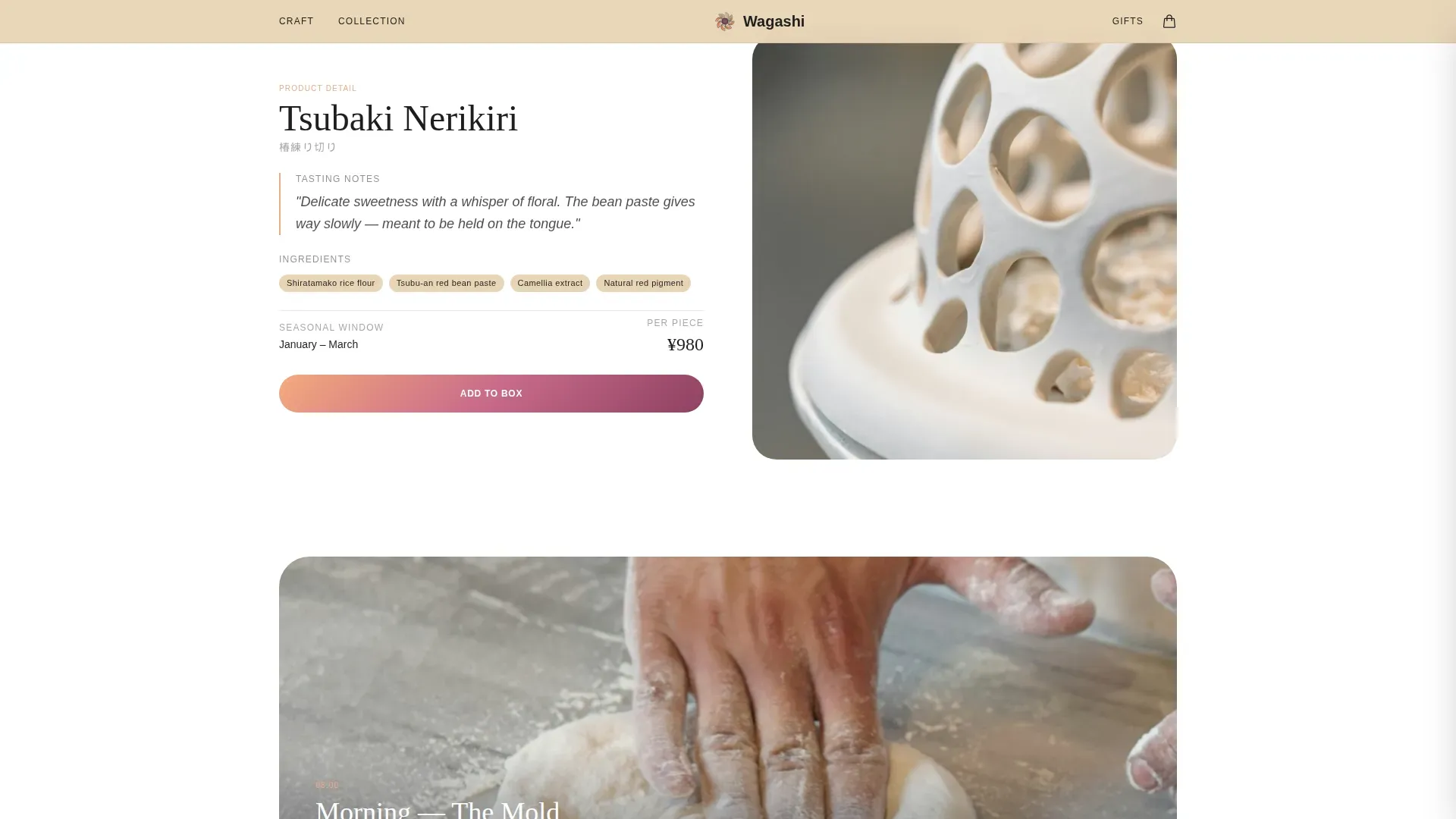
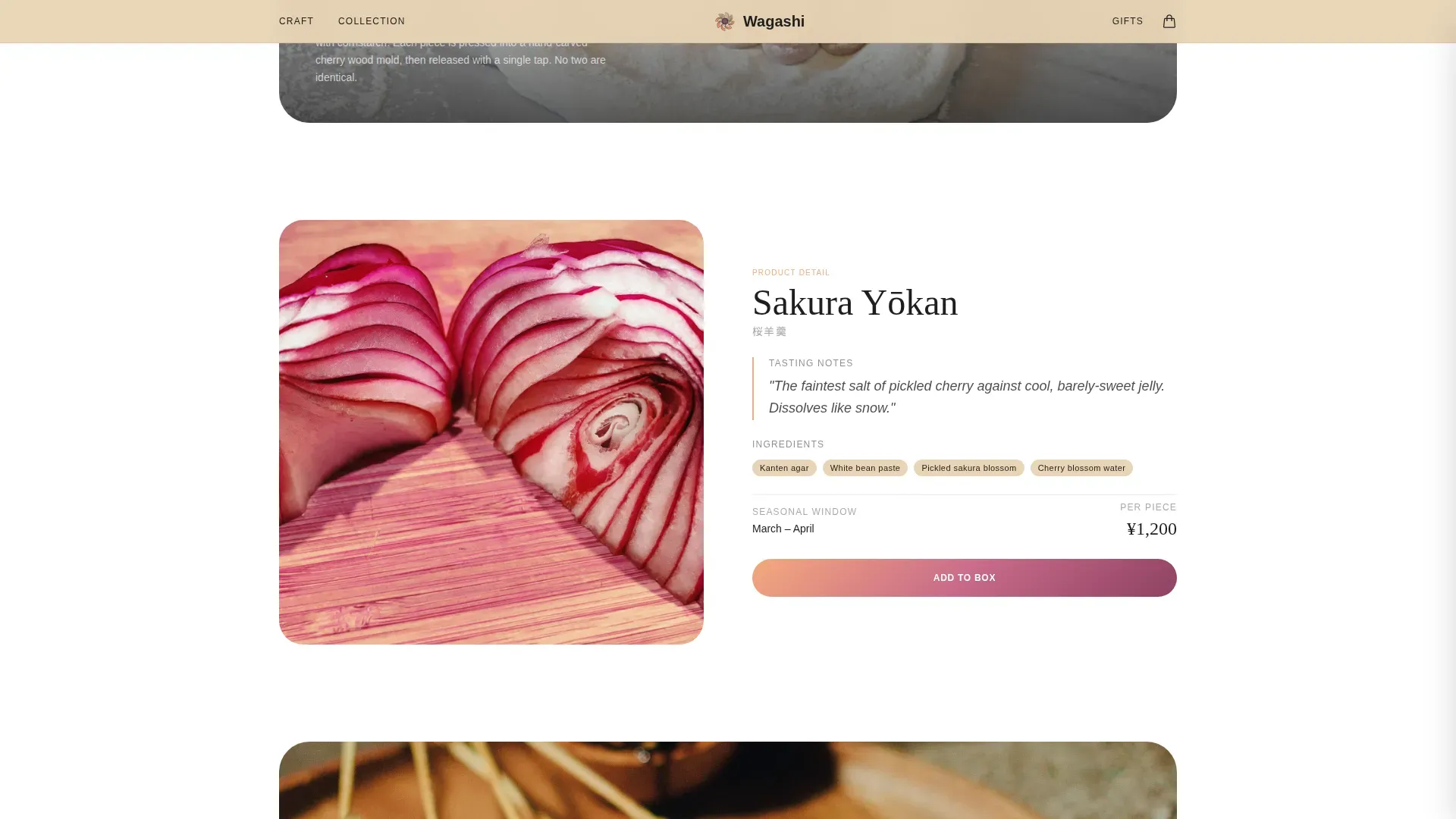
- Alternating cinematic process shots and intimate product detail panels with tasting notes and ingredient information
- A persistent sliding cart, an asymmetric product gallery with "Add to Box" actions, and an inline gift form with a noshi tag message field
Feature list
A landing page for luxurious artisan wagashi must blend minimalist aesthetics with sensory storytelling. This template delivers both in a single structured scroll.
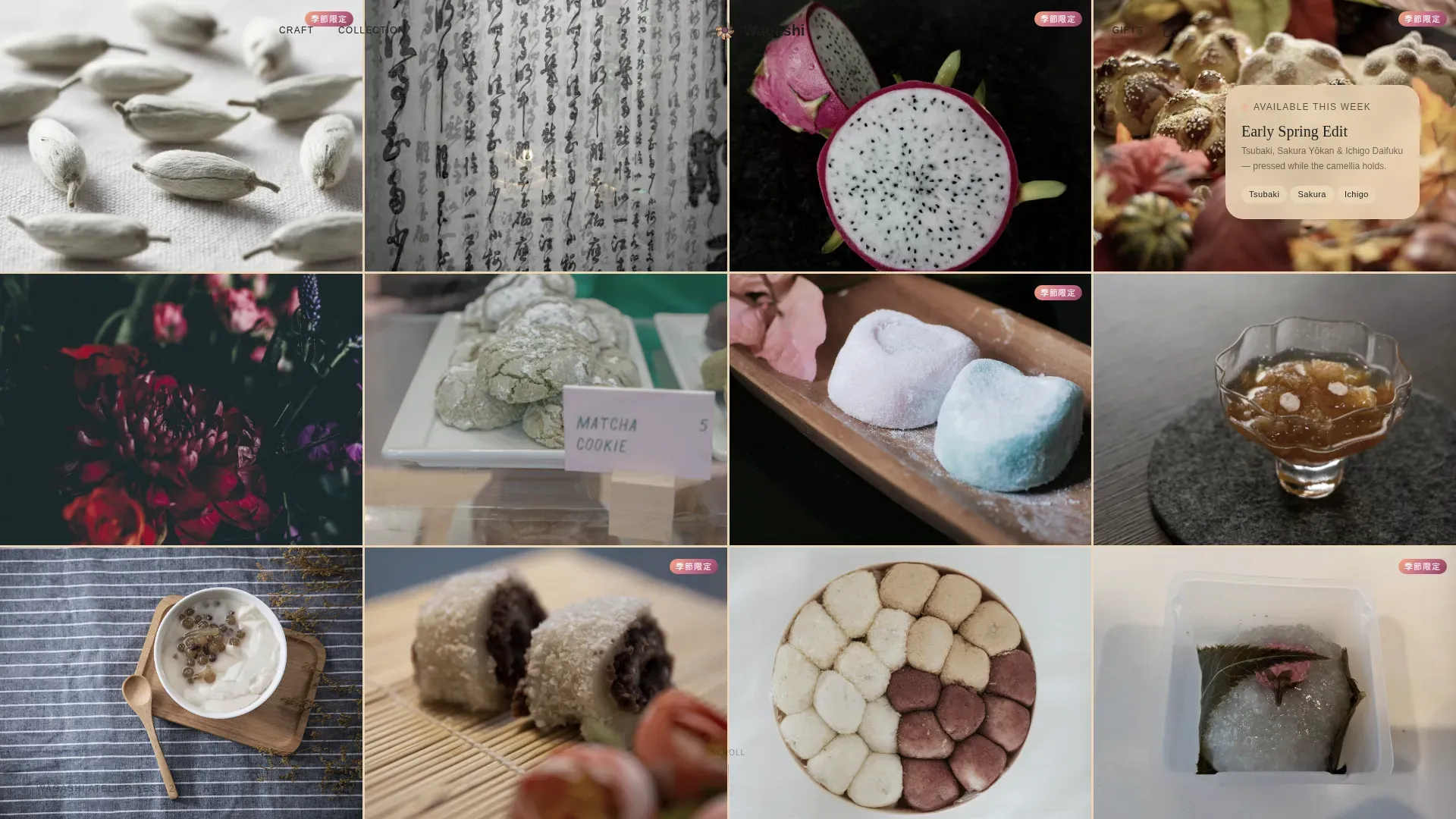
Twelve-Tile Photo Mosaic Hero
Twelve square tiles fill the viewport, each holding a single overhead wagashi shot against a linen backdrop. On hover, each tile lifts gently and reveals the confection's name in charcoal type. No competing headline needed; the mosaic is the headline, and high-resolution images showcase intricate details of the craft.
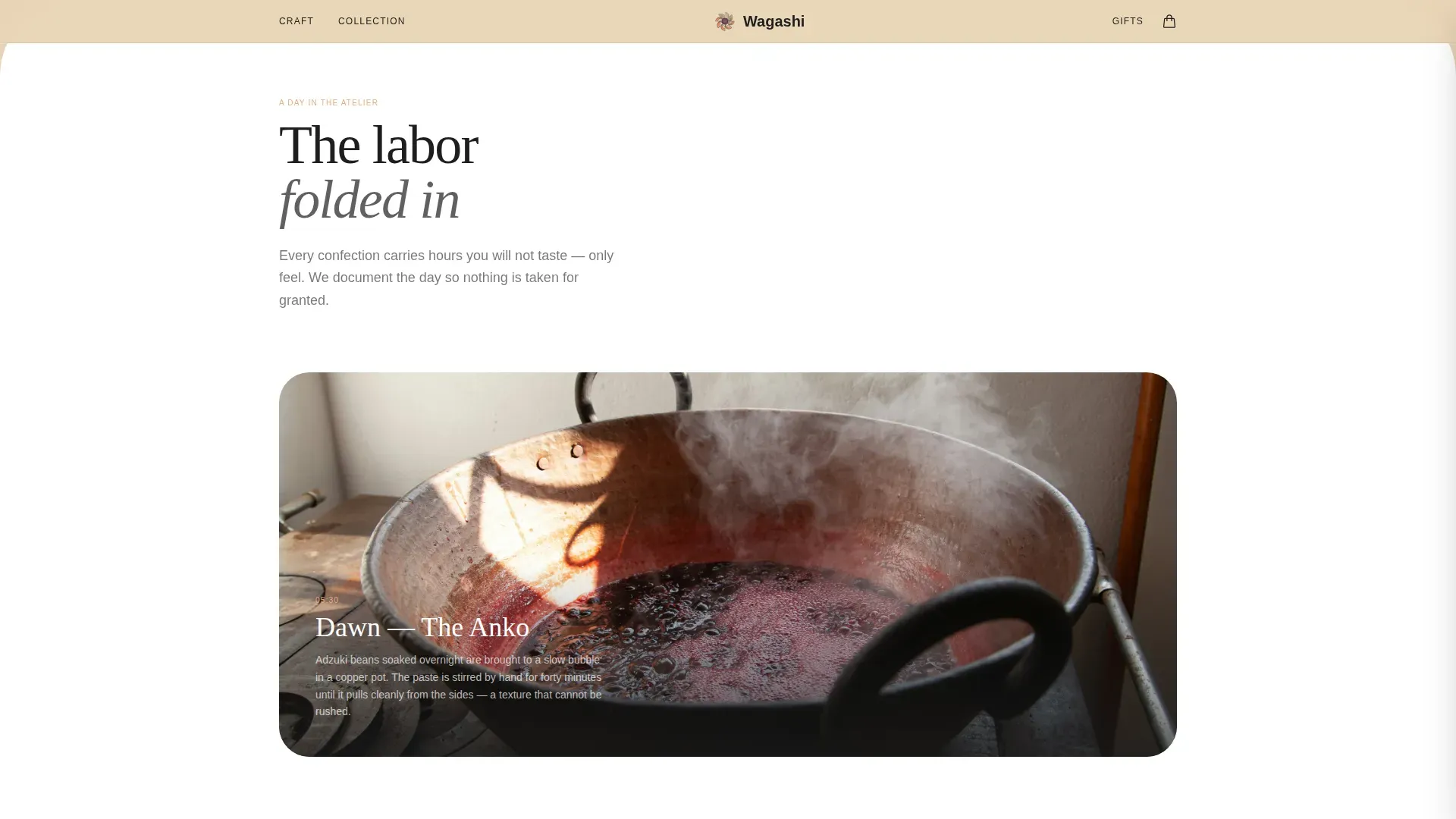
Day-in-the-Life Scroll Narrative
The scroll advances through a full atelier day: dawn preparation, midday assembly, afternoon packaging, and evening delivery. Wide cinematic process shots alternate with intimate product cards, building appetite and respect in equal step. Craftsmanship views like this add to the sensory experience and authenticity in a way static catalogs cannot.
Seasonal Availability Indicator
A real-time indicator at the top of the page shows which confections are available this week only. It communicates scarcity without pressure, making each purchase feel like a chance to bring home something genuinely fleeting. Wagashi is deeply tied to the four seasons, and this feature keeps that narrative live.
Persistent Sliding Cart and Custom Box Builder
A sliding cart panel stays accessible throughout the scroll. Visitors add individual pieces to build their own assortment using the "Add to Box" action on each product card. The cart tallies the custom selection without interrupting the browsing experience.
Inline Gift Form with Noshi Tag Field
A "Send This Collection" button opens an inline gift form requesting recipient name, delivery date, and a handwritten-message field capped at forty characters. That limit mirrors the length of a traditional noshi tag, keeping the cultural reference intact and the shop experience coherent.
Asymmetric Bento Product Gallery
The product gallery uses an asymmetric bento-style grid to display individual wagashi with macro photography, flavor notes written like tasting cards, ingredient lists, and seasonal availability. Emphasizing natural, premium ingredients in this way is essential for a shop selling craft confectionery.
Page sections overview
| Section | Purpose |
|---|---|
| Photo Mosaic Hero | Opens the experience with twelve overhead wagashi tiles and a floating seasonal indicator |
| Workshop Documentary | Scroll-linked cinematic shots guide visitors through a full atelier day from dawn to delivery |
| Product Detail Panels | Slide-in cards pair macro photography with tasting notes, ingredients, and seasonal availability |
| Bento Product Gallery | Asymmetric grid displays the full range with "Add to Box" actions and flavor information |
| Seasonal Gift Collections | Curated box options with a "Send This Collection" button and inline noshi tag gift form |
| Persistent Sliding Cart | Stays visible throughout scroll; tallies custom assortment selections in real time |
| Footer | Single-row linear layout with shop navigation and atelier founding information |
Design & branding system
The palette draws from a Sunset Gradient system, moving from pale persimmon through ripe plum. It feels like golden hour sliding across a lacquered tray. Using a clean, modern color palette of muted and neutral tones consistently evokes a sense of luxury without decoration that competes with the product.
- Persimmon (#F4A97E) to plum (#8E4162) gradient for hover states and the cart ribbon; kinako beige (#E8D5B7) and pure white for backgrounds; sumi ink charcoal (#1E1E1E) for all type
- DM Serif Display for headings, Plus Jakarta Sans for body text; a single type weight that never raises its voice
- Minimalist layouts with ample negative space; cultural motifs drawn from washi paper, noshi tags, and seasonal flowers rather than decorative add-ons
Mobile & speed optimization
The template is designed desktop-first, with graceful mobile adaptation built in. Luxury customers frequently browse on mobile devices, so the gallery grid collapses cleanly without losing the visual hierarchy that makes the desktop experience work.
- Gallery grid collapses to a single-column scroll on smaller screens; product cards and tasting notes remain fully readable
- Lazy loading and next/image optimization support the image-heavy layout without sacrificing browse experience
- Sliding cart panel adapts to mobile viewport; gift form fields remain accessible and easy to complete on touch screens
How this template helps you convert
A wagashi shop needs more than a nice product grid. This template builds trust before the buy button ever appears, then makes the purchase action feel natural and easy.
- The day-in-the-life documentary earns trust by showing the real labor behind every piece, so visitors arrive at the cart already convinced of the value they are about to find.
- The seasonal availability indicator creates genuine time pressure. When visitors can see exactly which confections are available this season only, they book a selection rather than deferring.
- The inline gift form removes friction for gift-givers. They can select a curated box, book a delivery date, and add a personal note in one uninterrupted step without leaving the page.
Other information about this template
This template is built specifically for the Japanese wagashi shop niche and the broader artisan confectionery category. It carries several context details worth knowing before you begin customizing.
- Wagashi is considered a form of delectable art rather than just food, and the template's visual hierarchy reflects that status throughout every section
- The washi paper and noshi tag references in the gift form connect the digital experience to UNESCO Intangible Cultural Heritage traditions that many buyers already associate with Japanese craft quality
- Cherry blossom season is a national obsession in Japan. During spring, particularly around April, cafes and restaurants across the country offer sakura-themed menus and snacks. The seasonal indicator in this template can surface those moments, helping your shop enjoy peak traffic when it matters most
- In Tokyo and across Japan, luxury hotels provide cherry blossom afternoon teas and curated souvenirs for guests. This template is well suited to shops supplying those hotel amenity programs and wanting to book wholesale gift orders alongside retail sales
- The "canal" references in Japanese travel culture often appear in the context of hanami boat experiences, where visitors enjoy a multi-course kaiseki meal while cruising past cherry blossoms. Shops that decorate their seasonal menus with flowers and botanical motifs can use this template's product panel structure to guide those stories
- From January through the full calendar year, the day-in-the-life scroll can be updated to reflect each seasonal chapter, letting the shop bring home a new story for returning visitors every few weeks
- The Wagashi Luxe Artisan Confectionery Gallery Landing Page Template ships with all section layouts, typography pairings, and color tokens pre-configured so you can step into customization immediately
Theme
Luxe Minimal
Creative direction
Day-in-the-Life
Color system
Sunset Gradient
Style
Gallery + Detail
Direction
Marketplace/Multi
Page Sections
Twelve-tile Photo Mosaic Hero
Day-in-the-life Scroll Documentary
Real-time Seasonal Availability Indicator
Persistent Sliding Cart and Box Builder
Inline Gift Form with Noshi Tag Field
Asymmetric Bento Product Gallery
Related questions
Can I update the seasonal indicator to reflect my current menu?
How does the 'Add to Box' cart work for custom orders?
Is this template suitable for a shop handling wholesale gift orders?
Does the template support both English and Japanese text?
Can I use this template for artisan confectionery other than wagashi?