Gourmet Paleo Kitchen Landing Page Template
Forage is a modular card-grid landing page built for paleo cookbook creators, recipe bloggers, and meal planning coaches. It pairs an editorial Haute Craft visual identity with a Sunset Gradient color system to present gluten free, ancestral recipes with Michelin-level polish. The template is structured to convert recipe browsers into booked clients and email subscribers through a clear, focused layout.
by Rocket studio
Quick summary
Forage is a single-page, card-grid landing page template designed for paleo cookbook authors, recipe-focused food blogs, and meal planning services. It blends warm editorial aesthetics with a conversion-first structure. Every section serves a purpose: draw visitors in with stunning food photography, hold their attention with editorial storytelling, and guide them toward booking a meal planning session or downloading a free plan.
Who this template is for
This template is built for creators who take food seriously and want a landing page that reflects that commitment. It works particularly well for people who cook with intention and want their audience to feel that immediately.
- Paleo recipe bloggers and cookbook authors who want to present recipes with the authority and warmth of a professional cookbook, particularly those moving from a blog to a coaching or booking model.
- Meal planning coaches and nutrition consultants who work with CrossFit athletes, autoimmune protocol followers, or busy families and need a page that handles bookings, captures email leads, and tells a compelling food story.
- Home cooks and culinary entrepreneurs who are ready to share their knowledge of ancestral eating, wild ingredients, and grain-free cooking with a wider audience through a polished, trust-building platform.
What problem this template solves
Most food blog layouts treat every page like a content archive. They scatter attention, bury calls to action, and make it hard for visitors to understand what they are actually being offered. For a paleo cookbook creator or meal planning coach, that means people browse a few recipes and leave without booking, without subscribing, and without converting. The Forage template is designed to fix that.
- Scattered conversion paths are replaced by a focused layout with a sticky booking bar, a mid-grid email capture card, and a clear primary call to action that guides visitors through a logical journey from inspiration to commitment.
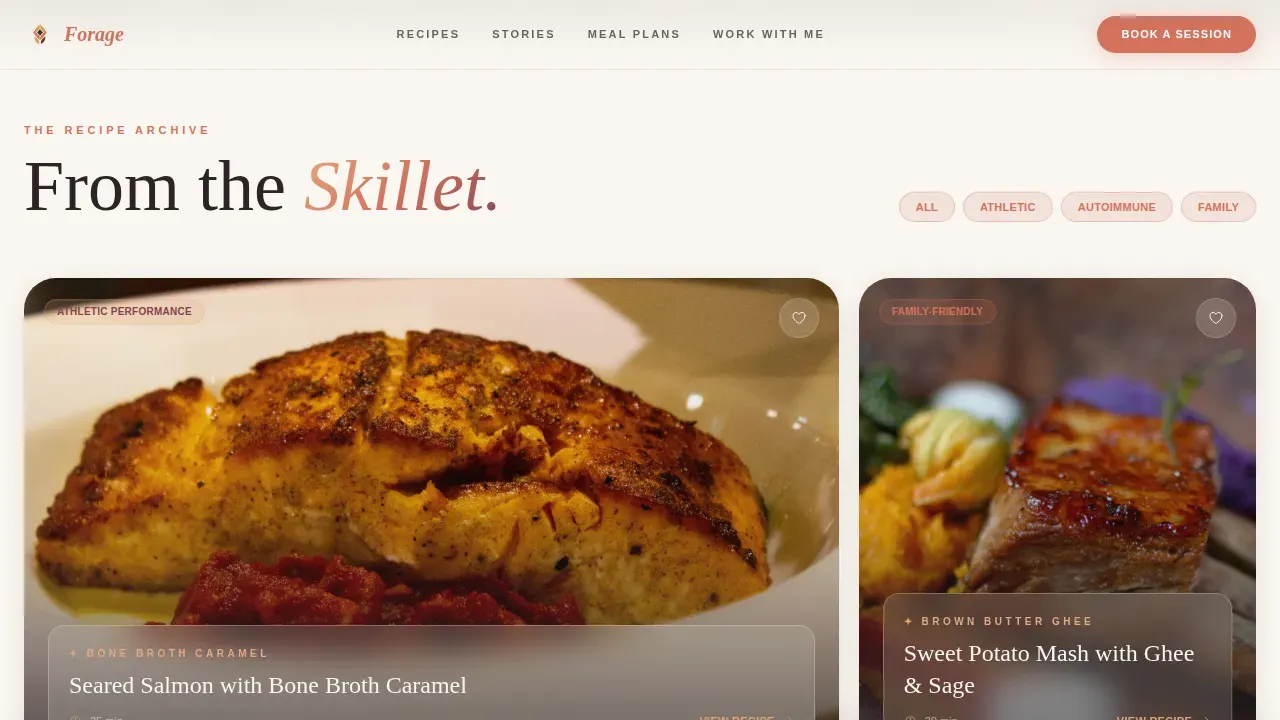
- Generic food visuals are replaced by an immersive card-grid structure where every recipe module is a full-bleed food photograph with a frosted-glass overlay, cook time, and a provocative ingredient callout that makes stopping to read feel unavoidable.
- Unclear value propositions are addressed through editorial interlude blocks that tell the story behind each dish, building emotional resonance alongside practical interest in the recipes and the cook behind them.
What you get with this template
Forage delivers a fully structured, section-led landing page that functions as both a recipe showcase and a booking-ready service page. The layout is modular, meaning each card in the grid can present a different recipe, a lead-capture offer, or an editorial story block without disrupting the overall visual rhythm.
- A complete modular card-grid layout featuring an asymmetric bento-style recipe grid, editorial interlude blocks in oversized serif type, a styled email capture card, a multi-step booking form section, and a footer in the Vercel Horizontal Flow pattern.
- A full Sunset Gradient visual system built around honey (#E8A87C), persimmon (#D4725C), rosewood (#85444E), and charred bone (#2D2426), with gradient washes behind each card module and persimmon-glow interactive elements.
- High-interactivity components including a sticky booking bar that appears after the second scroll section, hover image zoom on recipe cards, GSAP ScrollTrigger animations, parallax effects, and staggered card reveal transitions.
Feature list
The Forage template covers a wide range of built-in capabilities drawn directly from its Haute Craft design brief. Each feature is purposeful and specific to a food, recipe, and meal planning context.
Full-Viewport Lifestyle Hero Section
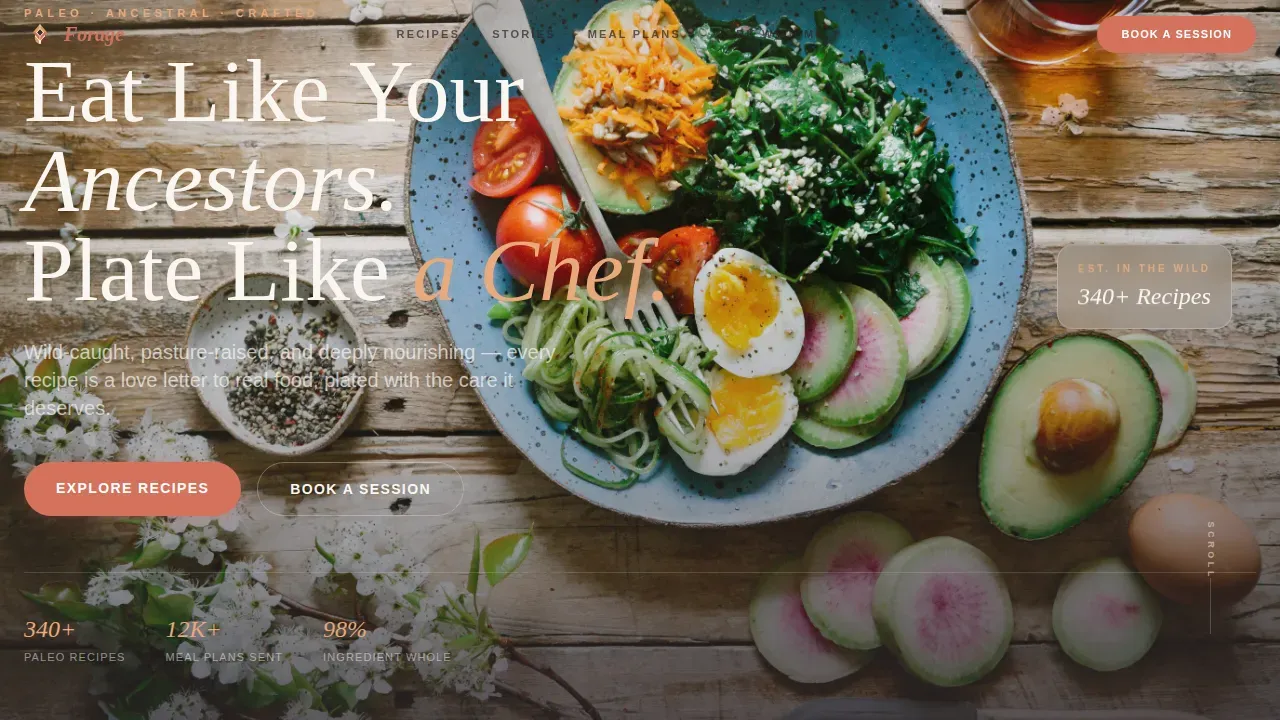
The header fills the entire screen with an overhead lifestyle shot. The scene is a weathered oak table scattered with the aftermath of real recipe development: halved avocados, rosemary sprigs, a smear of tahini on ceramic, and one perfectly composed central dish lit by warm window light. The editorial headline fades in over the negative space, setting tone before a single recipe is shown.
Asymmetric Modular Recipe Card Grid
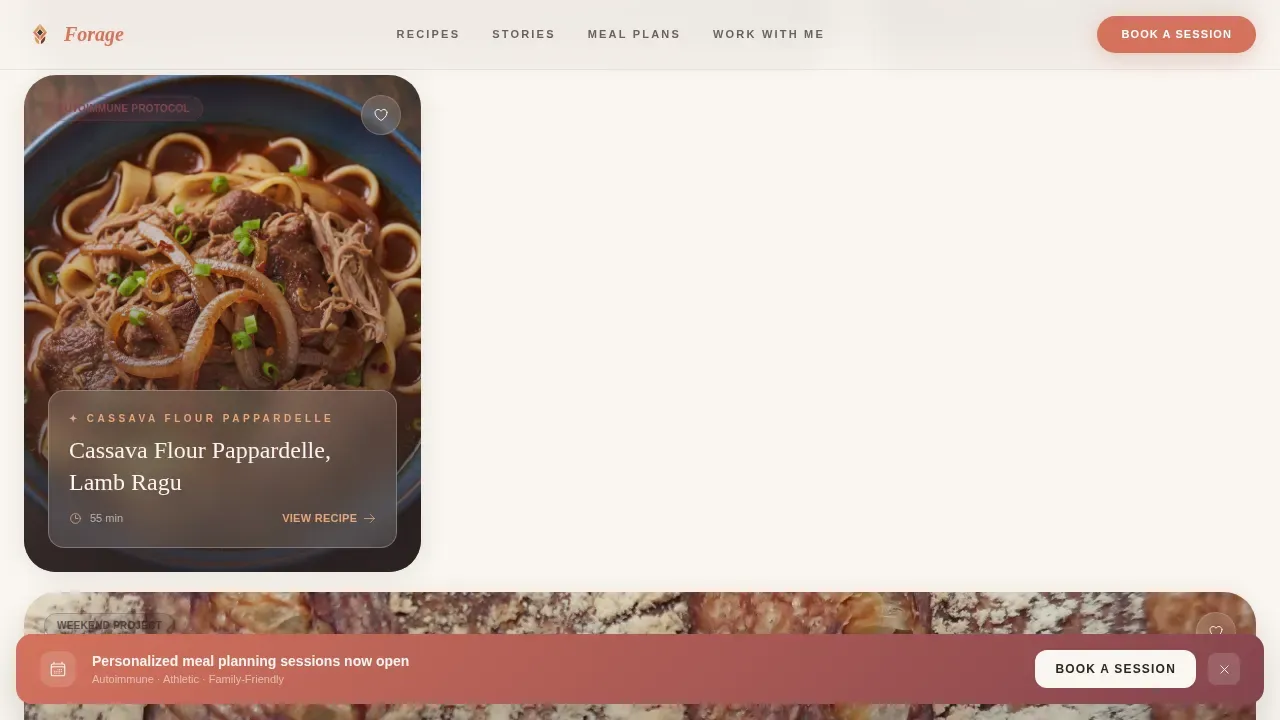
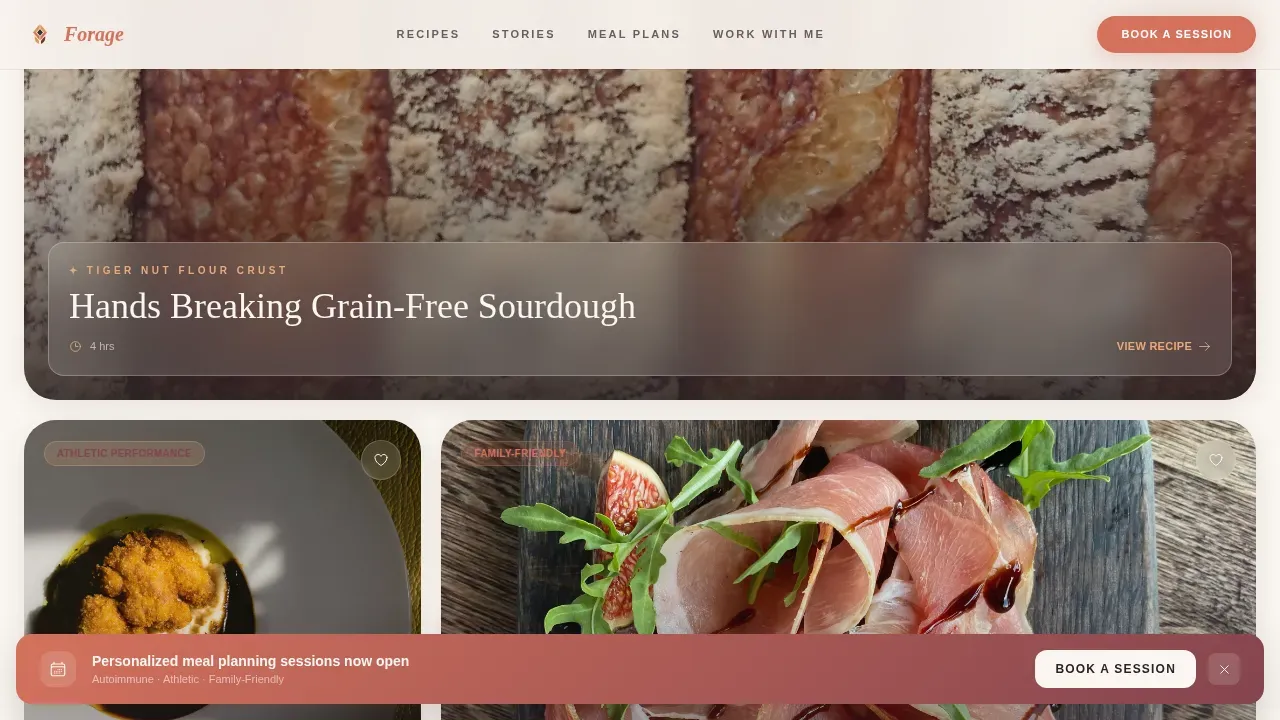
The recipe grid uses an asymmetric bento layout that shifts density as visitors scroll. Two wide cards give way to three tighter ones, then a single cinematic full-width photograph of hands breaking bread. Each card is a full-bleed food photograph with a frosted-glass overlay carrying the recipe name, cook time, and a single ingredient callout. The rhythm mirrors flipping through a beautifully art-directed cookbook.
Editorial Interlude Blocks
Between recipe clusters, short editorial blocks appear in oversized serif type on gradient backgrounds. These micro-story sections explain where a dish was born, what it healed, and why it matters. They give the page depth and soul, transforming a recipe grid into a narrative food experience that holds visitors longer and builds genuine interest in the creator behind the recipes.
Multi-Step Booking Form and Sticky Bar
The primary call to action is "Book a Meal Planning Session," pinned in a slim bottom bar that activates after the second scroll section. The embedded booking form is multi-step: it asks for dietary focus first (autoimmune protocol, athletic performance, or family-friendly), then preferred session format (video call, in-person workshop, or written custom plan), then date selection. This structure reduces friction and clarifies the service before asking for a commitment.
Mid-Grid Email Capture Card
Positioned midway through the recipe grid, a styled card with a persimmon gradient background offers visitors a free seven-day meal plan download in exchange for their email. The card is designed to look identical to the recipe cards in structure, so it integrates naturally into the browsing experience. The line "Your first week, on us" frames the offer simply and warmly.
Social Proof Section with Metrics and Testimonials
The template includes a dedicated social proof area featuring recipe count metrics and reader testimonials with photos. This section is designed to build credibility quickly, particularly those visiting for the first time who need reassurance before booking. Clear proof elements placed near conversion sections help reinforce the quality and consistency of the cooking and meal planning offered.
Page sections overview
| Section | Purpose |
|---|---|
| Hero Lifestyle Shot | Full-viewport overhead food scene with editorial headline fade-in |
| Recipe Bento Grid | Asymmetric modular card grid with full-bleed food photography |
| Editorial Interlude | Oversized serif micro-story blocks on gradient backgrounds |
| Free Meal Plan Card | Persimmon-gradient email capture card mid-grid |
| Booking Section | Multi-step "Book a Meal Planning Session" form with embedded calendar |
| Social Proof Area | Recipe count metrics and reader testimonials with photos |
| Footer | Vercel Horizontal Flow pattern footer |
Design & branding system
The Forage template uses a Haute Craft visual identity that sits at the intersection of editorial cookbooks and warm kitchen lifestyle photography. Every color, typeface, and texture choice is deliberate. The design feels like watching a kitchen come alive at golden hour, warm and deeply nourishing without being overworked.
- Sunset Gradient color system using honey (#E8A87C), persimmon (#D4725C), rosewood (#85444E), and charred bone (#2D2426). Card backgrounds wash from honey to persimmon in soft gradients. Bone-dark charred type and rosewood dividers keep the layout grounded and editorial. Interactive elements including hover states, buttons, and ingredient tags glow in persimmon.
- Fraunces serif display and DM Sans body typography working together to balance editorial weight with clean readability. Fraunces carries the storytelling sections and headlines, including the oversized interlude blocks, while DM Sans handles ingredient lists, cook times, and form labels with confident clarity.
Mobile & speed optimization
Forage is built desktop-first with a strong mobile adaptation designed for the real-world context of meal prepping. Many of the people who will use this page are checking recipes and booking sessions from a phone on a Sunday afternoon between workouts or school pickups. The layout responds to that reality.
- Desktop-first with mobile-adapted card grid that reflows the asymmetric bento layout into a clean single-column scroll on smaller screens, keeping recipe images prominent and the sticky booking bar always visible.
- Server Components for the static recipe grid and Client Components reserved for interactive animations, keeping initial load fast while preserving the GSAP ScrollTrigger parallax and staggered card reveal effects that make the page feel alive.
How this template helps you convert
The Forage template is built around two conversion paths, and everything in the layout supports one of them. No section is decorative only. Every scroll section moves the visitor closer to an action.
- The sticky booking bar converts browsers into clients. It appears after the second scroll section, once the visitor has already seen the recipe grid and the editorial interludes. By that point, they have enough context to book. The multi-step form then guides them through dietary focus, session format, and date selection, reducing hesitation at each step.
- The mid-grid email capture card converts curious visitors into subscribers. Styled to match the recipe cards, it appears naturally in the grid flow. Offering a free seven-day meal plan download frames the email exchange as a fair, valuable trade. Visitors who are not yet ready to book leave with a reason to return.
Other information about this template
The Forage template is a strong fit for creators who want to present their food world with the confidence of a head chef and the warmth of a family kitchen. It covers a wide range of cooking contexts and content types, making it adaptable beyond a single niche while staying true to its ancestral eating and craft food identity.
- The template suits cookbooks and recipe blogs featuring a variety of food types, including meat-forward dishes like wild-caught fish and slow-roasted chicken, plant-rich sides featuring mushrooms, root vegetables, and seasonal fruit, and even grain-free takes on comfort classics. It can also support vegan and gluten free recipe sections alongside paleo-core content, accommodating visitors with varied food preferences.
- Recipe cards can present a wide range of dishes across cultures and cuisines. A menu might span from a cassava flour pasta dinner to a slow-cooked chicken and mushroom braise, from sweet potato desserts to a coconut milk and fruit compote. The card format handles each dish with equal visual weight, so no recipe feels like an afterthought on the plate.
- The template's editorial interlude sections are well-suited to sharing the history and story behind wild ingredients and foraged foods. Foraging has a deep history across many cultures. It involves harvesting wild plants, fruit, fish, and other foods from local environments. That context gives the micro-story blocks real substance and makes the food feel connected to the world beyond the kitchen.
- For those considering this as a present for a food creator friend or as a launch vehicle for a new book, the template supports a compelling pre-launch or pre-order landing page structure. A benefit-driven headline such as "Elevate Your Paleo Lifestyle with Artfully Crafted Wild Foods" fits naturally into the hero section. Adding a scarcity note or a limited first-edition detail in the hero subheadline can encourage early action.
- The visual emphasis on wild ingredients, gluten free cooking, and ancestral eating also resonates with audiences beyond strict paleo followers. Vegan cooks interested in plants-forward ancestral traditions, seafood lovers drawn to wild-caught sashimi and fish preparations, and food-curious home cooks who want to expand their knowledge of grain-free cuisine all represent audiences this template can serve well.
- This is the forage haute craft paleo cookbook landing page template, designed to help food creators and meal planning coaches build a focused, high-impact landing page without starting from a blank canvas. The layout covers every conversion surface, from hero to footer, with a consistent visual language and a clear editorial voice.
- The template is particularly relevant for black chefs and diverse culinary voices who want an editorial-grade landing page that takes their cooking as seriously as they do. A food creator whose first restaurant experience shaped the recipes they now teach deserves a digital home that reflects that weight and craft.
- For wine-paired dinner menus, sushi and sashimi tasting nights, or plant-based feast events, the booking section and social proof area can be adapted to present any kind of food-focused experience. The multi-step form covers guests' preferences upfront, making it useful for entertaining contexts where dietary needs and session formats vary.
Theme
Haute Craft
Creative direction
Immersive Visual
Color system
Sunset Gradient
Style
Card Grid (Modular)
Direction
Booking/Scheduling
Page Sections
Lifestyle Hero with Editorial Headline
Asymmetric Bento Recipe Card Grid
Editorial Interlude Story Blocks
Sticky Booking Bar and Multi-step Form
Mid-grid Email Capture Card
GSAP Scrolltrigger Animation System
Related questions
Can this template be used for a gluten free or vegan recipe blog, not strictly paleo?
How does the multi-step booking form work?
Is the email capture card separate from the recipe grid?
Can I use this template to launch a new cookbook or promote a new book release?
Does the sticky booking bar stay visible on mobile screens?