Chinese Dining Professional Website Template
The Wok neighborhood Chinese casual dining landing page template is a modular card-grid landing page built for neighborhood noodle houses and casual Chinese restaurant owners. It blends lived-in photography, a warm Japanese Zen color system, and a persistent call-to-action bar to guide every visitor toward the menu and reservation page, without a single form on the page itself.
by Rocket studio
Quick summary
This is a single-page, card-grid restaurant landing page designed for a casual Chinese restaurant with a strong neighborhood identity. The design system uses unglazed clay, charcoal, rice white, and ginger blush to create a tactile, unhurried atmosphere. Every section funnels visitors toward one clear action: viewing the menu and making a reservation.
Who this template is for
This landing page is a perfect fit for independent Chinese restaurant owners who want a warm, story-driven web presence without heavy development work. It suits operators who rely on local foot traffic and phone-based discovery.
- Neighborhood Chinese restaurant owners building their first restaurant website
- Food and beverage operators creating a landing page for local ad campaigns
- Restaurant managers showcasing dishes and menu offerings to new customers
What problem this template solves
Most Chinese restaurant landing page designs either feel too corporate or too cluttered. This template solves that gap by creating an atmospheric, mobile-first landing page that earns trust through texture and storytelling rather than long forms or aggressive popups.
- Static PDFs and hard-to-read menus make it difficult for customers to find what they want
- Generic restaurant website templates fail to communicate the warmth of a neighborhood dining room
- Missing or weak calls-to-action mean visitors leave without clicking through to the menu
What you get with this template
You get a fully structured, modular restaurant landing page ready to edit and launch. Every section is pre-designed for a Chinese casual dining restaurant, allowing you to drop in your own photos, copy, and menu link.
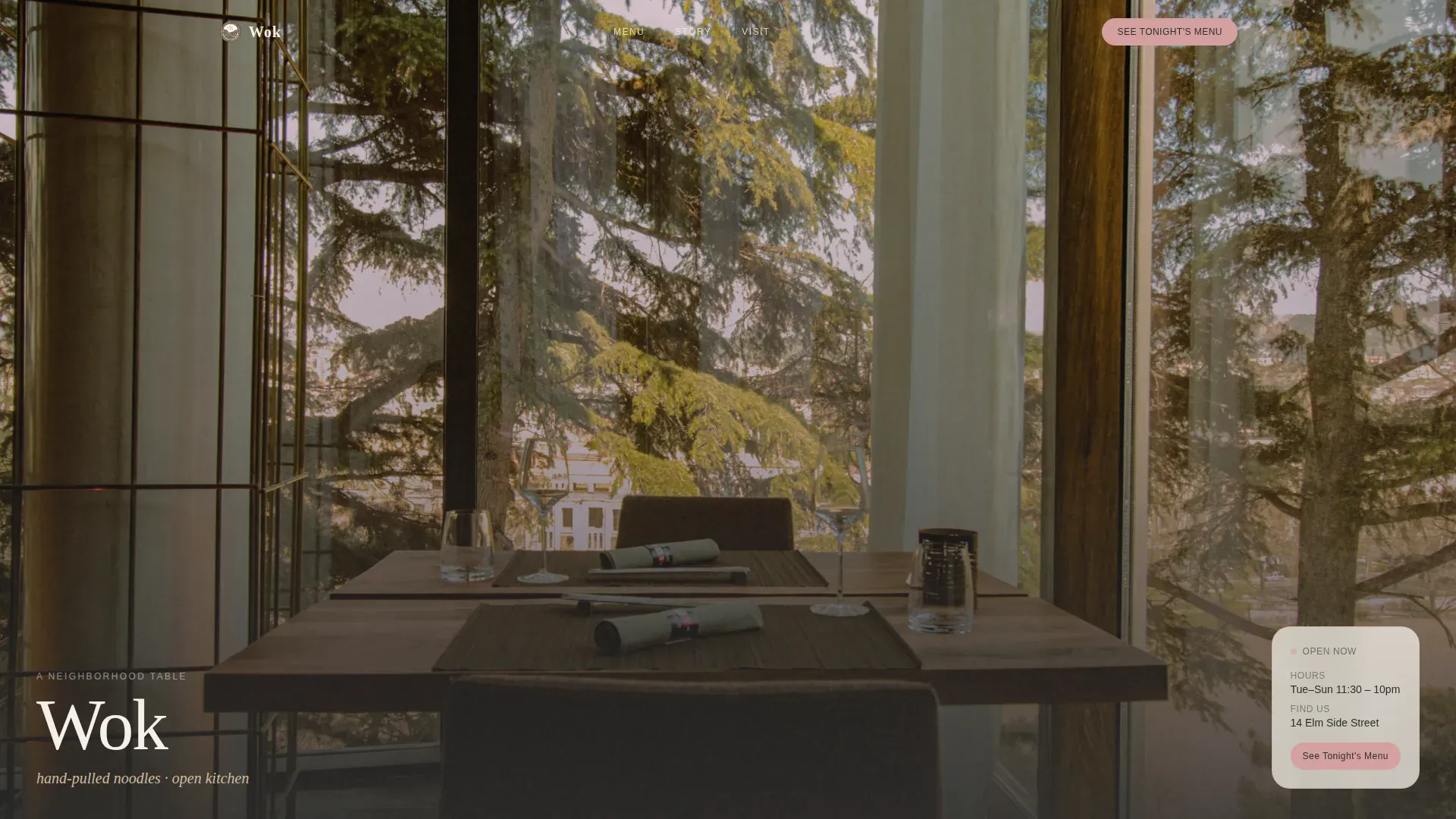
- A full-bleed hero section with an overhead communal table photo and slim serif restaurant name
- A modular card grid showcasing signature dishes, chef origin story, and neighbor quotes
- A persistent bottom bar with a single call-to-action button linking to the menu and reservation page
Feature list
This landing page delivers purpose-built design decisions backed by the source brief.
Full-Bleed Hero Section
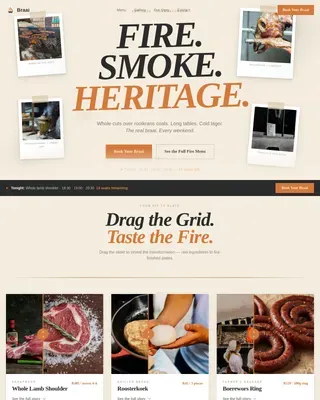
The hero opens with an overhead, lived-in communal table photo. The restaurant name appears bottom-left in a slim Fraunces serif, like a quiet signature. A floating glass card sits over the image, setting the tone before the visitor scrolls.
Modular Bento Card Grid
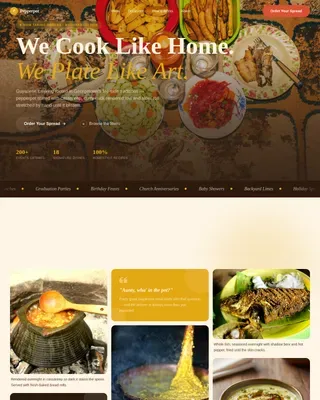
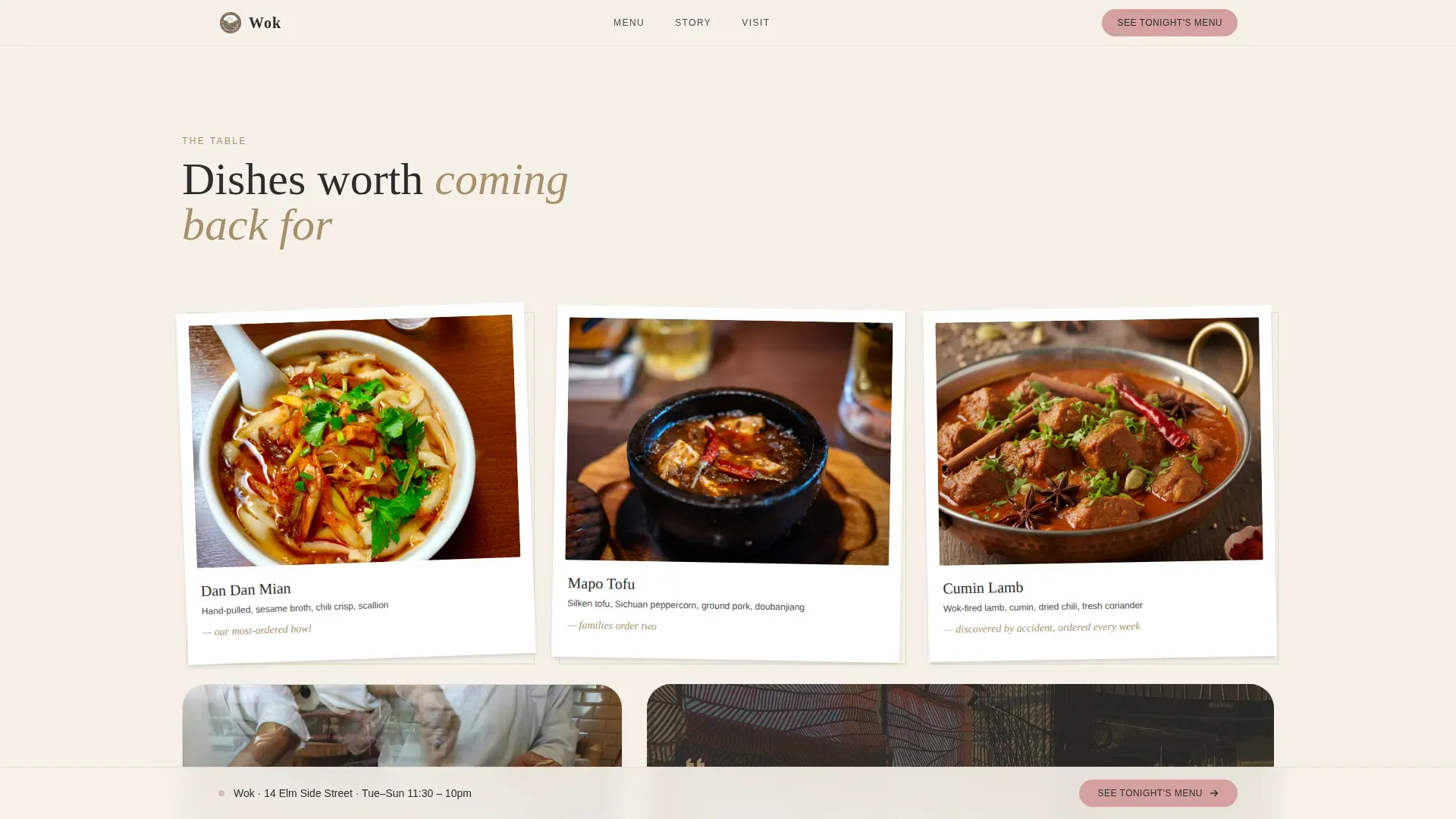
The card grid is the heart of this restaurant landing page design. Polaroid-style dish cards, a chef hands card with an origin story, and a dining room quote card stagger and breathe with generous whitespace. The rhythm is calm and unhurried, allowing warmth to accumulate naturally.
Neighborhood Vignette Section
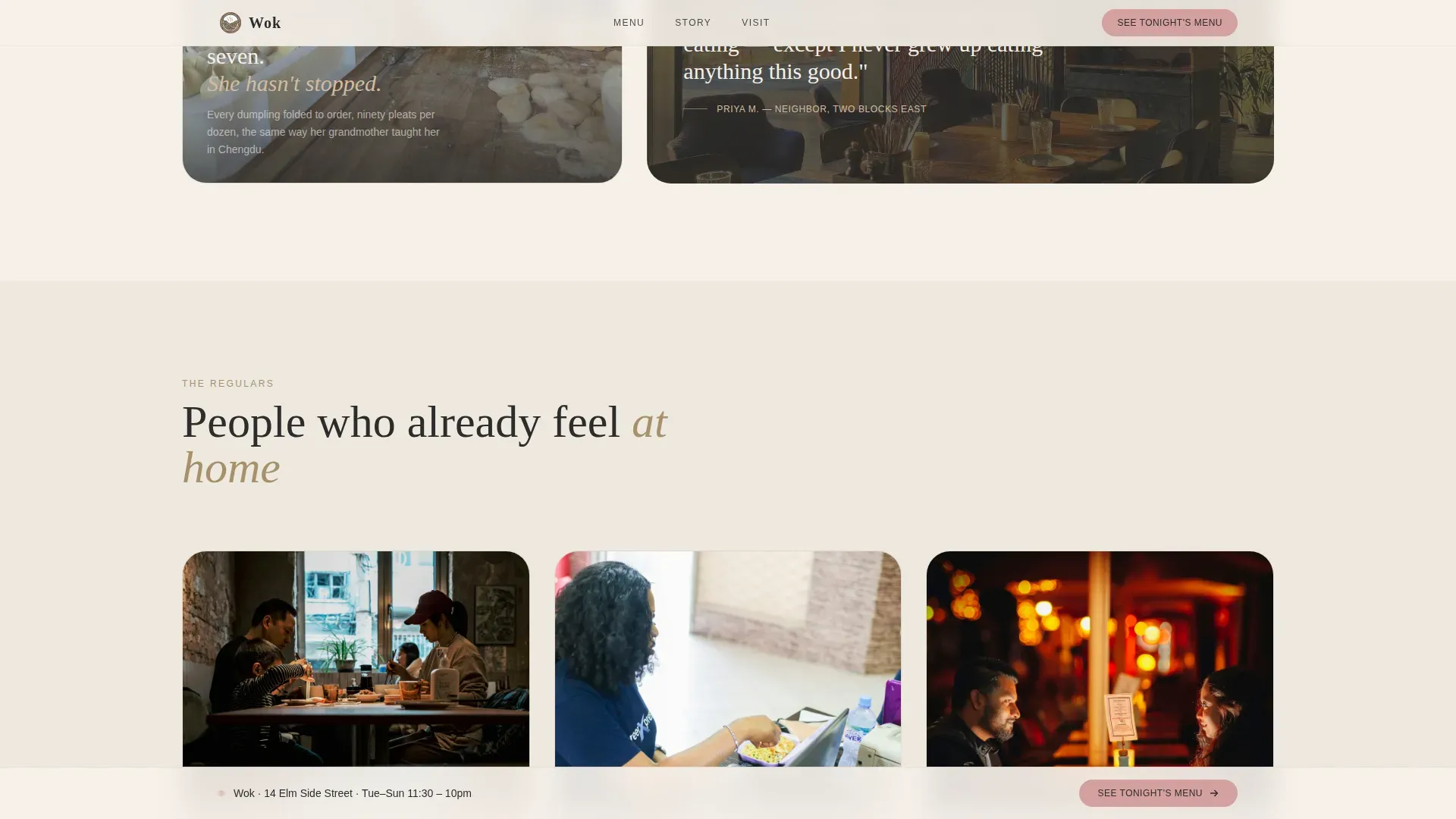
This section presents regular customer moments as short visual vignettes. Neighbor quotes and lived-in photography serve as social proof, showcasing the restaurant's community roots and building credibility with first-time visitors.
Open Kitchen Story Section
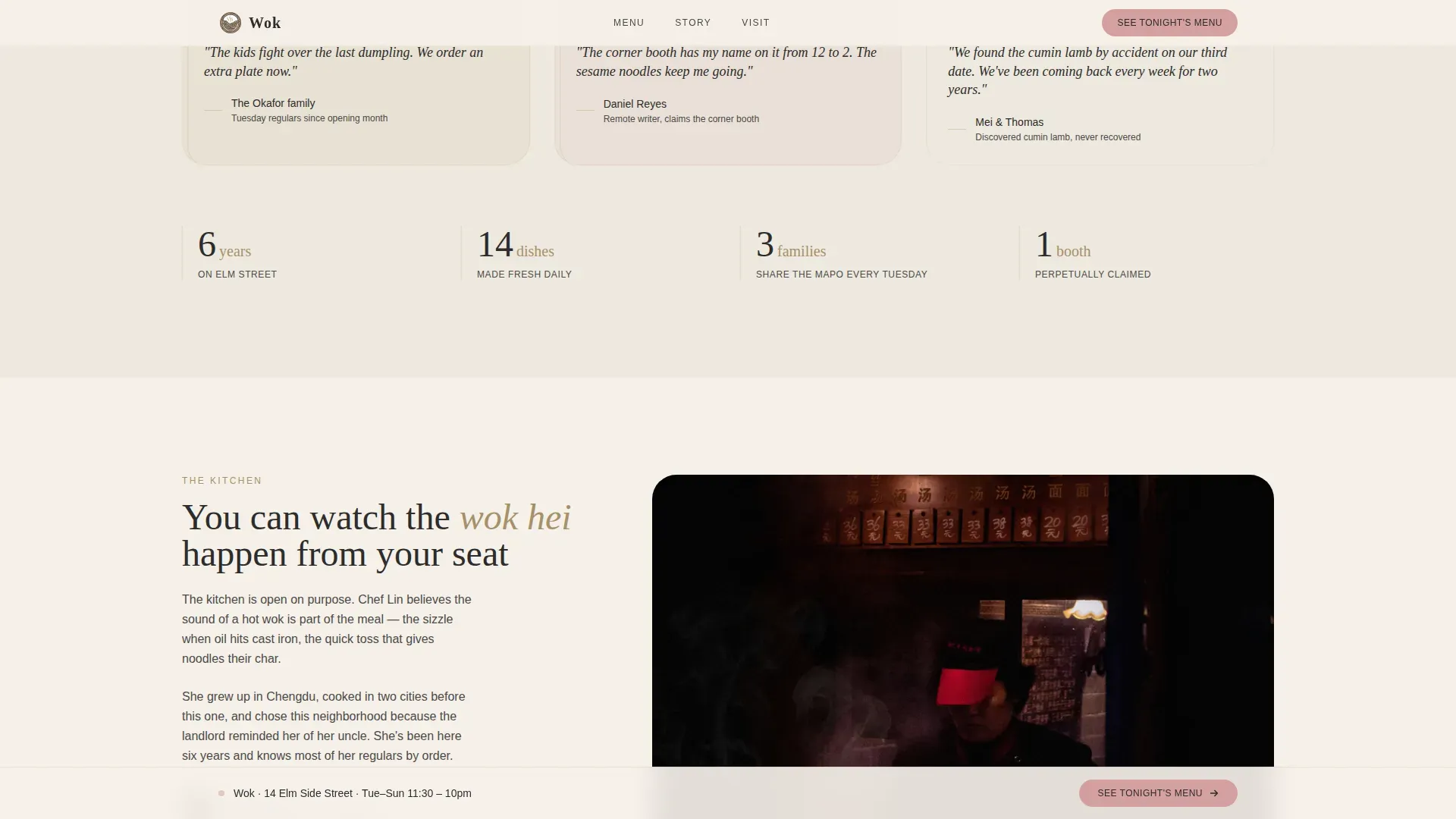
A dedicated card tells the chef's origin story alongside open kitchen imagery. It gives the Chinese restaurant a human face and communicates the care behind every dish, strengthening trust before the final call-to-action.
Persistent Call-to-Action Bar
A sticky bottom bar stays visible throughout the entire scroll. The "See Tonight's Menu" button in pickled ginger blush links directly to the hosted menu and reservation page, keeping the action clear without interrupting the story.
Front Door Closing Card
The final card shows the restaurant's front door at dusk, lights glowing inside. It lands as a standing invitation, making the decision to click feel natural rather than pressured.
Page sections overview
| Section | Purpose |
|---|---|
| Hero Full-Bleed | Opens with communal table photo and restaurant name |
| Signature Dish Grid | Polaroid cards showcasing key menu dishes |
| Chef Hands Card | Origin story and dumpling-folding visual |
| Dining Room Quote | Golden-hour photo with neighbor testimonial |
| The Regulars | Neighborhood vignette cards with customer moments |
| The Kitchen | Chef story and open kitchen warmth |
| The Door | Front door at dusk with standing invitation |
| Persistent call to action Bar | Sticky menu and reservation call-to-action |
| Footer Row | Single-row linear footer with essential details |
Design & branding system
The design language follows a Pastoral Calm theme with a Japanese Zen color system. Traditional neighborhood warmth and modern, clean web design principles combine to create a restaurant landing page that feels tactile and deliberate.
- Color palette: unglazed clay (#C4A882), ink-washed charcoal (#2C2C2C), steamed rice white (#F5F0E8), and pickled ginger blush (#D4A0A0) for hover states and interactive cards
- Typography: Fraunces serif for display headings, DM Sans for body text
- Animations: intersection observer reveals, staggered card entrances, and gentle hover lifts on interactive cards
Mobile & speed optimization
This landing page is built mobile-first, reflecting the phone-heavy discovery habits of neighborhood restaurant customers. High-resolution food images are compressed to help the landing page load quickly and minimize bounce rates.
- Large, tappable buttons suited for casual diners searching on the go
- Single-column scroll layout that reads cleanly on any screen size
- Static-first build with optimized image handling for fast initial load
How this template helps you convert
The landing page earns trust gradually through visual storytelling, then presents one clear action at the right moment.
- The card grid accumulates warmth section by section, so customers already feel like regulars before they reach the call-to-action.
- The persistent bottom bar keeps "See Tonight's Menu" visible at every scroll position, removing friction for visitors ready to act.
- The front door closing card reframes clicking through to the menu as accepting a warm, standing invitation rather than a transactional step.
Other information about this template
This template is a strong starting point for any Chinese restaurant looking to build a more engaging web presence. It can support ad campaigns that send traffic to a focused, single-purpose landing page with no distracting links. The design is fully customizable, allowing you to edit colors, copy, and images to match your restaurant's identity. No coding skills are required. Drag-and-drop interfaces in no-code website builders make it straightforward to set up and launch. The template also works well for food lovers who manage or promote Chinese food experiences and want a page that displays the personality behind the dishes. The Figma file provides a modern, visually appealing base for creating a restaurant landing page for any Chinese restaurant, and the layout can be adapted across different platforms or no-code app environments. You can find the full design system ready to access and customize from day one.
- Compatible with no-code website builders that offer drag-and-drop customization
- Suitable for running ad campaigns that require a focused, single-action landing page
- Fully editable layout, allowing you to set your own brand colors, copy, and menu links
Theme
Pastoral Calm
Creative direction
Local & Neighborhood
Color system
Japanese Zen
Style
Card Grid (Modular)
Direction
Click-Through
Page Sections
Full-bleed Hero with Serif Signature
Modular Bento Card Grid
Neighborhood Vignette and Social Proof Cards
Persistent Bottom Call-to-action Bar
Chef Origin Story Section
Front Door Closing Card
Related questions
Can I edit the colors and fonts in this template?
Does this landing page include a reservation form?
Is this template suitable for mobile users?
Can I use this template for social media ad campaigns?
Do I need coding skills to set up this template?