
Adalo, FlutterFlow, and Rocket.new each offer a different path—simplicity, control, or AI-powered speed. Your choice should depend on your app’s complexity and long-term goals. Pick the platform that grows with your vision.
Which app builder actually gets your idea off the ground without making you learn a whole new coding language?
No-code and low-code platforms like Adalo, FlutterFlow, and Rocket.new are making it possible to build apps fast, without drowning in syntax. The global low-code/no-code market is projected to hit $65 billion by 2027.
This is where apps are getting built these days. Let’s see how Adalo vs FlutterFlow vs Rocket.new stack up and which one actually fits your project.
Choosing the Right No-Code App Builder
Not all apps are created equal, and neither are the platforms that build them. Some projects need speed, some need flexibility, and some need both. That’s where no-code and low-code platforms come in; they let you focus on your idea instead of wrestling with syntax and backend setup.
Before diving into Adalo, FlutterFlow, and Rocket.new, here’s what to keep in mind:
- App Complexity: Is it a simple internal tool, or a full-scale production app?
- Speed vs. Control: Do you want to launch fast, or have full control over customization and scalability?
- Technical Comfort: Are you okay learning some technical setup, or do you need a platform that works out-of-the-box?
With those questions in mind, let’s see how each platform stacks up.
Adalo: Simple, Drag and Drop, but Powerful
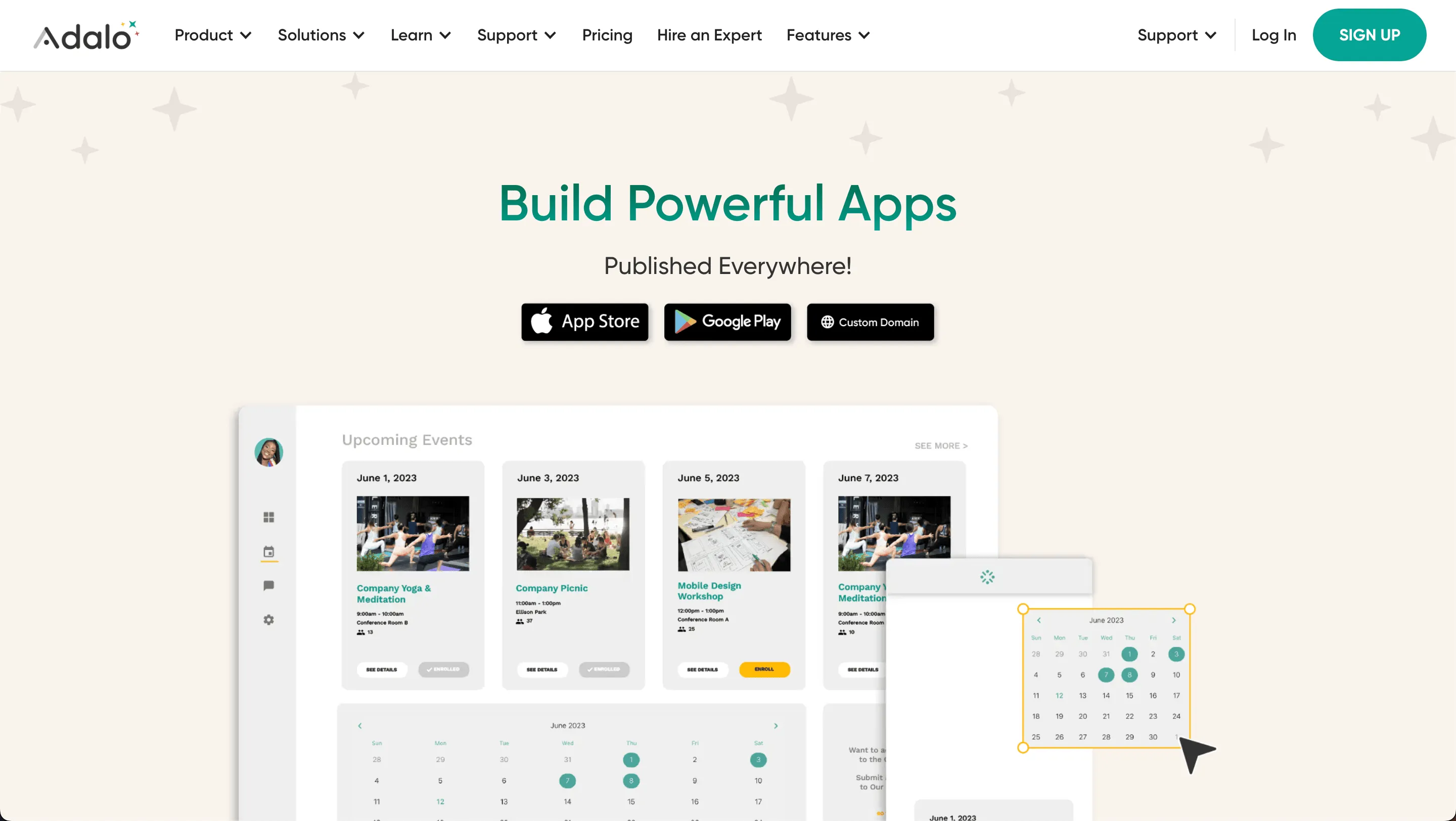
Adalo is one of the most popular no code app builders. If you’re a non-technical user, its drag-and-drop interface is perfect.
You can build web apps and native mobile apps without worrying about coding knowledge. The platform allows you to connect to Google Sheets, manage data models, add push notifications, and handle user authentication.
Key Features:
- Drag and drop interface
- Native mobile apps for iOS and Android
- Built-in database
- User authentication
- Push notifications
- Google Sheets integration
- Custom domains
- App store publishing ready
Best For: Simple apps, internal business tools, and prototypes.
Pricing: Free plan available; paid plans start around $50/month.
Limitations: Scaling complex applications can be challenging. Limited advanced customization. Some features need custom code.
Pros: Quick prototyping, built-in database, user authentication, and easy app store publishing.
Cons: Limited code ownership, not ideal for very complex apps.
Adalo is perfect if your goal is speed and simplicity build functional apps or internal tools without touching code. Just don’t expect to scale a super-complex app without hitting some limits.
FlutterFlow: Power Meets Flexibility
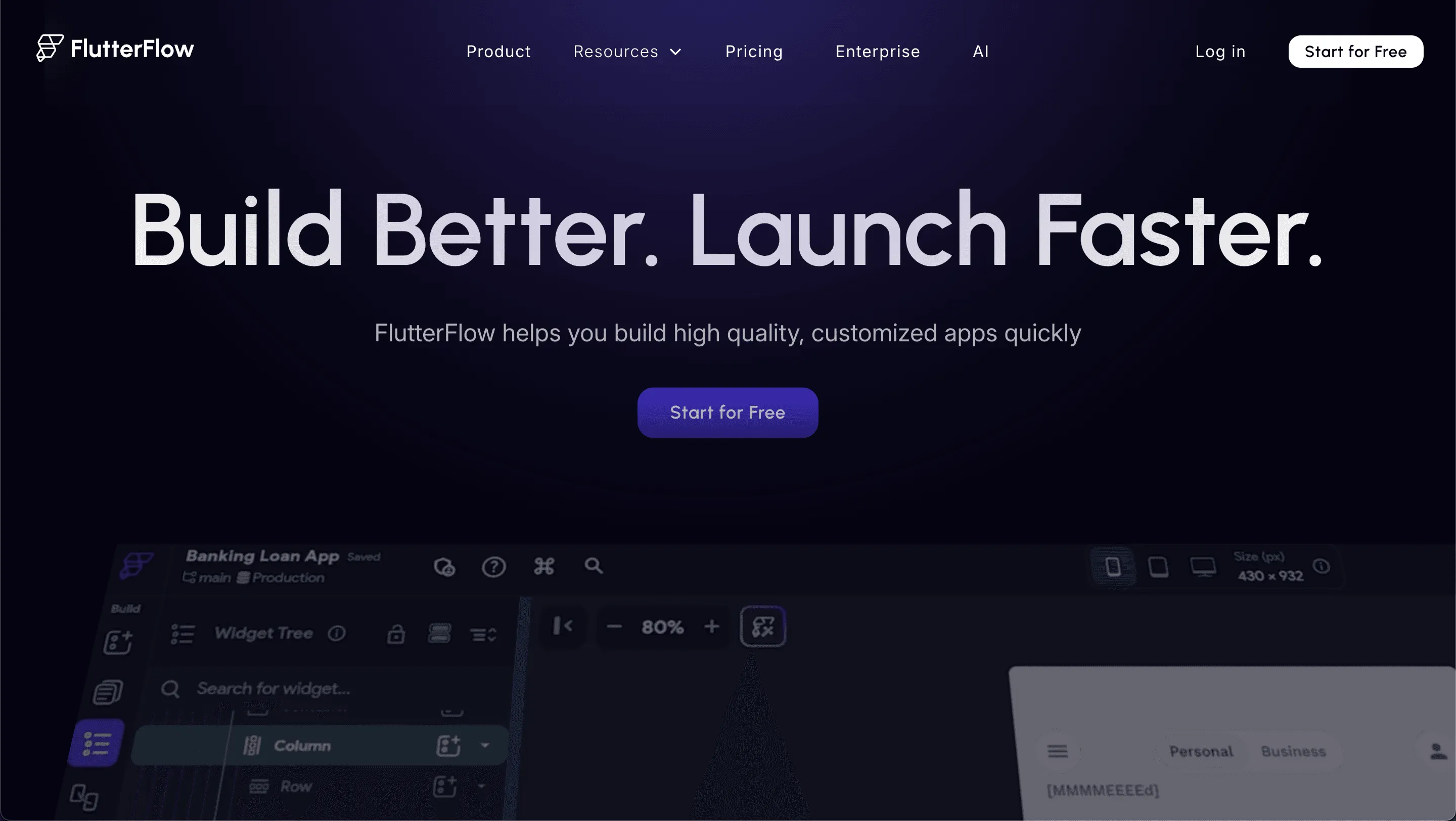
Next up, FlutterFlow rides on Google’s Flutter framework. It’s more technical than Adalo, but also more powerful for building scalable apps.
FlutterFlow lets you create mobile and web apps with a visual builder and a drag-and-drop interface, but you also get the option to add custom code.
Key Features:
- Drag and drop interface
- Web apps and native mobile apps
- Complex workflows with backend logic
- Source code export for full ownership
- Firebase and third-party integrations
- Advanced customization and custom components
- App store publishing ready
Best For: Complex apps, scalable apps, production-ready projects.
Pricing: Free plan available; paid plans start at $30/month.
Limitations: Steeper learning curve for beginners. Some setup is needed for app store publishing.
Pros: Supports native iOS and Android, complex workflows, full code ownership, third-party integrations.
Cons: Non-technical users may struggle initially, and there is a longer setup for app store publishing.
FlutterFlow is for builders who want full control. If your app needs complex workflows, backend logic, or production-ready scalability, this is your best bet but be ready to invest some time learning the ropes.
Rocket.new: The AI-Powered App Builder
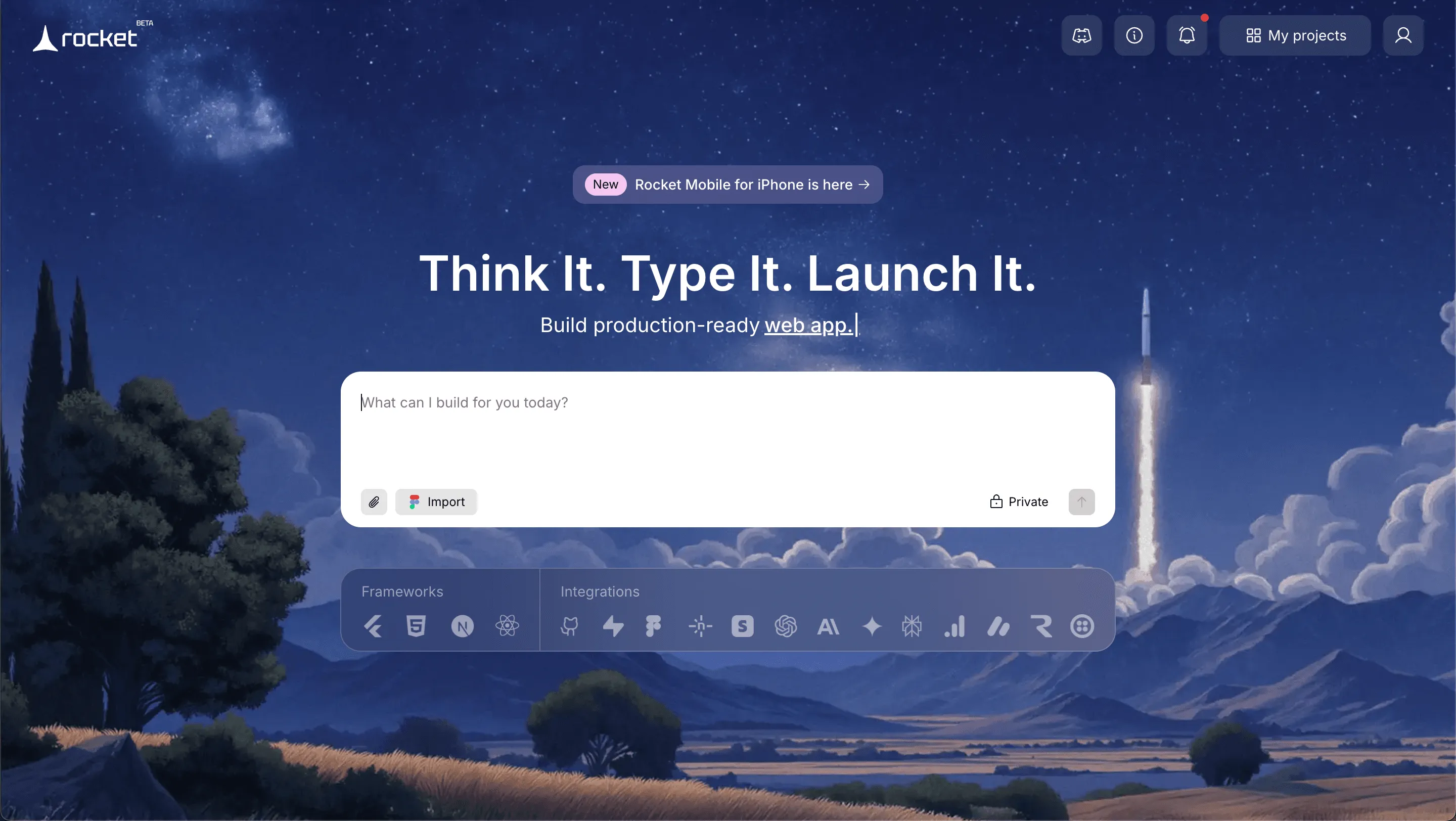
Rocket.new is a fresh face in the no code platforms world, focusing on rapid app creation. It’s an AI-powered app builder designed to simplify app creation for non-technical users.
The platform promises production-ready apps for both mobile and web apps with minimal setup.
Key Features:
- AI-powered features to generate functional apps quickly
- Drag and drop interface
- Web apps and native mobile apps
- Source code export for full control
- User authentication is built-in
- Custom domains
- Push notifications
- Internal tools and dashboards
Best For: Rapid prototyping, internal tools, simple to moderately complex apps.
Pricing: Free plan available; paid plans start around $20/month.
Limitations: Less advanced customization compared to FlutterFlow. Mostly geared for non-technical users.
Pros: AI-powered features, fast app creation, drag and drop interface, source code export, and native iOS and Android support.
Cons: May require workarounds for very complex apps, less community support than older platforms.
Rocket.new shines when speed matters. AI-assisted prototyping and easy code export make it a great hybrid for non-technical users, but still flexible enough if you want to take control later.
Comparing Adalo, FlutterFlow, and Rocket.new
Use this table to see which platform fits your goals, whether it’s speed, control, or complexity.
| Factor | Adalo | FlutterFlow | Rocket.new |
|---|---|---|---|
| Speed of Development | Fast | Medium | Very Fast (AI-powered) |
| Learning Curve | Easy | Medium-High | Easy |
| Flexibility / Control | Medium | High | Medium-High |
| Community Support | Medium | High | Medium |
| Cost Efficiency | Moderate | Good | Best for budget-conscious |
| Scalability | Medium | High | Medium |
This table helps pick a platform based on your app’s complexity, timeline, and how much control you want, rather than just ticking off features.
Community Insights
Real users often reveal what works and what doesn’t faster than any feature list. On Reddit, one user shared their experience with Rocket.new.
“So I’ve been experimenting with Rocket.new recently… it does a really solid job… For rapid prototyping or just spinning up an MVP, it feels like a big productivity boost.”
Feedback indicates Rocket accelerates prototyping while keeping customization options open.
Which One Fits Your App Idea?
If your goal is a simple app or internal tool, Adalo works well. For scalable apps with complex workflows, FlutterFlow is a stronger choice. But if you want a hybrid approach with AI-powered features and fast app creation, Rocket.new shines.
Mobile and Web Apps in Focus:
- Adalo apps: Best for functional apps without code.
- FlutterFlow apps: Great for complex, production-ready apps with some coding knowledge.
- Rocket.new apps: Rapid app creation for both mobile and web apps, ideal for non-technical users.
Advanced Features and Customization:
FlutterFlow allows advanced customization with backend logic and complex workflows. Rocket.newlets you add custom functionality and export code for later customization. Adalo is more limited but still excellent for functional apps and internal business tools.
Learning Curve:
Adalo is friendly for beginners. Rocket.new has an easy start with AI-powered features. FlutterFlow has a steeper learning curve but pays off when building scalable apps.
Pick the platform that matches your app’s complexity, your comfort with learning, and whether speed or control matters most each has its sweet spot.
Adalo vs FlutterFlow vs Rocket.new
Picking the right no code app builder can feel like choosing between three tasty desserts you like them all, but each serves a different purpose.
Adalo for simple apps and internal tools, FlutterFlow for complex apps and scalability, Rocket.new for fast, AI-powered functional apps that are mobile and web-ready.
Your choice depends on your app idea, your comfort with learning, and whether you want speed or control. Adalo vs FlutterFlow vs Rocket.new each has its own sweet spot. Pick the one that fits your project, not the one everyone else is hyping.
Table of contents