
How can AI solutions for small businesses lighten daily work? This blog shares simple tools and real steps teams use to handle tasks with focus.
Work feels different these days. Tasks move faster. Decisions come quicker. And many small business owners are starting to feel that shift.
Recent studies show that simple AI tools help teams move faster and with greater clarity. So it’s natural to wonder what this means for your day-to-day work.
What changes first?
As more entrepreneurs look for practical ways to lighten their load, conversations keep returning to affordable AI solutions for small businesses.
Not big systems. Not complicated setups. Just tools that support the work you already do.
In this blog, we walk through how everyday teams bring AI into real routines. We talk about what actually helps, what feels doable, and what tends to create the biggest early wins. All in a way that feels clear, steady, and easy to follow.
Why AI Fits the Real-World Work of Small Teams?
AI is no longer something abstract sitting in research labs. It’s now part of daily operations. It shapes AI-powered tools, supports AI-powered solutions, keeps teams organized, surfaces patterns, and helps handle repetitive tasks that drain time. And because of that shift, small business owners are rethinking how work flows across teams.
The impact shows up quickly.
People lean on AI for small tasks that once felt tedious. Operators support growing workloads with fewer delays. Even medium-sized businesses rely on AI systems, machine learning, and quick business insights to plan smarter.
Many business owners still ask how small businesses operate with AI when budgets are tight. The answer is simple: start small, stay practical, and let AI support the work rather than complicate it.
Where AI Fits Into Everyday Work?
Sometimes the clearest improvements come from small adjustments.
A drafting tool that writes email replies. A system that trims data entry time. Or an agent that organizes customer inquiries before someone steps in. Those small details shift team rhythm in meaningful ways.
1. Customer Support Feels Easier
People expect fast replies now. AI helps teams respond quickly with AI-powered chatbots that guide customers, answer basic questions, and support consistency across channels. This keeps service teams more available for trickier requests and improves customer satisfaction without adding headcount.
Modern customer service chatbots also help track orders, schedule appointments, flag issues, and support customers by answering questions in real time.
2. Marketing Moves with Better Timing
Marketing teams feel the pressure of constant content. AI helps draft marketing materials, schedule social media posts, manage marketing campaigns, and identify audience behavior trends. And because AI tools integrate with CRMs and calendars, people spend less time switching between apps.
Writers and editors use generative AI tools to draft early drafts faster, leaving more energy for strategy and brand voice. It’s a balanced way to stay consistent without burning out.
3. Operations Start Flowing More Smoothly
Operational tasks form the backbone of how small businesses function each day. AI supports these processes by managing reminders, organizing schedules, highlighting risks, reducing manual tasks, and supporting clean business decisions across teams.
Some teams rely on AI for inventory signals, human resources hiring workflows, or scheduling tasks in a project management tool. This helps everyone track progress without extra meetings.
4. Routine and Repetitive Work Gets Lighter
Many owners underestimate how much time goes into routine tasks. AI supports automating repetitive tasks, text formatting, file routing, and automating routine tasks that slow teams down. That shift creates room for deeper work and helps people save time on operations that never seem to end.
Practical Use Cases Across Business Functions
To keep things clear, here’s a quick look at real use cases for small and medium businesses adopting AI.
| Area | AI Use Case | Impact |
|---|---|---|
| Customer Support | Assistants, AI agents, chatbots | Faster replies and steady customer satisfaction |
| Sales & Marketing | Scoring, automated marketing campaigns, and social media platforms scheduling | Better timing and stronger engagement |
| Operations | Inventory tracking, workload checks | Fewer delays and cleaner workflows |
| HR | Screening and onboarding | More structure and less paperwork |
| Compliance | Monitoring sensitive data | Lower risk exposure |
| Workflow | Automated project management | More clarity and fewer bottlenecks |
Across these examples, the goal is the same: give small businesses more breathing room while supporting predictable growth.
A Community View
One business owner on Reddit explained the early stages of AI adoption in a refreshingly honest way:
“AI didn’t replace anyone in my shop. It filled the cracks we never had time for. My team stopped drowning in admin and finally had space actually to talk to customers.”
How Small Businesses Move Through AI Adoption?
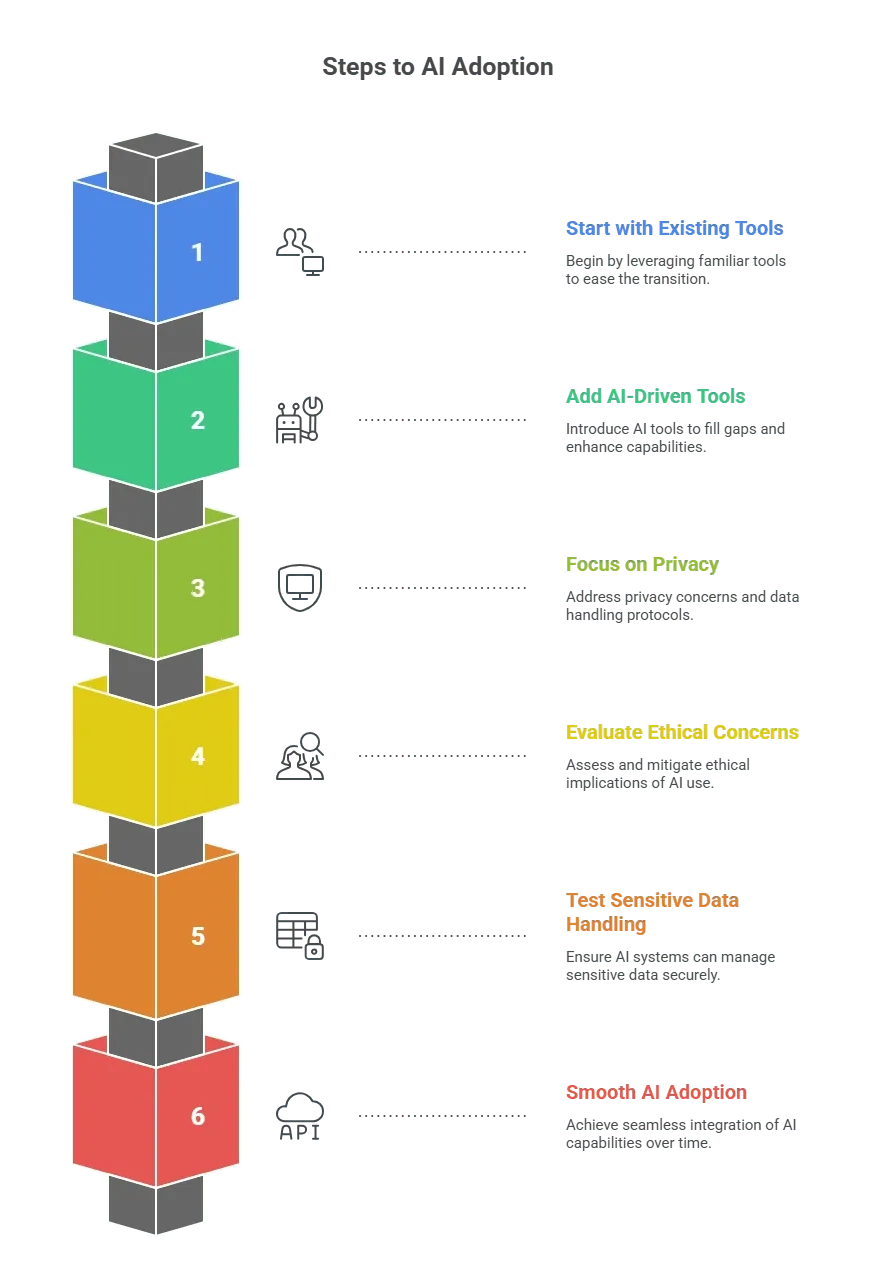
AI adoption typically happens in steps. Most teams start with existing tools they know well. Then they add AI-driven tools where the gaps appear. This gradual process feels easier and helps maintain morale.
The Workflow Shift Teams Feel
Work feels different once AI becomes part of the daily rhythm.
People spend more time on strategy and decision-making, and less time repeating old admin patterns. Teams coordinate better across departments. Tools help flag bottlenecks, track content, and organize customer communications.
The change even supports compliance and documentation in industries such as healthcare, finance, and law firms, where consistent record-keeping is essential. AI helps maintain cleaner workflows and monitor updates across the computer system and the cloud-based services already in use.
This also creates space to develop a clearer business plan, improve cross-team collaboration, and reduce stress in growing teams.
AI in Content, Admin, and Daily Communications
Creative teams often feel AI’s impact immediately.
Writing tasks, research, structuring long pieces like this blog post, and planning editorial calendars become easier. Tools prepare drafts, summarize research, and help organize big content libraries.
Teams push content faster across social media posts, emails, newsletters, and website updates. They keep the tone consistent and the pace more manageable.
Admin-heavy roles feel the same relief.
AI helps filter documents, prepare summaries, flag issues in contracts, and coordinate internal communication. It reduces clutter and helps keep information organized.
Why AI Works So Well for Smaller Teams?
Large companies aren’t the only ones benefiting. Small and medium businesses see major gains because they often feel pressure from limited time, lean teams, and unpredictable workloads.
Here’s why AI fits these environments:
- AI takes over tiresome work.
- Teams respond to customers faster.
- Workload feels less stressful.
- Errors drop dramatically.
- Budgets stretch further.
- People get better clarity on goals.
And because many free AI tools exist, teams can experiment without financial risk. They use AI to help small businesses operate more calmly and consistently.
Rocket.new: A Helpful Companion for Growing Teams
Rocket.new is a Vibe Solutioning platform that provides an AI workspace to simplify tasks for small teams. It pairs well with other AI-powered apps and helps reduce busywork across content, planning, and research.
Features
- Natural-language app generation: Turn plain text instructions into a complete full-stack application.
- Design-to-app conversion: Import a Figma design and instantly generate a working web/mobile app.
- Automatic backend setup: Rocket builds databases, authentication, APIs, and infrastructure without manual coding.
- One-click deployment: Publish your app to the web or mobile with no DevOps steps required.
- Export full codebase: Download clean, editable code so you maintain complete ownership and flexibility.
- Starter templates & libraries: Quickly launch dashboards, MVPs, landing pages, or internal tools with ready-made templates.
Rocket gives people a clear structure that doesn’t weigh down the workflow.
Preparing a Business for Practical AI Use
Organizing a business preparation phase usually involves reviewing existing routines, checking access controls, and identifying which tasks AI can actually support. Teams also consider what to automate, how to align with compliance rules, and how AI affects customer interactions.
Once mapped clearly, the transition feels smoother. The process helps reduce friction and supports choices about future tools and training.
Moving Toward Smarter Growth With AI
AI continues to reshape how teams plan, communicate, and handle daily tasks. It supports cleaner workflows, stronger customer relationships, and fewer staff bottlenecks. And with thoughtful planning, small businesses gain steady advantages without adding unnecessary stress.
For many teams, the most practical shift starts with choosing the right tools, gradually training people, and introducing updates in small steps. And that is where affordable AI solutions for small businesses make a real difference.
Table of contents
- -Why AI Fits the Real-World Work of Small Teams?
- -Where AI Fits Into Everyday Work?
- -1. Customer Support Feels Easier
- -2. Marketing Moves with Better Timing
- -3. Operations Start Flowing More Smoothly
- -4. Routine and Repetitive Work Gets Lighter
- -Practical Use Cases Across Business Functions
- -A Community View
- -How Small Businesses Move Through AI Adoption?
- -The Workflow Shift Teams Feel
- -AI in Content, Admin, and Daily Communications
- -Why AI Works So Well for Smaller Teams?
- -Rocket.new: A Helpful Companion for Growing Teams
- -Features
- -Preparing a Business for Practical AI Use
- -Moving Toward Smarter Growth With AI