
Sales intelligence talking points are data-backed arguments built from intent signals, buying data, and competitive activity. When sales and product teams share this intelligence, roadmaps become market-driven decisions rather than guesswork. Rocket.new's Intelligence feature continuously monitors competitors and delivers daily briefs serving sales, product, marketing, and strategy teams from a single source.
What if the best product decisions weren't made in a planning meeting - but in a sales call?
That's not a hypothetical. Sales teams sit on a goldmine of competitive intelligence every single day. The objections prospects raise, the features they compare, the competitors they mention - all of that is real-world market signal. And when product teams learn to read that signal, their roadmaps stop being opinion-driven and start being evidence-driven.
The global sales intelligence market was valued at USD 4.85 billion in 2025 and is on track to reach USD 12.45 billion by 2034, according to Fortune Business Insights. That growth tells you something: companies have figured out that gathering and acting on sales intelligence isn't optional anymore - it's how roadmaps get built right.
What Are Sales Intelligence Talking Points?
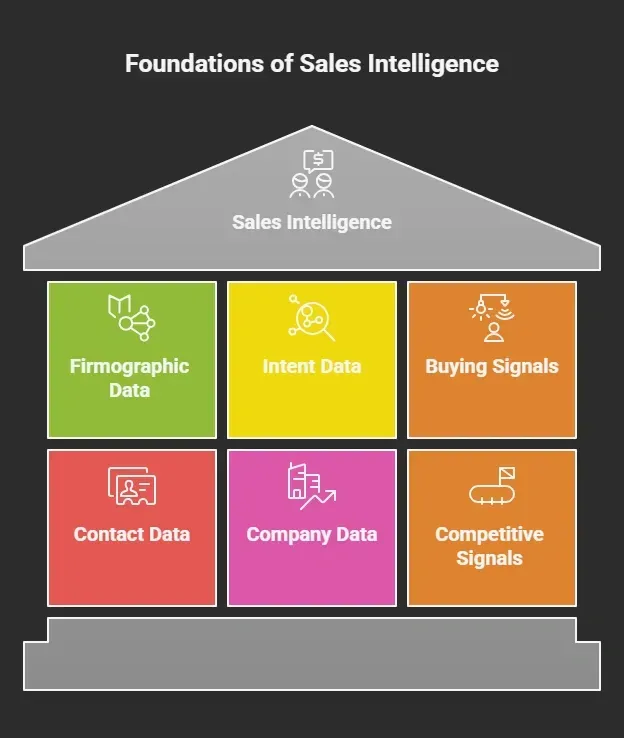
Sales intelligence talking points are the data-backed, context-specific arguments a sales team uses in conversations with prospects and customers. They're built from sales intelligence data - firmographic data, intent data, buying signals, contact data, company data, and real-time competitive signals.
But here's where it gets interesting for product teams.
Those same talking points reveal something deeper: what buyers care about, what they're frustrated with in existing solutions, and what they keep asking for that nobody is building yet.
 When a sales rep loses a deal because a competitor announced a new feature last week, that's a product signal. When three different prospects in the same week ask about the same missing capability, that's a roadmap hint. Sales intelligence exists precisely to surface these patterns at scale.
Why Sales Intelligence Matters for Both Teams
Sales intelligence helps in two directions at once.
For the sales team, it shortens the sales cycle and sharpens the pitch.
For the product team, it answers the question nobody else can answer as accurately: what should we build next?
| Team | What Sales Intelligence Provides |
|---|---|
| Sales Team | Contact details, intent signals, buying signals, account-level data, engagement signals |
| Product Team | Feature gap signals, competitor activity, customer feedback patterns, market trend data |
| Marketing Teams | Messaging differentiation cues, ideal customer profile refinement, content gaps |
| Revenue Teams | Forecasting inputs, pipeline data, historical deal data, win/loss patterns |
The Data Types Behind Strong Sales Intelligence Talking Points
Not all sales intelligence data is created equal. The best sales intelligence tools pull from multiple sources - both internal and external - to create a full picture of what's happening in a deal, in a market, and with a competitor.
Here are the core data types that feed good talking points:
Intent Data and Buying Signals
Intent data tells you when a company is actively researching solutions. Buyer intent signals - things like content consumption on relevant topics, visits to competitor pages, or spikes in job postings for specific roles - tell sales reps when a prospect is in buying mode before they've filled out a form.
For product teams, intent signals also reveal what capabilities buyers are searching for. If a wave of intent activity is clustering around a feature your product doesn't have, that's a direct roadmap input.
Firmographic and Technographic Data
Firmographic data covers company size, industry, location, and growth stage. Technographic data covers the tech stack a company runs. Both give sales reps the context to craft personalized messaging - and give product teams a view into which integrations or compatibility issues might be blocking deals.
Sales development representatives armed with good technographic data can walk into a sales call knowing exactly what tools the prospect uses and where your product fits in their workflow.
Contact Data and Customer Relationship Management Records
Accurate contact data with verified phone numbers and email addresses keeps outreach from being wasted effort. But beyond outreach, the CRM data sitting inside customer relationship management systems holds a record of every objection raised, every feature requested, and every competitor mentioned across hundreds of deals.
That historical deal data is one of the most under-used sources of product intelligence in most organizations.
Competitive and Engagement Signals
This is where sales intelligence and product intelligence start to overlap. When a competitor launches a new feature, updates their pricing page, starts running new ad campaigns, or gets a wave of reviews mentioning a specific capability - those are engagement signals that matter far beyond the next sales call.
How Sales Teams Use Sales Intelligence to Build Better Talking Points
Sales intelligence helps sales reps walk into every conversation with context they didn't have to manually research.
Think about what a well-prepared sales call looks like when the rep has access to good sales intelligence data:
-
They know the company's recent funding announcements and leadership changes
-
They understand the prospect's current tech stack and can speak to specific integration points
-
They've seen the intent signals that suggest the prospect is evaluating solutions right now
-
They have competitive talking points based on that prospect's use case, not generic feature comparisons
Without this, reps spend hours doing manual research before each call - or skip the research entirely and show up underprepared. According to Salesforce's State of Sales, sales reps spend only 30% of their time actually selling, with the majority consumed by admin tasks, manual data entry, and internal meetings. Sales intelligence solutions exist to flip that ratio.
"Stale data leads to wrong outreach, wasted time, and damaged credibility. Buyers expect tailored interactions. Updated data allows sales teams to craft messages that resonate." Abdulaziz Al-zaid, LinkedIn, 2025
The Journey from Sales Intelligence Reports to a Smarter Roadmap
Here's the part that most teams miss. Sales intelligence reports aren't just for the sales team. When the right data flows to the right people, it changes what product teams decide to build.
The process works as a feedback loop. Every deal that closes or loses generates new sales data. That data feeds the sales intelligence platform. The platform surfaces patterns. Those patterns inform talking points for the next round of sales and product decisions for the next quarter.
What Sales Intelligence Reports Tell Product Teams
Good sales intelligence reports for product teams don't just say "competitor X launched feature Y."
They say: "Competitor X launched feature Y, three of our enterprise deals mentioned it in the same week, and intent signals in that segment spiked 40%."
That's actionable. That's a roadmap item with evidence behind it.
Automated sales intelligence systems can pull this together from internal CRM activity, external sources like company websites and review platforms, and third-party intent data - without someone manually gathering it. That's the difference between gathering sales intelligence once a quarter and having it run continuously.
The Gap Between Sales and Product Teams
Most organizations still pass competitive intelligence between sales and product teams through inconsistent methods - a Slack message here, a deal notes export there, a quarterly review that arrives too late to change anything.
The result is predictable: product teams build based on their best guesses about what the market wants, while the people who talk to buyers every day sit on a pile of unstructured competitive data that never makes it into a roadmap decision.
Sales intelligence platform adoption is growing because more teams are recognizing this gap. Predictive sales intelligence and predictive analytics are now being used not just to score leads but to predict which features will resonate with target customers before they're built.
Sales Forecasting and Resource Allocation: The Hidden Benefits
Sales intelligence isn't only useful for talking points and roadmaps. It has a direct impact on sales forecasting accuracy and how revenue teams allocate resources.
When sales intelligence data is properly connected to sales operations, teams can:
-
Identify which target accounts are most likely to convert based on buying signals and engagement metrics
-
Allocate resources toward high-value opportunities instead of spreading effort evenly across all prospects
-
Improve forecasting by analyzing historical deal data patterns alongside current pipeline data
-
Spot sales event triggers - like a competitor's pricing change or a leadership change at a target company - that create new windows for outreach
According to Gartner's 2024 research, sales reps who partner with AI tools are 3.7x more likely to meet quota than those who rely on manual methods. The difference isn't working harder - it's working with better information.
Sales Intelligence Helps Account Executives Close More Deals
Account executives spend significant time managing complex, multi-stakeholder deals. Sales intelligence helps them in two specific ways:
-
Before the deal - understanding buyer intent, technographic data, and decision-maker profiles before the first call
-
During the deal - tracking engagement signals, updating talking points as competitive context shifts, and responding to objections with accurate data
Sales intelligence solutions that provide real-time data updates - rather than static exports - are increasingly non-negotiable for enterprise account executives running deals with long sales cycles.
Rocket.new: Where Competitive Intelligence Becomes a Roadmap Decision
Most sales intelligence tools stop at the brief. They surface signals. They generate reports. They send alerts. Then they hand the interpretation back to you.
Rocket.new is built differently. It's the world's first Vibe Solutioning platform - where competitive monitoring, strategic research, and building happen in the same place, on the same shared context.
Intelligence: Continuous Competitive Monitoring Across Every Surface
Rocket.new's Intelligence feature monitors every public platform a competitor operates on - continuously - and interprets what those signals mean for your business specifically.
Six signal categories are tracked for each competitor:
-
Website - every page change, messaging shift, pricing update, new feature announcement, and positioning pivot, with full before-and-after comparison and strategic interpretation
-
Social Media - every post, campaign, and engagement pattern across LinkedIn, X, Instagram, Facebook, YouTube, TikTok, and Reddit
-
News and Web Presence - press coverage, blog posts, partnership announcements, executive interviews, and media mentions
-
Reviews and Reputation - G2, Glassdoor, Capterra sentiment shifts over time with impact tags
-
People - employee count, new hires, exits, hiring velocity, and open position breakdown by department (hiring concentration reveals where competitors are investing before any product announcement confirms it)
-
Performance Marketing - ad activity across LinkedIn, Meta, and TikTok
The daily brief is where this becomes usable: every day, Intelligence produces a structured brief for every competitor. It includes a synthesized paragraph connecting everything that moved, what to watch next, and a concrete recommendation - what your business should do, consider, or act on. This brief lands before the first meeting of the day.
Four Functions, One Source
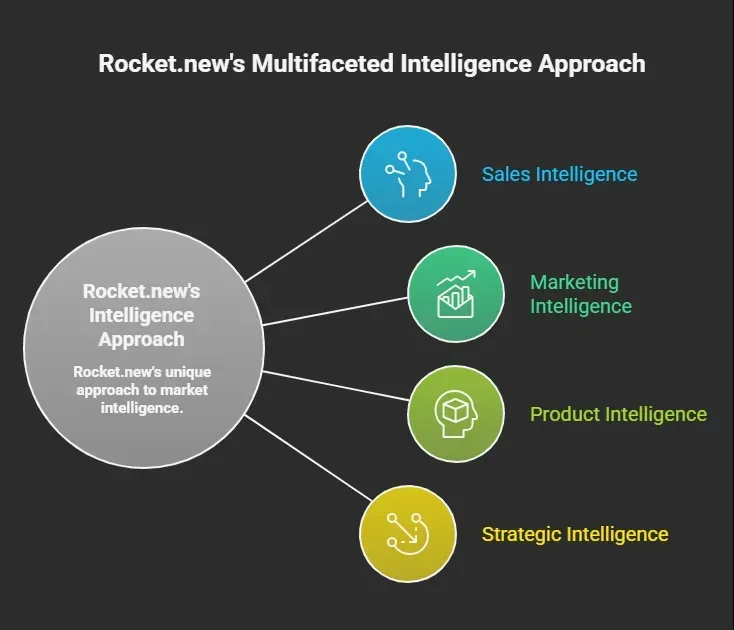
What makes Rocket.new's approach different from standalone sales intelligence tools is that Intelligence serves four teams simultaneously from a single source:
-
Sales intelligence - deal-specific competitive briefs and weekly updates for sales teams building talking points
-
Marketing intelligence - campaign differentiation based on current competitor ad activity and messaging shifts
-
Product intelligence - what competitors shipped in the last 90 days and what their job postings signal they're building next
-
Strategic intelligence - M&A signals, market entry moves, and enterprise positioning shifts detected months before formal announcements
Most organizations run four separate competitive intelligence setups - one for each team. Rocket.new replaces all four with one source and four lenses.
What Competitor Sales Intelligence Platforms Miss
Traditional sales intelligence tools like ZoomInfo, LinkedIn Sales Navigator, or Demandbase are powerful at surfacing contact data, firmographic data, and intent data. But they have a structural limitation: they stop at the data layer.
They don't interpret what a cluster of signals means for your specific business. They don't connect last week's competitive brief to this week's product decision. They don't sit inside the same workspace as your research, your builds, and your sales strategy.
Rocket.new's compound context architecture means the competitive signal from Monday's brief is present when a product manager opens a research task on Wednesday. The pricing move from last week is present when marketing writes the landing page. The job posting spike from Tuesday is present when the sales team prepares their talking points for Thursday's call. Intelligence compounds - it doesn't reset between sessions.
What Strong Sales Intelligence Talking Points Look Like in Practice
Let's make this concrete. Here's how a well-structured sales intelligence talking point gets built using real-time data:
Step 1 - Pull the Competitive Signal
A competitor updates their pricing page to add an enterprise tier. Rocket.new's Intelligence detects this and flags it in the daily brief with context: the pricing update appeared alongside three new enterprise sales job postings and a shift in LinkedIn ad targeting toward VP-level buyers.
Step 2 - Interpret the Signal
This isn't just a pricing change - it's a market positioning move. The competitor is going upmarket. That creates a specific window: mid-market buyers who were evaluating them may now feel priced out.
Step 3 - Build the Talking Point
Sales reps get a talking point: "Competitor X recently moved upmarket with enterprise-only pricing. If you've been evaluating them, you may find that the tier that fits your needs has changed. Here's how our pricing compares for your company size."
Step 4 - Feed the Product Team
The same signal tells the product team: mid-market buyers are underserved by a competitor's pricing shift. That's a positioning and packaging opportunity worth investigating in the roadmap.
This is sales intelligence turning into a sales strategy, a product hypothesis, and a competitive advantage - all from a single signal read correctly.
Conclusion: Sales Intelligence Talking Points Are Only as Good as the Platform Behind Them
The gap between teams that win deals and teams that lose them often comes down to one thing: who had better information at the right moment.
Sales intelligence talking points close that gap. They give sales reps the context to walk into every conversation prepared with accurate data on buyer intent, competitive positioning, and account-level signals that actually matter. And when that same intelligence feeds product teams, roadmaps stop being guesswork and start being market-responsive decisions.
The challenge is that gathering, interpreting, and distributing sales intelligence across sales, product, marketing, and revenue teams is genuinely hard without the right infrastructure. Most teams are still stitching together separate tools, separate monitoring setups, and separate briefing processes - and losing the signal somewhere in between.
Rocket.new is built to solve exactly that. One platform. Continuous monitoring. Interpreted intelligence delivered daily. Every team working from the same competitive picture - so your sales intelligence talking points are always current, always relevant, and always connected to what you're building next.
Start building smarter at Sign up now
Table of contents
- -What Are Sales Intelligence Talking Points?
- -Why Sales Intelligence Matters for Both Teams
- -The Data Types Behind Strong Sales Intelligence Talking Points
- -Intent Data and Buying Signals
- -Firmographic and Technographic Data
- -Contact Data and Customer Relationship Management Records
- -Competitive and Engagement Signals
- -How Sales Teams Use Sales Intelligence to Build Better Talking Points
- -The Journey from Sales Intelligence Reports to a Smarter Roadmap
- -What Sales Intelligence Reports Tell Product Teams
- -The Gap Between Sales and Product Teams
- -Sales Forecasting and Resource Allocation: The Hidden Benefits
- -Sales Intelligence Helps Account Executives Close More Deals
- -Rocket.new: Where Competitive Intelligence Becomes a Roadmap Decision
- -Intelligence: Continuous Competitive Monitoring Across Every Surface
- -Four Functions, One Source
- -What Competitor Sales Intelligence Platforms Miss
- -What Strong Sales Intelligence Talking Points Look Like in Practice
- -Step 1 - Pull the Competitive Signal
- -Step 2 - Interpret the Signal
- -Step 3 - Build the Talking Point
- -Step 4 - Feed the Product Team
- -Conclusion: Sales Intelligence Talking Points Are Only as Good as the Platform Behind Them