
How can an AI full-stack app builder reshape software creation speed? Teams build faster with an AI full stack app builder, reducing setup headaches, bringing ideas to life sooner, encouraging creativity, smoother teamwork, and steady progress.
Teams are now cutting development cycles by more than 60 percent with AI building platforms.
Yes, that is real.
According to the 2024 Retool State of AI in Software Report, developers using AI assisted creation ship software 2.8 times faster and complete product iterations much earlier. As a result, product releases arrive sooner, teamwork feels smoother, and updates happen more often.
So, what does this new speed mean for the way we build full products today?
For a long time, creating full applications felt exhausting. Endless setup, debugging, hosting, and testing slowed everything down. Now the process feels creative again. Light. Almost fun.
And this is where an ai full stack app builder enters the picture, turning long development marathons into faster, more energetic progress.
Let’s talk about what is changing next.
Why building apps used to feel frustrating?
For years, building any serious app demanded a tangled mess of configuration before anything even felt real.
Think about it. Developers needed to set up backend frameworks, configure authentication systems, connect databases, choose hosting providers, implement file storage, connect integrations, manage environment variables, and write reusable code for basic CRUD operations.
That was before UI design even started.
If someone wanted a polished web app or a mobile app prototype, the path usually stretched into weeks. Even teams with extensive coding experience struggled with velocity. And if more people joined later? Merge conflicts exploded. Rewrites everywhere. And endless effort spent fixing issues from small mistakes buried deep in the architecture.
It drained creative energy out of the process.
And yes, decisions were exhausting. Express or Django? Next.js, React Native, Vue, or Svelte? Postgres or MongoDB? AWS or Vercel? Which productivity tools? So much thinking spent before any real creation.
That’s why the shift happening right now feels liberating.
Welcome to an ai powered platform culture
Today someone can describe an app through everyday language, like talking with a teammate, and a platform instantly generates the functional architecture. Backend logic. UI screens. Authentication systems. Database schemas. Even file storage and automatic deployment. Then teams modify pieces like sculptors, not like bricklayers moving stones one by one.
The magic? Natural language prompts. Write what the app should do. And it builds.
One single prompt can generate more structure than days of manual writing code.
This era introduces smart ai agents working like collaborative assistants. Imagine a coding agent reviewing logic, offering suggestions, correcting mistakes before they spread, and adjusting architecture intelligently in real time. It feels like having another senior engineer sitting beside you except faster, tireless, and hyper-organized.
Teams now create prototypes quickly. They test early. They deploy without waiting. They ship updates constantly. And every part of the flow becomes more enjoyable.
And here’s something many builders appreciate: no code flexibility sits alongside actual production ready code. People who love writing code still control everything deeply. People who want speed build visually. And both groups work together like a single team.
What modern development platforms now automate?
These platforms handle necessary components including:
- UI layout and component rendering
- backend logic
- database modeling and migrations
- CRUD operations without repetitive writing code
- authentication systems
- file storage
- API endpoints generation
- real time updates and deployment steps
And everything appears in a functional full stack environment from the start.
This means someone can describe app ideas and see full stack applications running before coffee cools. The system even handles environment variables, testing workflows, and integration setup. Then optional refinement happens through natural language or direct coding.
And every piece remains transparent. You can open the projects page, check logs, modify backend endpoints, connect third party services, and expand features incrementally.
Feels game changing? Absolutely.
Why this matters for teams under pressure?
Time matters in software. Delayed releases cost money, momentum, and opportunity. But when deployment time drops from weeks to hours, product direction becomes fluid again.
One teammate can sketch an idea at lunch and show a working demo by the afternoon. Feedback loops compress dramatically. Creativity accelerates.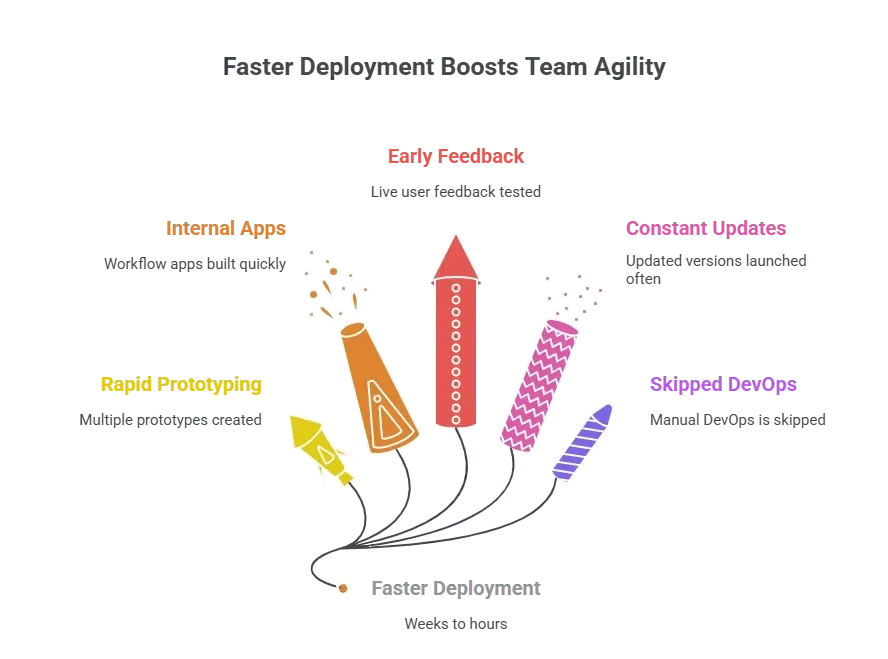
It’s better than rushing. It’s smarter.
Developers in the community feel the impact
A Reddit comment summed up the emotional difference:
“AI generated the backend for me, set up authentication, and even built forms. I only tweaked UI and logic. What normally took 2 weeks was working in 90 minutes.”
Traditional workflow vs AI building flow
Here’s a side-by-side comparison to visualize the difference:
| Task | Traditional workflow | With an ai powered platform |
|---|---|---|
| Backend setup | days of configuration | automatic |
| Database design | manual schema writing | natural language description |
| UI screens | built from scratch | generated and customizable |
| Authentication systems | complex handling | done instantly |
| CRUD operations | repetitive writing code | generated automatically |
| Deployment | complicated DevOps | one-click deploy |
| Fix issues | manual debugging cycles | guided suggestions |
| Custom domain | requires DNS work | smooth connection |
| Integrations | confusing setup | guided configuration |
Feels like moving from hand-carving stone to shaping clay.
No code and writing code working together
Some developers worry that no code threatens deep development work. Actually, the opposite appears true. The combination creates balance.
These platforms merge:
- drag-and-drop visual building
- complete editable source code
- GitHub repo syncing
- debugging visibility
- production ready code exports
- transparent architecture
So developers write code exactly where complexity matters. And repetitive tasks stop consuming expertise.
It respects everyone’s role.
You still choose logic, tuning, security, performance, and real engineering structure. But the heavy lifting disappears.
It means coding required moments feel purposeful, not exhausting.
What the real workflow looks like now?
Picture this flow.
Someone starts new project. Signs up. Types an everyday language prompt that describes what the app should do. The platform generates the foundational structure. A full stack app emerges instantly. The creator customizes pieces, adds UI components, connects database calls, inserts file storage, configures authentication systems, and tests interactively.
Another team member joins the projects page, reviews code, expands features, fixes issues with guided insight, and deploys. They connect integrations, set environment variables, and push updates to github easily. Later, they attach a custom domain and launch a live version of the web app. And parallel builds publish android versions.
That’s the real workflow. It feels smooth. Almost shocking.
And when clients check progress? They see demos, not explanations.
Rocket.new reaching attention fast
Rocket.new enters the scene with momentum because it merges creative speed with practical developer control. People build apps by describing features in natural language, then modify production ready code manually. It handles the biggest blockers automatically, but never hides real code behind a locked wall.
Rocket.new features:
- natural language prompt based app creation
- complete backend, UI, and database generated in minutes
- seamless GitHub and version control export
- built in hosting with instant deploy and custom domain attachment
- real time updates and collaborative editing
- database tools, logs, and testing visibility
- secure authentication systems and file storage setup
- ability to build mobile app and web app side by side
- integration connection for common services
- technical editing freedom without breaking automation
The focus stays on letting developers create more and waste less energy.
Why speed transforms business strategy?
A slow development process kills ideas quietly. But fast cycles awaken them.
Teams that:
- deploy quickly
- test early
- iterate often
- release updates frequently
win more conversations, more contracts, more confidence.
Marketing, sales, and engineering sync better. Everyone feels impact.
And yes, creative ideas stop dying in Google Docs.
Where these platforms fit best
These platforms work amazingly for:
- startups testing app ideas fast
- internal corporate productivity tools
- solo developers pushing beyond limitations
- agencies increasing margins
- mobile app entrepreneurs
- educators teaching concepts visually
- product teams shipping real features monthly
They scale beautifully. They help nontechnical thinkers connect with developers easily. And they support serious production.
When people call this shift a game changer, they aren’t exaggerating. It is.
The future belongs to builders who move fast
The future favors teams who build apps quickly, update continuously, deploy instantly, and keep full control without drowning in setup. And now it’s possible to create powerful digital software with natural language and modify through real code when needed, without months of waiting. The gap between idea and deployment no longer feels impossible.
Everything accelerates. Everything connects. And now the best ai full stack app builder turns development into collaboration instead of chaos.
Table of contents
- -Why building apps used to feel frustrating?
- -Welcome to an ai powered platform culture
- -What modern development platforms now automate?
- -Why this matters for teams under pressure?
- -Developers in the community feel the impact
- -Traditional workflow vs AI building flow
- -No code and writing code working together
- -What the real workflow looks like now?
- -Rocket.new reaching attention fast
- -Why speed transforms business strategy?
- -Where these platforms fit best
- -The future belongs to builders who move fast