
Learn how to define a V1 product scope using validated customer evidence with Solve on Rocket.new, helping teams prioritize effectively, reduce risk, and build products aligned with real user needs.
How do you actually define what goes into your first product version without guessing?
You start with real customer signals and shape your scope around that. Many teams rely on assumptions, and that often leads to building things nobody needs.
According to CB Insights, 42% of startups fail because there is no market need. That clearly shows how risky it is to skip real validation.
When you focus on what people actually need, you reduce risk, save resources, and move toward a successful product faster. You also gain clarity in your decisions and avoid unnecessary confusion during development.
This blog will help you understand how to define your product scope step by step using real customer input and structured thinking.
Why Defining Scope Feels Hard?
Getting the scope right sounds simple at first. You have a solid idea, a motivated team, and a clear goal. But once the work begins, things start to get complicated.
So, here’s what usually happens:
- You begin with a strong product idea, but quickly face too many possible features
- Everyone on the team has different opinions on what should be included
- Stakeholders push to add more, trying to cover every scenario
- You end up dealing with an overwhelming number of options
- This leads directly to scope creep, where the scope keeps expanding without control
- Timelines stretch and the project slows down
- The development process becomes messy and harder to manage
- The team loses focus on what actually matters
- The original core idea starts to fade
The goal is not to build everything at once. The goal is to define the right scope that delivers real value and keeps your team moving in a clear direction.
What is a Minimum Viable Product Really?
A minimum viable product is the smallest version of your app or service that delivers real value to users. It’s not about cutting corners. It’s about focus.
Your first version should solve a clear problem. That’s it.
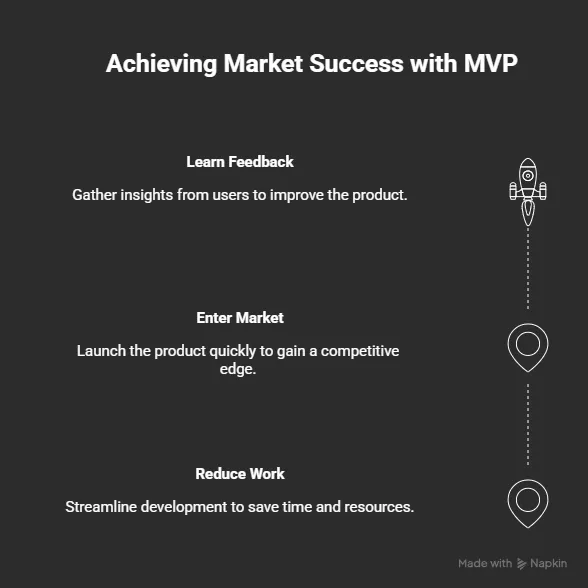
But here’s the catch. If your scope is wrong, your minimum viable product fails anyway. So, defining scope properly is one of the most effective ways to move forward.
Start With Customer Evidence, Not Assumptions
Well, this is where many companies go wrong.
They rely on internal opinions instead of real evidence. They skip proper research. They assume what customers want instead of listening.
Instead, your process should begin with:
- Talking to users
- Studying behavior data
- Identifying real users problems
This helps your product team define what actually matters.
When you use real signals, your plan becomes clearer. Your strategy becomes stronger. And your team gets a shared direction.
The Problem With Scope Creep
Let’s talk about it directly. Scope creep starts small. One extra feature here. One more request there.
Then it grows.
- The project becomes bigger
- The team loses focus
- The timeline slips
- The development cost rises
And worst of all, your first iteration never gets finished. Avoiding scope creep is not about saying no to everything. It’s about prioritizing features based on real value.
How to Define Scope?
Turning an idea into a clear scope can feel confusing, but breaking it into steps makes the process much easier.
When your team follows a structured approach, it becomes simpler to stay focused, avoid scope creep, and move forward with a clear plan.
Step 1: Define the Core Idea
Start by setting a clear base for your project.
- Identify the main idea
- Define the problem for your audience
- Keep it simple and focused
This step gives your team a strong direction.
Step 2: Gather Customer Input
Now shift your focus to real customers and users.
- Talk to customers directly
- Observe how users behave
- Collect early feedback
This helps you gather feedback and understand real needs.
Step 3: Identify Key Features
Now list possible features. Then reduce them.
Focus on key features that:
- Solve real users problems
- Deliver clear value
- Fit your first version
Step 4: Prioritize Features
This is where prioritizing features becomes critical.
Ask:
- Does this feature solve the main problem?
- Does it help users achieve something meaningful?
If not, remove it.
Step 5: Lock the Scope
Now you define your scope clearly. No extra additions. This prevents scope creep.
Step 6: Plan the Build
Create a simple plan for your development.
Your team should know:
- What to build
- What to ignore
- What success looks like
When you follow this step-by-step process, your team gains clarity and direction. It helps you stay focused on what matters, reduce unnecessary work, and build a first version that actually delivers real value to your users.
Example of Scope Definition
Let’s take a simple example to understand how scope should be handled. You want to build a fitness app.
Bad Scope
This is where most teams go wrong. The scope becomes too large right at the start:
- Workout tracking
- Nutrition tracking
- Social sharing
- AI coach
- Marketplace
This kind of scope leads to scope creep, delays the project, and makes the development process harder to manage.
Good Scope
Now let’s simplify it:
- Workout tracking only
This focused scope solves a clear problem and delivers real value quickly.
Why This Works
When your scope is simple, your team can stay focused, build faster, and reduce risk. It also makes your first version easier to launch and test with real users.
Scope Comparison
| Version | Scope | Outcome |
|---|---|---|
| First version | Workout tracking | Quick launch, clear value |
| Later versions | Add nutrition, AI features | Expand after feedback |
This keeps your process clean, your team aligned, and your product moving in the right direction.
Role of Product Managers and Teams
Now, let’s talk about people. Product managers and project managers play a big role here. They help the team stay aligned.
Their job is to:
- Maintain focus
- Prevent scope creep
- Guide the development process
A strong product team makes better decisions when everyone understands the scope. Also, your team size and company size matter. Smaller teams need a tighter scope to move faster.
Using Rocket.new for product
This is where things get practical. Instead of guessing your scope, you can use a structured tool to guide your team and bring clarity to your process.
- Solve is a built-in tool on the platform
- It helps your team define product scope clearly
- It replaces messy docs with structured thinking
- It connects your idea, features, and strategy
This gives your team a clean starting point and a clear direction.
What is Solve?
Solve helps you turn a raw idea into a structured plan that your team can actually use.
- Breaks down your product idea into smaller parts
- Organizes features into logical groups
- Connects each part into a clear structure
- Supports better focus during the development process
This makes it easier for your team to understand what to build and why.
How does Solve work?
So let us dive deep into how the Solve feature provided by the Rocket.new exactly works in a proper and easy way.
The process flows:
- You input your product idea
- The system structures it into connected nodes
- Each node represents a part of your plan
- You get a clear and actionable scope
It also helps your team define:
- Problem statements
- Feature sets
- User flows
This removes confusion and keeps your project aligned.
Key Features of Solve
Solve includes several useful capabilities that support your team and improve scope clarity.
- Structured Thinking: Breaks every idea into nodes to keep your scope clean
- Connected Logic: Links each node to create a clear direction
- Fast Planning: Lets your team begin without heavy research
- Clear Navigation: Helps stakeholders understand the project easily
- AI Powered Assistance: Uses AI powered suggestions to guide your plan and improve prioritizing features
These features help your team stay organized and focused.
How Solve Helps Define Scope?
Now, let’s connect it back to defining scope more practically. Solve does not just organize ideas. It guides your team step by step so you don’t lose focus.
- Structures your idea into smaller, manageable parts so your scope stays clear from the start
- Reduces scope creep by showing what fits your first version and what should wait for later versions
- Keeps your team aligned by giving everyone a shared view of the plan
- Helps you connect features directly to real users problems, so every decision adds value
- Supports better decisions using structured data, not assumptions
This way, your team is not guessing what to build. You follow a clear process, maintain direction, and move forward with confidence.
Example Using Solve
Let’s take a slightly deeper example to see how this works in real use.
- You start with a food delivery service idea and define the main problem for users
- You break the idea into smaller features like ordering, tracking, and payments
- You review each feature and remove anything that does not add immediate value to the first version
- You organize the remaining parts into a clear plan with a defined scope
- Focus stays on solving one main problem for customers
- Extra features are pushed to later versions
- The team knows exactly what to build and what to ignore
The result is a clean minimum viable product that is simple, user-friendly, and ready to test with real users.
People's POV
Here’s something from real builders:
“The goal isn't to build the final version; it's to build just enough to solve the core problem and get real feedback.” Linkedin
This shows how focusing on the right scope, instead of adding more features, helps teams stay aligned, reduce scope creep, and move faster in the development process.
Getting V1 Product Scope from Customer Evidence Right
Many teams struggle to define scope clearly. They add too many features, fall into scope creep, and lose focus. This slows the development process, wastes resources, and creates confusion for the team. The result is a delayed first version that fails to deliver real value to users.
The solution is simple. Use real input from customers, collect feedback, and define your scope with clarity. When decisions are based on V1 Product Scope from Customer Evidence, your team works with a clear plan, builds faster, and delivers a stronger product with confidence.
Try structuring your scope using Rocket.new to keep your team aligned and focused from day one.
Table of contents
- -Why Defining Scope Feels Hard?
- -What is a Minimum Viable Product Really?
- -Start With Customer Evidence, Not Assumptions
- -The Problem With Scope Creep
- -How to Define Scope?
- -Step 1: Define the Core Idea
- -Step 2: Gather Customer Input
- -Step 3: Identify Key Features
- -Step 4: Prioritize Features
- -Step 5: Lock the Scope
- -Step 6: Plan the Build
- -Example of Scope Definition
- -Bad Scope
- -Good Scope
- -Why This Works
- -Scope Comparison
- -Role of Product Managers and Teams
- -Using Rocket.new for product
- -What is Solve?
- -How does Solve work?
- -Key Features of Solve
- -How Solve Helps Define Scope?
- -Example Using Solve
- -People's POV
- -Getting V1 Product Scope from Customer Evidence Right