
What makes visitors stay and take action instead of clicking away? Strong landing page design combines clear messaging, persuasive structure, and thoughtful visuals to turn casual visitors into leads and paying customers.
Why do some pages grab clicks while others push visitors away?
The secret sauce is landing page design. The right layout, message, and visuals can turn curious visitors into sign-ups, leads, or actual customers.
According to research analyzing 41,000 landing pages with 464 million visits and 57 million conversions, the average landing page conversion rate is about 6.6% across all industries as of Q4 2024.
Landing pages aren’t magic. They’re psychology with strategy and a spritz of charm.
Let’s break it down into stuff that actually matters.
So, What is Landing Page Design Anyway?
Landing page design isn’t just about looking pretty; it’s about guiding visitors toward action in a blink. The right design can make them stay, click, or sign up almost automatically.
Key Points:
- Layout Matters: Every element on the page, from headline to images, should be positioned to guide the visitor’s eye naturally.
- Copy Talks: Words should be clear, concise, and aligned with your offer. No vague phrases.
- Visuals Speak: Images and videos reinforce the message and make your product or service easier to understand.
- Brain + Heart: Good landing page design appeals to logic and emotion, making visitors feel confident and excited to act.
- Instant Clarity: Visitors should immediately know they’re in the right place and what to do next.
A strong landing page design sets the stage for conversions. When visitors get the message instantly, they’re more likely to follow through, and that’s the magic of a focused page.
Why First Impressions Matter?
Once someone hits a landing page, there’s no waiting room. The hero section needs to work. That’s the first screen they see before scrolling. If they don’t get the point in a few seconds, they’ll bounce.
A strong early landing page gives:
- Clear main headline
- A simple offer
- A visible sign button
- A friendly visual
Keep the top half clean and focused. Visitors don’t want a cluttered buffet—they want the main dish served fast, clear, and inviting.
The Bare Bones of a Good Landing Page
A landing page isn’t just a pretty page; it’s a roadmap for visitors. Every element should guide them toward action, without confusing or overwhelming them.
Let’s break down the essentials that actually work.
1. Main Headline That Doesn’t Confuse
Your main headline is the first sentence they read. If it says something vague like “We’re awesome,” visitors will snooze. But if it says “Get real tools to save time,” that’s something they can feel.
2. Hero Section That Says What’s Up
Hero sections are like first hellos. Make them friendly and clear. A good landing page shows the offer without forcing people to squint or guess.
3. Humans Trust Humans
Show testimonials, ratings, or logos of people who liked what you’re offering. Human brains go, “Okay, other people tried it. Maybe I should, too.” That’s why social proof on your landing page is not just fluff, it’s subtle body language that says you’re safe here.
4. Visuals, But Make Them Real
Poorly executed stock photos can be like wallpaper that tries too hard. Use real photos or simple graphics that match what you’re offering. Don’t make people wonder what they’re looking at.
Stick to these core elements, and your landing page instantly becomes easier to understand and more trustworthy. Clear, real, and human-focused pages make it easier for visitors to take the action you want.
Why Many Pages Flop?
Not all landing pages convert, and often it’s because they try to do too much. Visitors come for one thing, but some pages make them work for it, and nobody likes that.
- Too Many Ideas at Once: Jamming every feature, offer, or bonus on one page confuses visitors.
- Cluttered Layout: Walls of banners, multiple buttons, and endless sections make the page feel chaotic.
- Long Forms: Asking for too much information upfront turns people away before they even see the value.
- Vague Messaging: If your page doesn’t clearly say what’s in it for the visitor, they’ll bounce.
Keep it simple, focused, and purposeful. Visitors came for one thing: give it to them clearly, and you’ll have a much better shot at conversions
How Landing Page Parts Help?
Every landing page is made up of key parts, and each part plays a role in guiding visitors toward your goal. Understanding what each section does helps you design pages that actually convert.
| Part of the Page | What It Does | Why You Care |
|---|---|---|
| Main headline | Sets expectations | First glance = decision time |
| Hero section | Highlights offer | Creates focus fast |
| Images/Videos | Shows, not tells | Quick brain processing |
| Form | Collects info | Gets you contacts |
| Social proof | Breeds trust | People copy other humans |
| CTA button | The goal action | Clicking is the whole point |
When each element has a clear purpose, the page works as a cohesive unit. Visitors understand what to do next, making it much easier to convert them into leads or customers.
Real People Talk About Landing Pages
Here’s a real Reddit conversation you can use instead of the removed one, with a valid source link and relevant insight about landing pages and drop‑offs:
“Normally, when I hear about converting people, it’s less of a design problem and more of a really dumb funnel and/or too much copy. This is way too much of an ask of any user when your real goal is to sell product. You gotta put product first, then when they’re interested, you hit them with ‘to learn more…’ and then let them fill in the rest.”
This thread shows how confusing flows, too much copy, or requests for extensive info early in the funnel can cause high drop‑off on landing pages, exactly the kind of honest feedback many designers face.
Where to Peek for Ideas
Even the best designers sometimes need inspiration. Looking at what works elsewhere can spark ideas and help you create landing pages that actually convert.
- Collections of Popular Landing Page Templates: Pre-designed templates give you a tested structure to start from.
- Screenshots of High-Performing Pages: Seeing what others have done well helps you understand why certain elements work.
- Galleries Highlighting Successful Designs: Curated galleries show patterns, layouts, and visuals that consistently drive conversions.
Studying a variety of landing pages can reveal subtle tricks and layout decisions that improve conversions. Borrow ideas, adapt them for your audience, and you’ll know why that one button suddenly looks so inviting.
How to Create Landing Pages That Don’t Suck?
Creating a landing page doesn’t have to be rocket science. You don’t need coding skills or a design degree, just the right tools and approach.
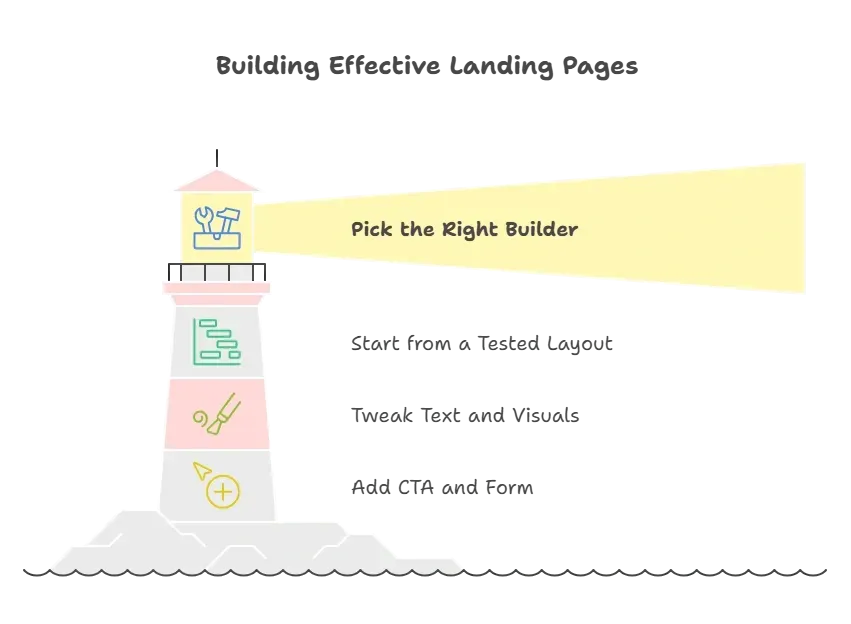
Think of it like building Lego, fun, simple, and satisfying. This Lego can actually generate leads, sign-ups, or customers, which is far more useful than just looking cool on a shelf.
How to Build a Landing Page with Rocket.new?
Creating a landing page doesn’t have to be hard or technical. With Rocket.new, users can build a page step by step without coding or wrestling with complex settings.
It turns ideas into real pages fast, guided by your prompts and supported by ready templates.
How to Build a Landing Page with Rocket.new
- Sign In & Start: Log in at Rocket.new and start a new project.
- Describe Your Idea: Tell Rocket what kind of landing page you want. Be clear about the goal.
- Select Landing Page: Set your project type to Landing Page so the structure fits.
- Choose a Template: Browse landing page templates and click Use this template to get started.
- Customize: Edit headlines, images, forms, and call-to-action to match your offer.
- Preview & Publish: Check desktop and mobile views, then go live using a free Rocket domain or your own.
Key Features:
- Prompt-driven Builder: Just describe what you want; Rocket builds the structure.
- Landing Page Templates: A variety of popular templates let you start with a clean foundation.
- Fast Publishing: Your landing page goes live quickly, with options for a custom domain or free Rocket hosting.
- Visual and Form Support: Add images, videos, and email capture forms to match what your audience expects.
Need a landing page that’s ready-to-go, visually engaging, and designed to convert?
With Rocket.new, building a landing page becomes a structured, guided process from idea to live page without needing a developer. Just prompt, pick a template, customize, and publish.
It’s a fast way to bring your landing page vision to life.
You Can Always Do Better
Your first landing page is like your first pancake. It might be great. It might be a little awkward. Either way, it’s just the start.
The trick? Make two versions and see which one gets more clicks. Testing headlines, swapping images, moving buttons, and making small tweaks can reveal big differences.
A/B testing isn’t complicated. It’s just watching what works, ditching what doesn’t, and slowly turning a good landing page into a great one.
Common Landing Page Missteps
Here’s a quick list of things that kill chances of a good conversion:
-
Too many buttons
-
Blah visuals
-
Long forms
-
Vague offers
-
Confusing headlines
If it makes visitors pause, they’ll ditch before they act.
Keep it simple and focused. When visitors don’t have to think twice, they’re far more likely to take actionand that’s what a high-converting landing page is all about.
How to Match Marketing Campaign to Landing Page
A landing page doesn’t exist in a vacuum. It should feel like a natural extension of your ads, emails, and social posts. Mismatched messaging confuses visitors and kills conversions.
- Consistent Voice: Use the same tone and style as your marketing campaign.
- Aligned Messaging: If the campaign promises a “Free trial,” the landing page shouldn’t say “Learn more.”
- Smooth Transition: Matching headlines, visuals, and offers helps visitors feel confident and stay engaged.
- Marketing Psychology: Pages that vibe with your ad language encourage visitors to stick around and take action.
When your landing page and marketing campaign speak the same language, visitors don’t get whiplash; they just follow the flow and click the button.
Landing Page Design That Works
Many landing pages try to do too much. Visitors get confused, scroll past, or leave before taking any action. All that effort, wasted.
Focus on a clear landing page design. One goal, short text, strong visuals, a visible call to action, and social proof. Make it easy for visitors to know what to do next.
When a landing page respects the visitor’s attention and keeps things simple, conversions rise. Simple, human, focused pages win every time.
Table of contents
- -So, What is Landing Page Design Anyway?
- -Why First Impressions Matter?
- -The Bare Bones of a Good Landing Page
- -1. Main Headline That Doesn’t Confuse
- -2. Hero Section That Says What’s Up
- -3. Humans Trust Humans
- -4. Visuals, But Make Them Real
- -Why Many Pages Flop?
- -How Landing Page Parts Help?
- -Real People Talk About Landing Pages
- -Where to Peek for Ideas
- -How to Create Landing Pages That Don’t Suck?
- -How to Build a Landing Page with Rocket.new?
- -You Can Always Do Better
- -Common Landing Page Missteps
- -How to Match Marketing Campaign to Landing Page
- -Landing Page Design That Works