
Rocket.new continuously monitors competitor pricing, reviews, hiring, ads, and market signals before your pricing discussions happen. Its Intelligence feature connects scattered data into actionable insights, helping teams avoid reactive pricing decisions. Instead of guessing, businesses can make pricing moves backed by structured competitive intelligence and real-time market context.
What if your pricing decision was already informed before the meeting even started?
That is exactly what Rocket.new makes possible. The platform's Intelligence feature runs continuously in the background, tracking competitors across pricing pages, social media, reviews, job postings, and ad campaigns - so by the time your team sits down to set or adjust pricing, the full picture is already built.
The Global AI-Driven Price Optimization Market was valued at USD 2.98 billion in 2024, growing at a 14.7% CAGR toward USD 11.74 billion by 2034, according to Market.us. Companies that use AI to inform pricing report revenue increases of 10-15%. The teams winning on pricing today are not guessing - they are working from structured, real-time data.
The Real Problem With Pricing Decisions Today
Most pricing decisions happen at the wrong time.
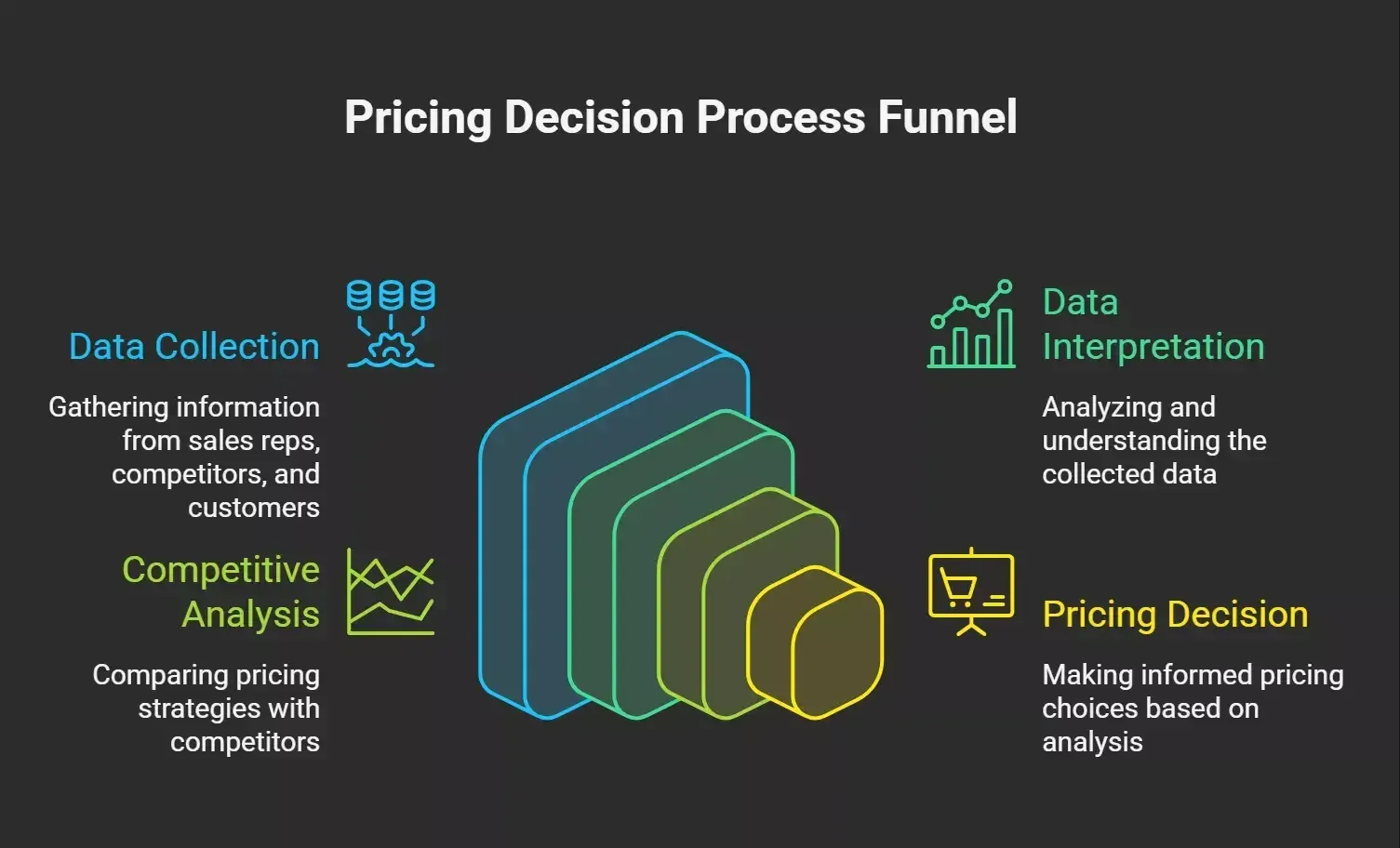 A sales rep hears something from a prospect during a call. Someone spots a competitor's updated pricing page. A customer mentions a discount a rival is running. By the time that information reaches the person making the pricing call, it is already days old - and almost certainly missing context.
Research from Retail Scrape shows that approximately 80% of consumers find price either essential or significant in their purchasing decisions. Yet most companies are still pricing reactively, off fragmented data sources and instinct.
The gap is not the desire to make smarter pricing calls. It is the lack of structured, interpreted competitive intelligence before the decision is made.
Most businesses do not need more data. They need data that has already been interpreted - and connected to what competitors are actually doing right now, not last quarter.
Companies that skip competitive analysis before a pricing meeting tend to misprice by 20% or more, leading to significant revenue loss.
What Competitive Intelligence Actually Does for Pricing
Competitive intelligence in the context of pricing is not just monitoring what competitors charge. It covers the full picture. Market penetration pricing involves setting an initial price low enough to capture a large share of the market quickly, but it carries the risk of signaling low value to users.
A price change on a competitor's website is a single data point. That same price change - alongside new enterprise-focused job postings, a shift in their ad copy toward larger buyers, and a spike in defensive G2 reviews - is a cluster signal. It tells a coherent story: this competitor is repositioning upmarket, and they just adjusted pricing to match.
A BCG study found that pricing decisions work best when they combine cost data, competitor intelligence, and willingness-to-pay research.
That kind of data analysis requires monitoring multiple data sources simultaneously, continuously. It requires connecting signals that, on their own, would not tell you much. And it requires doing all of that before your pricing call - not after you have already made the decision.
That is what separates teams with real competitive intelligence from teams that are still pricing off a spreadsheet.
How Intelligence Turns Raw Data Into Actionable Insights
The challenge with leveraging AI for pricing intelligence is not the data collection step. It is the interpretation layer.
Raw data without structure creates noise. Structure without interpretation creates reports no one reads. The real value is in the step where signals get connected, weighted, and translated into a clear recommendation your team can act on.
The AI analyzes related signals such as new hiring and marketing messages to predict enterprise shifts before they become public.
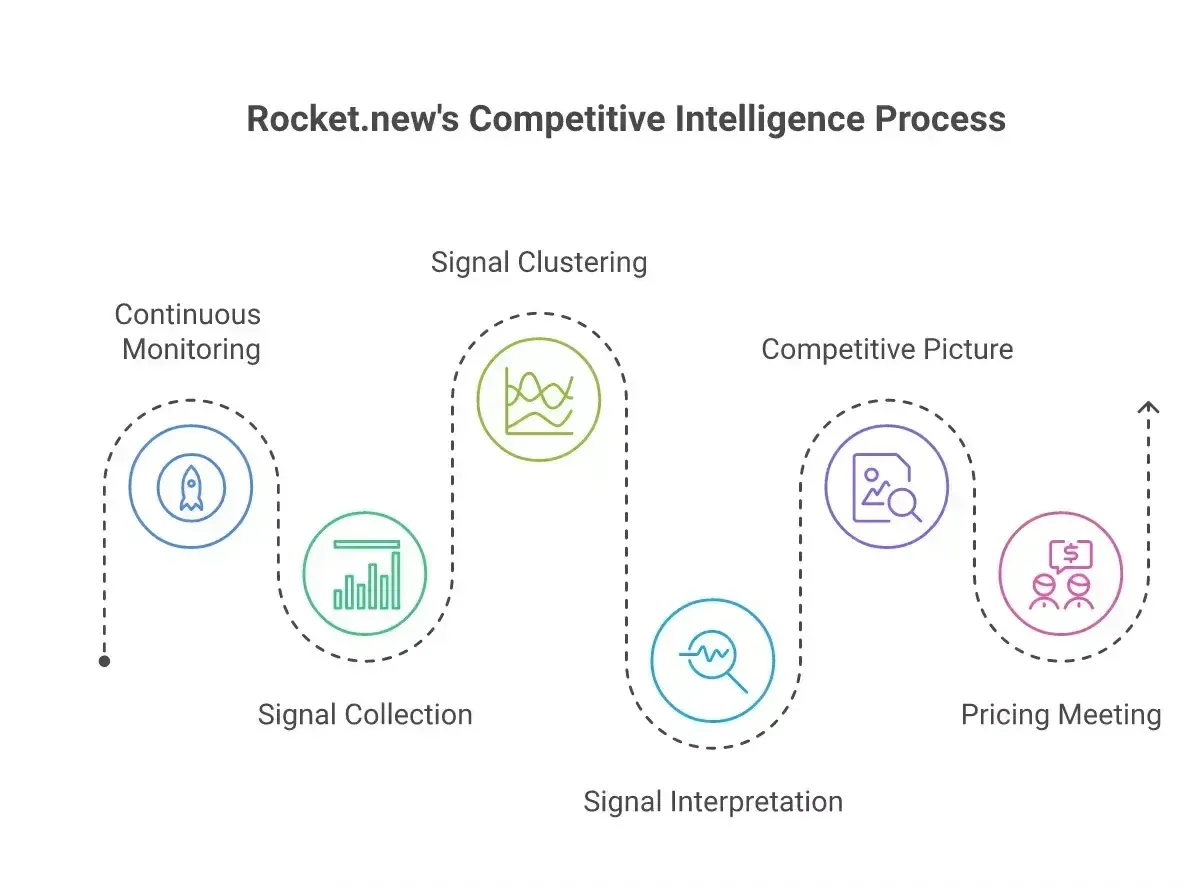
Here is how that flow looks in practice:
Most companies get stuck between steps B and C. They collect data from various tools - a pricing tracker here, a Google Alert there, an occasional manual review of a competitor's site - but never connect it into a coherent picture.
Teams that make consistently better pricing decisions are the ones reaching step F with confidence. Not because they work harder, but because their systems are built to get them there before the meeting starts.
Vibe Coding's Blind Spot: The Missing Intelligence Layer
The vibe coding market hit USD 4.7 billion in 2025 and is projected to reach USD 12.3 billion by 2027, according to Second Talent. AI-assisted development has genuinely changed how fast teams can ship products.
But that speed has exposed a different problem.
Most vibe coding tools are pure execution platforms. They build what you describe. They do not research whether what you asked them to build was the right call. They do not monitor what a competitor shipped last week. They do not flag that a rival just dropped their pricing to break into your target segment.
Vibe coding tools were built to solve the second half of the problem - the build. The first half - the market research, the competitive picture, the pricing context - still gets left entirely to the team.
The result: most businesses building products with vibe coding tools are still making pricing decisions the old way. Looking at cost-plus math, a rough sense of what competitors charge, and maybe a survey or two. The intelligence that should be shaping those pricing decisions is sitting in unread reports, spread across tools that do not talk to each other.
Structured market research can help businesses avoid leaving revenue on the table by ensuring that pricing reflects what customers are willing to pay, rather than relying on instinct or guesswork.
How Pricing Decisions Look Without Competitive Intelligence
AI tools can enhance competitive analysis by providing structured, evidence-backed research that informs pricing decisions, allowing teams to act on real-time data rather than instinct.
Here is a quick look at how different teams typically approach pricing - and where the blind spots consistently appear:
| Team Type | Common Pricing Method | Where Intelligence Is Missing |
|---|---|---|
| Early-stage startup | Cost-plus with ad hoc research | Real-time competitor pricing shifts post-launch |
| Growth-stage SaaS | Surveys and benchmark data | Competitor strategy changes between review cycles |
| Agency or consultancy | Industry standards and intuition | Client competitors' pricing repositioning |
| E-commerce brand | Repricer tools and platform analytics | Broader competitive strategy changes |
| Enterprise team | Annual pricing review cycles | Agile competitor responses between reviews |
The pattern is consistent across all of them: most companies review pricing on a fixed schedule. Competitors move on their own timeline.
Teams can model different pricing strategies, such as market penetration pricing, using historical revenue data and competitor tier structures.
By the time most teams find out a competitor has restructured their pricing, the move has already taken effect. Customers have already seen it. Sales conversations have already been shaped by it. You are reacting rather than responding.
Rocket.new - Where Intelligence Informs Every Pricing Decision
This is where Rocket.new changes the model entirely.
Rocket.new is the world's first Vibe Solutioning platform, a place where business research, product building, and competitive intelligence share the same workspace and the same memory. Its Intelligence feature is what sets it apart from every other vibe coding platform available. No other AI app builder includes built-in competitive intelligence as a core pillar alongside building and research.
The platform provides confidence scoring to ensure strategic pricing decisions are based on trustworthy, high-confidence data. The platform tracks over 150 sources, including ad libraries, websites, and review sites, to detect competitor pricing shifts within 48 hours.
The platform helps gather real user signals and engagement data on proposed pricing through rapid prototyping of landing pages or app prototypes. The persistent context feature of the platform ensures that competitive intelligence findings continuously inform recommended pricing strategies without starting the research process over.
When Intelligence is active, your team is not going into pricing discussions blind. The background for the call is already built.
Six Signal Categories, One Source
Rocket's Intelligence monitors six categories per competitor you add:
-
Website - every pricing page change, product update, messaging shift, and feature announcement
-
Social media - activity across LinkedIn, X, Instagram, Facebook, YouTube, TikTok, and Reddit
-
News and web presence - press coverage, partnership announcements, and executive interviews
-
Reviews and reputation - sentiment shifts on G2, Glassdoor, Capterra, and other review platforms
-
People - headcount changes, new hires, executive activity, and open positions by department
-
Performance marketing - ad activity across LinkedIn, Meta, and TikTok
Hiring concentration is one of the most underused pricing signals available. When a competitor posts seven new enterprise sales roles in a single month, that is not a coincidence. It is a strategy being telegraphed publicly. Rocket surfaces it.
The Daily Brief Before the Pricing Call
The most important output from Intelligence is the daily brief.
Each morning, Rocket delivers a structured summary for every competitor in your workspace. It includes the most significant changes from the previous day, what those changes mean when interpreted in the context of your business, and a recommended action.
This brief lands before the first meeting of the day. Teams going into pricing discussions already have the competitive picture built in - without manual research, without scrambling to pull data together from five different tools.
That is a structural advantage over competitors who are still reacting.
Intelligence That Compounds Across the Team
Intelligence in Rocket lives inside a project alongside your research tasks, build tasks, and collaborative context. This is the part that most teams do not expect.
The pricing signal flagged in Monday's brief is present when a product manager opens a task on Wednesday. The competitive insight from last week is present when the marketing team writes new positioning. Nothing is siloed. Nothing resets between sessions or between team members.
This compound context architecture means business strategy gets sharper over time - and so do the pricing decisions it informs.
What the Community is Saying
Aryan Mahajan, a Rocket 1.0 user, described the experience on LinkedIn in a way that captures it directly:
"Rocket 1.0 scanned thousands of data points across my competitive landscape and returned a 40-page structured analysis: competitor pricing restructures, senior hire patterns, ad spend shifts across LinkedIn and Meta, review sentiment over time, product launch timing, and executive messaging changes. Then it connected them. A pricing restructure alone means nothing. A pricing restructure + enterprise job postings + defensive G2 reviews = they're pivoting upmarket. Move now or get outmaneuvered. McKinsey charges $200K and 6 weeks for that read." - Aryan Mahajan, LinkedIn
That is precisely the kind of connected, multi-signal interpretation that used to require a consulting engagement - or at minimum, a dedicated analyst. Rocket delivers it daily, as standard.
Smarter Pricing Decisions Start With Better Intelligence
Pricing is not a math problem. It is an intelligence problem.
Most teams do not make weak pricing decisions because they cannot run numbers. They make them because they are missing context - what competitors are doing right now, what customers are saying about those competitors, and where the market is heading next.
How does Rocket.new's intelligence inform a pricing decision before it gets made? It monitors competitors continuously across six signal categories, interprets those signals in clusters rather than in isolation, delivers structured briefs each morning, and keeps the full competitive picture alive inside every task your team works on. The decision still belongs to you - but you will not be making it without the full picture anymore.
Make every pricing decision with real-time competitive intelligence. Sign up and start using Rocket.new.
Table of contents
- -The Real Problem With Pricing Decisions Today
- -What Competitive Intelligence Actually Does for Pricing
- -How Intelligence Turns Raw Data Into Actionable Insights
- -Vibe Coding's Blind Spot: The Missing Intelligence Layer
- -How Pricing Decisions Look Without Competitive Intelligence
- -Rocket.new - Where Intelligence Informs Every Pricing Decision
- -Six Signal Categories, One Source
- -The Daily Brief Before the Pricing Call
- -Intelligence That Compounds Across the Team
- -What the Community is Saying
- -Smarter Pricing Decisions Start With Better Intelligence