
How can teams create digital solutions with AI? Let's explore practical steps for digital transformation, machine learning use, smart tools, and people-focused strategies to improve decision-making and business results.
How can businesses turn ideas into smart digital solutions without making things complicated?
The answer lies in using AI with purpose and clarity. Within the early stages of digital transformation, artificial intelligence supports teams by simplifying work, improving insights, and guiding better outcomes.
A 2024 McKinsey study reports that 65% of companies actively use artificial intelligence across business functions, with many citing improved decision-making and faster delivery. That trend continues to rise as AI technologies become easier to apply and more practical for daily use.
Let’s discuss how this works.
Digital Transformation Today
Digital transformation is the process of reshaping how businesses operate by leveraging digital tools across systems, teams, and customer touchpoints. It changes how value gets delivered and how customers interact with brands. This process touches marketing, sales, finance, customer support, and supply chain management.
Artificial intelligence supports digital transformation by helping organizations process information faster and act with confidence. AI systems analyze historical data, identify patterns, and support decision-making without adding friction. Over time, these efforts form a steady digital transformation journey that feels achievable rather than overwhelming.
AI digital tools now support customer relationship management platforms, track customer behavior, and guide customer engagement across channels. These tools also reduce human error and improve operational efficiency. As a result, teams spend less time fixing mistakes and more time improving customer experiences.
So, digital transformation becomes practical when AI solutions are applied with focus and patience.
Understanding Artificial Intelligence Without the Hype
Artificial intelligence refers to computer systems that perform tasks associated with human thinking, such as learning, reasoning, and adaptation. Machine learning plays a major role here. It enables systems to learn from data rather than follow fixed rules.
Machine learning algorithms analyze large datasets, including unstructured data like emails, chat logs, and reviews. Natural language processing (NLP helps machines understand customer queries and language patterns. Over time, these systems grow smarter and more accurate.
AI-powered tools like chatbots already handle routine tasks and repetitive tasks. They support customer satisfaction by offering quick, consistent responses. Businesses also rely on AI platforms and models to support marketing campaigns, e-commerce, and inventory management.
So while artificial intelligence sounds technical, its real value shows up in simple, everyday improvements.
Building a Strong Foundation for AI
Before launching AI projects, teams need structure.
A clear AI transformation strategy sets direction and avoids wasted effort. This strategy connects business goals with data practices, people, and IT infrastructure.
A strong foundation often includes:
- Clean historical data and accurate purchase history records
- Clear goals shared with business stakeholders
- Collaboration between data scientists and business leaders
Machine learning supports this foundation by handling complex processes and predictive models. Leveraging machine learning allows teams to automate repetitive tasks and improve customer engagement without overwhelming staff.
Digital transformation works best when leaders leverage AI across departments. That includes marketing, operations, and supply chain teams. Each step strengthens the digital transformation journey and builds confidence over time.
Enhancing Business Operations with AI
Next, AI reshapes business operations by simplifying workflows and reducing manual effort.
Intelligent automation handles routine tasks, lowers stress on employees, and reduces human error. This leads to stronger operational efficiency across teams.
In supply chain management, AI supports supply chain optimization through predictive analytics. These systems forecast demand, guide inventory management, and keep the supply chain moving smoothly. Machine learning models help teams respond more quickly to shifts in demand and supply chain disruptions.
AI systems also analyze customer behavior and customer preferences to improve business processes. Customer relationship management tools powered by AI algorithms help anticipate customer needs and personalize interactions.
Common benefits include:
- Faster process optimization
- Improved customer experiences
- Better operational efficiency
Over time, these gains support competitive advantages and long-term growth.
Driving Innovation with Generative AI
Then comes generative AI, which opens new creative possibilities.
Generative AI creates content such as text, videos, code, and even generate images. Generative AI models support teams working on content, product design, and development.
Gen AI tools support market research by analyzing consumer behavior and market trends. They also help create personalized messaging, product descriptions, and social media posts. This shortens content cycles and keeps messaging relevant.
Machine learning supports these AI models by refining outputs as more data flows in. Artificial intelligence here supports creativity while keeping outputs grounded in real data. Generative AI is playing a growing role in digital transformation by accelerating experimentation and driving innovation.
This approach helps businesses stay flexible while building a competitive edge.
Improving Decision Making with AI Insights
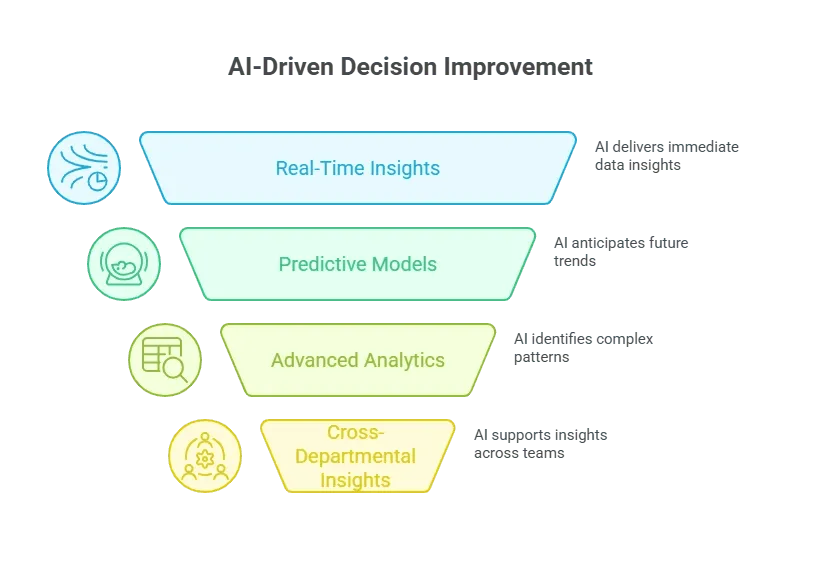
Decision-making improves as data becomes easier to understand. AI systems deliver real-time insights from historical data, customer behavior, and predictive analytics. Leaders no longer wait weeks for reports.
Rocket.new and AI Driven Digital Solutions
Rocket.new brings practical power to building AI-powered digital solutions by turning simple, plain-language ideas into production-ready apps without long setup cycles or deep coding skills.
The platform supports the entire workflow from planning to live deployment, helping teams focus on actual outcomes rather than boilerplate code and complex tooling.
It analyzes market context, designs user interfaces, generates backend logic, handles database and authentication setup, and provides editable, clean code you can export or launch directly.
Key Features:
- One-prompt app generation – Turns a plain-language idea into a full working app in minutes.
- Figma-to-code support – Converts design files into responsive, editable UI code.
- Built-in backend setup – Automatically creates databases, APIs, and authentication flows.
- Multi-platform output – Supports web and mobile builds using modern frameworks.
- Live preview and editing – Shows real-time changes while refining features and layout.
- Templates and smart suggestions – Speeds up development with ready structures and guided inputs.
AI Use Cases Across Industries
| Industry | AI Application | Business Impact |
|---|---|---|
| Retail | Predictive analytics | Higher customer satisfaction |
| Logistics | Supply chain optimization | Lower costs |
| Marketing | Consumer behavior analysis | Better customer engagement |
| Finance | Advanced analytics | Smarter decision making |
These examples show how artificial intelligence supports real outcomes across sectors.
How to Generate Digital Solutions Using AI
Digital transformation works best when AI supports clear goals, strong data, and people-first processes. When teams focus on machine learning, smart tools, and steady progress, they learn how to generate digital solutions using AI without stress or confusion.
Growth comes from consistent steps, practical thinking, and confidence built over time, with every AI decision tied back to real business value and improved customer experiences.
Table of contents
- -Digital Transformation Today
- -Understanding Artificial Intelligence Without the Hype
- -Building a Strong Foundation for AI
- -Enhancing Business Operations with AI
- -Driving Innovation with Generative AI
- -Improving Decision Making with AI Insights
- -Rocket.new and AI Driven Digital Solutions
- -AI Use Cases Across Industries
- -How to Generate Digital Solutions Using AI