
The SaaS market hits $465B in 2026. This guide covers the best micro SaaS ideas across five categories, a 5-step validation framework, the right tech stack, and how Rocket.new turns any idea into a production-ready product without writing code.
The SaaS market is forecast to reach $465 billion in 2026, and the barrier to building your own product has never been lower. This post covers the best micro SaaS ideas in 2026 across five categories, how to validate demand before building, and how Rocket lets non-technical founders go from idea to deployed product without writing code.
What is micro SaaS? A micro SaaS product is a focused, subscription-based software tool built by a solo founder or small team to solve one specific problem for one well-defined audience, typically generating $1K-$50K MRR with minimal overhead.
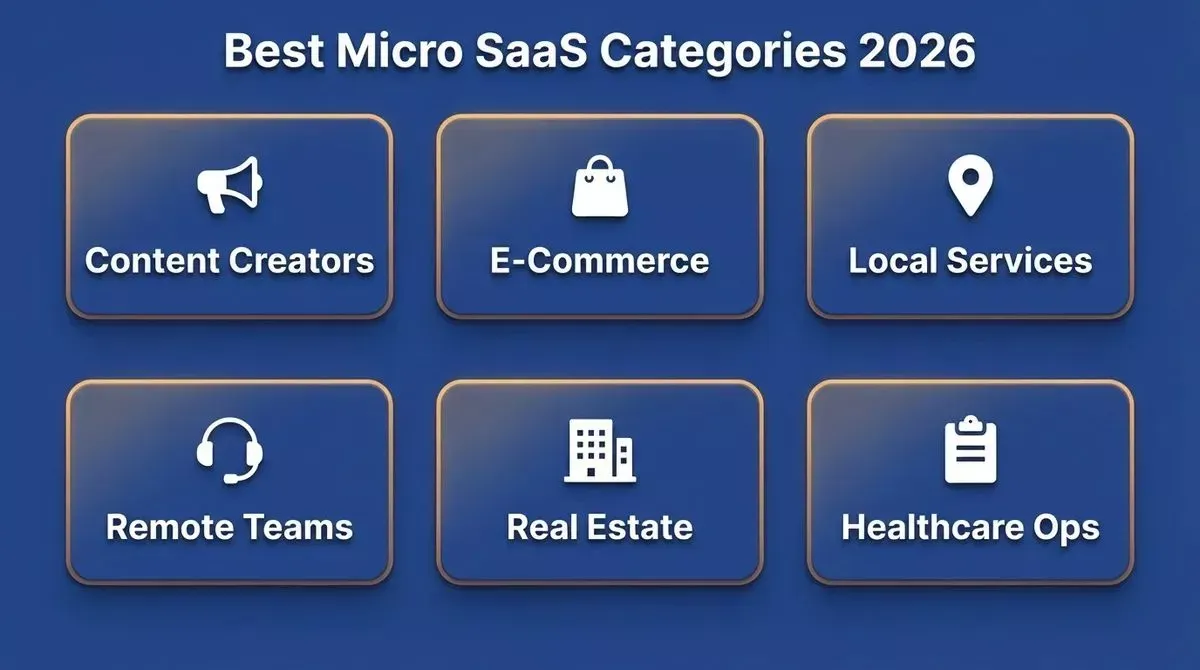
Six high-potential micro SaaS categories for non-technical founders in 2026
Why 2026 Is A Different Year For SaaS Builders
The barrier to building software has largely disappeared for non-technical founders.
According to Gartner, 75% of new applications are expected to be built using low-code or no-code technologies by 2026. That is not a fringe trend; it is the direction the whole industry is moving. Per Stack Overflow's 2025 Developer Survey of 33,169 developers worldwide, 84% are already using or planning to use AI tools in their development process.
The practical conclusion: in 2026, the edge in SaaS is no longer who can write code. It is who has the sharper idea, the clearer niche, and the willingness to actually ship.
That is a very different game. And for non-technical founders, it is a much fairer one.
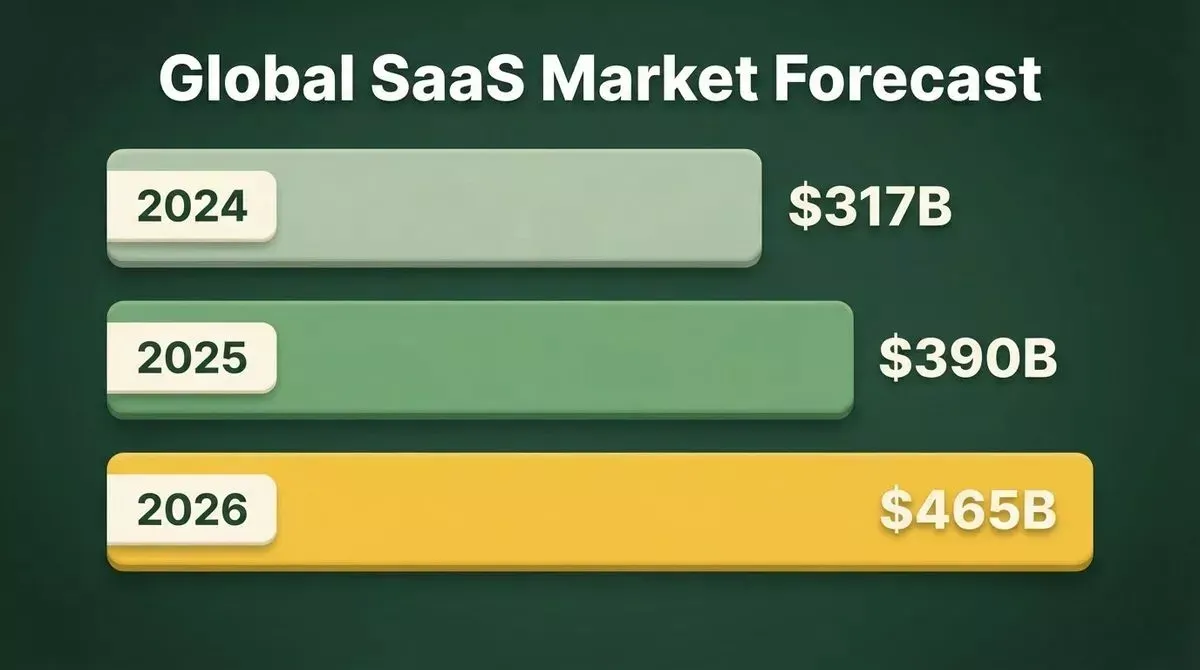
Global SaaS market forecast showing growth from $317B in 2024 to $465B in 2026
What Makes A Strong Micro SaaS Idea In 2026?
Not every SaaS idea is worth building. A lot of people jump straight into writing code before doing market research to figure out who they are building for or whether anyone will pay for it.
A strong micro SaaS idea in 2026 follows a few clear patterns. It solves a specific pain point for a well-defined target audience, works well in niche markets, offers specialized solutions rather than bloated feature sets, and fits inside a niche where big generic tools feel like overkill. It also has a clear path to paying customers from day one.
The micro SaaS model is particularly strong in underserved verticals. Think real estate agents tracking deals in Google Sheets, or local businesses juggling three separate apps for booking, invoicing, and customer communication. These are not small problems; they are just small enough that the big platforms have not solved them properly. In practice, the best business ideas and startup ideas usually come from pain points inside niche industries.
Here is a quick framework for evaluating any micro SaaS idea before committing:
| Criteria | What To Look For |
|---|---|
| Target audience | Narrow and clearly defined, not "everyone" |
| Pain point | Something done manually, poorly, or across too many tools |
| Revenue potential | Clear evidence that people already pay for related solutions |
| Competition | Existing options are overbuilt, too generic, or too expensive |
| Build complexity | A minimum viable product (MVP) is achievable without a full development team |
| Demand signal | Testable with a simple landing page to attract users and gather user feedback from potential users |
What Are The Best SaaS Ideas For 2026, By Category?
AI-Powered Tools For Content Creators And Micro Influencers
Content creation is one of the fastest-growing categories for micro SaaS right now and one of the most underserved by existing tools.
Tools built for large social media agencies are often overbuilt marketing automation tools that do not work well for micro-influencers and small brands. They are expensive, complex, and packed with features that a creator with 50,000 followers simply does not need.
A focused micro SaaS idea here: a brand deal tracker built specifically for micro influencers. A simple SaaS product where they can track pitches, manage sponsor responses, store their media kit, handle file sharing with brands, and monitor what has been paid versus what is overdue. No enterprise CRM complexity, just one clean workflow for one specific pain point.
Another strong micro SaaS idea in this space: a social media scheduler that doubles as a content repurposing tool. Upload one piece of long-form content, and the tool generates short-form posts, captions, and platform-specific rewrites with automated scheduling built into the publishing workflow. Not a massive social media management platform, just a focused, fast tool for solo creators.
The target audience in this vertical is tech-comfortable, used to paying for software, and growing fast. Revenue potential is strong because the pain point is real, and creators and small brand marketing teams can greatly benefit from a focused tool like this. Most micro-influencers currently manage brand relationships through email threads, and they know that does not scale.
Pricing models that work well here: a free tier to attract free users, with paid tiers that unlock additional client connections and content volume. If you want to explore how to build this kind of lightweight micro saas apps, the AI app builder page shows what is possible from a single prompt.
E-Commerce SaaS For Shopify Stores And Small Brands
The e-commerce space has a clear gap between what massive platforms offer enterprises and what small businesses actually need.
Shopify stores represent a massive target audience with real budgets. Most tools available to them are either too simple to be useful or too expensive for their size. The strongest e-commerce micro SaaS products often win by integrating with existing tools like Shopify and Slack, so they fit naturally into how merchants already work.
Some strong e-commerce micro SaaS ideas in 2026:
- Failed payments recovery tools that handle automated follow-up sequences, retry logic, and personalized outreach when a customer's billing fails. This is a proven revenue potential play; reducing failed payments churn directly protects monthly recurring revenue for any subscription business. Many SaaS companies lose 5-10% of revenue monthly to billing failures that nobody is actively chasing.
- Product description generators that match brand voice. Generic AI content is everywhere now. A focused saas solution inside broader merchant software services, a tool that learns a brand's tone and generates consistent, on-brand descriptions for new product listings, is a clear win for e-commerce operators who add products frequently.
- Post-purchase customer communication tools. After the sale, most small brands go silent. A micro SaaS product that handles review requests, shipping updates, return instructions, and cross-sell sequences, all in one place, built for Shopify, fills a real gap in the current tools landscape.
Revenue potential in e-commerce SaaS is high because operators already pay for tools. Usage-based pricing tied to order volume often works better than flat plans, since it scales naturally with the customer's success. Rocket.new's online store builder is a good reference for what a production-ready e-commerce build looks like.
SaaS Ideas For Local Businesses And Service Businesses
Local businesses are one of the most underserved markets in software. A yoga studio, a dental practice, and a home services company all need scheduling, payments, customer communication, basic client management, and lightweight accounting software. Most existing tools are built for enterprises, priced for enterprises, and sized for enterprises.
That mismatch is an opportunity.
Appointment and booking tools for one specific vertical are a strong micro SaaS idea category. Not a generic booking app that tries to serve everyone, but one built specifically for mobile pet groomers, personal trainers who work across multiple locations, or independent music teachers. The right niche-specific fields, the right reminder sequences, the right payment flow. Nothing extra.
Client portals for freelancers and agencies are another high-potential micro SaaS idea. Most agencies currently manage customer communication, file sharing, project management, project sign-offs, and invoice delivery across four or five different tools. A simple client portal that bundles these for one industry vertical, say, marketing agencies or freelance video editors, creates real value by cutting down tool sprawl while acting as one of the more practical collaboration tools for client-facing work.
Route optimization for service businesses is a surprisingly underserved niche. Plumbers, HVAC technicians, landscapers, and delivery operators all face the same problem every morning: a list of jobs and no efficient way to order them. A simple SaaS product that takes their job list, maps an efficient route, and sends customer ETA notifications as part of the customer support layer is exactly the kind of industry-specific tool that target customers pay for immediately.
The target audience in local services tends to be less technical, which means a SaaS product needs a simple onboarding flow. Retention, though, is high once a tool is embedded in their daily workflow. See how Rocket builds production-ready mobile apps for service-focused use cases.
AI Meeting Notes And Async Team Tools
Remote teams are still growing, and the meeting problem has not been solved.
AI meeting notes are a growing category with room for niche versions that deliver stronger revenue potential than the generic tools currently dominating search results. The AI meeting assistants market is projected to grow from $3.24 billion in 2025 to $7.33 billion by 2035, reflecting demand that is still well ahead of the supply of purpose-built tools.
A micro SaaS idea worth pursuing here: an AI meeting notes tool built specifically for sales calls. Auto-extracted action items, a one-click follow-up email draft, CRM systems integration, and deal stage suggestions based on what was discussed, with call outcomes and lead context logged automatically for sales teams. Not a general meeting recorder, but a specific SaaS product designed for one use case with one target audience.
Async video update tools for small remote teams are another gap. A lighter, faster alternative with built-in feedback loops, threaded responses, simple task assignments built directly into the video clips, and lightweight workflows for project management across remote teams. Small teams that pay $50-100 per month for communication tools represent a well-validated category of paying customers.
Vertical SaaS For Real Estate Agents And Healthcare Operators
These two sectors are full of generic tools and very few that actually feel purpose-built for the people using them.
Real estate agents still lose track of leads, rely on spreadsheets for deal tracking, and use email for all client communication. One of the stronger micro saas solutions here is a focused product for agents who need niche workflows around lead status, automated follow-ups, client document sharing, and appointment scheduling, without the complexity of a full CRM. The target customers in this space know they have a problem and are actively looking for a better solution.
Healthcare-adjacent software (not clinical, but operational) is another area with significant gaps. Appointment reminders, patient intake forms, and billing follow-up sequences for small practices are real pain points that vertical SaaS companies can solve with niche solutions cleanly. Tools in this space tend to have high retention because they become embedded in daily operations fast.
The pattern across both categories: one industry, one tool, one audience. That is the micro SaaS idea playbook working exactly as intended, and it is where micro saas focuses on one audience can outperform broader SaaS products. For a deeper look at finding the right niche before you build, see how to find micro SaaS niche ideas using AI research tools.
How Do You Validate Demand Before Building A SaaS Product?
This is where most founders go wrong. They build first and validate second.
In 2026, there is no reason to skip thorough market research before building. Over 70% of companies are already adopting AI strategies, which means the window for easy wins is narrowing. A simple landing page to test interest costs almost nothing to put up. The question is not whether you can build the product; it is whether enough people want it badly enough to pay for it.
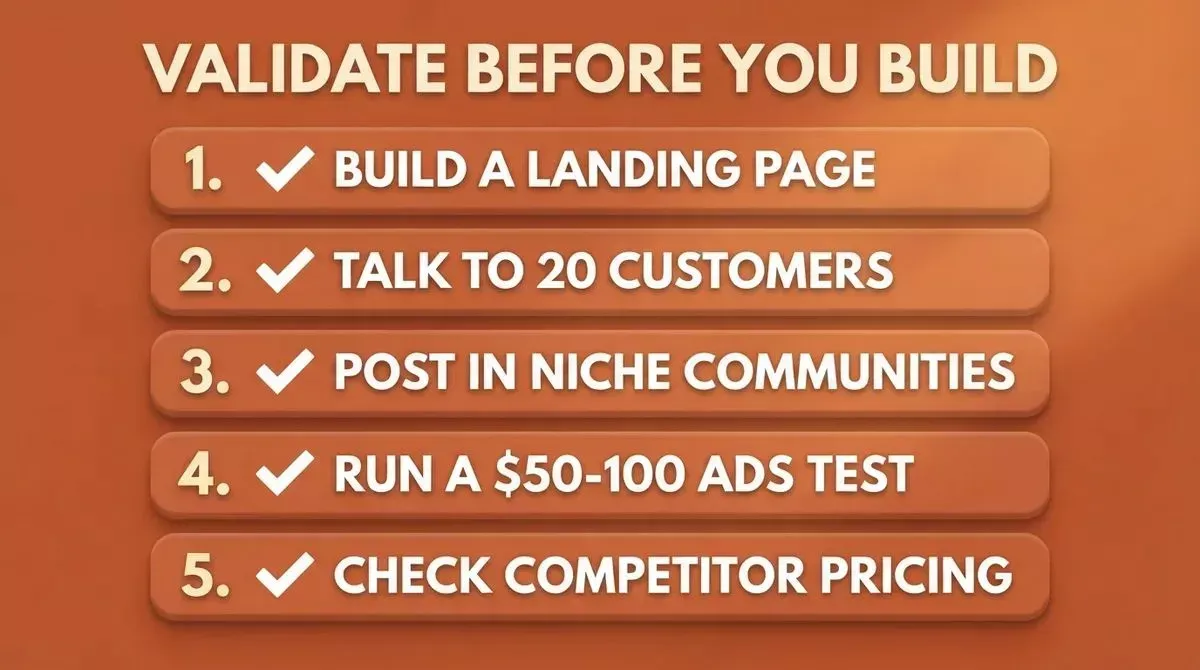
Five practical steps to validate any SaaS idea before writing a single line of code
Here is a practical process to validate demand for any SaaS idea:
- Build a simple landing page with a clear description of the problem and a preview of the solution so you can test positioning and create high-converting landing pages. Add an email signup or a pre-order button.
- Talk to at least 20 people who fit your target audience before writing code. Ask them about the pain point, not the product, so you gather customer feedback and user feedback from potential users.
- Post in the communities where your target customers spend time and see if the problem resonates, and use Google Trends as a quick way to spot demand patterns during research.
- Run a small paid ads test ($50-100) to a simple landing page and count email signups. Twenty or more qualified signups are a strong signal of genuine interest.
- Check competitor pricing. If people are already paying for an imperfect solution, they will pay for a better one.
The goal of validation is not to collect compliments. It is to find real users who confirm the pain point, or better, try to pay you before you have built anything. Rocket's Solve feature is built exactly for this step, turning any business question into a structured, evidence-backed research report before you commit to building.
Tech Stack And Pricing Models For Micro SaaS In 2026
What Tech Stack Should You Pick?
For non-technical founders and small teams, the tech stack question used to be a major blocker, but modern SaaS development is far simpler for small teams than it used to be. For most micro SaaS ideas in 2026, it has largely been solved.
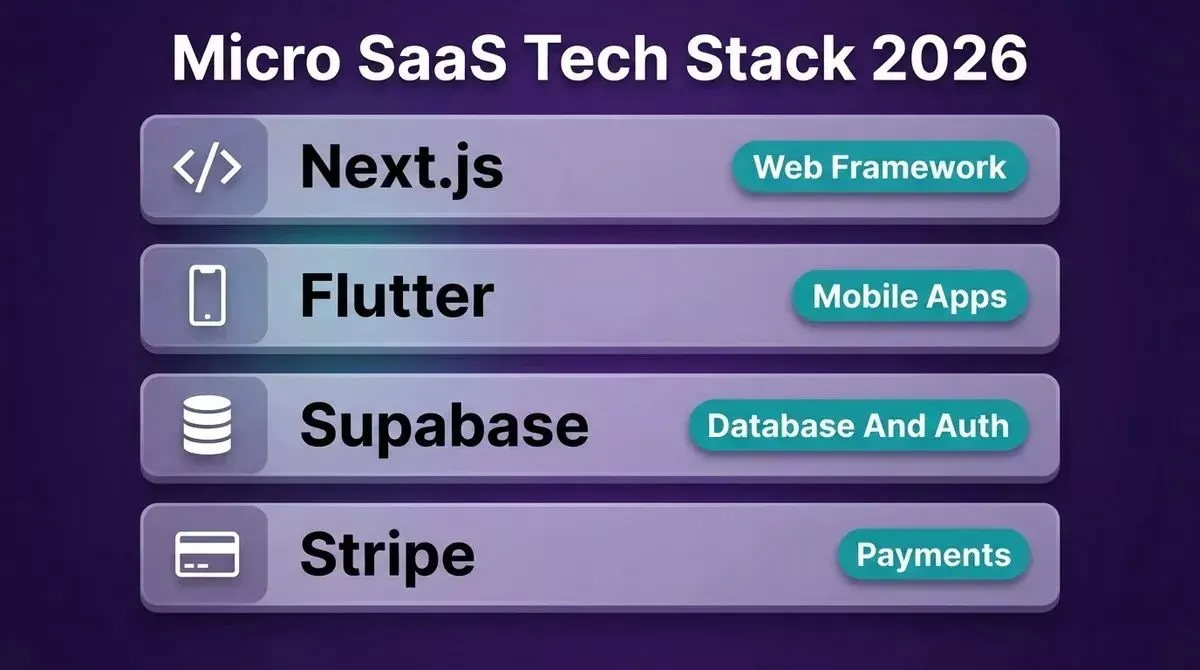
The four core components of a production-ready micro SaaS tech stack in 2026
The practical answer: use tools that handle infrastructure for you so you can focus on the product and your target audience, with no-code tools and no-code SaaS making early builds feasible without extensive programming.
- A database that handles auth and storage without complex setup (Supabase is widely used)
- A payment layer that manages subscriptions, pricing models, failed payments recovery, and billing sequences (Stripe is the default)
- A production-ready web framework that is also SEO-friendly (Next.js is standard for web apps)
- A deployment environment that does not need DevOps expertise
Together, these form the core stack behind many lightweight saas apps.
The tech stack choice matters less than shipping. A simpler tech stack you can maintain beats a complex one that becomes a bottleneck as you try to iterate.
One thing many founders miss: if your SaaS product includes AI features, understand the API costs per user before setting pricing. A practical rule: your API costs should stay under 20% of your subscription price to maintain healthy margins. You can explore how Rocket handles full-stack app generation, including all integrations, from a single prompt.
Which Pricing Models Work Best For New SaaS Products?
Pricing is one of the most important decisions for any new SaaS product, and one of the most commonly overlooked.
Here is what the data shows for micro SaaS pricing models, and many successful products charge $10 to $100+/month because they replace labor or increase revenue:
| Pricing Model | Best Fit | Key Benefit |
|---|---|---|
| Usage-based | AI-powered tools where costs scale with usage | Aligns cost with customer value |
| Tiered with free tier | Early-stage products converting free users to paid | Reduces friction to first signup |
| Annual billing | Products with stable, recurring user bases | Reduces churn by ~30% vs monthly |
| Flat pricing | Simple tools with a consistent target audience | Predictable revenue from day one |
Start with a free tier to build an audience, one paid plan to generate revenue, and iterate based on feedback from your first paying customers. First-time founders consistently underprice, which attracts price-sensitive customers who churn faster and demand more support. A useful benchmark: price your product at the point where roughly 20% of prospects say it is too expensive.
The goal early on is simple: convert free users into paying customers, learn what they value, and design recurring revenue models from the start to build a profitable business, not just accumulate free users. See Rocket's own pricing structure as a real example of a tiered model that scales from free to full-stack.
How Rocket Helps You Build SaaS Ideas 2026 Faster Than Any Other Platform
Here is the honest situation for building software as a service in 2026: the best ideas do not always come from developers. They come from people who understand a problem deeply. And those people are often not technical.
Rocket.new is the world's first Vibe Solutioning platform, combining Solve (structured market and competitive research), Build (production-ready app generation), and Intelligence (continuous competitor monitoring) in one shared-context workspace. Not a prototype generator. A platform where the thinking and the building happen in the same place.
For solo founders and non-technical builders working on micro SaaS ideas, this changes the math entirely. People with strong SaaS application ideas can turn them into a working micro saas business faster. You focus on the product concept, the target audience, and getting it in front of paying customers. Rocket handles the full build, often in minutes. 1.5 million people across 180 countries have tried the platform, from solopreneurs validating ideas to enterprise teams running full product operations.
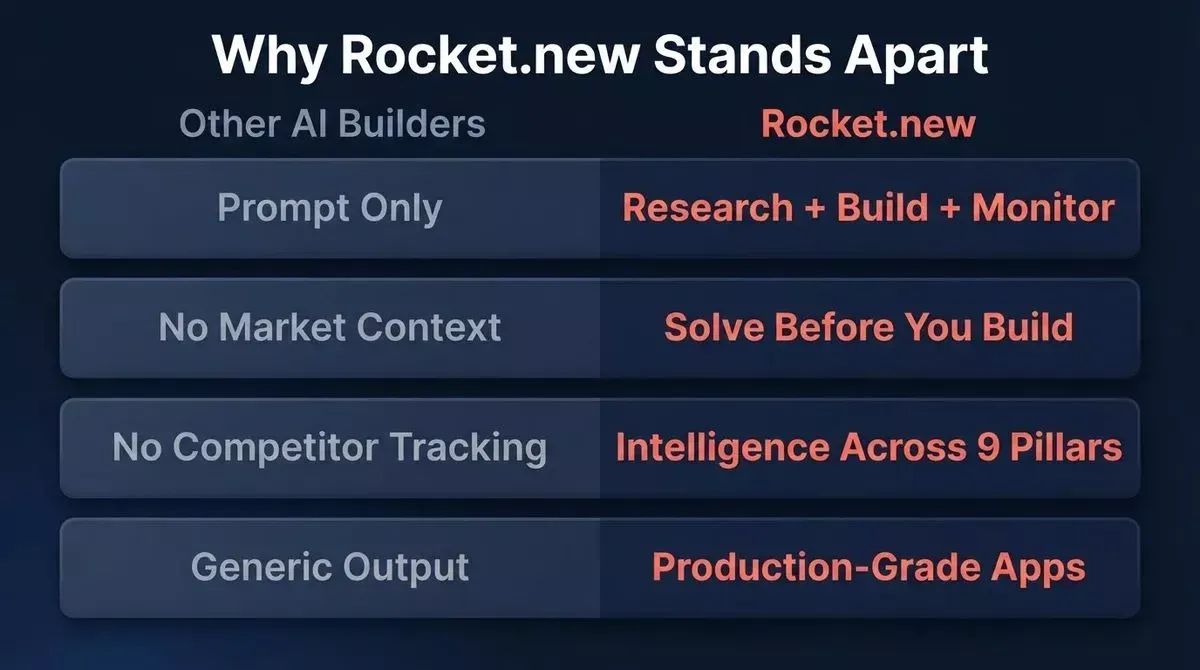
How Rocket.new compares to other AI builders across research, monitoring, and output quality
What you can build with Rocket:
- Web Apps and Dashboards: Client portals, booking systems, AI meeting notes tools, analytics dashboards, internal dashboards for marketing automation, and workflow-focused software services, all generated as fully functional web apps in Next.js. Database, auth, and backend are handled automatically. Production-ready from the first generation.
- Mobile Apps: Flutter-based mobile apps for iOS and Android from a single build. If your micro SaaS idea belongs in a user's pocket, Rocket covers this without a separate mobile development workflow.
- E-Commerce SaaS Products: Full e-commerce workflows, product catalogs, checkout flows, subscription management, and Stripe payment integration. Strong fit if you want to launch a production-ready SaaS business for Shopify stores, small brands, or service businesses handling recurring payments in a competitive market.
- Booking Apps For Service Businesses: Scheduling, user profiles, paid sessions, and automated email reminders, all generated from a single prompt.
- Built-In Analytics After Launch: Every deployed Rocket project includes a built-in analytics dashboard tracking visits, unique visitors, pageviews, bounce rate, and traffic sources. No third-party script or setup required.
How Rocket compares to other AI builders:
| Feature | Lovable / Bolt / v0 | Rocket.new |
|---|---|---|
| Build speed | Fast | Fast |
| Pre-build research (Solve) | None | Structured market and competitive reports |
| Competitor monitoring (Intelligence) | None | Continuous, across 9 signal pillars |
| Shared context across tasks | None | Persistent across all tasks |
| Output design quality | Generic | Production-grade |
| Mobile app support | Limited | Flutter, iOS and Android |
| Integrations out of the box | Limited | 26+ services including Stripe and Supabase |
| Code ownership | Varies | Full source download |
| Free tier | Yes | Yes |
Features that matter most for micro SaaS builders:
- 26+ integrations built in. Stripe, Supabase, Google Analytics, Mailchimp, Cal.com, Resend, Notion, and authenticate once, and they flow into every build. No manual wiring of third-party tools.
- Staging and production environments. Ship to a staging URL first, gather feedback from beta users, then push to production with a custom domain. Full version history and one-click rollback mean you can iterate without risk to your live product.
- Full code ownership. Download the source code and take it anywhere. No vendor lock-in. Your SaaS product is yours from day one.
- Solve before you build. Use Rocket's Solve pillar to research your market, size the opportunity, and validate the idea before generating a single line of code. The research output carries directly into the build.
- Intelligence after you ship. Rocket's Intelligence pillar monitors competitors across nine signal categories, including pricing changes, hiring signals, product releases, and reviews, so you can track how the market moves after your SaaS is live. See how Intelligence works for a full overview.
Which SaaS Ideas in 2026 Should You Act On?
The best profitable SaaS ideas usually come from narrow pain points in niche markets. The tools are there. Whether it is a micro SaaS idea for local businesses, an AI-powered tool for micro-influencers, a client portal for service businesses, or vertical SaaS for real estate agents, the window to build and ship is open. Pick a target audience with a real pain point, validate demand quickly, and get a working product in front of paying customers as fast as possible.
Ready to turn your SaaS idea into a working product? With opportunity still strong across the wider saas industry. Sign up for Rocket and start building today. No development team required.
Table of contents
- -Why 2026 Is A Different Year For SaaS Builders
- -What Makes A Strong Micro SaaS Idea In 2026?
- -What Are The Best SaaS Ideas For 2026, By Category?
- -AI-Powered Tools For Content Creators And Micro Influencers
- -E-Commerce SaaS For Shopify Stores And Small Brands
- -SaaS Ideas For Local Businesses And Service Businesses
- -AI Meeting Notes And Async Team Tools
- -Vertical SaaS For Real Estate Agents And Healthcare Operators
- -How Do You Validate Demand Before Building A SaaS Product?
- -Tech Stack And Pricing Models For Micro SaaS In 2026
- -What Tech Stack Should You Pick?
- -Which Pricing Models Work Best For New SaaS Products?
- -How Rocket Helps You Build SaaS Ideas 2026 Faster Than Any Other Platform
- -Which SaaS Ideas in 2026 Should You Act On?