Struggling to meet rising customer expectations? Digital teams are adopting omnichannel strategies to unify touchpoints, boost engagement, and create seamless experiences, driving measurable growth across retail and digital customer journeys.
Are digital teams truly customer-first now?
Yes, and many are doing it with smart omnichannel strategies that actually work.
In fact, studies show that 73% of retail buyers now shop via multiple channels, and firms using integrated approaches see up to 250% more customer engagement than single‑channel setups.
Let's break down how retail and digital teams can create smoother customer journeys, improve customer experience, and handle customer expectations.
What & Why Does Omnichannel Really Matter?
Let’s clear the fog. An omnichannel approach links digital and physical channels so customers feel they interact with a single brand, no matter where they shop.
Think website, mobile app, email, social media, and physical store all working together. This unified view makes the customer journey feel natural.
In contrast, multichannel marketing just offers many channels without much link‑up between them.
Why It Matters
Today’s buyers interact with brands in up to six touchpoints before buying something. If those experiences feel chopped up, people get annoyed. Great omnichannel experiences make interactions smooth from start to finish
Start With Unified Customer Data
Centralizing customer information is the first step toward a smooth shopping journey. Organized customer data helps teams serve shoppers faster and smarter.
- Centralized Customer Data: Keep shopping history, preferences, and interactions in one place.
- CRM Syncing: Ensure customer data flows freely across teams for more personalized marketing.
- Customer Expectations: Track customer expectations to avoid repeating information across channels.
- Data-Driven Suggestions: Use crm data to show relevant recommendations and offers.
- Behavior Tracking: Monitor customer behavior across digital and physical channels to anticipate needs and improve experience.
Closing note: Getting this right not only smooths the omnichannel customer journey but also makes every interaction feel thoughtful, personal, and stress-free for shoppers.
Map the Customer Journey
Understanding how shoppers move from one point to another is key to a smooth experience. Mapping the customer journey helps teams spot friction and improve every step.
- Journey Mapping: Visualize how shoppers move from online research to in-store purchases.
- Spot Pain Points: Identify where customers get stuck and fix bottlenecks.
- Cross Channel Awareness: See how interactions across digital and physical channels influence decisions.
Closing note: Clear mapping gives teams a real picture of the omnichannel customer journey, helping create a seamless and satisfying customer experience that keeps shoppers coming back.
Keep Brand Consistency Across All Touchpoints
Keeping your brand consistent across all channels helps build shopper trust and makes experiences feel familiar. A unified approach makes your omnichannel experience feel intentional and smooth.
- Consistent Visuals: Match colors, logos, and tone across social media channels and physical stores.
- Uniform Messaging: Keep promotions and marketing messages aligned across marketing channels.
- Recognizable Voice: Customers feel more comfortable interacting with a brand that speaks consistently.
When brand consistency is nailed, omnichannel customers experience a seamless experience across every touchpoint, boosting customer loyalty and making the customer journey more enjoyable.
Personalization That Actually Feels Personal
Most customers value personalization when it makes sense. But it quickly feels creepy when it doesn’t. Balance it by:
- Using customer data to tailor suggestions.
- Matching offers to their browsing behavior.
- Customization based on device type (desktop, mobile).
Good personalization doesn’t guess wildly. It respects preferences and feels like help rather than a sales pitch.
Mix Digital and In‑Store Experiences
Bridging the gap between online and in-store shopping is a key part of any omnichannel strategy. Offering services like click-and-collect lets customers order online and pick up in-store, giving them flexibility and saving time.
Shoppers also expect to check inventory before visiting a store, so making stock information available online keeps them informed and reduces frustration. Inside the store, tools like tablets can provide product reviews or additional info right at the shelf, creating a smoother customer journey.
Get the Marketing Team on the Same Page
Silos are the enemy of a smooth omnichannel strategy.
Teams should talk daily:
- Marketing channels
- Sales promotions
- Support messages
Shared calendars and pipelines help avoid mixed signals in messages and experiences. When everyone works in sync, customers feel like they’re dealing with one brand, not a dozen disconnected parts.
Pull in Social Media and Reviews
Social media channels matter big time today. Don’t just post, use them as part of the journey.
- Show product demos and unboxings.
- Respond to comments as customer service.
- Use reviews on your product pages.
Customers often research on social media before making a purchase. Be where they look, not just where it’s comfortable.
Use Automated Tools to Keep Pace
Smart automation helps teams stay ahead without overloading human effort, keeping omnichannel marketing smooth and consistent.
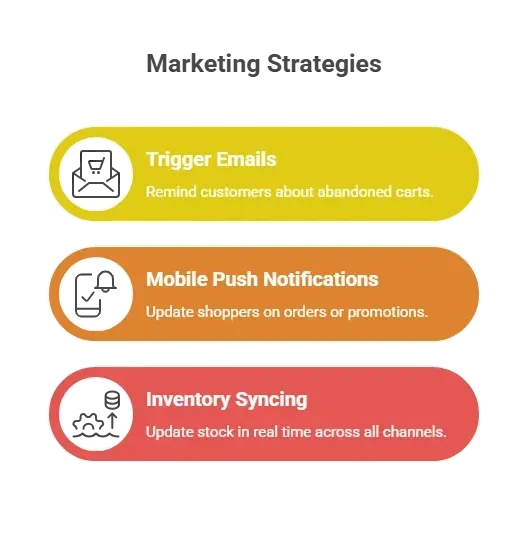
Using automation effectively saves time, maintains a consistent customer experience, and frees the team to focus on meaningful customer engagement.
Measure and Respond to Feedback
Listening is just as important as acting. Feedback loops give teams real insight into the omnichannel customer journey.
- Post-Purchase Surveys: Collect customer feedback immediately after transactions to track satisfaction.
- Monitor Trends: See how customer experience evolves over time to spot friction.
- Flow Adjustments: Quickly tweak processes when shoppers show frustration, improving overall customer engagement.
Acting on feedback strengthens the customer-centric approach, helping teams create happier, loyal customers and smoother omnichannel experiences.
How Rocket.new Supports Omnichannel Strategy
Rocket.new lets teams build apps and dashboards without coding, helping unify digital channels and physical store interactions. AI generates full-stack apps from simple prompts, automatically handling backend setup, databases, and deployment.
- Prompt-Based Creation: Describe what you want, and Rocket.new builds the app logic and layout, perfect for dashboards connecting customer touchpoints.
- Cross-Platform Deployments: Launch web and mobile versions at once, reaching omnichannel customers on any device.
- Backend & Deployment Ready: Handles backend setup, APIs, and deployment so teams focus on insights, not infrastructure.
- Use Case Example: A “Customer Insights Dashboard” can pull CRM data from email, in-store visits, mobile sessions, and support tickets in one place, providing a real-time view of customer behavior.
This keeps the focus on the features and examples naturally, without additional notes.
Use Cases
- Loyalty Dashboards: Build apps that track customer points across digital and physical channels.
- Inventory Apps for Staff: Enable store teams to check stock or pick orders on tablets.
- Customer Feedback Tools: Create quick feedback forms that plug into your data streams.
This keeps the mention of omnichannel strategy natural and tied to real, practical features while avoiding over‑promotion.
Community Insight
One Reddit post highlights how omnichannel can impact real companies:
“Retailers with solid omnichannel engagement tend to keep about 89% of their customers, while those doing a poor job retain only around 33%.”
That’s a huge gap. Good multitouch strategies can literally change how many people come back.
Omnichannel Tactics
These key tactics make omnichannel best practices actionable, showing exactly how each step improves the customer journey and customer experience.
| Practice | What It Helps With |
|---|---|
| Centralized data | Better personal suggestions |
| Consistent branding | Strong recognition |
| Social media engagement | Improved visibility |
| In‑store + online flows | Higher conversions |
| Automated alerts | Faster follow‑ups |
| Team alignment | Fewer mixed messages |
Applying these tactics ensures omnichannel customers get a smooth, consistent experience, while teams stay coordinated and focused on customer engagement and satisfaction.
Omnichannel Best Practices That Work
Shoppers now jump between online and offline channels. Disconnected experiences frustrate them.
Apply proven omnichannel best practices, including centralizing customer data, mapping the customer journey, maintaining brand consistency, and aligning teams. These steps make interactions smooth, personalized, and enjoyable.
A strong omnichannel strategy not only keeps customers happy but also boosts customer loyalty, operational efficiency, and overall business outcomes.
Table of contents
- -What & Why Does Omnichannel Really Matter?
- -Why It Matters
- -Start With Unified Customer Data
- -Map the Customer Journey
- -Keep Brand Consistency Across All Touchpoints
- -Personalization That Actually Feels Personal
- -Mix Digital and In‑Store Experiences
- -Get the Marketing Team on the Same Page
- -Pull in Social Media and Reviews
- -Use Automated Tools to Keep Pace
- -Measure and Respond to Feedback
- -How Rocket.new Supports Omnichannel Strategy
- -Use Cases
- -Community Insight
- -Omnichannel Tactics
- -Omnichannel Best Practices That Work