Static market research tools like IBISWorld deliver industry snapshots at high cost. This blog explains why the real IBISWorld alternative is Rocket.new's build-measure-iterate approach turning every product cycle into a live market research loop.
What if the most expensive part of your market research wasn't the report - it was the lag between reading it and acting on it?
A single IBISWorld Industry Research Report costs US $2,850, per the official IBISWorld pricing page. One industry, one snapshot, one fixed moment in time. Yet 42% of startups still fail because they misread market demand - building products nobody wanted, despite access to market data.
The data wasn't the problem. The approach was. The real IBISWorld alternative isn't a cheaper report. It's a different way of gathering knowledge altogether: build, measure, and iterate.
Why Teams Start Looking for an IBISWorld Alternative
IBISWorld has a clear role in enterprise workflows. Banks, consulting firms, and corporate strategy teams use it to benchmark industries, analyze historical revenue data, and track macro competitive forces. For those workflows, it does the job.
But product teams and early-stage companies run into real friction with this model.
Reports are published on quarterly or annual cycles. By the time a team acts on Q1 research in Q3, those market signals are already six to nine months old. And market demands don't wait for publication cycles.
There's also a specificity gap. Industry reports describe averages across thousands of companies. They can't tell you whether your landing page converts, whether a pricing change is landing with your customers, or what a competitor just shifted in their product last week.
So teams go looking for something else.
The Problem With Static Analysis of Market Demands
Traditional market research follows a linear path:
-
Study the market
-
Build based on the findings
-
Launch
-
Wait
The problem is that steps 1 and 2 can take months and by the time the product ships, the research is already ageing. Competitors move. Customer priorities shift. A new entrant changes the category.
The deeper issue is that industry-level analysis misses the layer that matters most for product decisions: how real users actually behave when they interact with your product. That's user research, and no annual report can substitute for it.
Build, Measure, Iterate: A Better Framework for User Research
The build-measure-learn framework, introduced by Eric Ries in The Lean Startup, works differently.
Instead of front-loading all the analysis before building, you treat the product itself as the research instrument.
-
Build: Ship something minimal and real
-
Measure: Track how users engage with it: conversion rates, session time, drop-offs, support questions, direct surveys
-
Iterate: Make changes based on what the data shows, then repeat
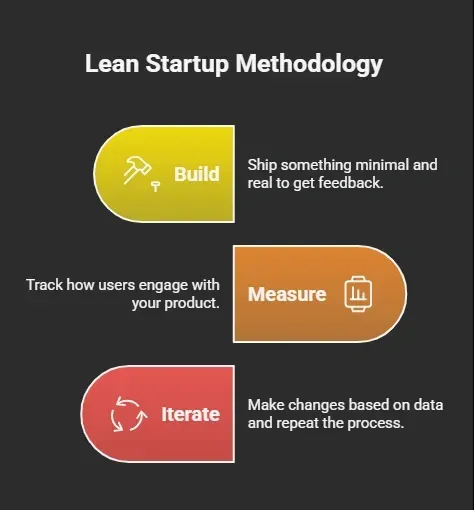 Each cycle delivers insights tied directly to your actual product performance and your actual customers. The feedback is current, specific, and grounded in real behavior not projected from category averages.
This approach is built around actionable strategies. Rather than waiting for a quarterly report to confirm a trend, teams gather data through direct customer interaction and surveys. They analyze what that feedback says about product performance.
They respond by shipping changes that address specific customer needs. The cycle time is days, not months.
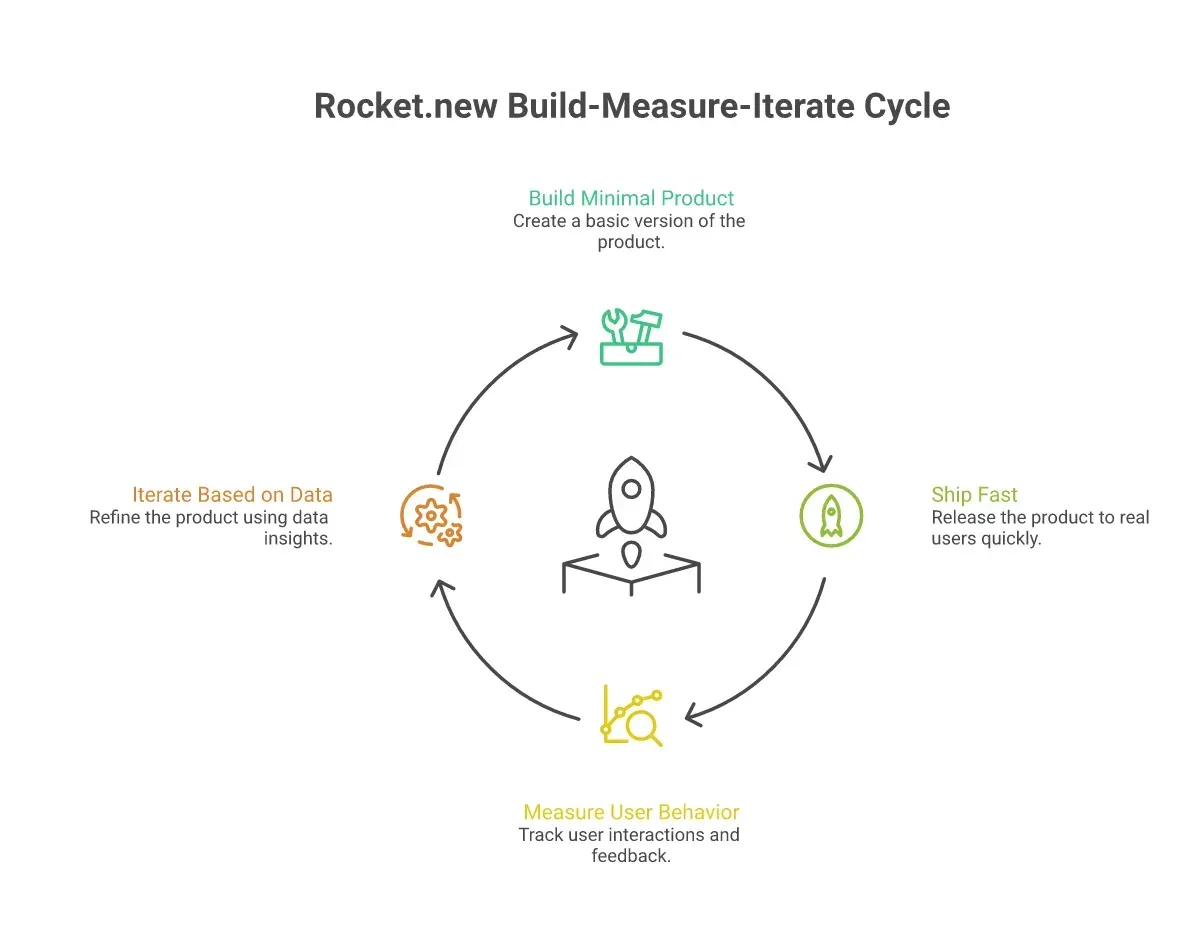 Build-Measure-Iterate Cycle
Your Target Market vs. Your Target Audience: Where Reports Fall Short
Static market research tends to paint the target market with a broad brush. A report might define a segment as "B2B SaaS companies with 10-50 employees in North America." That's useful context. But your actual target audience is a subset of that with specific workflows, specific pain points, and specific reasons they convert or churn.
That granularity only comes from direct user research. From watching what users click on and where they drop off. From support tickets that reveal the same confusion showing up three times in a week. From A/B test results that contradict what the category data suggested.
The build-measure-iterate loop bakes user research into the product cycle. You stop reading about your target audience and start learning about them by building for them and watching what they do.
Understanding customer needs at this level is what separates teams that grow from teams that guess. Industry data tells you what the market looks like from 30,000 feet. Your own users tell you what actually matters at the product level. Both are valuable - but only one of them updates in real time.
What Builders Say About the Build-Measure-Iterate Loop
Ben Yoskovitz, co-author of Lean Analytics and founder of the Focused Chaos Substack, describes the core idea clearly:
"Build - Measure - Learn is simple and elegant. It encourages an experimental approach and the right mindset for validating each piece of the puzzle independently before making huge leaps forward." Focused Chaos - Build, Measure, Learn: The Expanded Edition by Ben Yoskovitz
The same post makes a critical point: solving one problem in a startup always reveals the next one. The teams that cycle fastest through that feedback loop learn their market faster - and make better product decisions as a result. Cycle time is key. If experiments take too long, your speed to learning is slow, which is bad for the business.
IBISWorld vs. Build-Measure-Iterate: A Side-by-Side Look
| Factor | IBISWorld | Build-Measure-Iterate |
|---|---|---|
| Data freshness | Quarterly or annual snapshots | Real-time from user behavior |
| Cost model | $2,850 per full industry report | Tied to product development cycles |
| Research specificity | Industry-wide averages | Product and user-level data |
| Target market insight | Broad demographic segments | Actual customer behavior patterns |
| Actionability | Read and interpret | Test, measure, and respond |
| Alignment with market demands | Historical trends and forecasts | Live signals from real customers |
| Iteration speed | Weeks to months | Days to sprints |
Rocket.new: Where Research, Build, and Intelligence Connect
This is where Rocket.new changes the picture for teams running the build-measure-iterate approach.
Rocket.new is the world's first Vibe Solutioning platform a workspace where market research, product building, and competitive monitoring happen together, sharing context at every step. It is built for the organization that wants to close the gap between strategic thinking and execution.
Solve: The Research Layer
Ask any business question in plain language market entry, pricing strategy, competitive assessment, product direction - and Solve runs thousands of queries across 150+ sources simultaneously. Within 60 to 90 minutes, the output covers findings, evidence, risks, and a clear recommendation. This replaces the static report with a structured deliverable tied to a real decision and it flows directly into what gets built next.
The output includes key elements like a verdict, core objectives, key findings with evidence, a competitive analysis, a risk matrix, and an execution path. Teams can refine any section through follow-up chat and export to PDF or a presentation deck.
Build: From Research to Working Product
Describe your idea, and Rocket generates a production-ready Next.js web app or Flutter mobile app in minutes. The research from the Solve phase carries into the build automatically. The product starts from what the team already learned - not from a blank canvas that ignores everything that came before.
Web apps, mobile apps, landing pages, and internal tools are all covered. Every build ships with SEO-ready structure, WCAG accessibility compliance, and GDPR coverage built in by default. Iterate through chat, visual edit, or direct code access. No change limit.
Intelligence: Continuous Competitive Monitoring
Intelligence monitors competitor websites, pricing pages, product updates, social activity, and review platforms continuously. Teams get daily briefs covering what changed, why it matters, and what action makes sense. That is the real-time market signal layer that an annual industry report cannot provide. Each brief includes a "so what" interpretation and recommended next actions.
Context: Nothing Gets Lost
The research from Solve, the product from Build, the signals from Intelligence all of it lives in one project. Nothing gets re-explained between sessions. Every iteration starts from the full picture the team has built. Add files once pitch decks, customer research, financial models and every task that follows already knows everything.
Platforms like Lovable, Bolt, and v0 can generate code from prompts quickly. But they start at the build step. There is no pre-build intelligence, no shared memory across tasks, no competitive monitoring. The research still has to happen somewhere else, and gets re-explained every time.
Rocket.new connects the thinking and the building so that the ibisworld alternative build measure iterate approach becomes a real loop from market question to shipped product to competitive signal, all in one workspace.
From Reports to Real Feedback: The Path to Sustainable Growth
The shift from static market research to the build-measure-iterate model is a shift from prediction to learning. Rather than betting months of effort on a market analysis, you ship something small and learn from how real users respond. The product itself becomes the research. Each iteration closes the gap between what you assumed and what the data actually shows.
The companies that build sustainable growth are the ones that learn faster than their competitors not the ones with the most detailed reports. That is the Rocket.new approach to the IBISWorld alternative. Not a cheaper data source. A better way to gather, act on, and compound market knowledge over time.
Table of contents
- -Why Teams Start Looking for an IBISWorld Alternative
- -The Problem With Static Analysis of Market Demands
- -Build, Measure, Iterate: A Better Framework for User Research
- -Your Target Market vs. Your Target Audience: Where Reports Fall Short
- -What Builders Say About the Build-Measure-Iterate Loop
- -IBISWorld vs. Build-Measure-Iterate: A Side-by-Side Look
- -Rocket.new: Where Research, Build, and Intelligence Connect
- -Solve: The Research Layer
- -Build: From Research to Working Product
- -Intelligence: Continuous Competitive Monitoring
- -Context: Nothing Gets Lost
- -From Reports to Real Feedback: The Path to Sustainable Growth