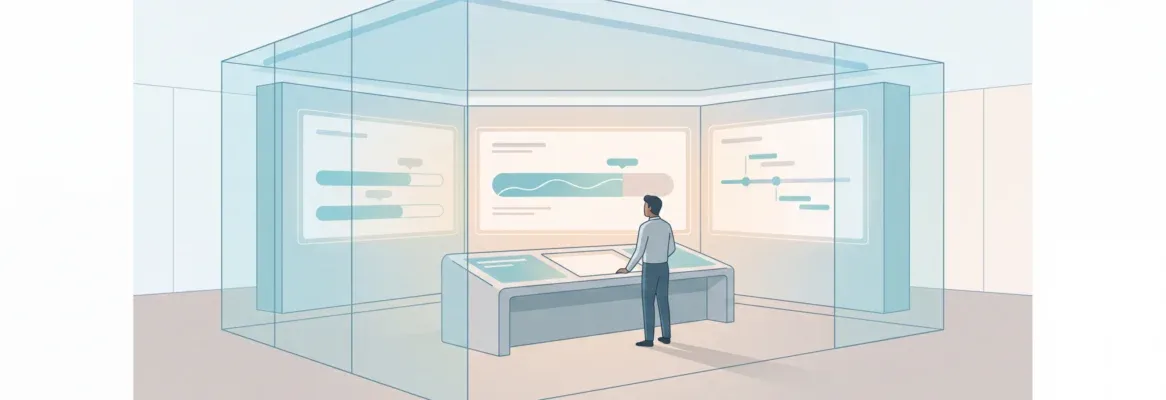
Rocket.new Intelligence helps teams build products grounded in real market data, enabling faster validation, smarter decisions, and reduced risk by aligning development with actual customer needs and demand consistently through actionable insights.
Why do so many products fail to match what the market actually wants?
Most products today are built around a brief instead of real market signals. That gap is exactly why many ideas feel disconnected from actual user needs. Research often looks complete, but it misses what people are actively saying, doing, and expecting.
According to a report by CB Insights, 35% of startups fail because there is no market need. That is where Rocket.new Intelligence starts to matter. It connects research, signals, and execution so the product reflects what people actually want, not just what was written in a brief.
This blog will help you understand how to turn research into real product decisions that stay aligned with the market..
Why Building from a Brief Alone Falls Short?
A brief looks structured and clear at first glance. It lays out goals, features, and timelines. But it often misses what is actually happening in the market. That gap creates problems when the build starts moving forward.
Where things break down
-
Research stays scattered across different tools
-
Notes, insights, and decisions are not connected
-
Teams work without full clarity or shared context
-
The build moves ahead without real-time signals
-
The final product feels disconnected from the audience
-
Competitive intelligence exists, but it sits inside reports
-
Most tools do not connect insights with execution
So even when teams put in the effort, the outcome still misses the bigger picture. Without connecting research to the build, products reflect the brief, not the market.
From Research to Build Starts with the Right Flow
So how does this actually change? It begins when research stops sitting idle and starts guiding the build directly.
What changes in the flow
-
Research feeds straight into the build instead of staying separate
-
Rocket works as a vibe solutioning platform connecting signals, thinking, and execution in one workspace
-
No switching tools, so the flow stays smooth and focused
-
With the world’s first vibe solutioning, research becomes part of the system, not just static notes
-
Every prompt pulls from one memory, keeping each step informed
-
Build starts with clarity instead of assumptions
-
Teams use deep research like job postings, pricing pages, and what people are saying
-
They move straight from insights to building without delays
This is the shift from scattered work to one platform thinking, where the build reflects real signals instead of guesses.
How Intelligence Feeds the Build in Practice?
Well, here is where things get interesting.
Rocket brings Solve, Build and Intelligence into one shared flow. It is not just about collecting data. It is about using it while building.
Here is a simple breakdown:
| Step | What Happens |
|---|---|
| Research | Deep research gathers signals from competitors and users |
| Context | Stored in one memory inside the workspace |
| Prompt | Teams write prompts based on shared context |
| Build | The system turns prompts into production-grade apps |
| Execution | Teams refine and launch faster |
Every step stays connected. No context is lost. That is the power of one shared memory.
The Role of Prompts in Building Smarter
Entry note
Let’s talk about prompts for a second. In most AI tools, a prompt is just an instruction. But here, it is backed by research, which changes everything.
How prompts become smarter
-
Research-backed prompts instead of generic instructions: Each prompt is connected to real insights, not just assumptions or guesses
-
Memory-driven output instead of random results: Every prompt pulls from one memory that includes reports, signals, and observations
-
Context-rich inputs instead of isolated commands: Prompts carry shared context from the workspace, so nothing important gets lost
-
Use-case based prompt examples: Teams write prompts like building a pricing comparison tool from competitor pricing pages, creating web apps from job postings trends, or designing mobile apps based on user feedback
-
Market-aligned build instead of brief-driven output: The system responds with outputs that reflect what the audience actually needs
Now the build reflects the market, not just a brief. That is where clarity improves, decisions feel informed, and work becomes fast and focused.
Rocket Intelligence Overview and Features
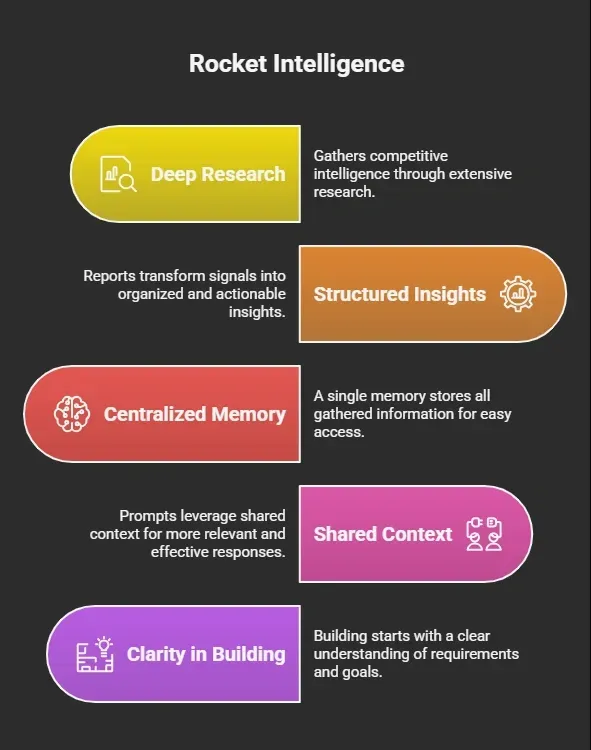
Rocket.new intelligence works as part of a single platform where everything connects.
From the official docs, the system focuses on:
-
Deep research across competitors, audience behavior, and trends
-
Real time signal capture so insights stay fresh
-
One memory that stores all findings in one workspace
-
Shared context across teams to avoid repeated work
-
Direct connection to build tools for web apps and mobile apps
Rocket.new handles everything from research to execution without switching tools.
It supports:
-
Next.js for web
-
Flutter for mobile
So teams can build production-grade solutions for both web apps and mobile apps inside one platform. This is why it stands as the world’s first vibe solutioning platform.
How Rocket Connects Intelligence with the Build?
Now let’s connect this to the title. Rocket is not just another platform. It acts as a bridge between intelligence and execution.
 So instead of starting from scratch, teams start informed.
The product reflects:
-
What the audience needs
-
What competitors are doing
-
What the market is signaling
That is how the build reflects the market and not just the brief.
Comparing Old Workflow vs Rocket Workflow
Let’s keep it simple.
| Old Way | Rocket Way |
|---|---|
| Multiple tools | One platform |
| Scattered research | One memory |
| Manual reports | AI app driven reports |
| Guess based decisions | Informed decision making |
| Slow execution | Fast execution |
The difference is clear. Work becomes smooth. Context stays intact.
Real Use Cases Where This Matters
Teams building web apps often rely on assumptions. But with competitive intelligence, they can see what features users expect.
For mobile apps, feedback loops matter. Rocket captures what people are saying and feeds it into prompts.
Some examples:
-
Building a dashboard based on competitor reports
-
Creating mobile apps based on audience feedback
-
Designing tools based on job postings trends
This keeps the product relevant from day one.
Why One Platform Changes Everything?
Working across multiple tools sounds normal, but it quietly creates friction over time. The real issue shows up when context starts slipping between steps.
Where friction and gaps appear
-
Constant switching between tools: Tabs keep changing, which breaks focus and slows down work
-
Scattered research and notes: Insights sit in different places, making the full picture hard to see
-
Lost context between research and build: Important signals do not carry forward into execution
-
Repeated work across teams: Lack of shared memory leads to duplication and wasted effort
-
Slow and unclear decision-making: Without connected context, progress becomes uncertain
With one platform, everything stays connected in one workspace. One memory holds all research, and shared context keeps teams aligned. That is how the build becomes clear, fast, informed, and aligned with the audience.
From Lost Context to Clear Execution
Let’s look at what usually goes wrong when moving from research to build. Most issues come from broken flow, not a lack of effort.
Where things break and how it improves
-
Context drops between research and build
-
Insights do not carry forward into execution
-
Switching tools slows down progress
-
Teams repeat the same work due to lack of shared memory
-
Decisions become slow and unclear
-
Reports stay separate instead of guiding the build
-
One shared flow connects research, prompts, and builds
-
Everything stays in one workspace without scattered tools
-
The build becomes clear, fast, and informed
When context stays intact, execution becomes smooth, and the build reflects real signals instead of assumptions.
Turning Research into Real Builds with Rocket.new Intelligence
The problem is simple. Teams rely on briefs and scattered tools, so research often gets lost before it reaches the build. This leads to products that feel disconnected from the audience. Decisions slow down, and execution lacks clarity. Rocket changes this by bringing competitive intelligence, deep research, and build into one platform, where signals connect directly with prompts and turn into production-grade outputs.
The main takeaway is clear. How Rocket.new Intelligence Feeds the Build closes the gap between research and execution. When everything stays in one memory, teams move fast and stay informed. Products reflect the real market, not just a brief.
If you want your build to reflect real signals instead of assumptions, Rocket.new is a great place to start.
Table of contents
- -Why Building from a Brief Alone Falls Short?
- -From Research to Build Starts with the Right Flow
- -How Intelligence Feeds the Build in Practice?
- -The Role of Prompts in Building Smarter
- -Rocket Intelligence Overview and Features
- -How Rocket Connects Intelligence with the Build?
- -Comparing Old Workflow vs Rocket Workflow
- -Real Use Cases Where This Matters
- -Why One Platform Changes Everything?
- -From Lost Context to Clear Execution
- -Turning Research into Real Builds with Rocket.new Intelligence