
How can API-integrated code automation support steady delivery? Teams face demand for faster releases. Reliable pipelines connect systems across industries, work stays steady and prevents failures that spread.
Automation shapes how tech teams work today. And every year, the pressure to deliver faster increases.
More than 83 percent of organizations rely on API integration as part of daily engineering work, according to the State of the API Report by Postman. Expectations keep rising around scale, speed, and reliability.
What actually makes automation effective for teams juggling constant change?
More systems now talk to each other across finance, logistics, healthcare, commerce, and warehouse operations. When automation pipelines run well, work feels smooth. When they fail, problems spread quickly.
That is why stronger practices around API integrated code automation matter.
Why Best Practices Shape Real Outcomes?
Teams automate workflows to streamline business processes and remove unnecessary repetition. And honestly, nobody enjoys waking up at 3 AM because something collapsed inside an integration tool or a brittle script failed during deployment. A single flaw inside API calls or an unstable integration platform can stall releases or freeze critical data pipelines.
The challenge grows rapidly. Data flows expand. Integration scenarios multiply. Legacy systems collide with cloud-first architecture. And complex workflows stretch across distributed services.
Well-defined planning around API integration platforms, responsible design of integration workflows, and consistent monitoring prevent chaos later. Gaps ignored early become expensive to fix when scaled. And teams that structure foundations well experience smoother collaboration.
Building Reliable Foundations Before Connecting Systems
Reliable automation begins long before code written or integration tool selected. Good architecture planning sets expectations clearly, improves visibility across team boundaries, and makes scaling far easier.

Skipping this stage often leads to uncontrolled complexity inside integration processes. And fixing chaos later always costs more time. Early structure protects stability across integration processes and helps manage APIs more confidently.
Choosing the Right Tools and Platforms
The number of API integration tools grows every year. Selecting the right API integration tool means evaluating scaling expectations, user needs, internal knowledge, and security constraints. Some organizations prefer a low code integration platform and drag and drop automation. Others prefer writing custom scripts for full control.
Many combine both techniques to balance speed with flexibility.
Here is a practical comparison to support selection:
| Requirement | Benefit | Approach | Example Tools |
|---|---|---|---|
| Faster setup and drag and drop configuration | Reduce scripting pressure | Low code integration platform | Zapier, Make, Workato |
| Handling complex workflows and data transformation | Structured scheduling and transformations | Hybrid architecture | MuleSoft, Celigo, SnapLogic |
| Highest levels of control and api management | enterprise grade security, access control | Enterprise integration platforms | ibm api connect, AWS api gateway |
| Full flexibility for custom integrations | Custom rules and transformation logic | writing custom scripts | Python or Node.js pipelines |
Teams working with non technical users often choose no code API integrations supported by visual interface builders. Others automate data flow exclusively using engineering-built logic. Choosing the right API integration tool shapes long-term scalability. And the wrong choice creates friction quickly.
Security, Governance, and Control
Security defines trust when integrating multiple systems. And governance is just as important. Reliable automation depends on careful handling of API keys, clearly scoped access control rules, standardized data encryption expectations, and consistent review cycles.
Strong security patterns include:
- Clear authentication policies on each API gateway
- Structured rate limiting for API pi requests
- Full audit logging across API usage
- Monitoring unexpected spikes in API calls
- Stable rollback paths for corrupted data flows
Teams using IBM API connect frequently describe dependable security shielding and confidence in scaling across enterprise systems. They highlight visibility improvements inside API management dashboards and unified observability across the entire API lifecycle. These capabilities help people sleep better at night.
Scaling Automated Workflows With Real-Time Data
Teams dealing with real-time data flows face real complexity. Data pipelines stretch across cloud platforms, on-prem solutions, and legacy systems. Integration capabilities must adapt without massive rebuilds every time a service shifts. Business leaders expect integration workflows that remain reliable through change.
Strong orchestration patterns rely on:
- Automated workflows that can adapt to new logic
- Full visibility and error handling structures
- Data pipelines designed intentionally to scale
- Clear retry strategies across chained API workflows
- Flexible data transformation patterns
Growing interest in no code API integrations reflects pressure for easier contribution from roles outside engineering. Transparency increases trust. And trust drives adoption of automation across organizations.
Community Perspective
Conversations around stability and trust appear often in DevOps and engineering communities. For example, one recent Reddit conversation resonated strongly among automation engineers:
“Automation only matters when people trust it. Transparency is everything. If it fails once without explanation, adoption collapses.”
Patterns That Strengthen Reliability
Some technical patterns appear repeatedly inside long-term stable automation outcomes. Teams build structure intentionally through documentation, testing, monitoring, and incremental releases.
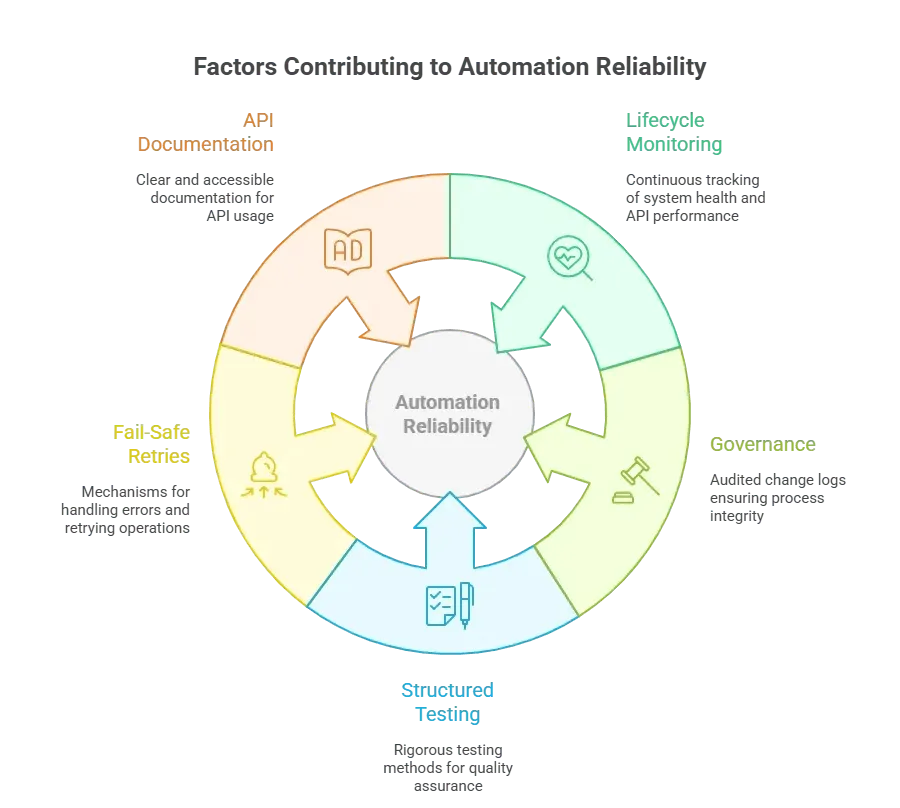
Large environments such as enterprise systems involving warehouse management systems and finance platforms rely heavily on consistency. People combine simple object access protocol and rest API depending on integration scenarios. Predictability matters far more than novelty.
Practical Tips for Better Design
Development moves more smoothly when planning and execution support each other. Teams refine architecture without over-engineering by focusing on manageable improvement strategies.
Recommended strategies:
- Validate schemas early to avoid late chaos across complex workflows
- Track meaningful logging that supports rapid failure diagnosis
- Control workloads with safe throttling across data pipelines
- Build test environments independent of production
- Use flexible mapping structures supported by strong data mapping rules
- Deploy changes incrementally instead of large leaps
These patterns align with scaling goals and protect continuity as business processes adapt.
API Design and Documentation Discipline
Design structure determines long-term success. When creating new endpoints, consistent naming patterns and versioning decisions prevent confusion as integrations multiply.

Teams that manage APIs responsibly carry less risk and create smoother collaboration.
Smarter Error Recovery Planning
Failure happens. The difference between stable and unstable pipelines is how failures behave. Controlled responses matter.
Helpful techniques include:
- Fail-fast logging for faster diagnosis
- Retry and backoff logic matching load levels
- Notification routing for the right teams
- Rollback paths to protect system consistency
Fast recovery protects trust and continuity.
The Role of Rocket.new
Rocket.new supports automation teams building automated workflows without heavy manual setup. The platform focuses on clarity, quick configuration, strong support for data flow, and dependable reliability. It creates space for collaboration between engineering and operational teams while supporting modern integration capabilities.
Features
- Visual interface builder supporting drag and drop workflow assembly
- Flexible multi-directional data flow connections across systems
- Native support for data mapping tools connected to data flow handling
- Broader integration capabilities supporting diverse API integrations
Real-World Outcomes
Organizations improving collaboration across engineering and product teams see operational improvements almost immediately. When integration tool selection aligns with realistic scaling paths and workflow automation patterns, automation reliability increases. People begin to trust processes again. Meetings shift from firefighting to reviewing future plans.
With better frameworks, writing custom scripts becomes a strategic decision rather than an emergency fix. Leaders gain visibility, engineers gain predictability, and teams perform calmer.
The Value of API Integrated Code Automation
Reliability matters more than raw speed. People want consistent data exchange, better communication between systems, and thoughtful architecture for scaling. Combining planning discipline, the right integration platform decisions, strong documentation patterns, and responsible monitoring builds a dependable foundation for API integrations that last. Teams that prioritize structure over quick fixes thrive as automation demand grows. And maturity inside integration practices becomes the differentiator.
Table of contents
- -Why Best Practices Shape Real Outcomes?
- -Building Reliable Foundations Before Connecting Systems
- -Choosing the Right Tools and Platforms
- -Security, Governance, and Control
- -Scaling Automated Workflows With Real-Time Data
- -Community Perspective
- -Patterns That Strengthen Reliability
- -Practical Tips for Better Design
- -API Design and Documentation Discipline
- -Smarter Error Recovery Planning
- -The Role of Rocket.new
- -Real-World Outcomes
- -The Value of API Integrated Code Automation