
Rocket produces structured preliminary M&A assessments covering financials, market position, and risk factors. The full M&A process takes 6-12 months, with due diligence being the most time-intensive stage. AI tools like Rocket help deal teams move faster.
Rocket produces structured, evidence-backed preliminary M&A assessments covering financials, market position, and risk factors. The full M&A process typically takes 6-12 months, with due diligence being the most time-intensive stage. AI tools like Rocket reduce manual work, helping deal teams move faster and make better early-stage decisions.
Quick answer: Solve on Rocket produces a structured preliminary M&A assessment covering market analysis, competitive position, financial signals, and risk factors with a clear recommendation on whether to pursue a target. The full M&A process from strategy to deal closure typically spans 6-12 months, with due diligence alone taking 30-90 days for mid-market transactions.
What M&A assessment can Rocket produce, and how long does the full process take, from "we should buy that company" to signing a purchase agreement?
For most deals, the full M&A process runs six to twelve months, and 86% of organizations have already started using generative AI to speed up the early stages. The preliminary assessment is the first step that shapes every decision after it.
Getting it wrong wastes months. Getting it right gives a buyer a clear understanding of risk, value, and strategy before real money hits the table.
How M&A Deals Move From Strategy to Deal Closure
Most people hear "mergers and acquisitions" and picture two companies shaking hands. The actual process behind those deals is longer, messier, and more layered than any single meeting.
- A typical transaction spans six to twelve months from start to finish, depending on company size, deal structure, and regulatory requirements
- 73% of investment banking executives expect due diligence to grow more complex over the next two years
- The process includes strategy development, target screening, due diligence, negotiation, and post-merger integration
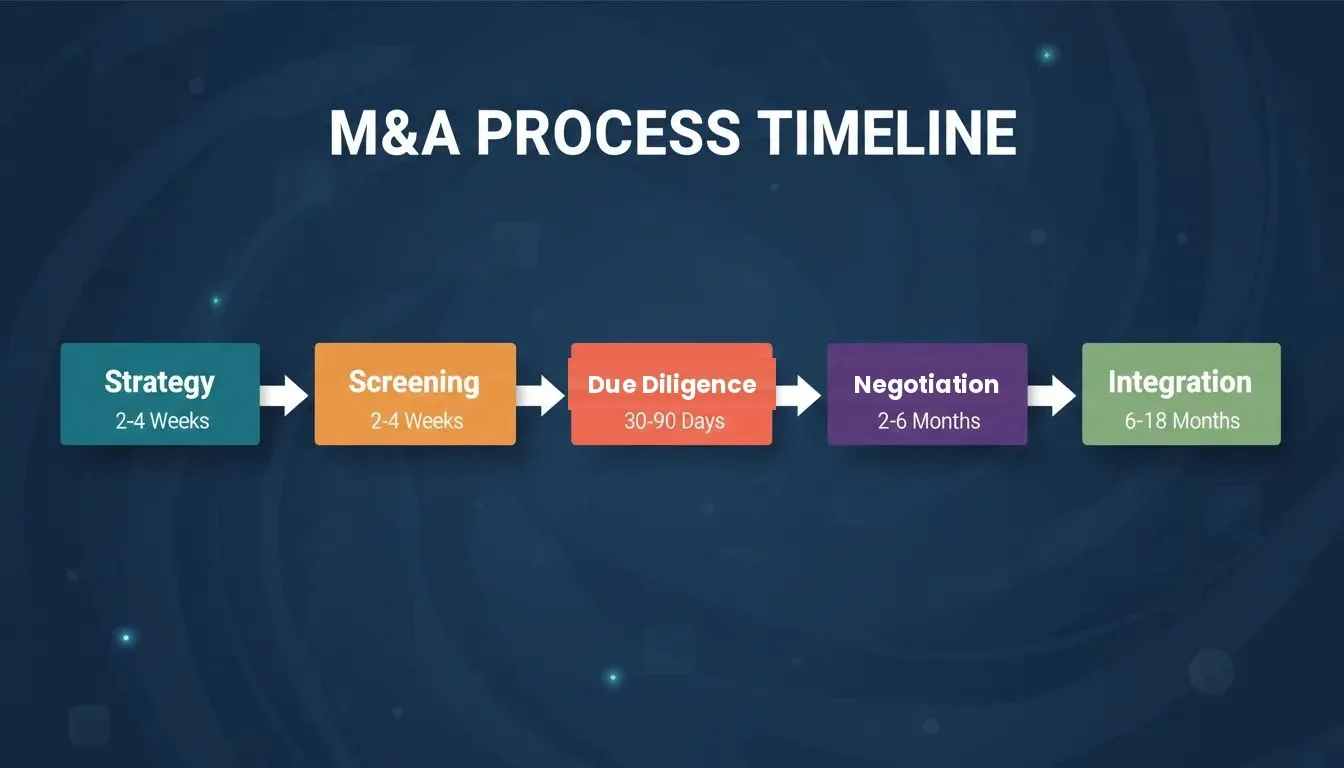
Each stage of the M&A process builds on the last. The preliminary assessment gates whether full diligence begins.
Strategy Development and Acquisition Planning
Before a buyer talks to any target company, they build a thesis. This is where acquisition planning starts.
- The deal team defines search criteria: what kind of business, what market share, what customer base, what recurring revenue model
- Strategic buyers look for companies that match their competitive position, while financial buyers look for deals with strong value creation potential
- Market analysis at this stage includes sizing the market, checking market trends, and identifying whether the proposed deal matches broader market conditions
This stage usually takes two to four weeks for experienced deal teams.
Starting Acquisition Planning With a Target List
After the strategy, the deal team builds a long list of companies that match their search criteria. Each acquisition target gets an initial screen: company size, revenue, customer base, and strategic fit.
The deal team narrows the list by sell-side fit, buy-side visibility, and whether the target is a sell side or buy side opportunity. Background for the call with each target company is prepared, including marketing materials, financial records, and any available confidential information memorandum.
This phase runs about two to four weeks as well, depending on how many companies the deal team reviews.
The Due Diligence Process From Start to Close
Due diligence is where most deals spend their time. The diligence process covers financial, legal, operational, commercial, and IT review of the target company.
Due diligence is a pivotal step in the M&A process that typically takes several months and involves verifying the claims made by the target company through detailed research and analysis.
- Most due diligence processes take 30 to 90 days for middle-market transactions
- Larger deals with regulatory approvals, cross-border complexity, or multiple parties can push diligence well beyond 90 days
- The negotiation phase can last from 6 months to a year, during which key terms such as pricing and post-merger goals are discussed and settled
Neglecting due diligence can lead to significant financial losses, operational inefficiencies, and strained relationships with stakeholders during M&A transactions.
What a Preliminary M&A Assessment Actually Covers
The preliminary assessment happens before full due diligence kicks off. It answers one question: does this deal deserve the time, money, and people a full diligence process requires?
Evaluations during the M&A process typically include financial review, legal document review, market analysis, and risk management.
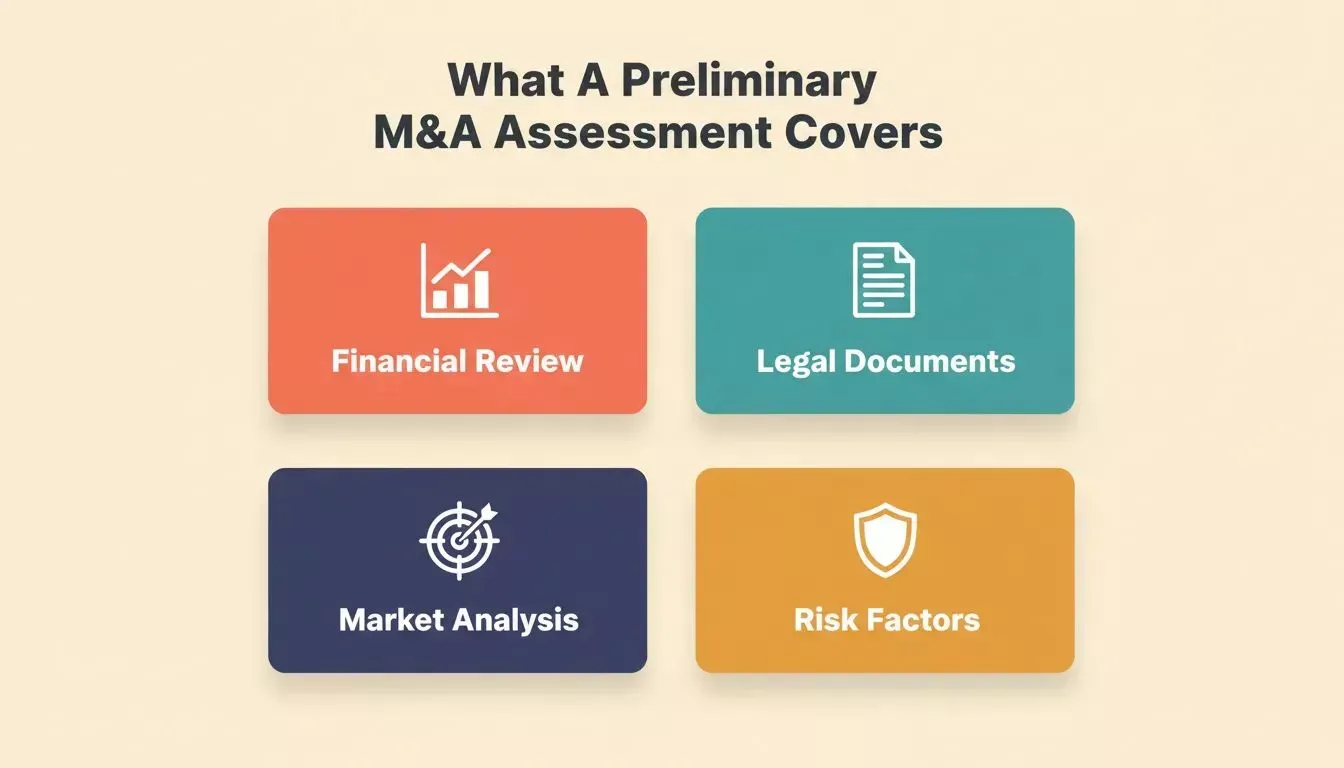
A preliminary M&A assessment covers four core areas: financial review, legal documents, market analysis, and risk factors.
- A well-built preliminary assessment reviews the target company's business model, financial health, legal standing, and competitive advantage in long-form detail
- It flags red flags early, before the buyer commits significant resources
- It gives the deal team enough data to decide on deal structure, valuation range, and whether closing conditions can be met
Financial Review in Preliminary Diligence
The first step in any preliminary assessment is a financial screen of the target company. Review revenue trends, margins, and any recurring revenue streams. Look at customer concentration: if one or two customers account for most revenue, that is a risk the buyer needs to price.
Check for red flags in financial records, like aggressive accounting or inconsistent reporting across years. Financial due diligence at this stage is lighter than a full Quality of Earnings report, but it sets the direction for the rest of the process.
Legal Documents and Regulatory Risk
Legal teams review the target company's contracts, employment contracts, and any pending or historical legal issues. Key employees' employment contracts get reviewed for change-of-control clauses and non-compete terms.
The deal team checks for regulatory issues that could slow or block the transaction. Legal documents like the stock purchase agreement, sale agreement, and any existing purchase agreement templates are assessed for standard terms. Law firms involved on both sides coordinate early to identify anything that could stall deal closure.
Market Analysis and Competitive Position
A solid preliminary assessment includes a market analysis of the target company's industry. How is the target company positioned against competitors? What is its market share?
Does the target have a competitive advantage that will hold up after the deal closes, or does it depend on relationships, key employees, or a single product? Market trends at the time of the deal shape how both strategic buyers and financial buyers value the business.
M&A Process Timeline at a Glance
| M&A Stage | Typical Duration | Key Activities |
|---|---|---|
| Strategy and target screening | 2 to 8 weeks | Market analysis, search criteria, deal thesis |
| Preliminary assessment | 2 to 4 weeks | Financial screen, legal review, risk flags |
| Full due diligence | 30 to 90 days | Financial, legal, operational, IT diligence |
| Negotiation and sale agreement | 2 to 6 months | Deal terms, purchase agreement, closing conditions |
| Post-merger integration | 6 to 18 months | Cultural integration, ongoing monitoring, value capture |
Why the Diligence Process Takes So Long
Deals do not stall because people are lazy. The diligence process is time-consuming because the work itself demands precision across hundreds or thousands of data points.
Data Overload and Repetitive Tasks
A mid-market acquisition generates 5,000 to 12,000 data room documents. Most deal teams cannot review them manually. Legal teams, financial advisors, and external consultants all need access to the same data, often under tight deadlines.
Repetitive tasks like document tagging, clause extraction, and data comparison eat up hours that analysts could spend on actual risk analysis. The heavy lifting in diligence is not interpretation. It is processing.
Market Conditions and Regulatory Issues
External factors add weeks or months to deals. Market conditions like economic volatility make buyers cautious; they may pause the transaction or renegotiate deal terms until conditions stabilize.
Regulatory issues, especially for cross-border deals or deals involving sensitive data, can extend the process timeline by months. Regulatory approvals from antitrust authorities are outside the deal team's control, and delays compound quickly when multiple parties are involved.
Cultural Integration and People Risk
The risk of culture clashes between two companies does not show up in a spreadsheet, but it derails deals and post-merger integration plans consistently.
- Cultural integration challenges, such as leadership misalignment and resource diversion, can significantly slow down the alignment process between merging companies, leading to extended timelines and increased effort to achieve effective collaboration
- Key employees at the target company may leave if they feel uncertain about their future, which erodes the business value the buyer paid for
- Post-closing obligations related to retention, integration milestones, and ongoing monitoring of cultural alignment add another layer of process after deal closure
AI vs. Manual Diligence: What Changes and What Stays the Same
The shift toward AI tools in M&A is not just a trend in reports. Practitioners are talking about it openly.
"The 2025 Survey confirms that dealmakers are confident in GenAI's potential to recast the look and feel of dealmaking, and are investing accordingly." — Erik Dilger, Managing Director, Deloitte Financial Advisory Services
That confidence shows up in spending: 83% of adopters have invested over $1 million in AI for their M&A teams, and most plan to increase that budget within the next year.
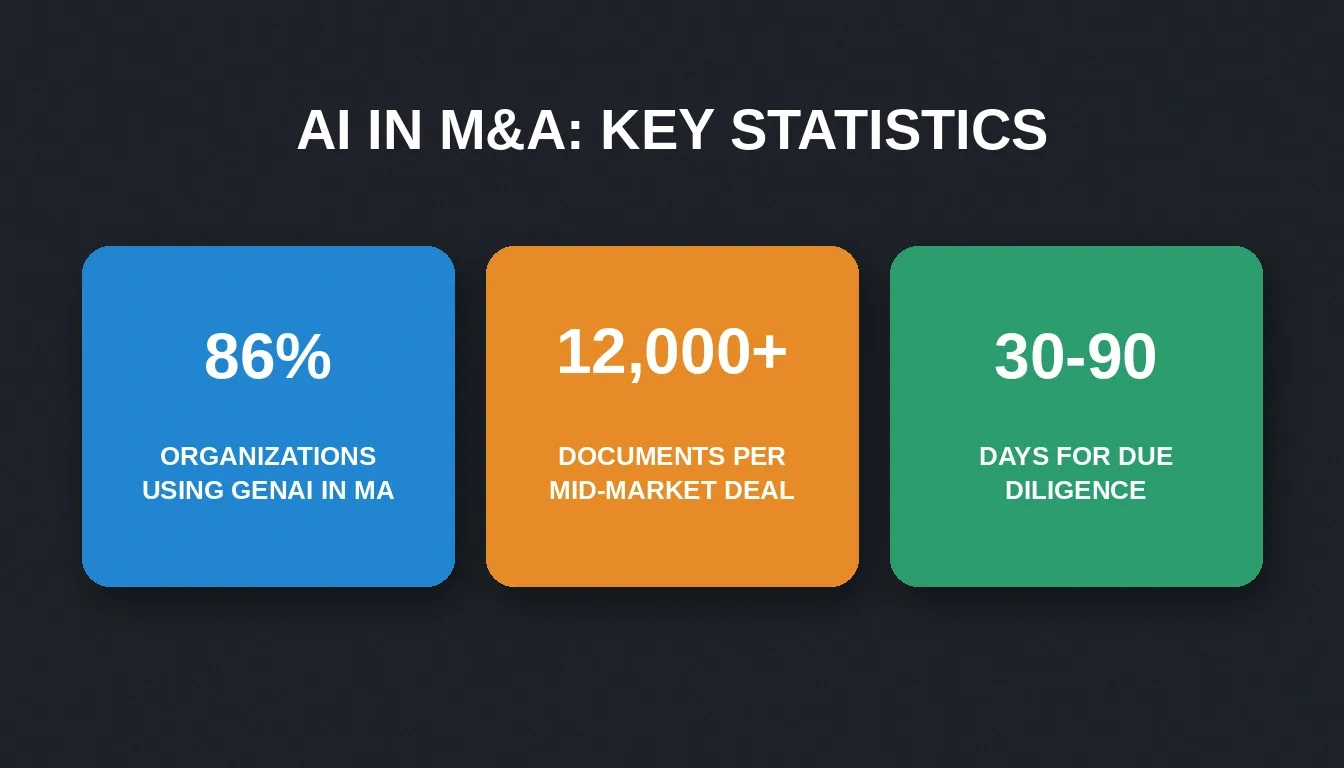
Key data points shaping how deal teams approach M&A in the current environment.
| Diligence Task | Manual Approach | AI-Assisted Approach |
|---|---|---|
| Document review | Weeks of attorney time across thousands of files | NLP extracts key clauses in hours |
| Risk flagging | Analysts read every page for red flags | Automated flagging of missing provisions |
| Data synthesis | Multiple consultants compile separate reports | Single risk profile from all sources |
| Ongoing monitoring | Periodic check-ins after close | Continuous post-closing obligation tracking |
| Cost impact | High external counsel and consultant fees | McKinsey reports 20-30% cost reductions |
Document Review and Risk Detection
AI-powered document analysis changes how deal teams handle the data room. Natural language processing extracts key clauses from contracts, financial statements, and legal documents in hours rather than weeks.
AI tools flag red flags automatically: missing termination provisions, non-standard indemnity clauses, and change-of-control triggers buried in vendor contracts. Deal teams review flagged items instead of reading every page, which frees legal teams and external consultants to focus on the risk that matters.
Data Synthesis and Ongoing Monitoring
Beyond document review, AI-powered platforms compile data from multiple sources into a single risk profile. AI tools pull information from financial filings, market data, news feeds, and internal documents into one view.
Data synthesis helps the deal team spot patterns that manual review misses: customer churn trends, supplier concentration, and regulatory exposure across jurisdictions. Ongoing monitoring after deal closure tracks whether the target company meets its post-closing obligations and whether value creation targets are on track.
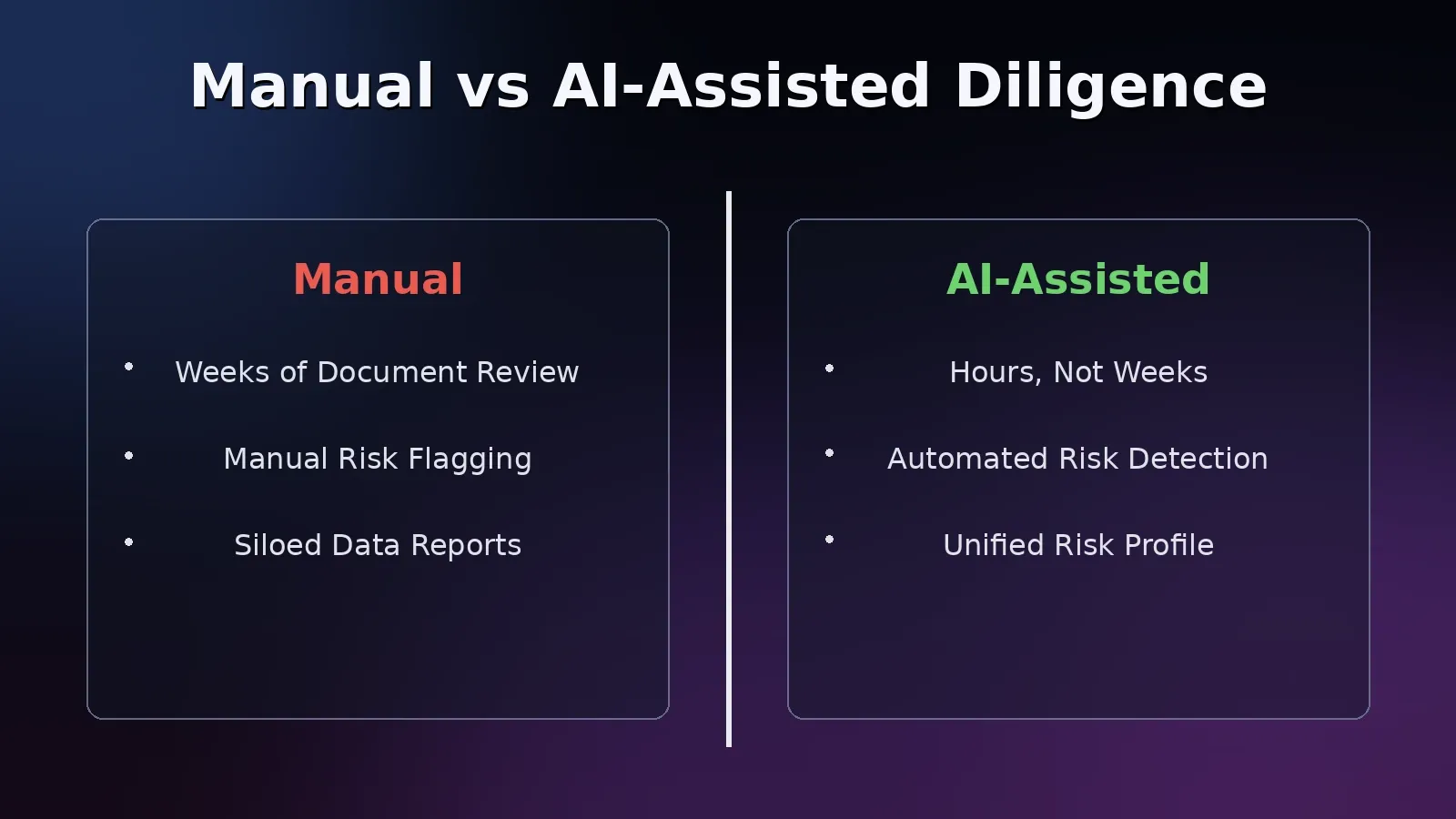
The gap between manual and AI-assisted diligence is not just speed. It is the quality of what gets caught.
Sell Side vs. Buy Side: Different Diligence Priorities
Not every deal team approaches due diligence from the same angle. Sell-side teams and buyer teams have different priorities, different risks, and different due timelines.
What Potential Buyers Focus On
The buyer runs diligence to protect their investment. Financial buyers care about earnings quality, recurring revenue, and whether the target company's business margins are sustainable.
Strategic buyers focus on strategic fit: does this business fill a gap in their product, customer base, or market? Every buyer wants a clear understanding of risk before committing to a purchase agreement, which is why diligence findings directly shape deal terms, escrow provisions, and closing conditions. Potential buyers who use AI-powered tools during diligence often complete their review faster, giving them an edge in competitive auction deals.
What Sell-Side Teams Prepare
Sell-side teams do not just wait for questions. A strong sell-side process includes vendor due diligence, where the seller reviews its own business before potential buyers see it.
The sell-side deal team prepares the confidential information memorandum, organizes the data room, and coaches management for management meetings. Sell-side preparation cuts weeks off the buyer's diligence process, which speeds up deal closure and reduces the risk of last-minute price reductions.
That Is the Problem. Here Is Where Rocket Fits.
Most preliminary assessments fail not because deal teams lack intelligence, but because gathering that intelligence takes too long and loses coherence across tools. By the time the research is compiled, the market context has shifted, or the deal window has narrowed.
How Rocket Handles Preliminary M&A Assessments
This is where Rocket fits into the M&A process. The Solve product on Rocket takes a question, like "Should we acquire this target company?" and returns a structured, research-backed recommendation. No slides to build manually. No re-explaining context to every new tool.
Rocket researches every angle of the problem: market data, competitive position, risk factors, and financial signals. It returns findings, evidence, and a clear recommendation that is ready to present in a room or hand to a deal team. Every output is exportable as PDF or PowerPoint, ready for stakeholders without reformatting.
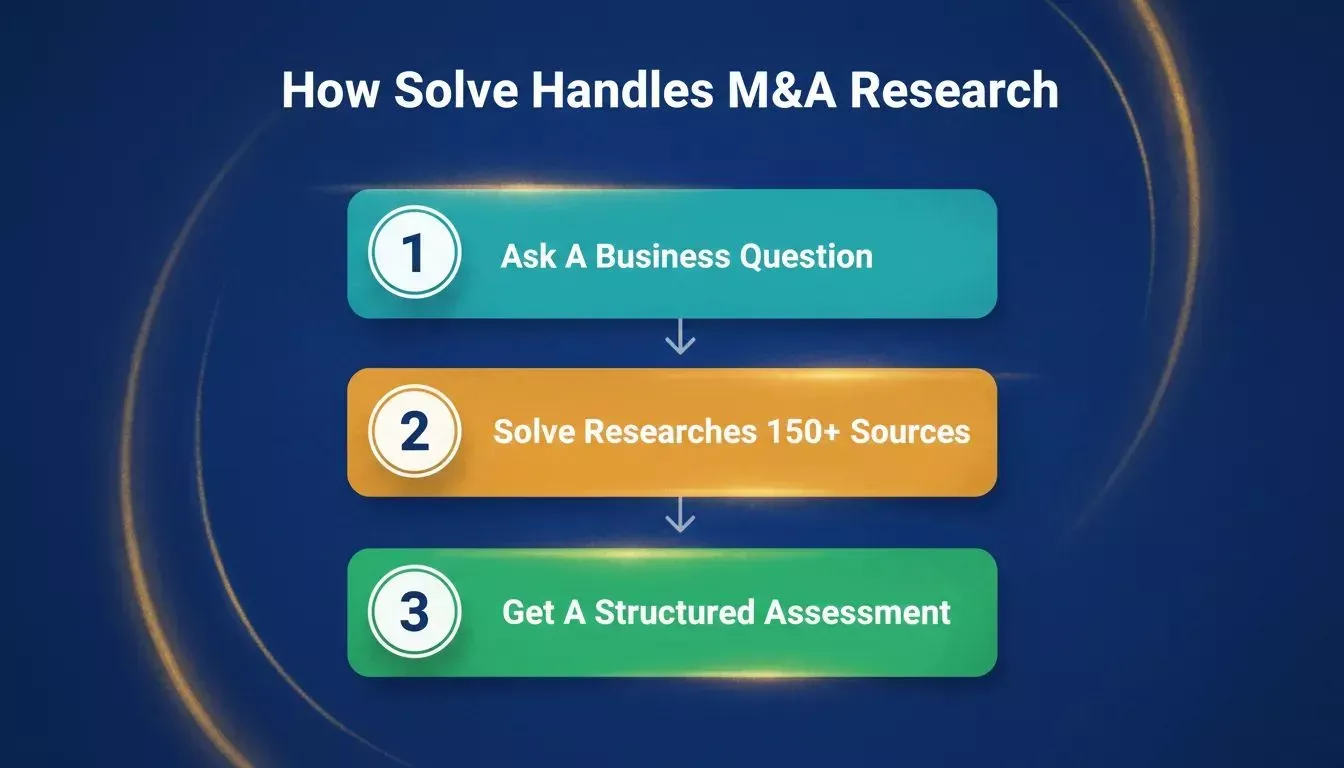
Solve turns a business question into a structured, evidence-backed M&A assessment in one workflow.
- Vibe-solutioning platform: Rocket is the first platform built to handle the thinking before the build, not just the build itself
- 25,000+ templates, free to browse: Pre-built starting points for strategy briefs, market analysis decks, competitive assessments, and deal evaluation frameworks. Browsing and remixing templates consume zero credits
- Shared context across every stage: Rocket carries findings, files, and decisions across every task in a project, so deal teams never re-explain what they already told the system
- Supports Flutter (mobile) and Next.js (web): When the assessment needs to become a tool, dashboard, or internal app, Rocket builds it in the same workspace
- Collaboration built in: Invite teammates to a project with editor or viewer roles; every member opens the project and all prior research, tasks, and decisions are already there
- Solve, Build, and Intelligence on one platform: Solve handles research and strategy; Build ships internal tools and apps; Intelligence monitors competitors and market shifts continuously
Use Cases for M&A Teams on Rocket
- Preliminary target assessment: Feed Rocket the target company's market, financials, and competitive position. Solve returns a structured brief with risk flags, value drivers, and a recommendation on whether to proceed to full due diligence
- Market analysis for acquisition planning: Before your deal team picks search criteria, use Solve to research market trends, map competitors, and identify where the strongest acquisition targets sit
- Deal team internal tools: When your deal team needs a tracker, a risk dashboard, or a closing conditions checklist, Build creates it from the context Solve already has
- Competitive intelligence during diligence: Intelligence watches what the target company's competitors do during the deal process, so the buyer knows whether market conditions are shifting under the deal
- Investor Q&A preparation: Use Solve to generate structured investor Q&A preparation tailored to the specific deal, so the deal team walks into every stakeholder meeting with answers already mapped
Ready to Run Your First M&A Assessment in Minutes?
Most deal teams spend weeks pulling together the research that shapes a preliminary assessment. By the time the brief is ready, the market has shifted, or the window has narrowed.
Rocket changes that equation entirely.
Solve on Rocket takes your question, researches 150+ sources simultaneously, and returns a structured, evidence-backed assessment covering market position, competitive landscape, financial signals, and risk factors, all in one place, ready to present.
No consultant fees. No tool-switching. No re-explaining context from one stage to the next.
Whether you are screening your first acquisition target or preparing a board-ready brief for a live deal, Rocket gives your team the research foundation to move with confidence, not guesswork.
Join 1.5 million builders and operators across 180 countries who already use Rocket to make faster, better-informed decisions.
Start Your First Solve Free, No credit card required.
Table of contents
- -How M&A Deals Move From Strategy to Deal Closure
- -Strategy Development and Acquisition Planning
- -Starting Acquisition Planning With a Target List
- -The Due Diligence Process From Start to Close
- -What a Preliminary M&A Assessment Actually Covers
- -Financial Review in Preliminary Diligence
- -Legal Documents and Regulatory Risk
- -Market Analysis and Competitive Position
- -M&A Process Timeline at a Glance
- -Why the Diligence Process Takes So Long
- -Data Overload and Repetitive Tasks
- -Market Conditions and Regulatory Issues
- -Cultural Integration and People Risk
- -AI vs. Manual Diligence: What Changes and What Stays the Same
- -Document Review and Risk Detection
- -Data Synthesis and Ongoing Monitoring
- -Sell Side vs. Buy Side: Different Diligence Priorities
- -What Potential Buyers Focus On
- -What Sell-Side Teams Prepare
- -That Is the Problem. Here Is Where Rocket Fits.
- -How Rocket Handles Preliminary M&A Assessments
- -Use Cases for M&A Teams on Rocket
- -Ready to Run Your First M&A Assessment in Minutes?