
Rocket.new Intelligence helps teams create products with stronger market fit through faster validation, smarter insights, and data-driven development, increasing the chances of launching solutions customers actually want and markets readily adopt.
Why do some products succeed fast while others fail after launch?
The answer usually comes down to research, timing, customer understanding, and the quality of decisions teams make before they build.
Products Built with Rocket.new Intelligence is more likely to match real customer demand because Rocket combines intelligence, analytics, research, and AI app builder workflows into one platform instead of spreading work across disconnected AI tools.
According to CB Insights, 42% of startups fail because there is no market need for the product. Teams often spend months writing code and shipping features for the wrong audience. Rocket helps teams search trends, study competitors, validate plans, and build with clearer market direction from the start.
This blog will help readers understand how connected research and AI driven product planning improve market fit, customer alignment, and product success.
Why Market Fit Starts Before the First Line of Code
A lot of founders think product success starts after launch, though the real work starts much earlier. The market usually gives signals about customer needs before a product even exists.
Many teams miss those signals because research gets scattered across different tools, meetings, dashboards, and spreadsheets, which leads to weak product direction before development begins.
-
Research stays disconnected across multiple tools
-
Teams build from assumptions instead of real market analysis
-
Competitor movement gets ignored until launch
-
Product features get planned without validation
-
Developers start writing code before understanding customer demand
-
Teams lose context while switching between cursor, bolt, lovable, and separate AI tools
-
Rocket combines intelligence, analytics, research, and AI app builder workflows into one platform
-
Teams can search trends, study competitors, validate ideas, and build from one connected system
The best AI app builder is not only about generating code fast. The best AI app builder also helps teams understand the market before they build, which leads to stronger decisions and better product outcomes.
Why Intelligence Changes Product Outcomes
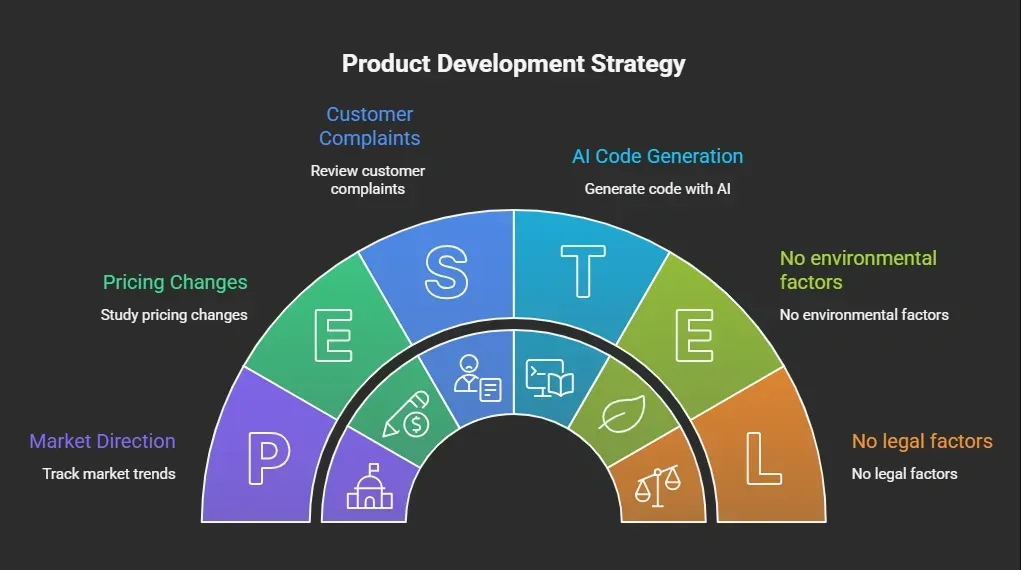
A lot of teams start tracking competitors only after launching their product. By that stage, many opportunities are already lost. Intelligence works much better when it becomes part of the planning process before teams start writing code or shipping features.
-
Teams can search competitor movement before development begins
-
Customer complaints help identify missing features in the market
-
Pricing changes reveal customer expectations and positioning trends
-
Review sentiment helps teams understand what users actually dislike
-
Analytics patterns show which product categories are growing faster
-
Mobile apps can be planned around real customer frustrations
-
Web apps can improve onboarding, pricing, and support workflows early
-
Rocket.new's intelligence validates ideas before teams spend months building
-
Teams build from real data instead of assumptions
That creates a major difference in product direction. Instead of reacting after launch, teams can study competitors, validate plans, and build products that already fit customer expectations before entering the market.
How Rocket Brings Research Into Product Building
Rocket is not only an AI app builder. Rocket is a vibe solutioning platform designed to connect, solve, build and intelligence into one workflow.
Most AI app workflows break context during research. One session focuses on competitor analysis, another focuses on prompt writing, while separate tools handle code, analytics, and architecture. After a week, teams often forget why certain decisions were made, which creates confusion during development.
| Traditional Workflow | Rocket Workflow |
|---|---|
| Research in separate docs | Research connected inside one platform |
| Manual competitor tracking | Continuous intelligence |
| Prompt rewriting across tools | Shared session context |
| Scattered analytics dashboards | Centralized analytics and answers |
| Build first, validate later | Validate before teams build |
| Random feature priorities | Market driven direction |
Rocket keeps research, analysis, planning, and execution connected inside one platform. That workflow helps teams build fast while staying closer to customer demand, competitor movement, and real market direction.
How Rocket.new Intelligence Works
Rocket is a vibe solutioning platform that combines strategic research, intelligence, and AI app builder capabilities in one system.
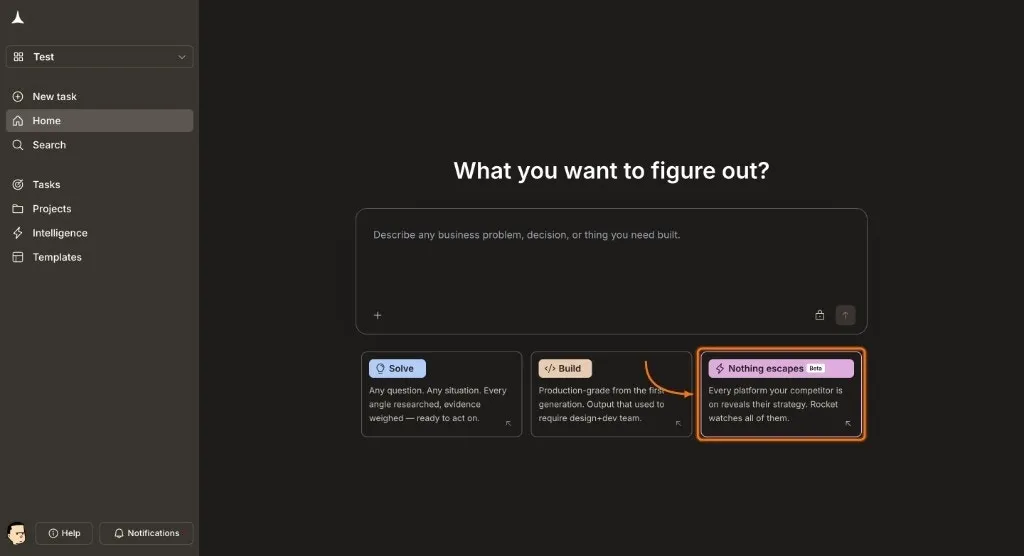
 Teams describe the product idea, customer type, market category, or competitors they want to track. Then Rocket.new's intelligence starts collecting signals from reviews, websites, feature updates, customer feedback, social activity, pricing pages, and search patterns.
After that, the platform organizes answers into usable insights.
 The platform also supports role based access for teams working across product, strategy, marketing, and research.
That shared context becomes valuable because products are only as good as the thinking behind them. Rocket 1.0 even describes the platform as the place where the thinking and building happen together.
Why AI App Builders Often Miss the Bigger Problem
Many AI app builder tools focus heavily on generation speed. Speed definitely matters, though fast development without market understanding creates risk.
Teams can generate mobile apps, layouts, pages, and code in hours, yet still fail because the product solves the wrong thing instead of a real customer problem.
-
Customer demand: Teams need answers about what customers actually want before development begins
-
Competitor gaps: Intelligence helps identify what competitors are missing in the market
-
Pricing direction: Research shows which pricing models customers respond to better
-
Customer complaints: Review analysis highlights repeated frustrations and weak product experiences
-
Feature trends: Analytics reveal which new feature patterns are growing faster
-
Market gaps: Search and research help teams identify underserved areas before competitors react
Rocket connects intelligence with AI app building, helping teams validate assumptions before they execute. That reduces wasted effort and leads to products with stronger market direction.
Why Lovable, Cursor, and Bolt Still Need Research
Lovable, cursor, and bolt are useful tools for building products quickly. Teams use lovable for rapid AI app workflows, cursor for coding assistance, and bolt for fast generation and deployment. Still, fast building alone does not guarantee market success.
-
Cursor: Helps teams write code faster, though it does not explain market demand
-
Bolt: Generates structure and deployment workflows, though competitors still change direction every week
-
Lovable: Speeds up AI app creation, though customer behavior and feature expectations continue evolving
-
Research layer: Rocket connects intelligence, analytics, and market interpretation into the workflow
-
Customer understanding: Teams can validate why certain features matter before development starts
-
Market direction: Research helps products stay aligned with customer demand and competitor movement
Rocket fills the missing research gap between fast generation and smart product planning. That is why lovable, cursor, and bolt work better when paired with Rocket.new's intelligence.
Insight From Founders and Builders
A LinkedIn discussion on product market fit shared a point that strongly connects with AI product building today:
“A lot of startups don’t fail because the idea is bad, they fail because nobody actually wants what they’re building.” LinkedIn Product Market Fit Discussion
That reflects why research matters so much. Teams can generate code and ship features quickly, though products still fail when customer demand is never validated. Rocket helps teams connect intelligence, analytics, and market research before development starts.
Why Research Creates Better Product Direction
Research is not only about collecting data. Good research creates product direction by helping teams understand customer behavior, competitor movement, feature expectations, and changing market timing before development starts.
-
Market analysis: Helps teams understand trends, customer demand, and shifting market behavior
-
Customer review interpretation: Reveals repeated complaints, expectations, and feature requests
-
Competitor monitoring: Tracks competitor movement, positioning updates, and new feature launches
-
AI app planning: Connects research with smarter AI app workflows
-
Mobile apps validation: Helps teams validate user experience decisions before launch
-
Web apps architecture: Supports better planning around structure and usability
-
Analytics review: Gives teams clearer answers from connected analytics workflows
-
Prompt refinement: Keeps session context connected during product planning
-
Code generation: Connects validated research directly with development workflows
Rocket centralizes answers into one platform instead of spreading them across disconnected pages and tools. That shared session flow reduces confusion, improves planning, and gives teams stronger product direction.
How Rocket Supports Real Product Building
Rocket is designed for teams that want to move from research into execution without breaking momentum.
Instead of separating planning, analytics, research, and development into different systems, Rocket keeps the workflow connected inside one platform.
-
AI app generation
-
Iintelligence
-
Market research
-
Analytics workflows
-
Code generation
-
Feature planning
-
Writing workflows
-
Web apps and mobile apps
-
Customer analysis
-
Team collaboration
-
Search and monitoring
Rocket also connects natural language prompts with product planning, which helps teams describe ideas in simple language instead of managing disconnected spreadsheets and scattered reports.
That keeps thinking connected, saves time, and validates ideas before large scale development starts. That is one reason products built after using Rocket.new intelligence are more likely to fit the market they were built for.
Why Customers Respond Better to Market Aligned Products
Customers usually notice when products feel disconnected from real problems. Sometimes onboarding feels confusing, features solve tiny issues nobody cares about, or the app simply copies competitors without adding meaningful value.
Market aligned products feel different because they are shaped around real customer expectations before launch.
-
Customer expectations: Features feel useful because they match actual customer needs
-
Clear experience: The page structure and onboarding flow feel easier to understand
-
Practical AI features: AI features solve real tasks instead of acting like random add ons
-
Focused writing: Product messaging feels clearer and more connected to customer problems
-
Better pricing decisions: Research helps teams understand what customers are willing to pay for
-
Feature priorities: Teams focus on features customers actually care about
-
User experience: Early customer analysis improves the overall product experience
-
Lower risk: Teams can act earlier instead of reacting after launch
Rocket helps teams study customers before development starts, which leads to stronger product direction and better market alignment.
Why One Platform Matters More Than Teams Expect
A lot of modern product workflows feel fragmented. Research happens in one app, code lives somewhere else, analytics sit in separate dashboards, and competitor tracking gets handled across different tools.
After some time, teams lose context, communication becomes messy, and product direction starts drifting.
-
Connected workflows: Rocket combines research, planning, analytics, prompt writing, code, and execution into one platform
-
Shared session context: Teams can review the same answers inside the same session without switching tools
-
Better communication: Product managers, marketers, developers, and researchers stay aligned around the same information
-
Reduced confusion: Teams avoid scattered dashboards, disconnected notes, and repeated explanations
-
Stronger execution: Connected workflows help teams move from research into product building with clearer direction
-
Improved collaboration: Decisions stay visible across the full product workflow instead of getting lost in separate systems
Rocket creates continuity between thinking and execution, which helps teams stay aligned while building products closer to real market demand.
Better Market Direction With Rocket
Many teams build products based on assumptions instead of validated research. They spend weeks writing code, polishing features, and designing pages without fully understanding the market. As competitors move faster and customer expectations change, teams often lose product direction before launch.
Rocket combines intelligence, analytics, research, and AI app builder workflows into one platform, helping teams search market signals, validate ideas, and build with connected answers instead of guesswork. The best AI app builder is not only about writing code faster. It also helps teams understand customers, competitors, and market behavior before development starts.
Want stronger product direction before launch? Start building with Rocket.new and connect research directly with execution.
Table of contents
- -Why Market Fit Starts Before the First Line of Code
- -Why Intelligence Changes Product Outcomes
- -How Rocket Brings Research Into Product Building
- -How Rocket.new Intelligence Works
- -Why AI App Builders Often Miss the Bigger Problem
- -Why Lovable, Cursor, and Bolt Still Need Research
- -Insight From Founders and Builders
- -Why Research Creates Better Product Direction
- -How Rocket Supports Real Product Building
- -Why Customers Respond Better to Market Aligned Products
- -Why One Platform Matters More Than Teams Expect
- -Better Market Direction With Rocket