Advanced AI for Construction Professional Website Template
Score is an AI-powered construction lead scoring landing page template built for construction SaaS founders, building material distributors, and commercial subcontractors. It combines a live dashboard bento grid, an interactive revenue simulator, and a "Score My Pipeline" lead capture form into one dark glassmorphic landing page that ranks your prospects by close likelihood before a sales rep ever picks up the phone.
by Rocket studio
Quick summary
Score is a single-page bento grid template designed to sell an AI lead scoring platform to the construction industry. It opens with a live animated dashboard, moves into an interactive ROI simulator, and closes with a lead capture form. Every section is built to show prospects the value of ranked, data-driven pipeline intelligence before they commit to signing up.
Who this template is for
This template suits founders and sales leaders who need to convert skeptical, data-aware buyers in a competitive construction tech market. It works best when your product actually uses behavioral signals to score and rank incoming prospects.
- Construction SaaS founders and sales leaders who manage high-volume inbound pipelines
- Building material distributors whose sales reps waste time on low-priority leads
- Commercial subcontractors looking to focus efforts on prospects most worth pursuing
What problem this template solves
Most teams in construction tech struggle with the same core issue: their pipeline is full, but the real buyers are invisible. Traditional lead scoring uses a static, rule-based approach to assign points to leads based on predetermined criteria. It is manual, slow, and fails to account for changing buyer behavior. Real deals slip to competitors while sales reps chase low confidence contacts.
- Sales reps spend call time on tire-kickers instead of closing deals with ready buyers
- Marketing and sales teams lack a shared, unified view of which leads deserve immediate follow ups
- Bad data and outdated scoring rules leave companies guessing about which prospects will actually convert
What you get with this template
You get a fully structured, single-page bento grid layout built for an AI lead scoring product in the construction industry. The template includes every core section needed to present, demonstrate, and capture pipeline leads at scale.
- A live animated hero dashboard with pulsing score cards and a real-time activity feed
- An embedded ROI simulator with interactive sliders for deal size, monthly lead volume, and close rate
- A multi-field lead capture form with CRM platform dropdown and persistent bottom-bar call to action
Feature list
This template is engineered for maximum engagement and lead qualification clarity. Each feature below maps directly to a component described in the source brief.
Animated Bento Grid Hero Dashboard
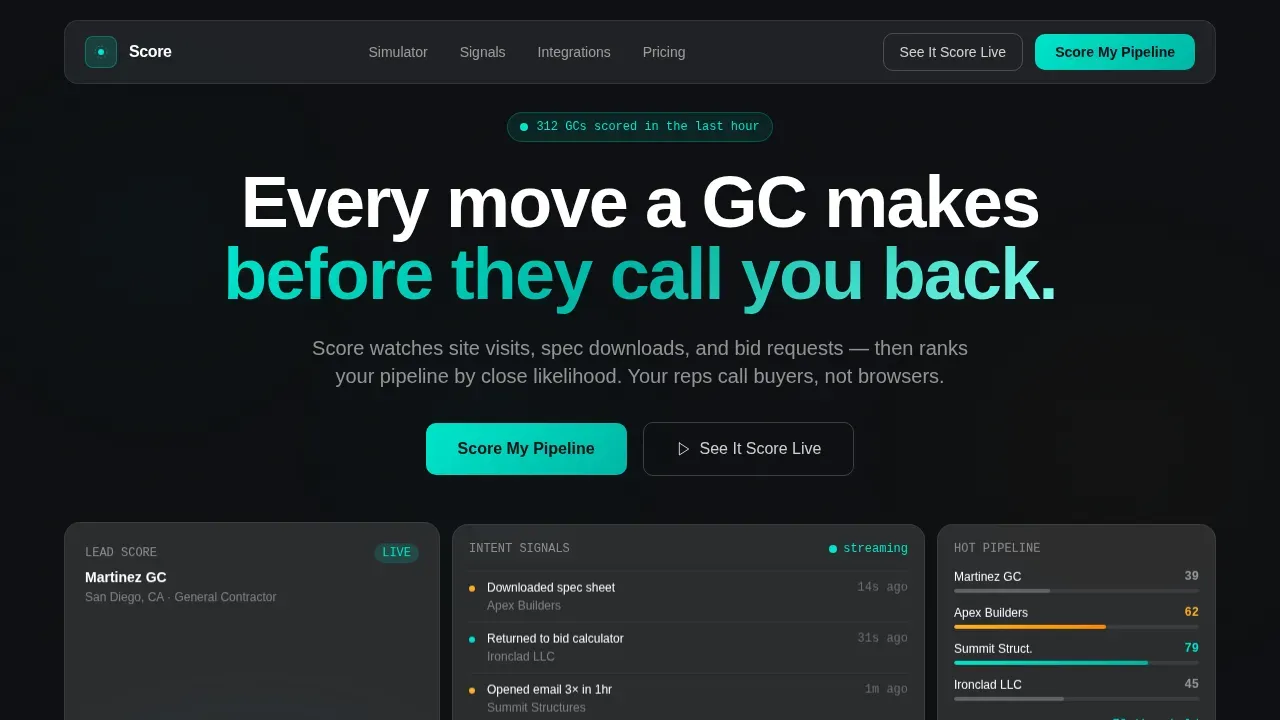
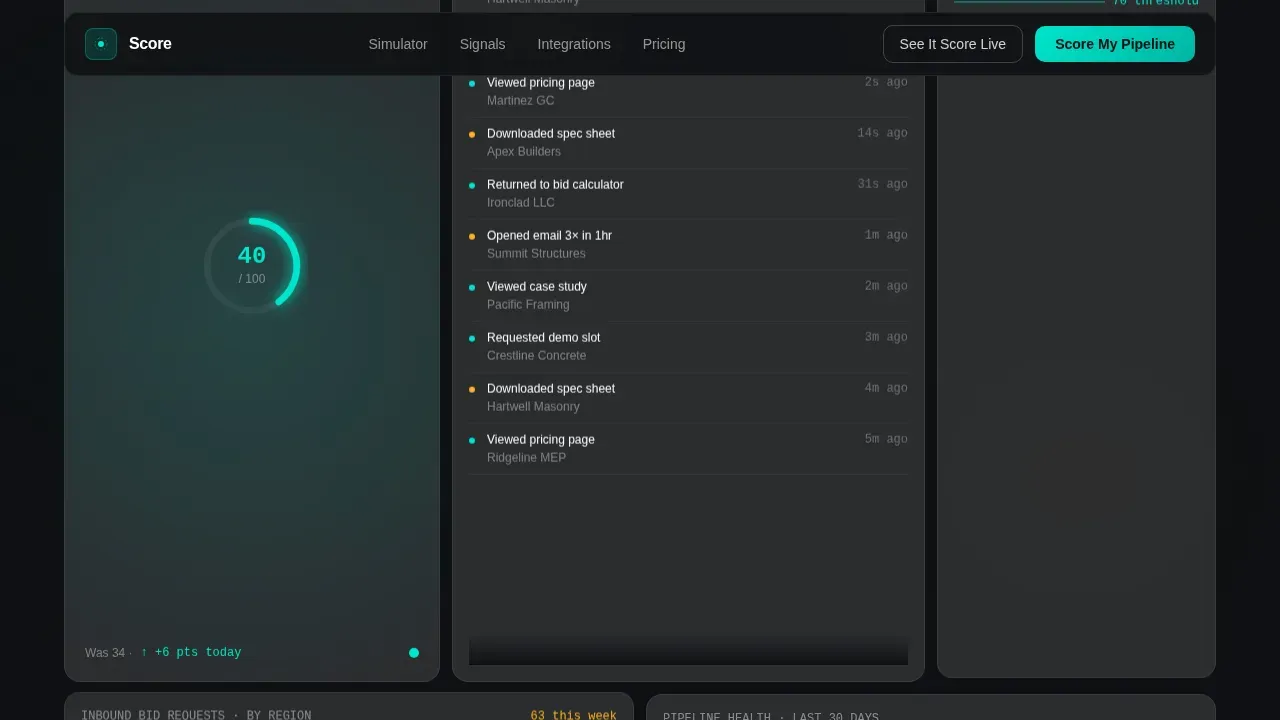
The hero section opens with a frosted-glass bento card layout showing a fictional pipeline where leads are actively being scored. One card tracks "Martinez GC" climbing from 34 to 87 with a pulsing cyan ring. A second card maps inbound bid requests by region with amber heat dots. A third streams a live activity feed of website visits, spec downloads, and bid requests. Micro-animations run continuously so the page feels like a system running, not a brochure sitting still.
Interactive Revenue Recovery Simulator
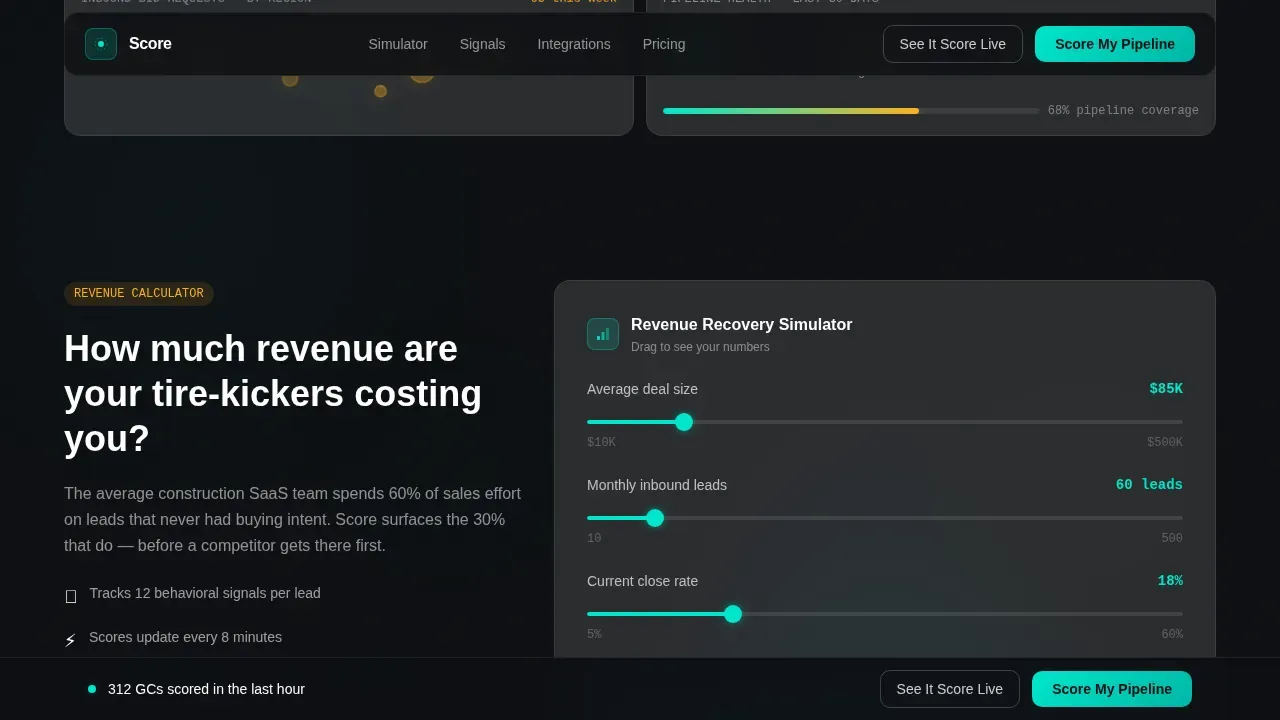
Before any pitch copy appears, visitors drag sliders for average deal size, monthly inbound leads, and current close rate. The tool instantly renders a bento results card showing estimated revenue recovered from leads the team is currently ignoring. This calculator-first approach means the page does the selling through real data before the form ever appears.
AI Signal Detection Bento Cluster
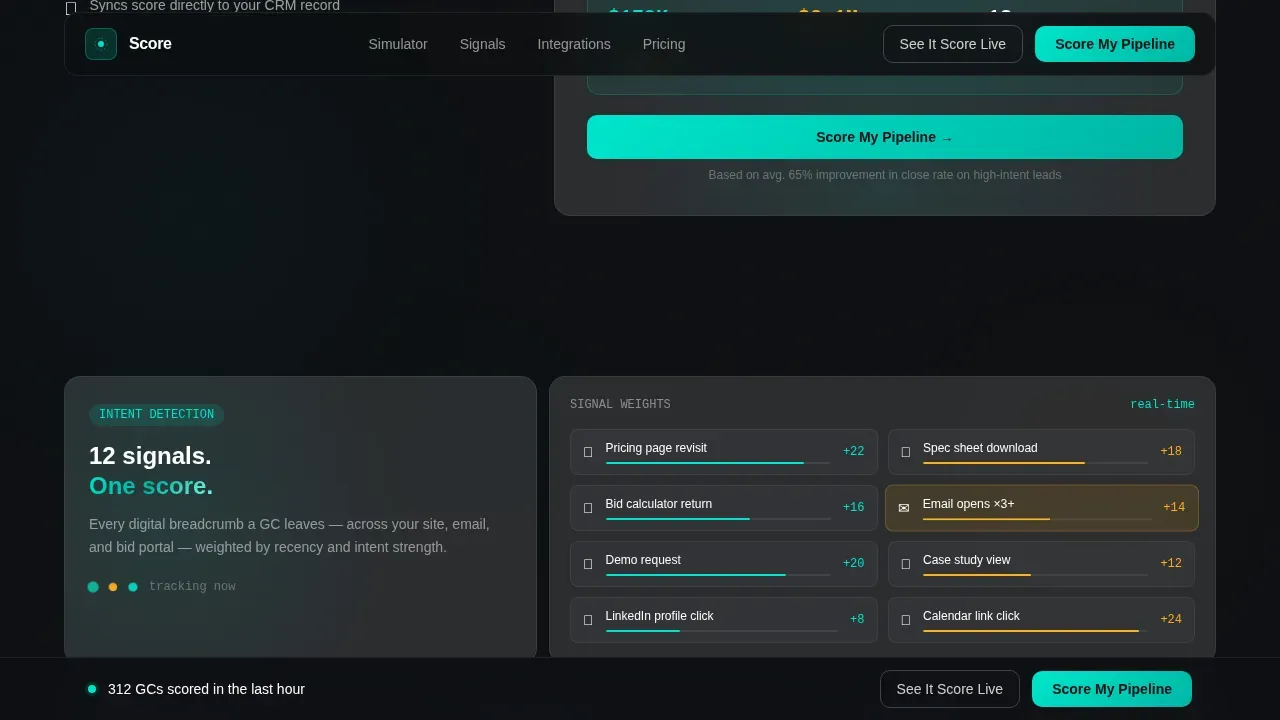
A dedicated scroll section unpacks intent signal detection across twelve tracked behavioral data points. Each card in the cluster contains a single animated diagram showing how the model reads engagement metrics like content downloads, webinar attendance, and page views. This section builds confidence in the scoring model without requiring paragraphs of explanation.
Behavioral Decay and CRM Sync Section
A separate bento cluster covers behavioral decay modeling and CRM integration. Lead scores automatically sync into the connected CRM system, triggering follow ups based on live performance criteria. This section visualizes how the AI powered lead scoring model stays accurate over time by continuously learning from new data.
Lead Capture Form with Persistent call to action Bar
The lead capture form collects company name, CRM platform selection, monthly lead volume range, and work email in that order. A "Score My Pipeline" primary call to action appears inside the simulator results card and again as a persistent bottom bar after the second scroll. A secondary path links to a three-minute recorded demo for prospects who need more context before committing.
Dark Glassmorphic Visual System
The entire template uses a Dynamic Motion design theme built on a glassmorphic color system. Scaffold black surfaces carry frosted translucent cards with luminous cyan and amber data elements floating on layered blur. Every glow in the design is earned by something moving underneath, giving the page the feel of a live construction jobsite control room.
Page sections overview
| Section | Purpose |
|---|---|
| Hero Dashboard Grid | Introduce the platform with live animated lead score cards |
| ROI Simulator | Let visitors calculate their own revenue recovery potential |
| Signal Detection Cluster | Visualize twelve tracked behavioral intent signals |
| CRM Integration Cluster | Show decay modeling and CRM sync capabilities |
| Lead Capture Form | Collect qualified company leads via "Score My Pipeline" call to action |
| Footer Bar | Persistent bottom call to action bar and secondary demo link |
Design & branding system
The visual identity follows a Dynamic Motion theme with a glassmorphic palette built for dark, data-heavy interfaces. Depth comes from layered blur rather than drop shadows, and every animation is tied to something meaningful in the data.
- Color palette: deep scaffold black (#0D0F12) as the base, frosted panel white at 12% opacity (#FFFFFF1F) for cards, active signal cyan (#00E5CC) for live data, and warning-grade amber (#FFB020) for high-priority lead indicators
- Typography: DM Sans for all headings and body text; JetBrains Mono for numerical data, scores, and pipeline metrics
- Motion style: continuous micro-animations including ticking counters, gently breathing cards, pulsing rings, and a score threshold line that visually crosses in real time
Mobile & speed optimization
The template is designed desktop-first to match how construction SaaS buyers typically evaluate tools at their workstations. A mobile-optimized and clutter-free layout ensures the page remains functional across devices without sacrificing the dense data presentation that makes it credible.
- GPU-accelerated CSS transforms keep animations smooth without degrading layout performance
- requestAnimationFrame is used for counter animations to maintain smooth, non-blocking number ticking
- Bento grid layout reflows cleanly for smaller viewports while preserving the visual hierarchy of score cards
How this template helps you convert
The page is structured around a single principle: let the simulator sell, then capture the lead. By the time a visitor reaches the form, they have already seen their own revenue numbers change.
- The hero dashboard immediately signals credibility. Visitors see leads being scored in real time, which builds trust in the AI powered system before a single word of copy is read.
- The ROI simulator creates personal investment. Dragging sliders and watching a personalized revenue recovery number render makes the value concrete and specific to each visitor's unique business needs.
- The persistent "Score My Pipeline" call to action reduces friction. Appearing after the second scroll, the bottom bar keeps the form submission path visible throughout the entire page experience without interrupting the content flow.
Other information about this template
The Score template is built to support an account-based marketing approach. It can align naturally with an ABM strategy where sales teams and marketing teams target the right accounts with the right message based on signals already captured in their tech stack.
- The scoring rules built into the simulator can be configured to reflect unique business needs such as job title weighting, company size thresholds, and technographic data signals
- The lead form order (company name first, CRM platform second, volume range third, email last) follows a low-commitment-first design principle that has been shown to improve form submission rates
- The page design accounts for company data variety, letting the model assign scores using both engagement metrics and non-engagement attributes like ideal customer profile match, company size, and industry vertical
- Teams that track webinar attendance, content downloads, and website visits alongside crm data get the most accurate picture of which leads are actually worth pursuing
- The template can support an automate lead qualification workflow where prospects are routed to sales reps within minutes of crossing a score threshold, removing low confidence contacts from the priority queue
- For teams running predictive models, real data from past closed deals trains the lead scoring model to identify patterns in prospects who convert, improving confidence level over time and reducing reliance on bad data or gut instinct
- The template's bento card structure is designed so individual panels can be updated to reflect unique business goals, new scoring rules, or changes in the ideal customer profile without redesigning the full layout
Theme
Dynamic Motion
Creative direction
Calculator/Tool First
Color system
Glassmorphic
Style
Bento Grid
Direction
Lead Generation
Page Sections
Live Animated Hero Dashboard
Interactive Revenue Recovery Simulator
Intent Signal Detection Bento Section
Behavioral Decay and CRM Sync Visualization
Persistent Score My Pipeline Call to Action
Dynamic Motion Glassmorphic Design System
Related questions
What type of business is this template designed for?
How does the ROI simulator work for visitors?
Can the lead capture form connect to a CRM system?
How does this template differ from a static lead form page?
Is this template desktop-first or mobile-first?