Advanced Software & SaaS Cost Estimator Website Template
This roadmap intelligent product planning roadmap landing page template is built for product teams who need clarity, not more complexity. It pairs an interactive calculator hero with escalating before-and-after comparison panels, a sticky call-to-action bar, and a pre-filled signup form. The result is a high-converting landing page that lets visitors experience the product roadmap tool before they ever read a headline.
by Rocket studio
Quick summary
This product roadmap template is a single-page, split-screen landing page designed for B2B SaaS product planning tools. It opens with a live calculator hero, moves through versus comparison panels, and closes with a pre-filled signup flow. Every section is built to show, not just tell, turning visitor interaction into genuine product confidence before the first click.
Who this template is for
Product managers, engineering leads, and CPOs need a landing page that speaks their language. This roadmap template is designed to convert technically minded buyers who judge tools by using them, not by reading about them.
- Product managers juggling priority chaos across scattered Slack threads and overloaded sprint backlogs.
- Engineering leads who need visible capacity data before committing to delivery dates.
- CPOs and product teams presenting quarterly plans to boards and key stakeholders who expect a coherent strategic plan.
What problem this template solves
Most landing pages for product roadmap tools rely on static screenshots and generic claims. The visitor leaves with the same uncertainty they arrived with. This template solves that by making the first interaction a working product experience.
- Priority chaos is real: product managers switch between six conversations before a single feature gets scoped, and the product roadmap never reflects the actual decisions made.
- Development teams lose trust in any roadmap based on a spreadsheet that was last updated two sprints ago.
- Key stakeholders, from internal stakeholders to external stakeholders, have mismatched expectations because no single source of truth exists.
What you get with this template
This is a fully structured, single-page landing page template built around an interactive hero section and a series of comparison panels. It includes every layout block needed to communicate product vision, demonstrate value, and drive signups.
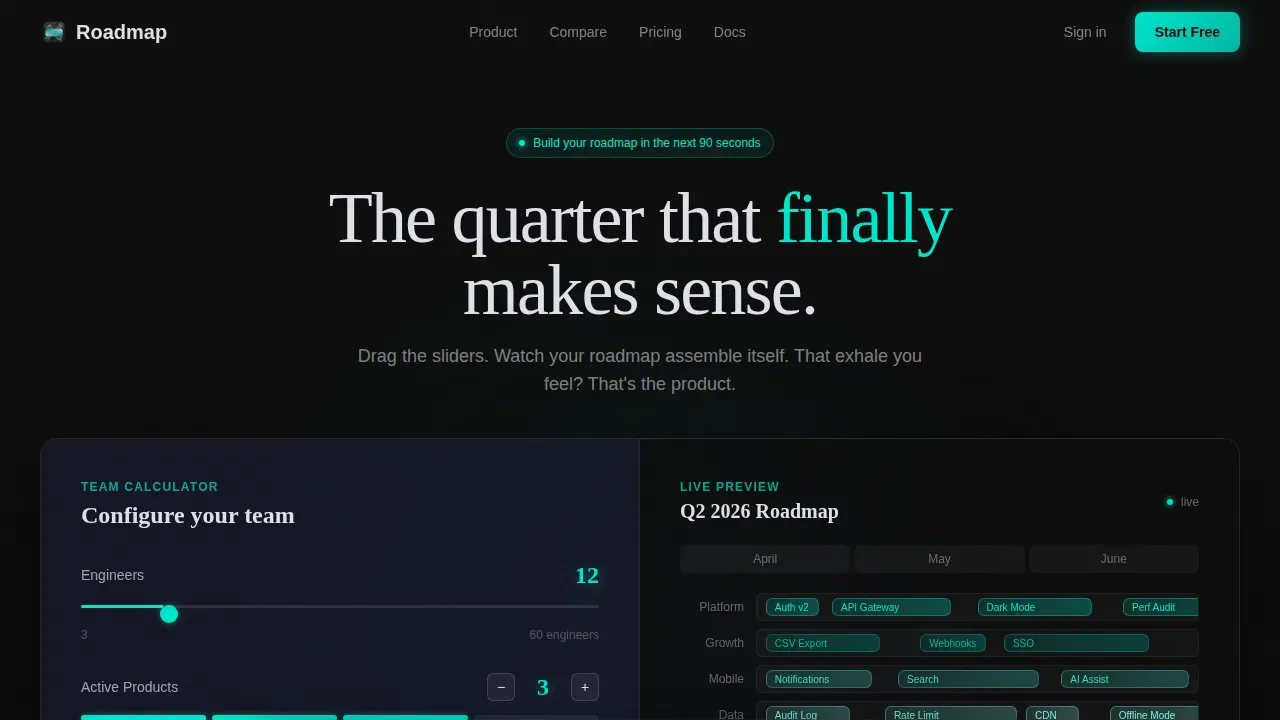
- A split-screen calculator hero where visitors configure team size, active products, and features shipped per quarter, while the right panel renders a live roadmap preview with swim lanes and dependency lines.
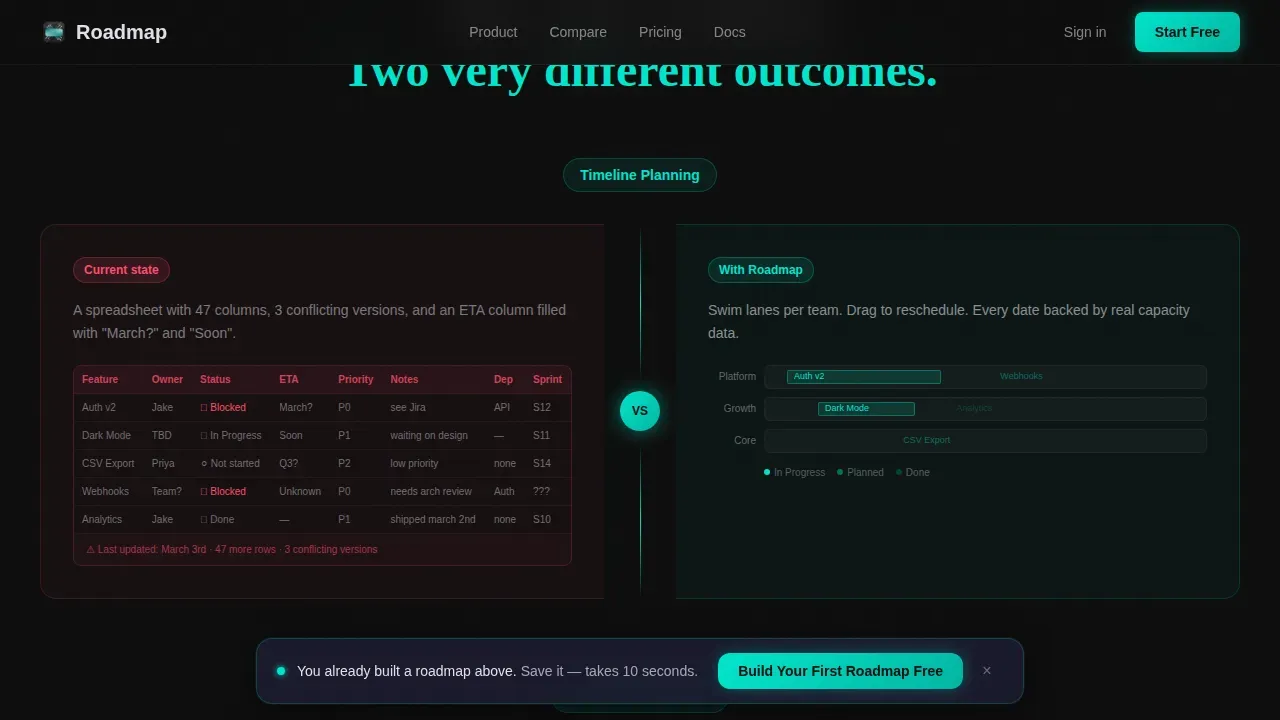
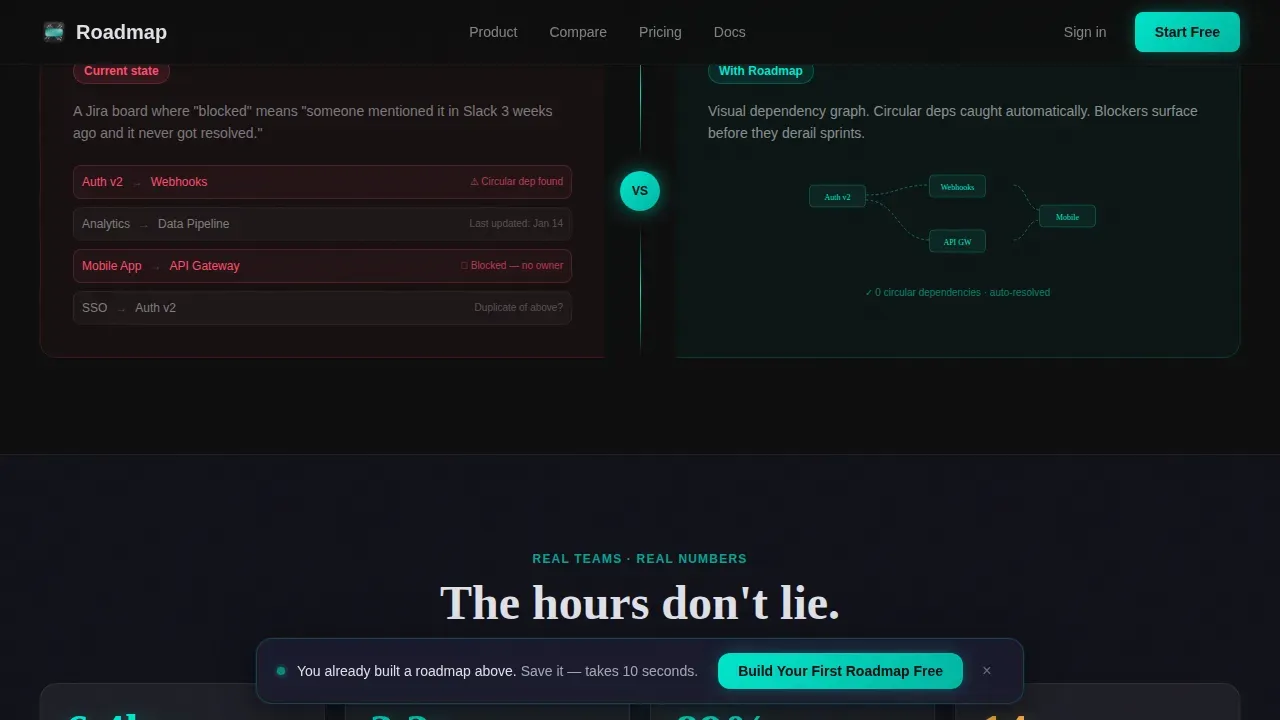
- Escalating before-and-after versus panels that move from simple timeline views through dependency mapping, stakeholder sharing, and roadmap versioning.
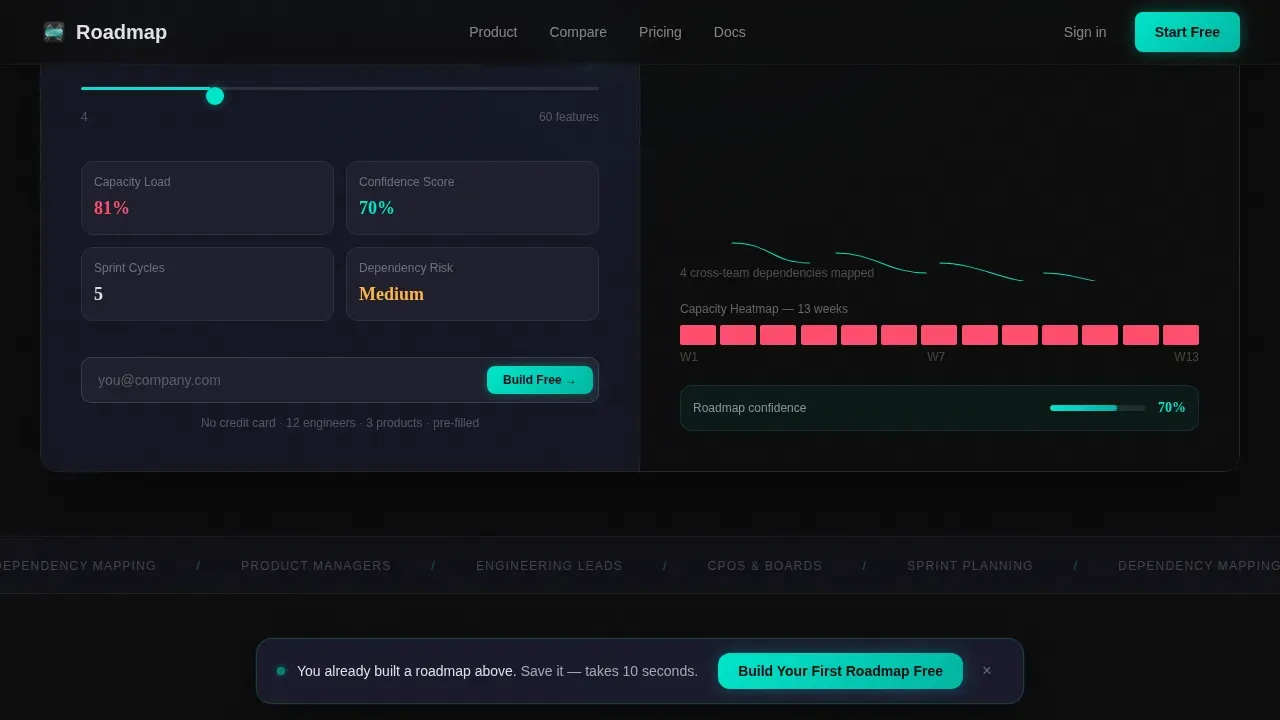
- A sticky glass call-to-action bar that activates after the calculator interaction, with a pre-filled signup form that uses data the visitor already entered.
Feature list
This product roadmap template ships with the following purpose-built sections and design features.
Interactive Calculator Hero
The left panel holds glass sliders and numeric steppers for team size, number of active products, and average features shipped per quarter. The right panel updates in real time: swim lanes populate, dependency lines draw themselves as dotted teal connectors, and a capacity heatmap shifts from green to amber as numbers climb. Visitors build their own complexity and watch the tool absorb it.
Escalating Versus Panels
Each comparison panel places the painful current state on the left, such as a Gantt chart last updated in March or a Jira board with 47 columns, and the clean tool view on the right. The panels escalate in complexity, moving from basic timeline views to dependency mapping to stakeholder sharing to roadmap versioning. This structure builds the case through side-by-side evidence rather than unsupported claims.
Stats Callout Sections
Single-column data callout blocks appear between versus panels. These sections surface concrete metrics: hours saved per week, meetings eliminated per sprint, and roadmap confidence scores from named team members at real-sounding companies. The format keeps product vision grounded in measurable outcomes rather than abstract promises.
Dynamic Tool Replacement Table
A secondary conversion path lets visitors select their current tool from a dropdown. The page renders a tailored comparison table showing exactly how this product roadmap template addresses the gaps in their existing workflow. This section keeps key objectives front and center for buyers who are actively evaluating alternatives.
Sticky Glass Call-to-Action Bar
After the calculator interaction, a frosted glass bar pins to the viewport. It carries the primary call-to-action and a pre-filled signup form. Because the calculator already captured work email and team size, the form fields arrive populated. The click feels like a continuation of the experience, not a new commitment.
Pre-filled Signup Form and Footer
The signup form asks only for work email and team size. Both values are carried forward from the calculator, reducing form friction to near zero. The footer follows a linear single-row pattern, staying minimal so the final scroll does not distract from conversion.
Page sections overview
| Section | Purpose |
|---|---|
| Calculator Hero | Live roadmap preview driven by visitor inputs |
| Versus Panel One | Timeline view before and after |
| Versus Panel Two | Dependency mapping comparison |
| Versus Panel Three | Stakeholder sharing comparison |
| Versus Panel Four | Roadmap versioning comparison |
| Stats Callout | Concrete metrics and team confidence scores |
| Tool Replacement | Dynamic comparison table by current tool |
| Sticky call to action Bar | Pre-filled signup after calculator interaction |
| Footer | Linear single-row navigation and links |
Design & branding system
The visual identity is built on a Tech Glass theme using a Carbon Fiber color system. The palette is engineered so color only appears when something matters, creating immediate visual focus on interactive and data-driven elements.
- Color system: Deep carbon black (#0D0D0D) for backgrounds, woven graphite (#1A1A2E) for layered surfaces, translucent panel gray (white at 6% opacity over dark) for frosted glass cards, electric teal (#00E5CC) for every interactive element and data highlight, and silver-white (#E0E0E8) for body text that feels etched rather than printed.
- Typography: DM Sans handles body copy and user interface labels for clean readability; Fraunces drives display headings for editorial weight and contrast against the dark background.
- Animation approach: High interactivity throughout, including slider-driven live updates in the calculator, dependency line drawing animations, scroll-linked section reveals, and a tool selector dropdown that triggers dynamic table content.
Mobile & speed optimization
This template is built desktop-first, reflecting the reality that product managers and CPOs do their planning work on large screens where roadmap complexity is visible at a glance. The layout priorities follow that audience.
- The split-screen 50/50 layout and the calculator hero are optimized for widescreen viewports, where the live roadmap preview panel has room to render swim lanes and heatmaps at full fidelity.
- Static sections such as the versus panels, stats callouts, and footer use server-rendered components to keep load weight low, while the calculator and dropdown interactions run as client components for responsive real-time updates.
How this template helps you convert
An effective landing page template for a product planning roadmap balances strategic vision with tactical features and timelines. This template earns conversion through interaction, not persuasion.
- The calculator hero turns every visitor into an active user before they read a single claim. By the time someone scrolls past it, they have already used the product, making the rest of the page feel like confirmation rather than sales copy.
- The escalating versus panels build a credible case through direct comparison. Each panel escalates complexity, so the visitor's own mental model of their current pain is reflected back at them alongside a concrete alternative, maintaining focus on the decision they are already considering.
- The pre-filled sticky signup form removes the final barrier. Work email and team size are already populated from the calculator, so the primary call-to-action feels like finishing what the visitor started rather than beginning something new.
Other information about this template
This template covers a wide range of product roadmap use cases. Understanding the full landscape of roadmap formats helps explain why the template is structured the way it is.
- A product roadmap is a strategic document that outlines the vision, direction, and progress of a product over time. There is no single format that fits every team, since appearance and depth vary based on strategic goals and audience.
- An agile product roadmap is a flexible plan that provides a high-level overview of product goals and adapts over time to reflect changes in priorities. This template supports an agile roadmap structure through its swim lane and dependency visualizations in the calculator preview.
- An outcome based roadmap shifts the focus from features shipped to measurable business impact. The stats callout sections in this template reflect that philosophy by surfacing metrics like user retention improvements and meetings eliminated rather than feature counts.
- A product launch roadmap provides a detailed plan for bringing a product to market, covering pre-launch through post-launch. The template's versus panels can illustrate product launch roadmap scenarios as one of the escalating comparison stages.
- A technology roadmap gives development teams and key stakeholders a shared view of infrastructure and capability milestones alongside product delivery. The swim lane preview in the calculator hero can represent a technology roadmap view for teams managing platform and product work in parallel.
- A multiple product roadmap template aggregates multiple products into a single high-level view. The calculator's "number of active products" input directly reflects this use case, letting visitors model complexity across multiple products before signing up.
- An agile product roadmap template built for product managers should incorporate stakeholder feedback, reflect customer insights from surveys and beta testing, and maintain flexibility for pivots when market conditions shift.
- A product roadmap presentation template is useful when CPOs need to keep key stakeholders and board members informed. This template's comparison panels and stats callouts can serve that narrative need directly.
- Using a product roadmap template can save time by standardizing the roadmap planning process across product teams, marketing teams, sales teams, and engineering leads, keeping everyone aligned on the product's strategic direction.
- The product development roadmap format covered by this template helps cross functional teams align initiatives, allocate resources effectively, and track progress against key milestones without relying on stale spreadsheets.
- Modern roadmap planning uses frameworks like RICE (Reach, Impact, Confidence, Ease) for dynamic prioritization, often supported by customer feedback drawn from support tickets, user stories, and market research.
- An intelligent product planning roadmap is a dynamic, data-driven strategic document that maps out a product's vision, direction, and priorities, often utilizing AI and real-time analytics to adapt to market changes. This template is designed to showcase exactly that kind of tool.
- Miro's product roadmap templates are one well-known reference point in this space. This template is built to help tools in the same category communicate their distinct value through interactive demonstration rather than static product screenshots.
- The template supports multiple product roadmaps within a single view, reflecting portfolio-level roadmap planning needs common in enterprise and mid-market software companies.
- Incorporating customer feedback into a product roadmap helps ensure that product features align with actual user needs. A feedback loop that connects customer insights to roadmap prioritization can lead to improved user satisfaction and help teams increase user retention over time.
- The product development process benefits from a living strategic document that is updated regularly to reflect market analysis, stakeholder feedback, and shifting business goals.
- Outlining key milestones in a roadmap template gives development teams and external partners a shared checkpoint structure that keeps project plans on track throughout the product development process.
- This template also supports efficient product development by making resource allocation visible in the calculator hero, helping engineering leads see capacity before committing to dates.
Theme
Tech Glass
Creative direction
Calculator/Tool First
Color system
Carbon Fiber
Style
Split Screen (50/50)
Direction
Comparison/Versus
Page Sections
Live Calculator Hero with Roadmap Preview
Escalating Before-and-after Versus Panels
Concrete Stats Callout Blocks
Dynamic Tool Replacement Comparison Table
Sticky Pre-filled Signup Form
Related questions
Who is this landing page template designed for?
Can this template support multiple product roadmap views?
How does the pre-filled signup form work?
What types of product roadmap formats does this template cover?
Is this template suitable for a product roadmap presentation template use case?