Elite Security Advisory Center Landing Page Template
Sentinel is a command-center security advisory landing page built for CISOs, IT directors, and startup CTOs who need one clear view of their threat landscape. The modular card grid layout surfaces vulnerability assessments, penetration test results, and compliance scorecards side by side. Hard benchmark numbers drive every scroll decision, and an interactive stack comparison tool earns the conversion before asking for a contact.
by Rocket studio
Quick summary
Sentinel is a single-page, card-grid security advisory landing page template built on a Dashboard Pro theme. It combines a blacked-out monitoring station aesthetic with stats-first storytelling to help security advisory teams communicate threats clearly and convert qualified prospects into booked briefings.
Who this template is for
Security leaders running lean programs need a page that speaks their language without decoration or delay. This template is purpose-built for that audience.
- CISOs at mid-market companies managing vulnerability programs with small teams
- IT directors in healthcare organizations juggling HIPAA audit plans and incident response obligations
- Startup CTOs who need to demonstrate SOC 2 readiness to close their first enterprise contract
What problem this template solves
Most security advisory pages bury the most important data behind generic hero images and vague copy. Visitors leave before they understand the risk gap. This template flips that pattern.
- Advisories that lead with hard numbers close the credibility gap faster than pages that lead with stock photography
- Security teams lose control of the narrative when prospects cannot see detection speed and remediation benchmarks upfront
- Organizations without a structured page struggle to communicate the cost of slow incident response to board-level stakeholders
What you get with this template
You get a fully structured, modular card grid landing page ready to customize and deploy for your security advisory platform. Every section has a clear job: inform, compare, and convert.
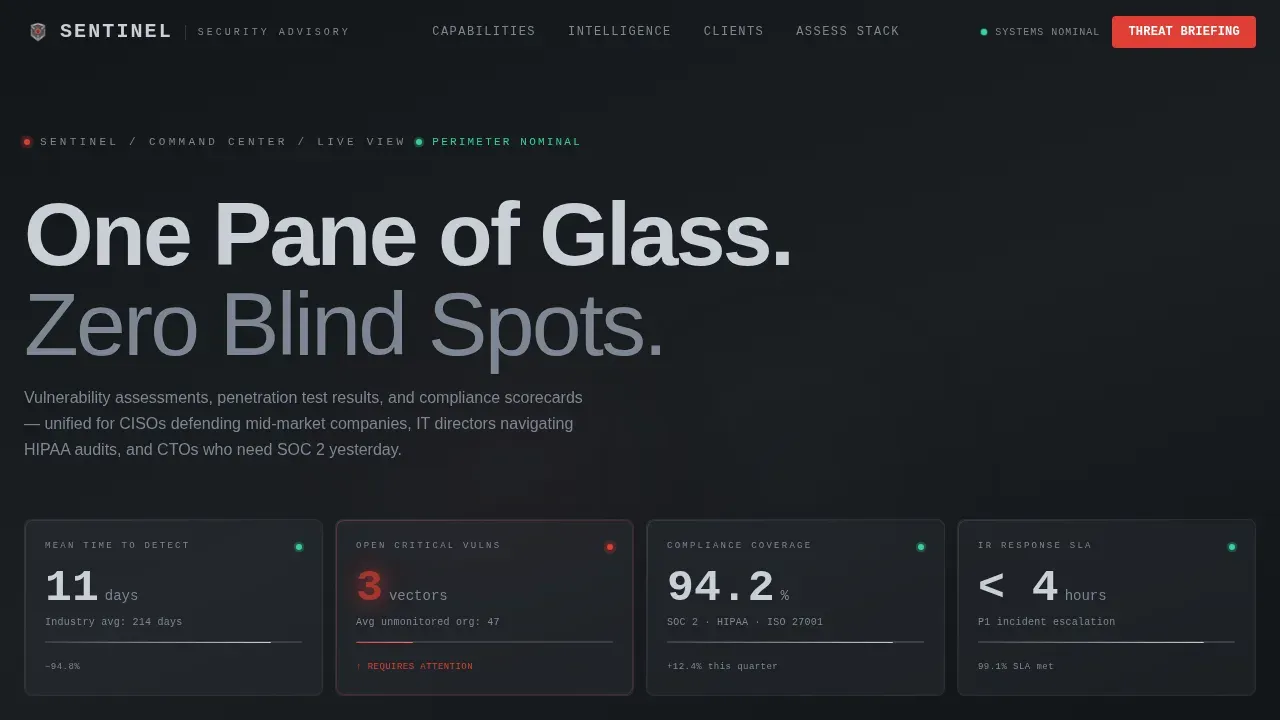
- A dark glass panel hero with live-styled security metric cards and threat-red pulsing alerts on the single worst indicator
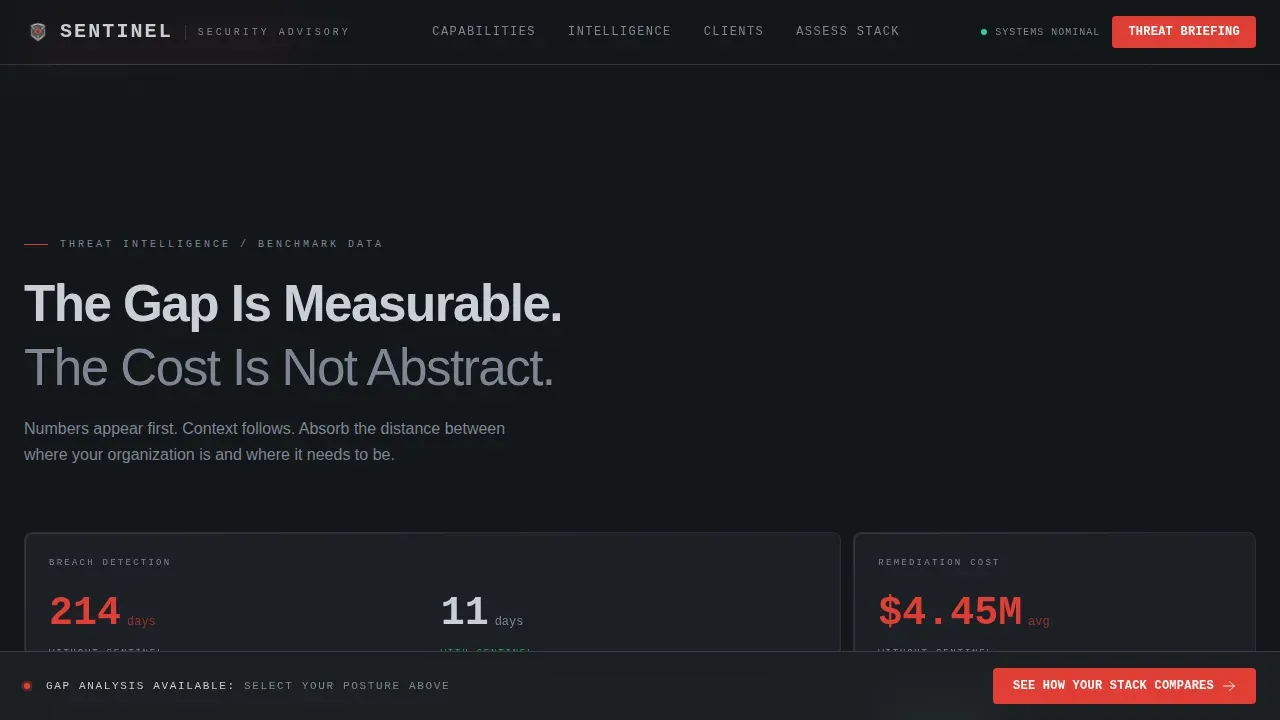
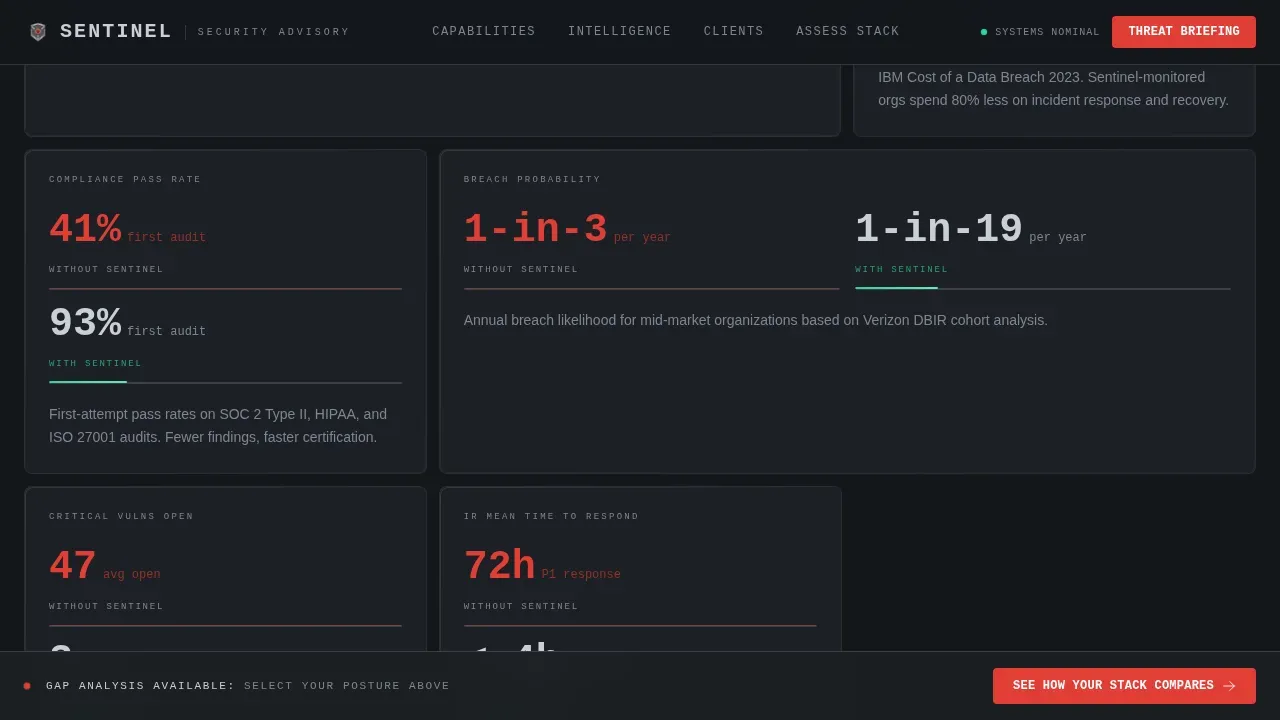
- A stats comparison section with side-by-side benchmarks showing detection speed, remediation cost, and compliance pass rates
- An interactive assessment tool that delivers a personalized gap analysis card before asking visitors to contact your team
Feature list
This template ships with six purpose-built sections that work together to defend your advisory brand and drive qualified response.
Dark Glass Panel Hero Grid
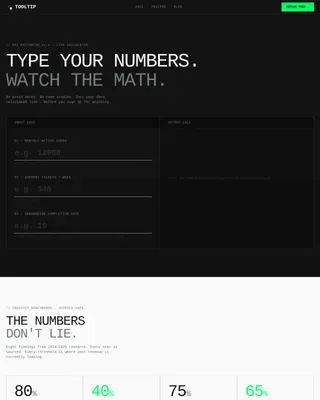
The hero section fills the viewport with semi-transparent card modules floating over a gunmetal background. Each panel displays a live-styled security metric: mean time to detect, open critical vulnerabilities, compliance coverage percentage, and incident response service level agreement status. Threat-red numerals pulse on the single worst metric. There is no hero image and no stock photography. The data is the visual.
Stats-First Comparison Section
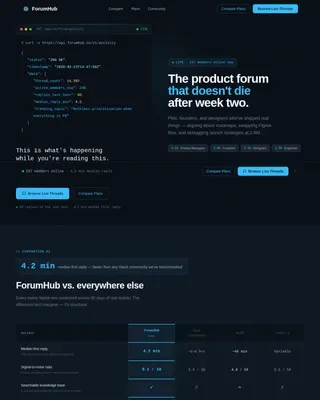
Side-by-side cards hit visitors with hard benchmark numbers before they reach any explanatory copy. The opening comparison reads 214 days average breach detection without advisory services versus 11 days with Sentinel monitoring. Subsequent card rows escalate through remediation cost, compliance pass rates, and breach likelihood. Some cards span two columns for flagship stats; supporting evidence clusters in groups of three to create a breathing, scannable grid.
Services Bento Card Grid
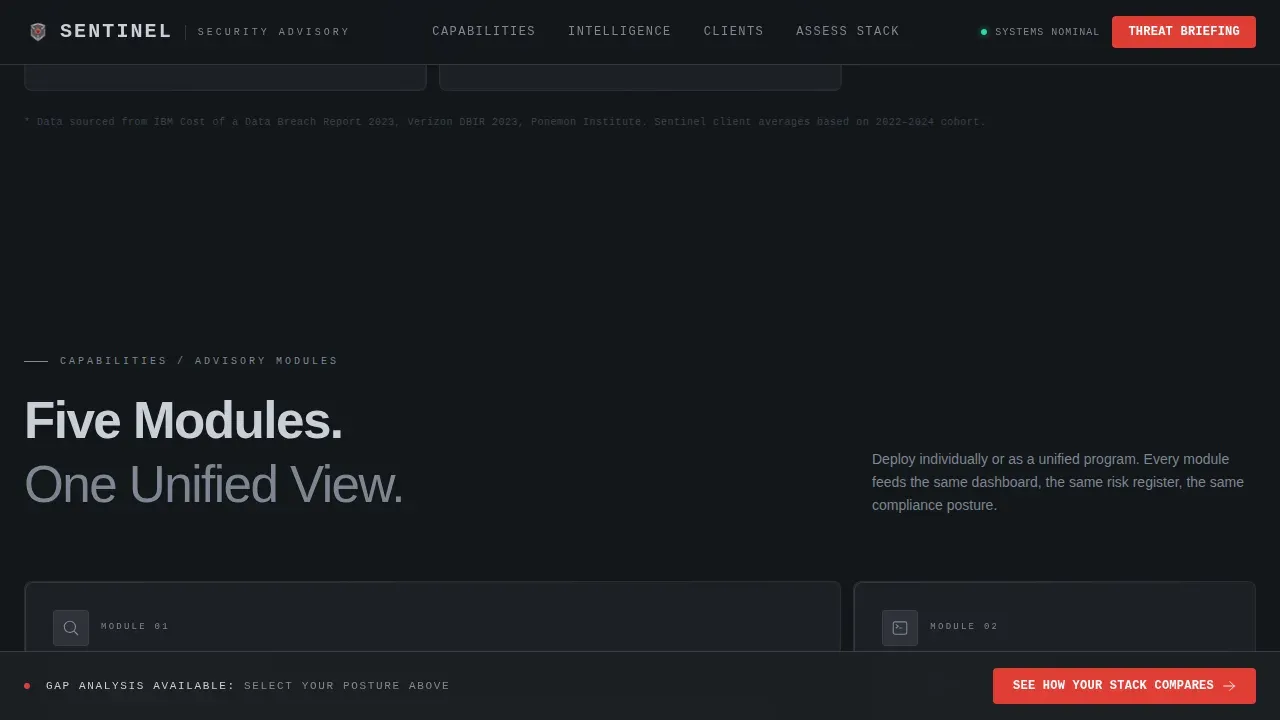
An asymmetric card grid covers the four core advisory capabilities: vulnerability assessment, penetration testing, compliance coverage, and incident response. Each card is modular and independently readable. Short paragraphs and bullet-style data points keep cognitive load low, so analysts and security leaders can sense the scope of services at a glance without reading wall-to-wall copy.
Interactive Stack Assessment Tool
A persistent bottom bar labeled "See How Your Stack Compares" anchors the page. Visitors select their current security posture and company size, then receive a personalized gap analysis card rendered in real time against Sentinel benchmarks. No email gate appears before the comparison. Value is delivered first. The primary call to action on the generated card reads "Request Your Threat Briefing," collecting name, organization, and biggest current concern in a three-field form.
Social Proof and Testimonial Cards
Metrics-first testimonial cards feature named CISO and IT director personas with company context. Compliance pass rate data and client logos function as trust signals, reinforcing the advisories with evidence-based references rather than generic praise.
Linear Single-Row Footer
A clean footer pattern keeps contact information accessible without visual clutter. It supports quick access to resources, plans, and the briefing request form so visitors can act at any scroll depth.
Page sections overview
| Section | Purpose |
|---|---|
| Dark Glass Hero | Surface live-styled security metric cards with pulsing threat-red alerts |
| Stats Comparison Grid | Show hard detection, remediation, and compliance benchmarks side by side |
| Services Bento Grid | Present vulnerability, pen testing, compliance, and incident response capabilities |
| Social Proof Cards | Reinforce advisories with CISO testimonials and compliance pass rate data |
| Assessment Tool | Deliver real-time gap analysis and capture the Threat Briefing contact |
| Linear Footer | Provide plans, resources, and contact access across all scroll depths |
Design & branding system
The visual identity follows the Monochrome Steel color system. Every design decision serves function over decoration, creating the feel of a hardened appliance racked in a cold aisle.
- Gunmetal base (#1B1F23), brushed steel mid-tone (#3A3F47), cold silver text (#C9CED6), and threat-red accent (#E03E36) reserved for interactive elements and critical alerts
- JetBrains Mono for all data and number rendering; DM Sans for body copy and headings to separate data from narrative clearly
- High-animation layer includes pulsing red indicators on critical incidents, staggered card reveals, animated metric bars, and shimmer effects on loading states
Mobile & speed optimization
The template is desktop-first, matching the primary workstation environment of CISOs and IT directors. A mobile fallback ensures incident responders can access advisories on any device, consistent with best practices for security advisory page accessibility.
- Static sections use server-rendered components for fast initial paint across all systems
- The interactive assessment tool uses client-side components to handle real-time gap analysis card rendering without blocking the rest of the page
- Card grid layout reflows cleanly on smaller viewports so alerts and compliance data remain readable on mobile screens
How this template helps you convert
The page is engineered around a Comparison/Versus conversion strategy. Every section earns the next scroll before asking for a response.
- Hard benchmark numbers in the hero and stats grid force visitors to absorb the detection and remediation gap before they understand why it exists, reducing time to value realization and increasing the likelihood they contact your team.
- The no-gate interactive assessment delivers a personalized gap analysis first, then presents "Request Your Threat Briefing" as a natural next step, making the three-field form feel earned rather than extracted.
- Metrics-first social proof and compliance badge references create the trust signals needed to secure the final click, especially for risk-conscious buyers in regulated industries.
Other information about this template
This template is designed to work alongside established security platform references and modern advisory practices. Teams exploring how to position their advisory services relative to well-known platforms will find the structure straightforward to adapt.
- Microsoft Sentinel is a widely referenced cloud security platform that unifies a cloud-native SIEM, a unified data lake, and intelligent reasoning tools to help analysts anticipate and respond to cyber threats across multicloud systems. Microsoft Sentinel integrates with more than 350 solutions through connectors supported by Microsoft and third-party partners, making it a common reference point for organizations evaluating advisory technology.
- Microsoft Sentinel delivers built-in SIEM, SOAR, User and Entity Behavior Analytics (UEBA), and Threat Intelligence (TI) capabilities to detect, investigate, and respond to incidents efficiently. Microsoft Defender XDR extends that coverage by unifying prevention, detection, and response across endpoints, identities, email, and applications.
- Teams building advisories around Microsoft infrastructure can use this template to explore how to present data from those systems in a client-facing format, customize the card grid for their specific services, and create a consistent visual identity across all client-facing plans.
- The combination of well-structured advisories and automation creates a resilient security posture. This template supports that goal by providing pre built templates for the most common advisory page patterns, including Executive Summary and Threat Score, Real-Time Alert Stream, and Actionable Intelligence and Recommendations sections.
- Organizations producing a white paper or detailed guidance document alongside their advisory page can reference this template's layout as a companion to long-form resources, keeping visual and structural references consistent across formats.
- Advanced analytics and operational efficiency are growing priorities for security teams at scale. The template's modular card grid makes it straightforward to surface advanced analytics data, adapt adoption-stage messaging, and expand services coverage as the program grows.
Theme
Dashboard Pro
Creative direction
Stats-First Impact
Color system
Monochrome Steel
Style
Card Grid (Modular)
Direction
Comparison/Versus
Page Sections
Dark Glass Panel Hero with Live Metrics
Stats-first Benchmark Comparison Grid
Services Bento Card Grid
Interactive Stack Assessment Tool
Metrics-first Social Proof Cards
Monochrome Steel Design System
Related questions
What types of security teams is this template best suited for?
Can I customize the card grid layout and metric panels?
Does the template include an incident response plan framework?
How does the interactive assessment tool work?
Is the template appropriate for regulated industries like healthcare?