Vintage Fashion Blog Website Template
Curate is a full-width immersive vintage lifestyle landing page built for thrift-obsessed shoppers, collectors, and nostalgic gift-givers. It combines a shoppable marketplace grid with editorial storytelling, drawing visitors through an Unboxing Experience scroll flow. A Ruby and Chrome color system and a portrait hero header make every visit feel like discovering something rare at an estate sale.
by Rocket studio
Quick summary
Curate is a single-page immersive landing page for a vintage lifestyle marketplace. It blends editorial narrative with shoppable grids in a rolling Unboxing Experience scroll. Visitors move from a full-viewport portrait hero through layered category reveals, storytelling spreads, and three conversion paths, all wrapped in a warm Ruby and Chrome visual identity.
Who this template is for
This template is built for people who sell vintage goods with a story, not just a price tag. It suits curators and small sellers who need a page that feels as considered as the pieces they offer.
- Vintage lifestyle bloggers who want a shoppable editorial presence
- Independent sellers and consignment curators listing mid-century and antique goods
- Nostalgic gift shop owners showcasing collectibles, accessories, and homewares
What problem this template solves
Most marketplace templates look like inventory databases. They show items but never build desire. Curate solves the gap between browsing and wanting by wrapping each product category inside a narrative layer that earns trust before asking for a click.
- Visitors leave generic grids because there is no emotional hook to keep scrolling
- Sellers lose buyer confidence when provenance and story are absent from the page
- Generic templates cannot balance shoppable grids with editorial depth in a single scroll
What you get with this template
You get a complete single-page layout that guides visitors from first impression to checkout consideration across multiple scroll depths. Every section has a defined role in building desire, offering a product, or inviting a longer relationship.
- A full-viewport portrait hero with editorial headline typography
- A layered scroll architecture that alternates product grids with storytelling spreads
- Three conversion paths covering direct purchase, email sign-up, and seller consignment
Feature list
This template is designed with a clear hierarchy of visual and functional decisions. Each feature serves the Unboxing Experience rhythm and the Marketplace Grid theme simultaneously.
Portrait Hero with Editorial Headline
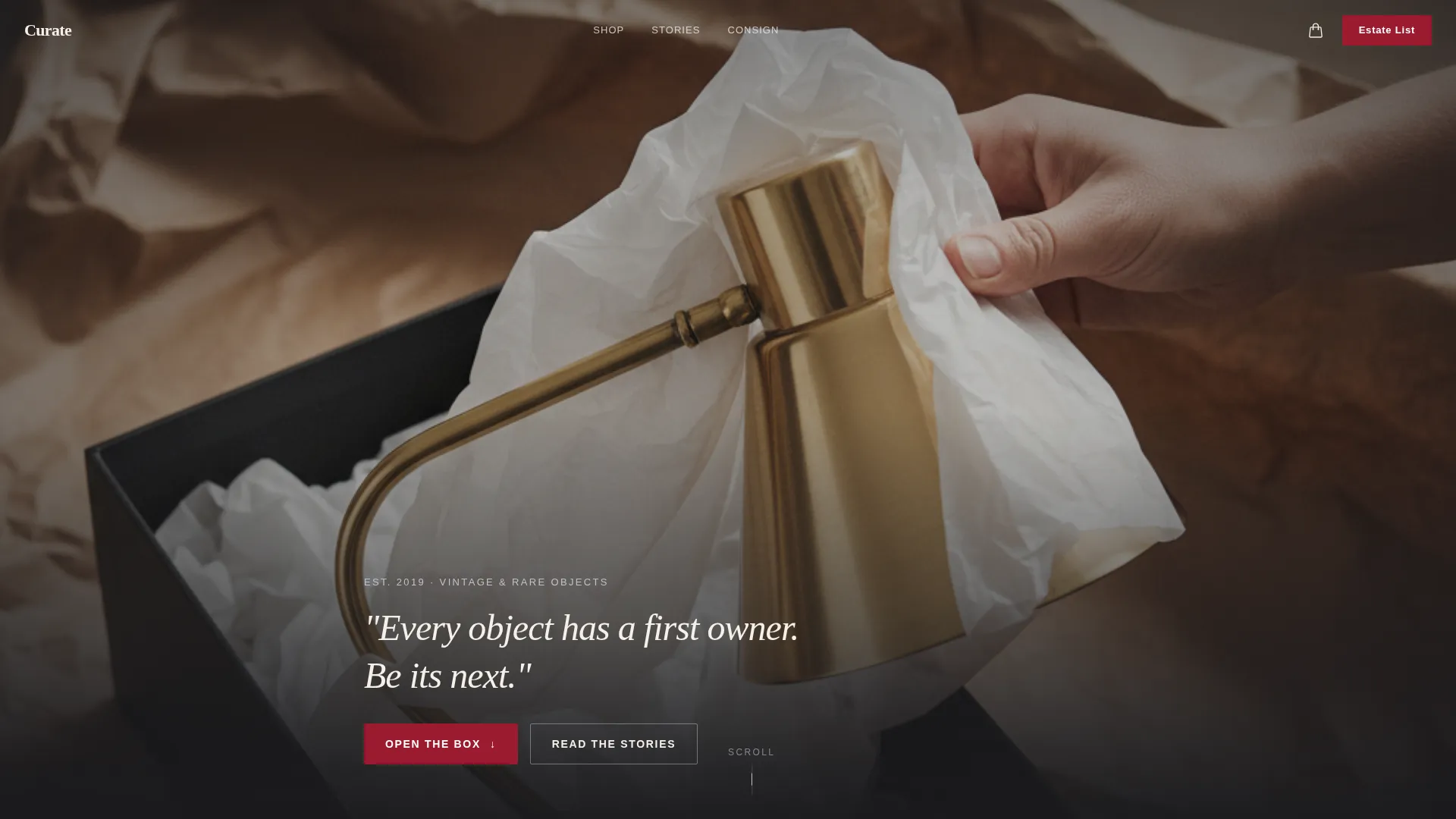
The header fills the full viewport in a vertical portrait orientation. A soft directional overhead shot of hands unwrapping a brass Art Deco desk lamp sets the scene. A single serif headline fades in at the base: "Every object has a first owner. Be its next."
Layered Unboxing Scroll Flow
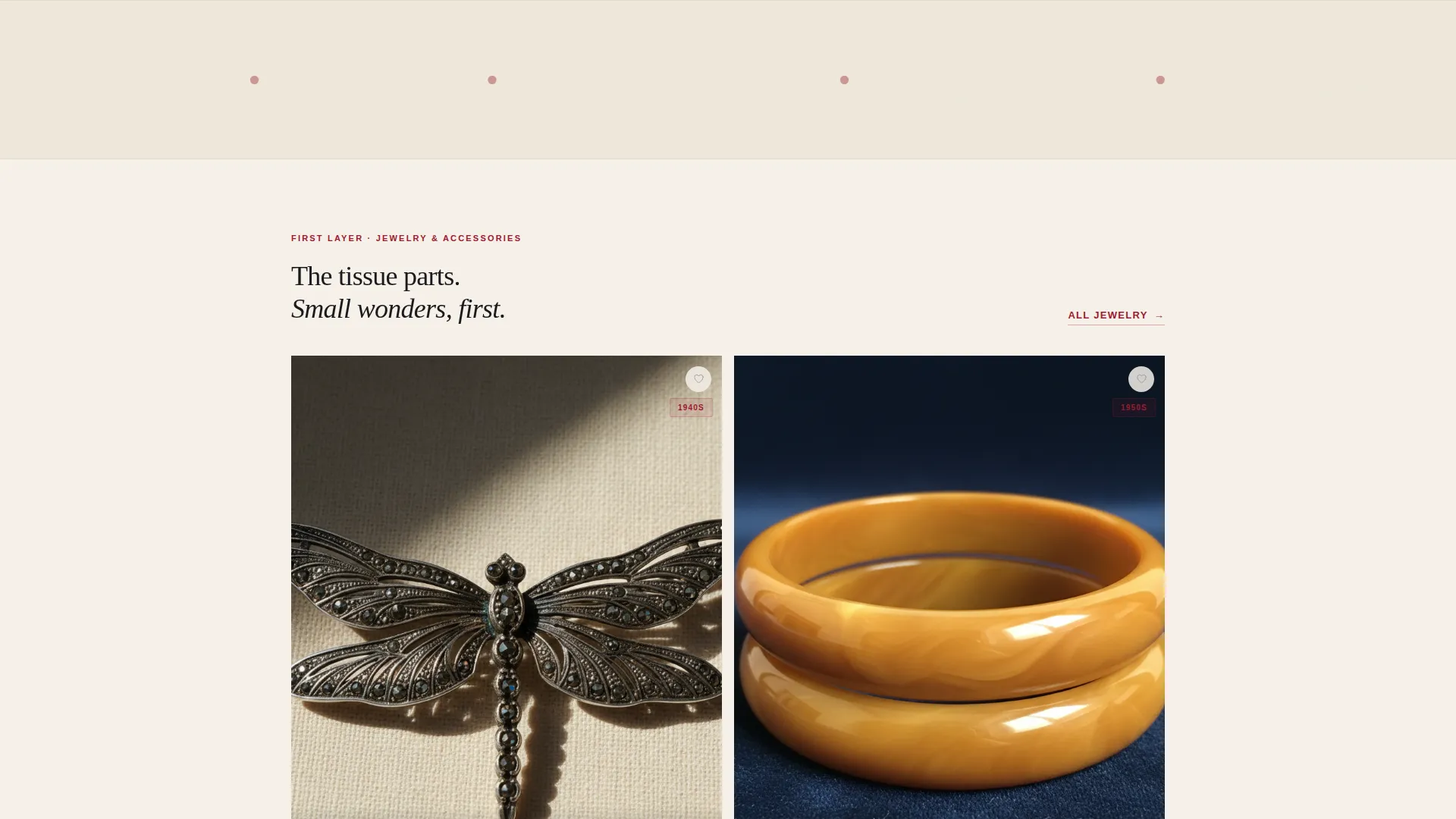
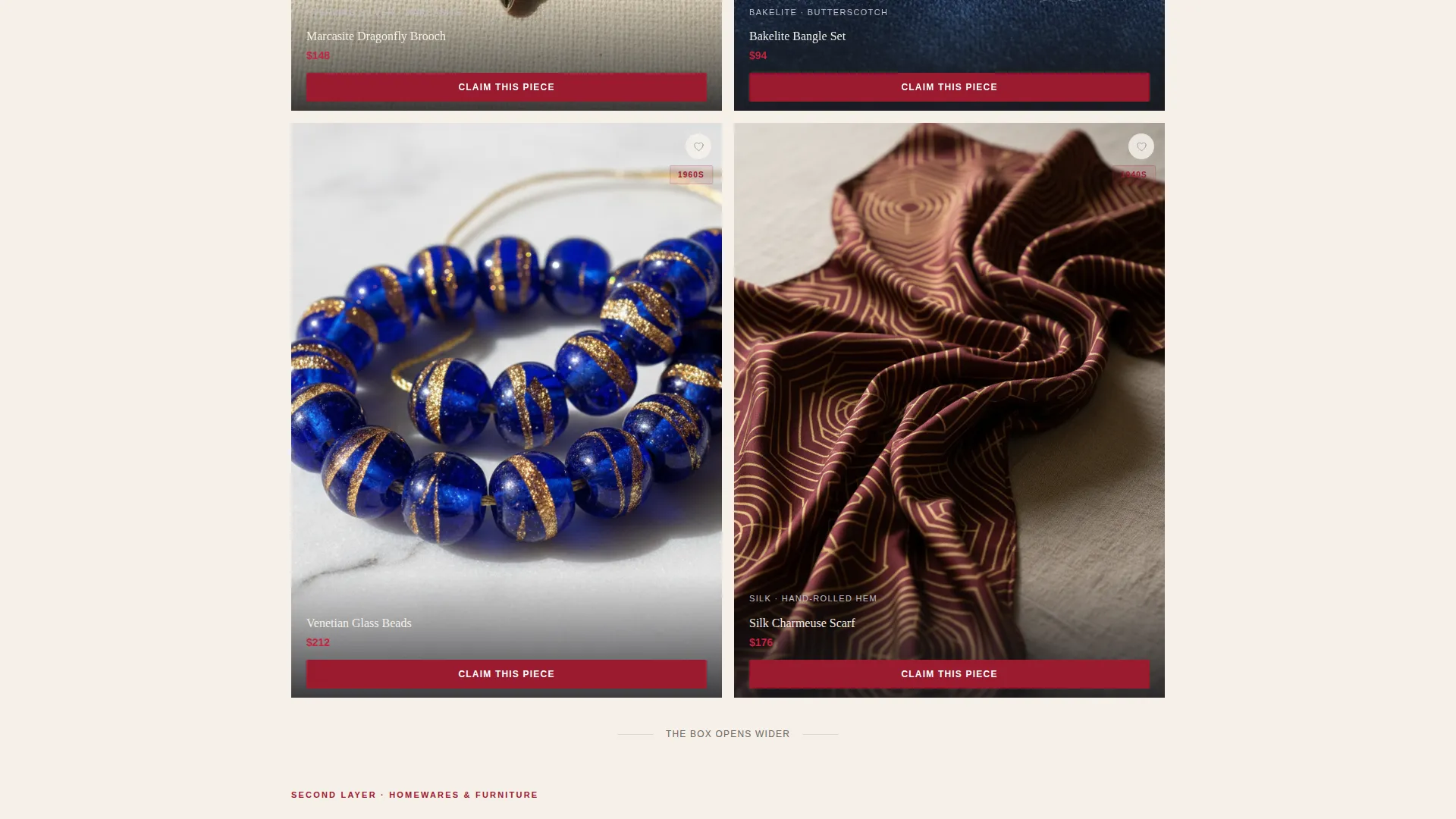
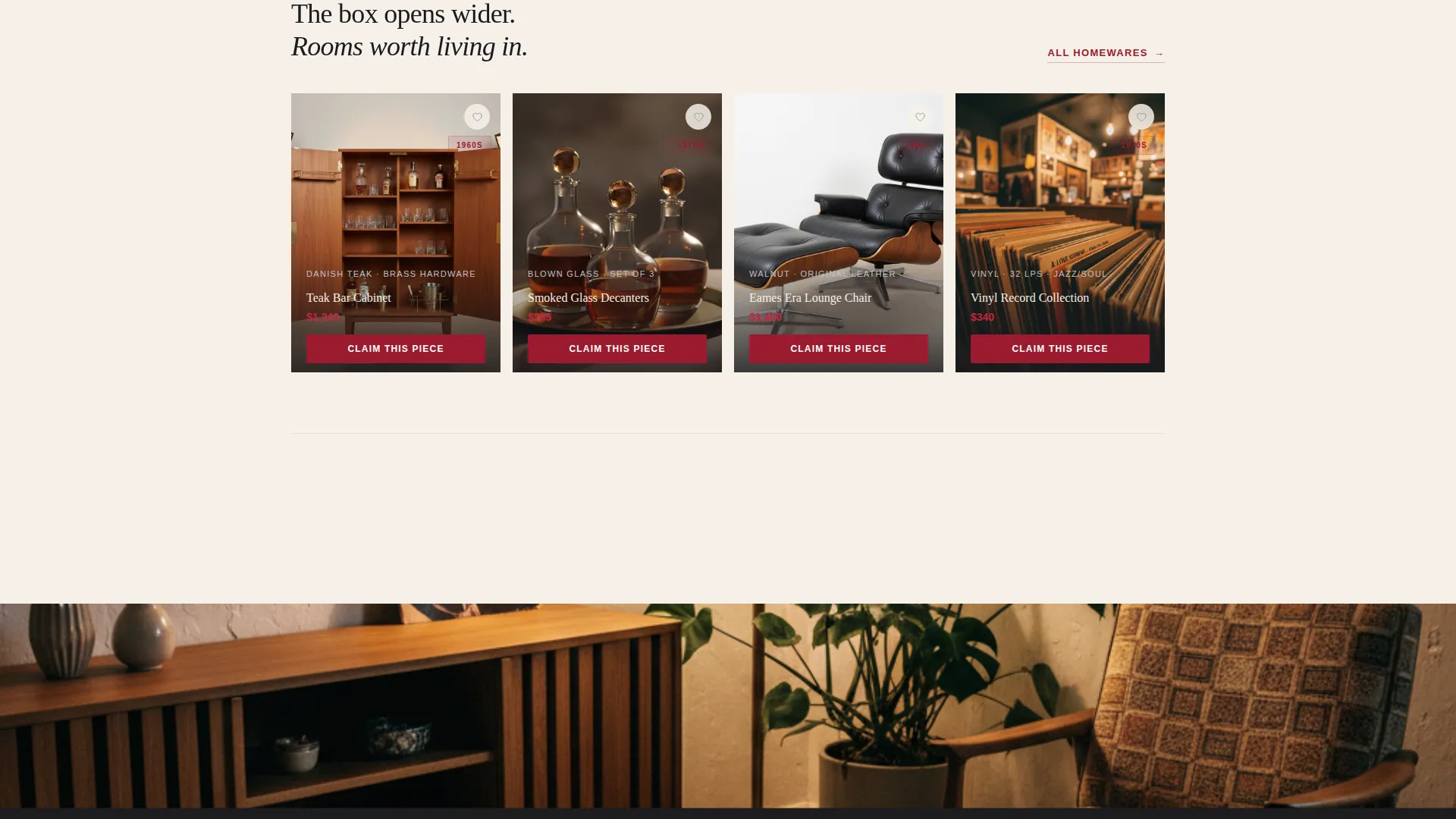
The scroll architecture unfolds like successive layers of packaging. Jewelry and accessories appear first in a tight two-column macro grid. Homewares and furniture expand the grid to four columns. Deeper sections open into full-bleed editorial spreads with room scenes and collector interviews.
Shoppable Marketplace Grid
Every product grid is built for browsing and buying. The primary call to action on each item reads "Claim This Piece." Clicking animates the item shrinking into a velvet pouch icon that travels to the navigation bar, confirming the add-to-cart interaction visually.
Estate List Email Sign-Up
After the first editorial section, a secondary conversion path invites visitors to join a weekly email drop of new arrivals. The sign-up requires only a first name and an email address, keeping the barrier low at the moment trust is warmest.
Consign Your Collection Form
A tertiary seller path lives in the footer. It presents a three-field form asking for a name, a photo upload, and a decade-era dropdown selector. This gives collectors and estate sellers a direct route to submit their pieces without leaving the page.
Ruby and Chrome Interactive States
Every interactive moment uses deep jewel ruby for hover states, price tags, buttons, heart icons, and cart badges. Polished chrome silver handles dividers and icon strokes. The combination keeps the grid feeling curated rather than cluttered.
Page sections overview
| Section | Purpose |
|---|---|
| Portrait Hero Header | Sets immersive editorial tone and introduces the brand headline |
| Jewelry Macro Grid | Opens the Unboxing scroll with accessories in a tight two-column layout |
| Estate List Sign-Up | Captures email leads after the first storytelling moment |
| Homewares Grid Expansion | Widens the grid to four columns as the unboxing deepens |
| Editorial Spread One | Full-bleed styled room scene breaking the sell rhythm |
| Collector Interview Section | Provenance storytelling rewarding visitors mid-scroll |
| Full-Bleed Editorial Spread | Final paper-falls-away moment before the footer conversion |
| Consign Footer Form | Three-field seller submission form closing the page |
Design & branding system
The Ruby and Chrome color system draws from the visual language of a 1940s department store cosmetics counter. Every tone has a specific role, and no color is used arbitrarily.
- Deep jewel ruby (#9B1B30) activates on hover states, price tags, buttons, hearts, and cart badges
- Polished chrome silver (#C0C0C8) defines dividers and icon strokes across the grid architecture
- Aged parchment (#F5F0E8) fills page backgrounds, and near-black lacquer (#1A1A1D) anchors all headline type and navigation
Mobile & speed optimization
The portrait header orientation is a deliberate mobile-first decision. Vertical framing means the unwrapping scene fills the screen naturally for visitors browsing on a phone, without cropping or repositioning the subject.
- The grid columns scale from two to four as viewport width allows, keeping the layout coherent at every screen size
- Scroll-triggered reveals and the cart animation are designed to work within the single-page structure without requiring external dependencies
How this template helps you convert
The page earns commitment by letting visitors explore freely before presenting any ask. The three conversion paths are sequenced by trust level, so each one reaches the visitor at the right emotional moment.
- The "Claim This Piece" interaction on product grids captures purchase intent with a tactile animation that confirms the action and encourages continued browsing
- The "Join the Estate List" sign-up appears after the first editorial section, when visitors have already been rewarded with narrative and are most receptive to a low-commitment offer
- The "Consign Your Collection" footer form opens a seller pipeline without disrupting the buyer experience, turning the page into a two-sided marketplace entry point
Other information about this template
Curate sits at the intersection of vintage fashion, vintage lifestyle blogging, and a curated marketplace experience. It is a full-width immersive layout built on the Marketplace Grid theme with a Ruby and Chrome color system and an Unboxing Experience creative direction. The page style is single-page and section-led, making it a landing page rather than a multi-page website. The Fashion and Lifestyle category context means the template suits vintage fashion sellers, lifestyle curators, and estate-style gift markets equally well.
- The template style is Full-Width Immersive with a Marketplace Grid theme
- The header concept is Vertical/Portrait, optimized for mobile-first estate-sale storytelling
- The conversion model is Marketplace/Multi, supporting buyer, subscriber, and seller paths from one page
Theme
Marketplace Grid
Creative direction
Unboxing Experience
Color system
Ruby & Chrome
Style
Full-Width Immersive
Direction
Marketplace/Multi
Page Sections
Portrait Hero with Editorial Headline
Layered Unboxing Scroll Flow
Shoppable Marketplace Grid
Estate List Email Sign-up
Consign Your Collection Footer Form
Ruby and Chrome Interaction System
Related questions
Can I use this template for a vintage fashion shop only, without the blog content?
Does the "Claim This Piece" button connect to a real shopping cart?
What types of vintage goods does this template suit best?
Is this template suitable for a seller who wants to accept consignments?
How does the estate email sign-up section work?