Parallel Test 3
Dialectic is a philosophy tutoring landing page built for undergraduate students who need expert guidance before a deadline hits. It pairs animated credibility metrics with real tutor profiles in a zigzag layout, guiding visitors toward a three-field lead generation form. The Slate and Sky color system keeps the design serious, academic, and conversion-ready.
by Rocket studio
Quick summary
Dialectic is a single-page tutoring landing page template designed for philosophy homework help services. It opens with animated stats counters, introduces PhD tutors through alternating profile sections, and drives sign-ups through a focused lead generation form. The design feels like a seminar room: serious, warm, and built entirely around earning student trust.
Who this template is for
This template is perfect for philosophy tutoring services that want a professional online presence without building from scratch. It suits solo tutors, small tutoring teams, and EdTech operators targeting undergraduate students.
- Philosophy PhD tutors launching an online tutoring service
- Academic support platforms covering ethics, epistemology, and political philosophy subjects
- EdTech founders building a lead generation site for tutoring pages
What problem this template solves
Students often struggle with writing, understanding, or articulating complex, abstract ideas. A generic tutoring website design fails to communicate the specialist depth these students need. This template solves that problem directly.
- It positions tutors as genuine scholars, not faceless service providers
- It shows subjects covered and real case studies so visitors know help is relevant
- It replaces vague promises with specific, trust-building proof points
What you get with this template
You get a fully structured landing page with every section ready to customize. The template covers the complete student journey from first impression to form submission.
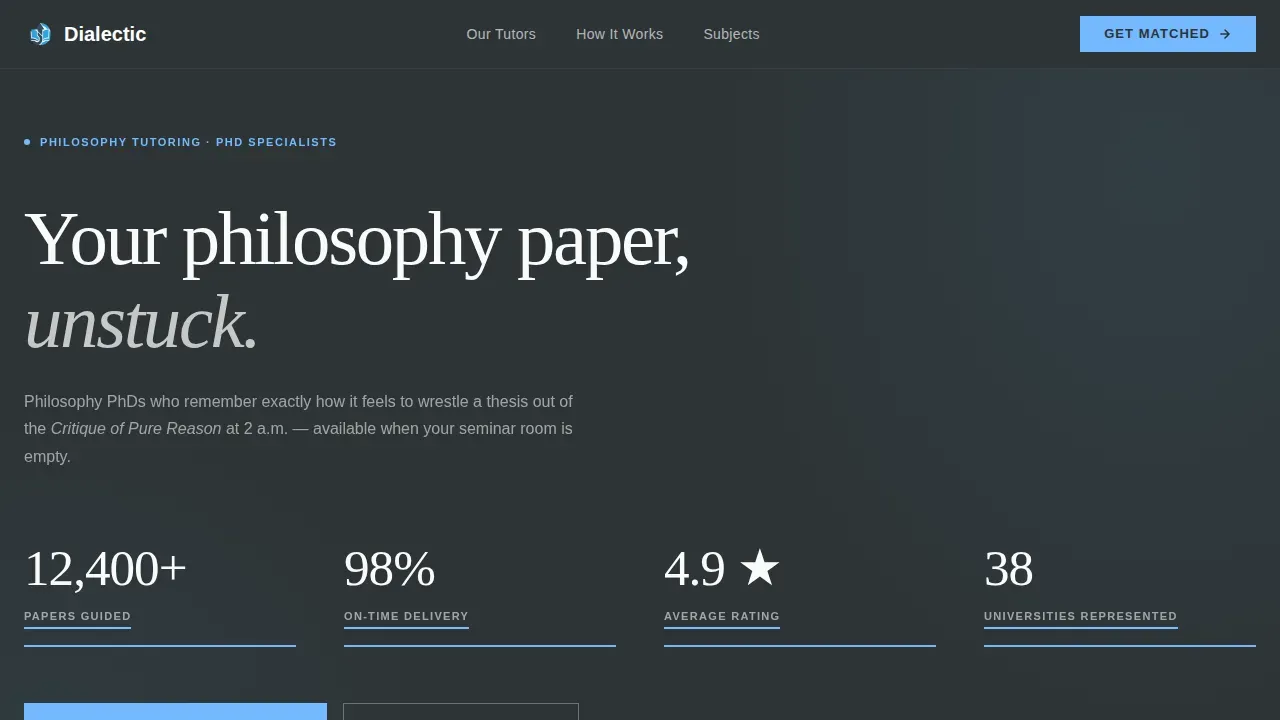
- Animated stats counters in the hero section with four credibility metrics
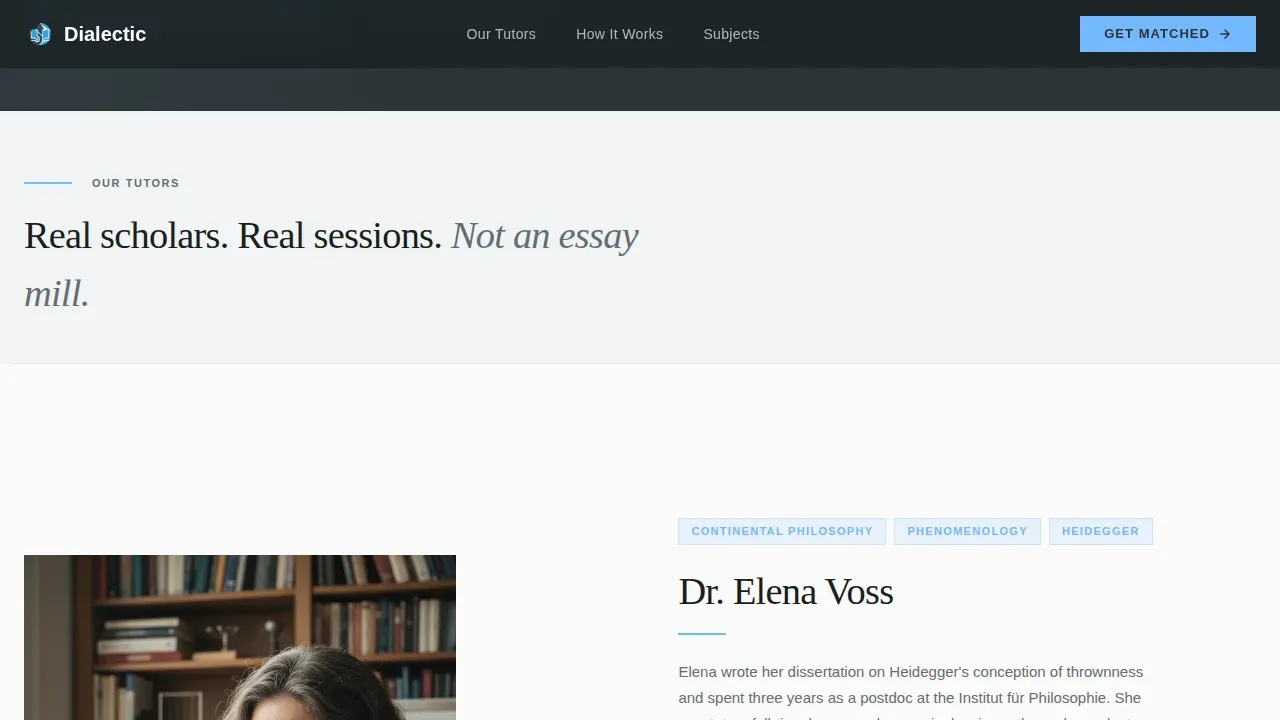
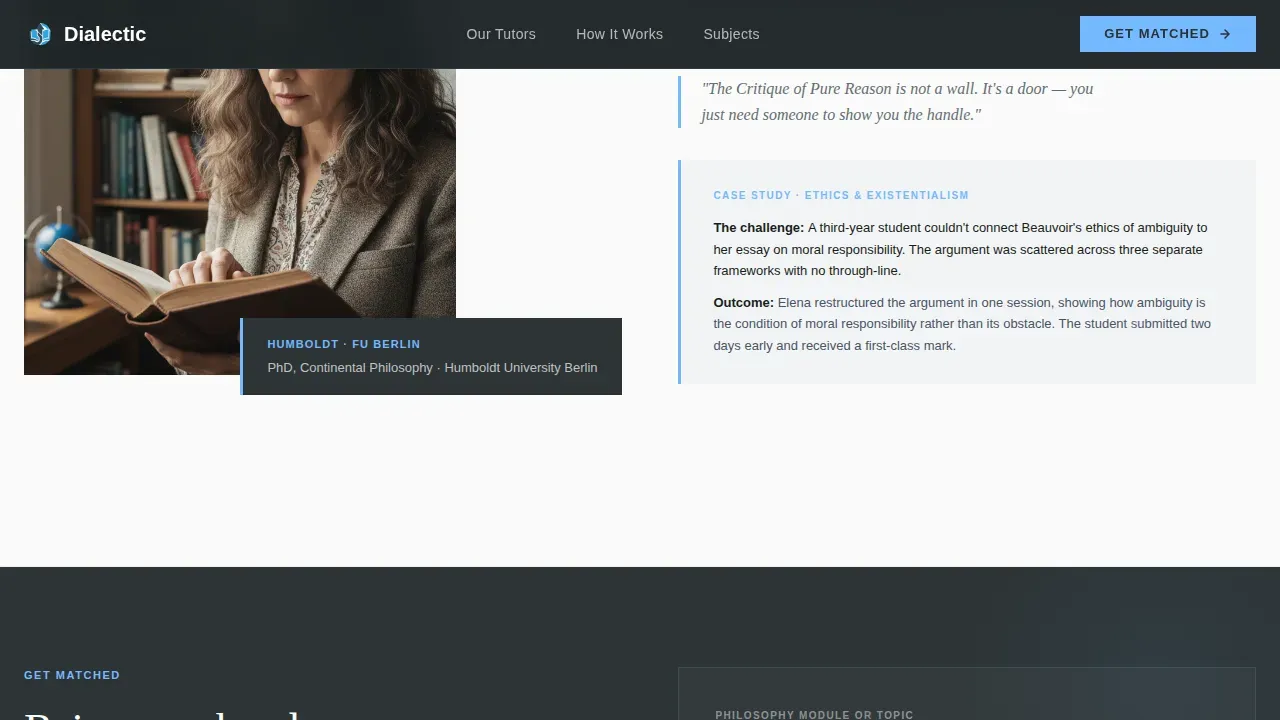
- Three zigzag tutor profile sections, each pairing a portrait with a real case study
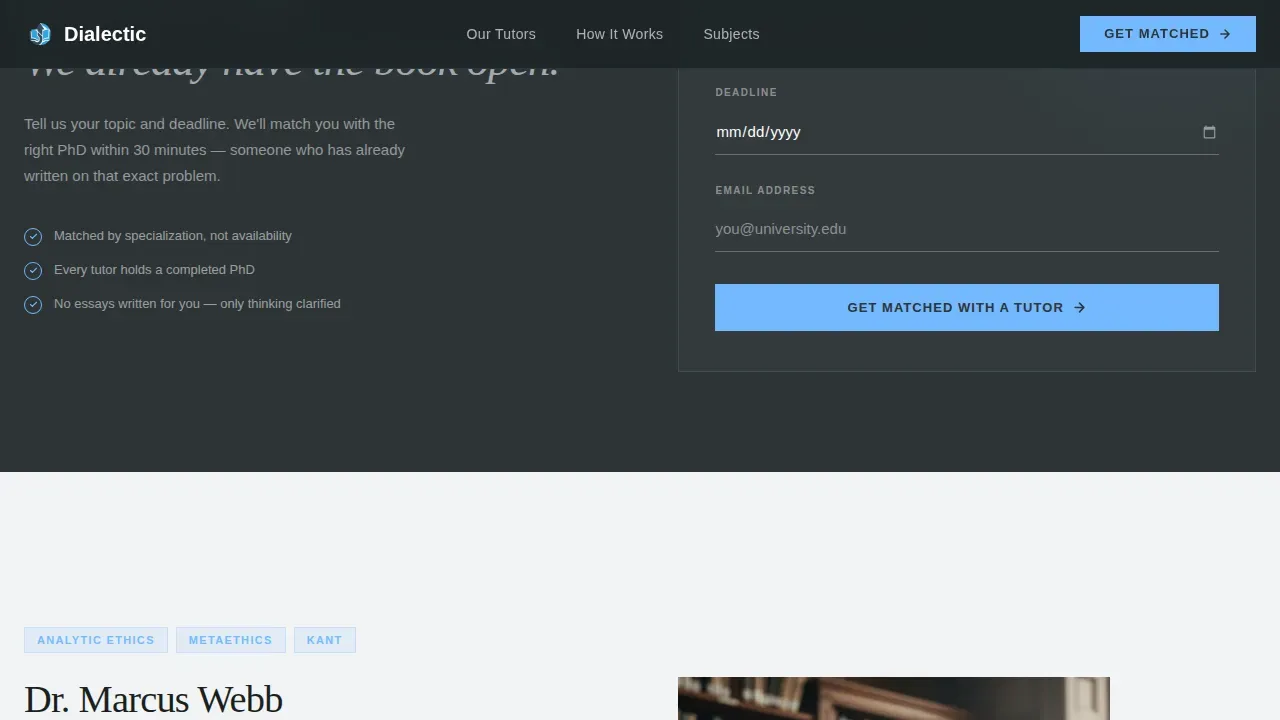
- A three-field lead generation form and a secondary free Outline Review conversion path
Feature list
This template ships with purpose-built components drawn directly from the project brief. Each one supports the core goal of converting anxious students into booked tutoring sessions.
Animated Stats Hero Section
Four large counters tick upward on scroll using Intersection Observer animation. The metrics cover papers guided, on-time delivery rate, average star rating, and tutor university affiliations. This section does the persuading before a single word of copy is read.
Zigzag Tutor Profile Layout
Each tutor section alternates image and text panels in a left-right rhythm. A candid portrait sits beside a short case study narrative, showing exactly how that tutor solved a real student problem. This design builds cumulative trust across the page.
Three-Field Lead Generation Form
The form collects a philosophy module or topic, a deadline via date picker, and an email address. It appears first below the hero and repeats after every second tutor profile. The deliberate field order mirrors the way a student would naturally explain their situation.
Free Outline Review Path
A secondary call to action invites visitors to upload a draft outline for brief feedback within two hours. This path converts skeptics who are not ready to commit but will be once they experience the quality of thinking firsthand.
Scroll-Triggered Reveal Animations
Fade-in-up staggered animations fire as each section enters the viewport. Tutor cards include hover states. Counter animations trigger on scroll entry. These interactions keep the page feeling alive without distracting from the content.
Academic Typography Pairing
The template uses Fraunces, a serif typeface that echoes academic typesetting, alongside DM Sans for body and interface text. The pairing gives the landing page a seminar-room credibility that generic sans-serif tutoring templates cannot match.
Page sections overview
| Section | Purpose |
|---|---|
| Hero Stats Counter | Establish credibility with animated metrics |
| Primary call to action Form | Capture leads immediately below hero |
| Tutor Profile: Elena Voss | Introduce Continental Philosophy specialist |
| Mid-Page Form Repeat | Re-engage visitors after first tutor profile |
| Tutor Profile: Marcus Webb | Introduce Analytic Ethics specialist |
| Tutor Profile: Priya Nair | Introduce Political Philosophy specialist |
| Final call to action Section | Repeat form and surface Outline Review path |
| Footer Linear Pattern | Close the page with clean navigation links |
Design & branding system
The Slate and Sky color system gives the design the feel of a seminar room with tall windows. It is serious enough for the humanities, bright enough to keep students engaged.
- Deep chalkboard slate (#2D3436) backgrounds, lecture-hall gray (#636E72) secondary text, open-sky blue (#74B9FF) accent on buttons and pull-quotes
- Notebook white (#FAFAFA) panels alternate with slate sections to create visual rhythm without clutter
- Fraunces serif headlines and DM Sans body text reinforce the academic, high-trust design identity
Mobile & speed optimization
The template is built desktop-first with full mobile responsiveness so it works wherever students find it. Over 60% of web traffic comes from mobile devices, making this a practical necessity for any tutoring landing page.
- Zigzag sections restack cleanly into single-column layouts on smaller screens
- Counter animations and form fields are handled as client components, keeping static sections lean
- Tutor portrait images and hover states adapt gracefully across breakpoints
How this template helps you convert
The landing page is structured as an invitation to a conversation, not a sales pitch. Every design decision reduces hesitation and moves the student toward the form.
- The hero counters establish trust before any copy is read, using social proof to answer the first question every visitor asks: "Can these people actually help me?"
- The zigzag tutor profiles replace anonymous credentials with human faces and real problem-solving examples, building the empathy that listing qualifications alone cannot achieve.
- The repeated form placement and the free Outline Review path give students two natural entry points, reducing the friction of commitment and increasing overall lead capture.
Other information about this template
This template is a strong starting point for anyone creating a professional tutor website in the education and training space. It is equally useful as a reference among online tutor landing page examples for teams inspired to build niche academic services.
- The template is compatible with a drag-and-drop page builder workflow, making customization accessible without deep development resources
- It is well-suited to lms platforms and EdTech sites that need dedicated landing pages for specific subjects or tutoring programs
- Tutor website templates like this one deliver a high-performance online presence at low cost compared to custom builds
- The design is a practical example for anyone building tutoring pages across multiple subjects or academic disciplines
- A professional tutor website serves as the most important marketing asset for a private tutoring business, and this template is ready to fulfill that role from day one
- Finding the right website templates for academic services is easier when the design already reflects the niche; this template does exactly that for philosophy online tutoring
Theme
Educational Guide
Creative direction
Team & People
Color system
Slate & Sky
Style
Zigzag/Alternating
Direction
Lead Generation
Page Sections
Animated Stats Hero with Counters
Zigzag Tutor Profile Sections
Three-field Lead Generation Form
Free Outline Review Conversion Path
Scroll-triggered Reveal Animations
Academic Serif and Sans Typography Pairing
Related questions
Can I adapt this template for subjects other than philosophy?
Does the template include the lead generation form logic?
How many tutors can I feature on the landing page?
Is the template suitable for an lms or EdTech platform?
What makes this different from generic tutoring website templates?