Physics Education Portfolio Website Template
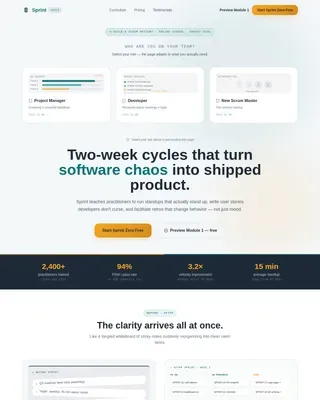
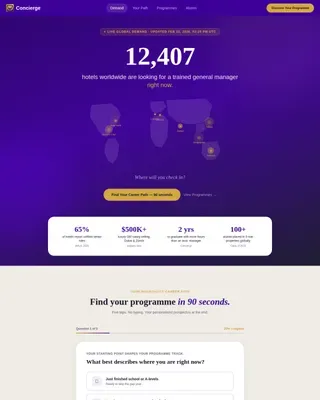
Momentum is a Family First physics homework help landing page template built for tutoring services that support students in grades 9 through 12. It pairs a Case Study Narrative comparison table with a five-question "Find Their Gap" diagnostic quiz. The Slate and Sky color system and editorial calm tone make the page feel trustworthy and approachable for parents searching for physics help late at night.
by Rocket studio
Quick Summary
Momentum is a single-page landing page template for a physics homework help service focused on families. It uses a comparison table format to tell real student stories and guides parents toward a free five-question diagnostic quiz. The design is calm, minimal, and mobile-first, built to earn trust before making any ask.
Who This Template Is For
This template is built for EdTech founders, independent tutors, and tutoring service businesses that want to connect with families of high school students struggling in physics. It works equally well for a solo certified physics teacher and for a multi-tutor practice offering everything from regular physics support to AP physics preparation.
- Parents of students in grades 9 through 12 who are searching for physics help late at night on their phones
- Students who understand physics concepts in class but freeze when facing a problem set alone
- Tutoring businesses that want a conversion-focused page without a cluttered, generic design
What Problem This Template Solves
Physics is one of the most emotionally charged subjects families deal with. Parents often feel helpless because they cannot remember how to define force as an interaction, explain the conservation of momentum, or walk through a kinematics calculation without losing patience. Students, meanwhile, feel isolated. They grasp the idea in class, but the moment the textbook closes and the problem set begins, the knowledge disappears. Standard tutoring landing pages do not address that emotional reality. They list credentials and prices and leave families cold.
- Families cannot tell whether a tutor truly understands where their student is stuck or is simply offering generic science help
- The gap between understanding physics conceptually and executing calculations is rarely acknowledged in typical marketing copy
- Parents need a reason to act immediately, not a long form to fill out after reading a wall of text
What You Get With This Template
This template delivers a complete, single-page layout structured around clarity, trust, and a low-friction conversion path. Every section is purpose-built to move a hesitant parent from scrolling to clicking "Find Their Gap" without feeling sold to. The page ships with defined sections, a clear visual identity, and a diagnostic quiz flow that produces an instant, personalized result.
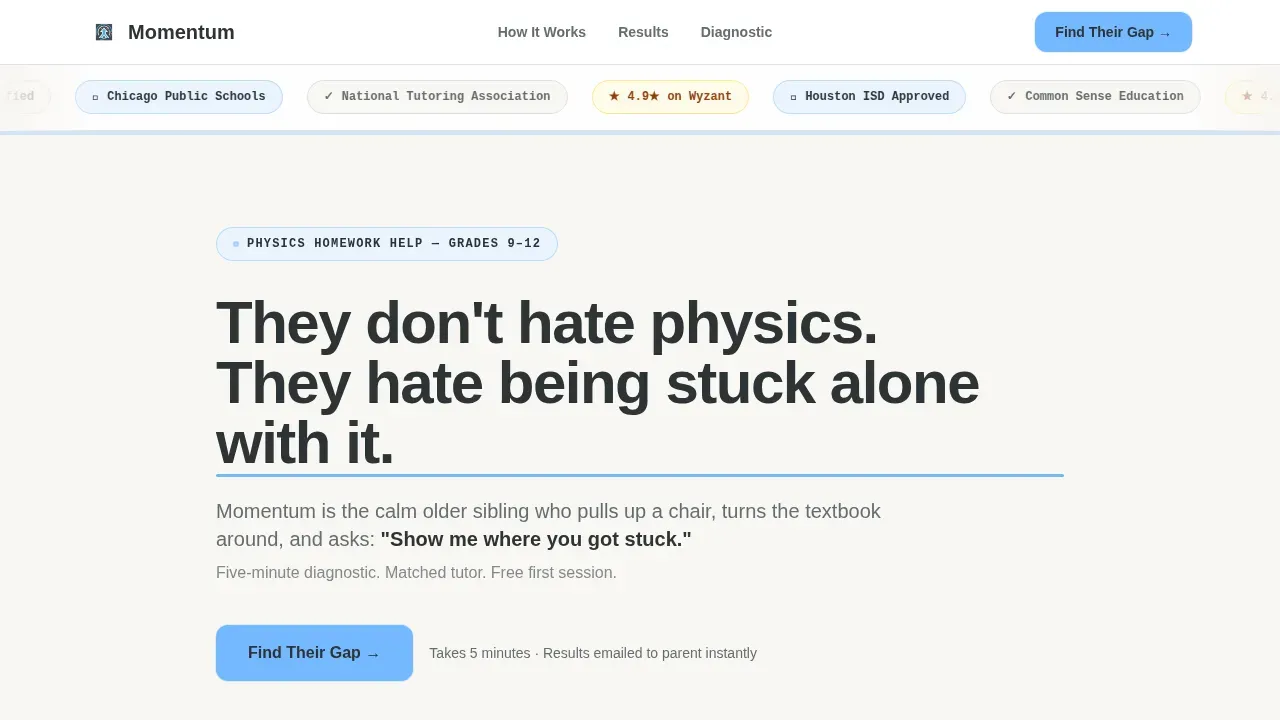
- A Logo Bar trust strip with scrolling institutional logos, school district crests, tutoring association badges, and parent-review platform icons
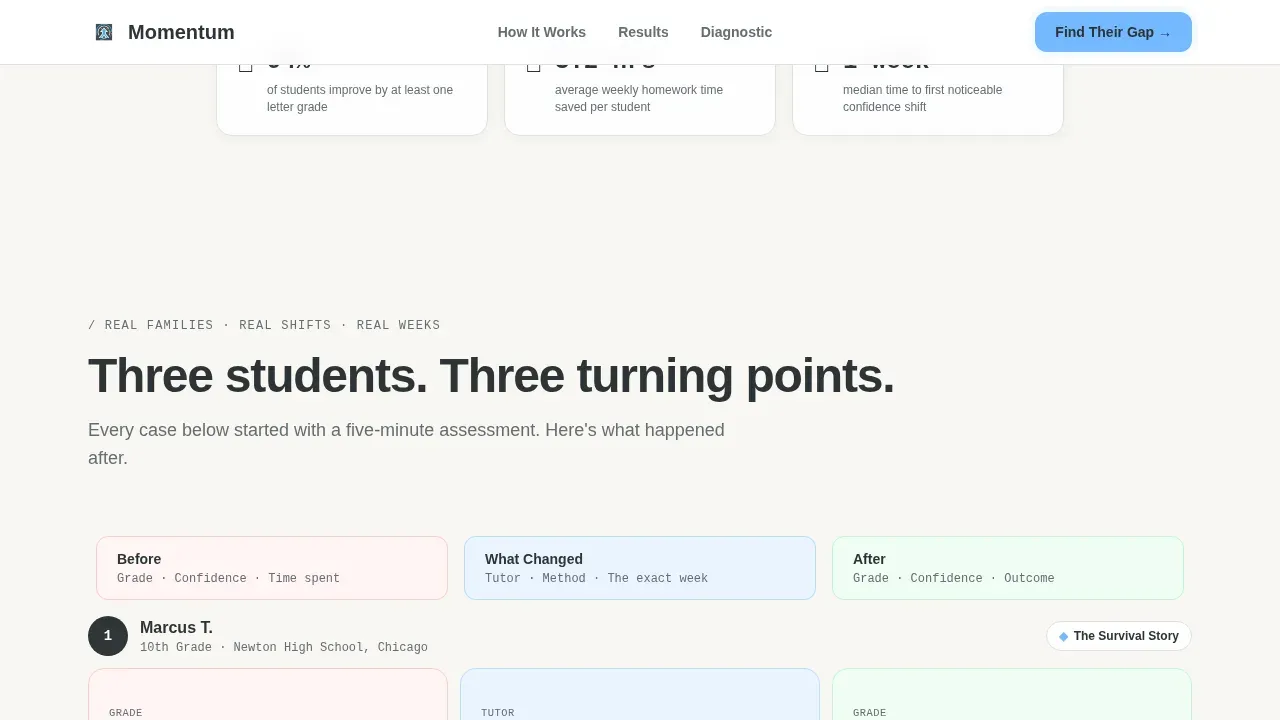
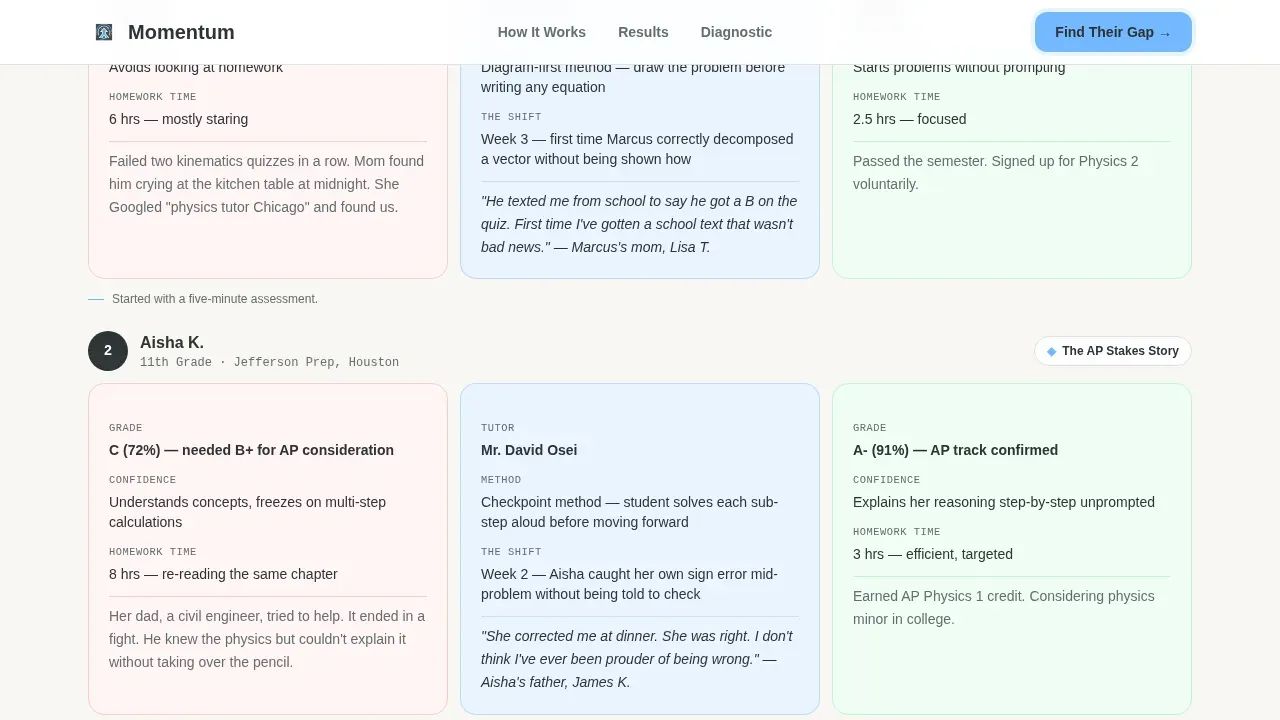
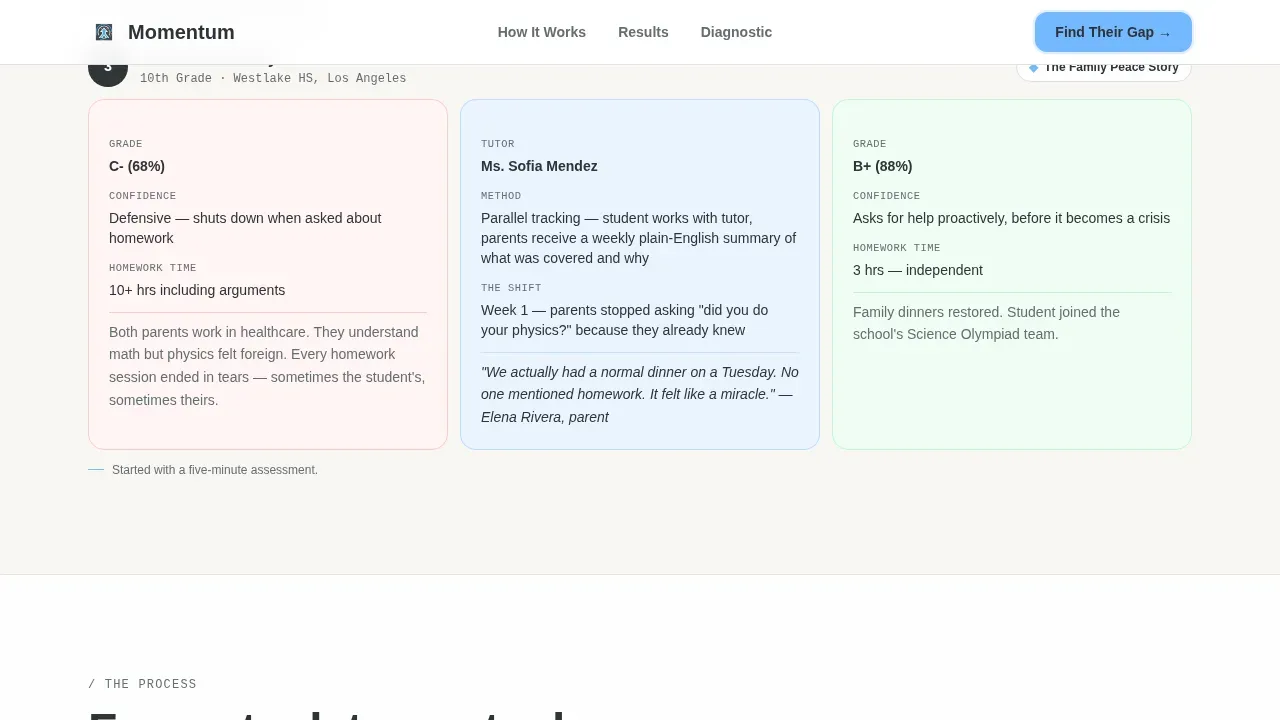
- A three-row Case Study Comparison Table showing student before-and-after stories with a named method, specific week, and measurable outcome in the center column
- A five-question "Find Their Gap" quiz that identifies the student's stuck point across physics topics like kinematics, forces, energy, waves, and electricity, then emails a personalized difficulty map to the parent with a recommended tutor match and a free first-session booking link
Feature List
Case Study Comparison Table
The core of this template is a three-column, three-row comparison table. Each row tells one student story in three acts: a "before" column with grade, confidence level, and hours spent struggling; a center column that names the specific tutor, method, and week the shift happened; and an "after" column with the outcome. The stories escalate from a student who needed to pass, to one who earned AP credit, to a family where physics was actively damaging dinner-table peace. The format feels like reading thank-you letters, not marketing copy.
Five-Question Diagnostic Quiz
The primary call to action is a free five-question assessment titled "Find Their Gap." It asks for the student's current grade, which physics unit they are stuck on, whether they freeze on conceptual questions or calculation steps, how many hours per week they spend on physics, and what a successful outcome looks like for the family. Results are instant. A personalized difficulty map is emailed to the parent, paired with a recommended tutor match and a free session booking link as the secondary conversion path.
Logo Bar Trust Strip
A horizontal scrolling strip sits just below the headline. It carries school district crests, tutoring association badges, and parent-review platform logos on a warm white background. This trust bar does the heavy lifting before a single claim is made. It grounds the page in institutional authority and signals that this is a service families can rely on, not just another tutoring ad.
Editorial Headline and Hero Section
The headline reads: "They don't hate physics. They hate being stuck alone with it." There is no hero image and no animation. The restraint is intentional. It signals that this service respects the family's time. The chalkboard slate typography and clean layout create the feeling of a calm older sibling pulling up a chair rather than a sales pitch arriving at the door.
Three-Step How It Works Section
A dedicated section walks families through the service process in three clear steps: assessment, tutor match, and first session. This section reduces anxiety by making the process feel simple and sequential. Parents can see exactly what happens after they click, which lowers resistance and increases quiz completion.
Linear Single-Row Footer
The footer follows a clean, single-row linear pattern. It keeps navigation minimal, which maintains focus on the offer and avoids pulling the visitor away from the primary conversion path before they act.
Page Sections Overview
| Section | Purpose |
|---|---|
| Editorial Hero | Headline and quiz call to action above the fold, no image |
| Logo Bar Strip | Scrolling institutional trust logos on warm white |
| Comparison Table | Three student case studies in before, center, and after format |
| How It Works | Three-step process: assessment, match, first session |
| Quiz Assessment | "Find Their Gap" five-question diagnostic and instant result |
| Single-Row Footer | Minimal linear footer keeping focus on conversion |
Design & Branding System
The visual identity follows a Slate and Sky color system that feels like a Saturday morning when the blinds are finally open and the work is spread across a clean counter. Deep chalkboard slate (#2D3436) anchors primary backgrounds. Soft graphite (#636E72) handles secondary text and table borders. Open-sky blue (#74B9FF) appears on buttons and highlighted table cells. Warm kitchen white (#FEFEFE) fills content panels. Typography uses Plus Jakarta Sans for headings and JetBrains Mono for data labels and quiz output.
- The palette is serious enough to trust and gentle enough to breathe, which matches the "calm older sibling" tone the service voice requires
- Sky blue calls to action stand out clearly against dark slate backgrounds without feeling aggressive or salesy
- JetBrains Mono on quiz result labels and data columns reinforces the idea that the output is precise, not generic
Mobile & Speed Optimization
This template is designed mobile-first. The brief explicitly recognizes that parents are most likely searching for physics help late at night on their phones, not sitting at a desktop. Every layout decision, from the scrolling logo strip to the comparison table stacking behavior, prioritizes the small-screen experience.
- The minimalist design removes unnecessary navigation links, keeping the parent focused on the quiz call to action rather than wandering off the page
- The single-page structure and lean section count support fast loading, which reduces the likelihood of a frustrated parent bouncing before reaching the diagnostic quiz
How This Template Helps You Convert
The conversion strategy is layered and sequential. Each section earns the next click rather than demanding it. The page is honest about the emotional reality that families face, and it makes the first step feel free, fast, and low-risk.
- The scrolling Logo Bar establishes institutional trust before the parent reads a single benefit claim, which means they arrive at the headline already primed to believe the page
- The escalating Case Study Comparison Table shows real outcomes tied to real processes, so the parent can picture their own student reaching the finish line rather than reading abstract promises
- The "Find Their Gap" quiz converts because it offers immediate value: a personalized difficulty map emailed to the parent, a tutor recommendation, and a free first-session booking link, all in exchange for five honest answers
Other Information About This Template
This template sits at the intersection of EdTech product design and family-focused teaching strategy. It was created specifically for physics homework help services that want to describe their value through outcomes rather than credentials alone. Several design and content decisions reflect best practices drawn from the broader physics education landscape.
- The Momentum Family First Physics Homework Help Landing Page Template is designed to be fully modifiable, so tutoring services can modify section copy, quiz questions, and case study details to match their specific student outcomes and tutor roster
- Conceptual physics courses, which focus on understanding the fundamental principles of nature rather than heavy mathematical derivations, are a natural audience fit; this template supports positioning for both regular physics and AP physics tracks for students in grades 9 through 12
- Resources like free printable PDF worksheets, video walkthroughs, and downloadable answer key materials are commonly used alongside this type of landing page to capture early interest and build trust before the quiz conversion
- The Physics Classroom offers free interactive physics and chemistry tutorials written at a high school reading level, along with game-like HTML5 simulations and a Conceptual Course Pack; these are the kinds of supplementary materials and resources that a physics teacher or tutoring service could reference when building out post-quiz follow-up content
- Guest Hollow's High School Conceptual Physics curriculum, which won first place in the Practical Homeschooling Reader Awards, is an example of the kind of structured, hands-on learning approach that resonates with the homeschool and parent-led education segment this template can also serve
- The quiz result email can include a PDF summary of the student's difficulty map alongside other materials such as a formula reference sheet, practice set, or video links, giving parents something concrete to download before the first session
- Programs that use vocabulary card games, collaborative discussion activities, and real-world experiments to teach impulse and momentum concepts are well-positioned to highlight those methods in the comparison table center column, focusing on what specifically changed for each student
- The conservation of momentum and the impulse-momentum theorem are among the physics topics most commonly cited as turning points in student case studies; focusing the table on these concepts helps parents recognize the specific unit where their student may be struggling
- Tutoring services interested in the homeschool or co-op school segment can modify the logo bar to reflect homeschool association badges and curriculum publisher logos rather than public school district crests
Theme
Family First
Creative direction
Case Study Narrative
Color system
Slate & Sky
Direction
Quiz/Assessment
Page Sections
Case Study Comparison Table
Five-question Diagnostic Quiz
Logo Bar Trust Strip
Editorial Headline and Hero Section
Three-step How It Works Section
Related questions
How can you explain momentum to a kid?
What is the formula for momentum in a grade 12 physics course?
What are some examples of momentum?
What exactly does momentum mean in physics?