IELTS Prep Landing Page Template for Score Growth
Fluency is a single-column landing page template built for IELTS and TOEFL prep academies. It guides visitors through a step-by-step diagnostic journey across all four test modules, builds confidence with interactive practice moments, and converts engaged visitors into leads through a goal-first score plan form. The botanical design feels like a focused study session, not a sales pitch.
by Rocket studio
Quick summary
Fluency is a Lead Generation landing page template designed for online IELTS preparation academies. It walks visitors through all four IELTS modules as scrollable chapters, surfaces common mistakes with real scored examples, and captures leads through a goal-first form. The warm parchment and deep fern botanical palette creates a calm, study-planner atmosphere that builds trust and encourages action.
Who this template is for
This template is built for educators, coaches, and online academies running IELTS prep or TOEFL preparation programs. It works especially well for courses targeting students with specific band score deadlines and documented score gaps.
- Test prep academies and independent IELTS coaches offering structured classes
- EdTech platforms serving university applicants, healthcare professionals, and skilled-worker visa candidates
- Course creators who want to convert website visitors into registered students through a diagnostic-led experience
What problem this template solves
Most test prep landing pages list features and hope visitors trust them. Fluency takes a different approach. It shows the visitor exactly where they are, where they need to be, and how the course closes that gap. This builds genuine confidence before the form ever appears.
- Visitors arrive unsure whether a prep course will actually move their band score
- Generic landing pages fail to engage students who need to feel the difference before committing
- Forms placed too early collect little data; Fluency places the lead form after diagnostic interaction, so students arrive ready to share their goals
What you get with this template
Fluency delivers a complete single-page flow built around progressive engagement. Every section earns the next scroll by giving the visitor something useful before asking for anything in return.
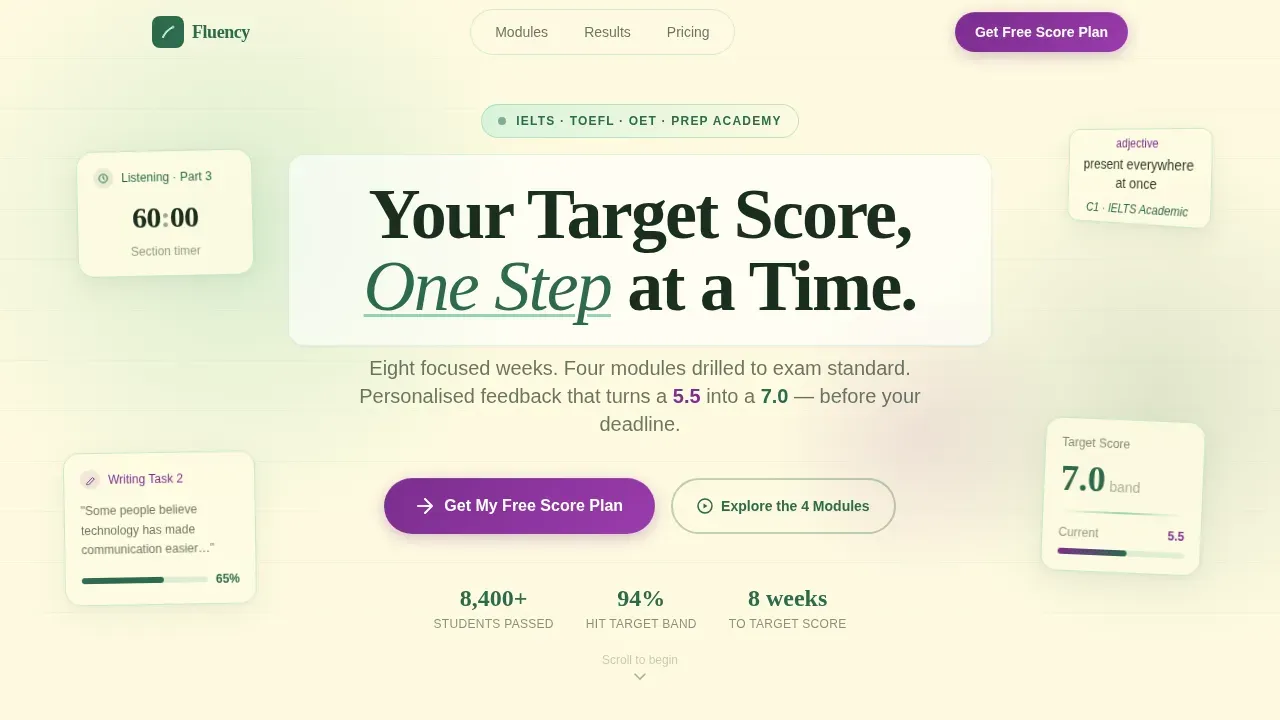
- A hand-drawn illustrated hero section with animated details, including a ticking timer and a flipping vocabulary flashcard
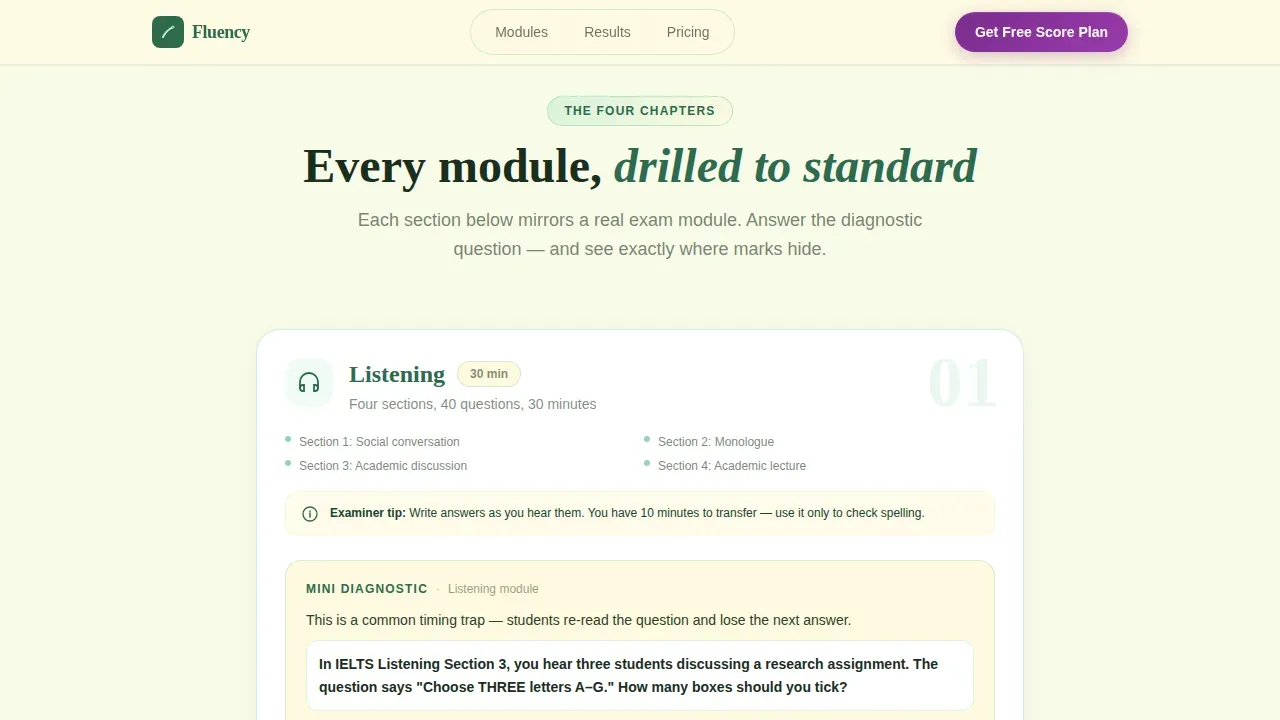
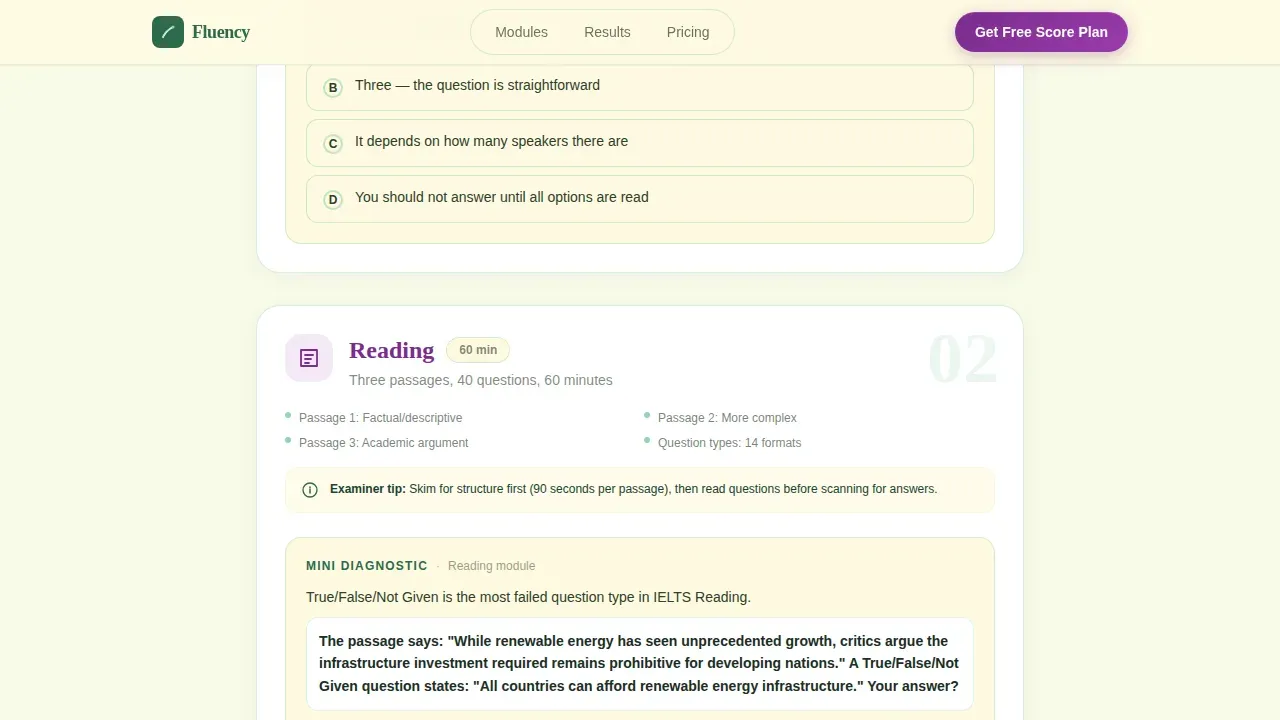
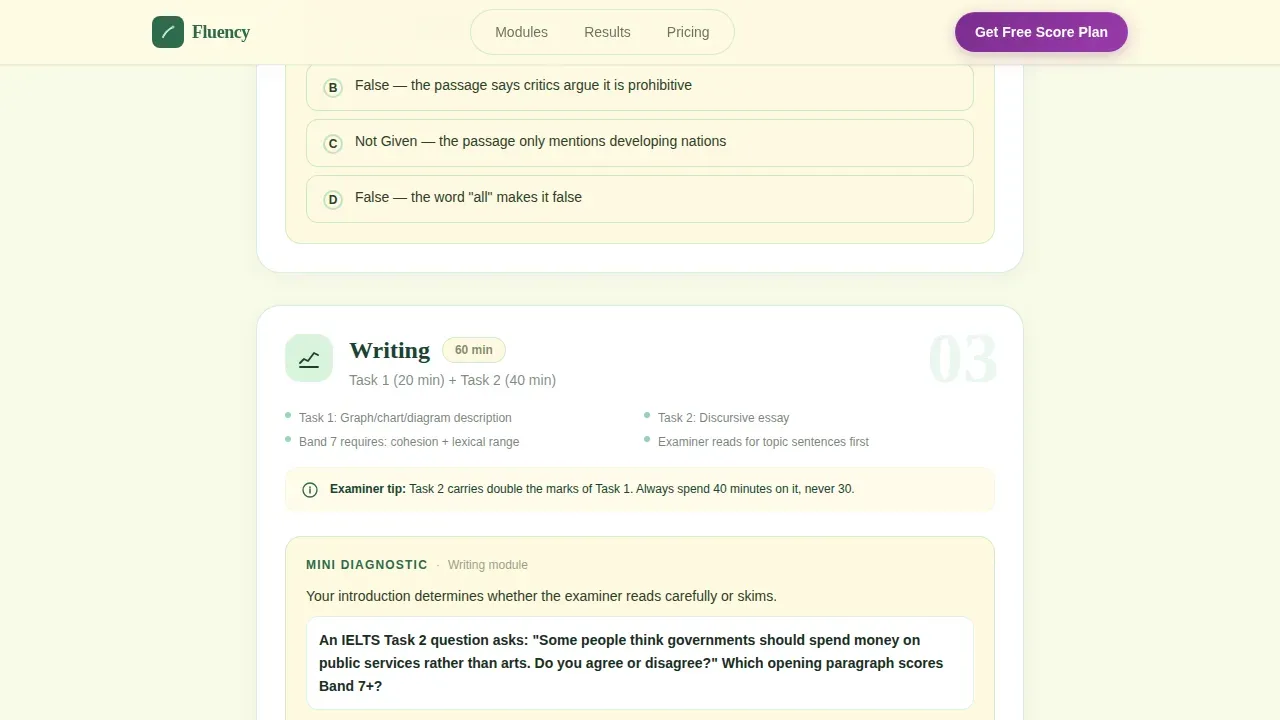
- Four module chapters (Listening, Reading, Writing, Speaking) each with a mini diagnostic question the visitor can actually answer
- A two-path lead generation section: a full score plan form for committed visitors and a free vocabulary PDF download gated by email alone for those not yet ready
Feature list
This template includes several carefully considered features drawn directly from the brief. Each one serves the IELTS preparation context and the goal of converting engaged visitors into enrolled students.
Animated Illustrated Hero Section
The header opens with a custom hand-drawn desk scene rendered in the botanical palette. Fine ink outlines show vocabulary flashcards, a 60-minute countdown timer, headphones, and a pencil mid-sentence on a writing task. Subtle animations, a ticking timer and a flipping flashcard, make the scene feel alive without distracting from the headline.
Four-Module Scroll Journey
Scrolling moves the visitor through the four IELTS sections as sequential chapters. Each chapter is introduced by a numbered botanical illustration and contains a short diagnostic question. This structure reflects how the IELTS test itself is organized: Listening, Reading, Writing, and Speaking, so the page teaches the format while presenting the course.
Real Scored Examples and Common Mistakes Display
A dedicated section shows side-by-side examples of responses with wrong answers against improved model answers. Visitors see the exact difference in task response, grammatical range, and lexical resource that separates a 5.5 from a 7.0 band score. This makes the value of expert feedback tangible before any commitment is made.
Goal-First Lead Generation Form
The primary call-to-action form collects four inputs in a deliberate sequence: target exam type (IELTS Academic, IELTS General Training, or TOEFL iBT), target score, exam date, and email. Asking about goals before contact details primes the visitor to think about their ambition, not about giving away personal data.
Social Proof with Before and After Band Scores
Student testimonials are displayed with specific cities (Hyderabad, Lagos), specific exam outcomes, and before-and-after band score improvements. Concrete results, rather than vague praise, build the kind of trust that moves visitors who are weighing whether the course is worth their time and money.
Secondary Vocabulary PDF Download Path
Visitors who are not yet ready to commit can download a free vocabulary reference document by entering only their email. This secondary path captures warm leads without pressuring early-stage visitors, while keeping the primary score plan form prominent for those who are ready.
Page sections overview
| Section | Purpose |
|---|---|
| Hero Illustration | Opens with animated desk scene and headline |
| Listening Module Chapter | Diagnostic question, module overview, common traps |
| Reading Module Chapter | Skimming practice, main idea focus, timing tips |
| Writing Module Chapter | Task response, word limits, and structure guidance |
| Speaking Module Chapter | Fluency, phrases, and speaking english confidence |
| Common Mistakes Display | Real scored examples showing the band score gap |
| Score Plan Lead Form | Goal-first form capturing exam type, score, date, email |
| Social Proof Section | Before-and-after testimonials from real students |
| Vocabulary PDF Download | Secondary email-only lead capture path |
| Footer | Horizontal flow footer with navigation and links |
Design & branding system
The visual identity follows an Educational Guide theme built on a Botanical color system. The palette is warm and focused, designed to feel like studying in a sunlit room, not scrolling through a generic course catalogue. Typography is editorial and readable, pairing a warm serif for headings with a clean sans-serif for body text.
- Deep fern green (#2D6A4F) anchors primary headings and trust elements; soft sage (#95D5B2) fills section backgrounds and progress indicators; warm parchment (#FEFAE0) serves as the base canvas
- Ripe berry (#7B2D8E) appears on calls to action and score highlights, creating clear visual contrast against the parchment base
- Fraunces (serif) handles all editorial headings; DM Sans (sans-serif) keeps body paragraphs and form labels clean and easy to read on small screens
Mobile & speed optimization
Fluency is built mobile-first, which is essential for students who research and register on their phones. The single-column layout adapts naturally to narrow screens without losing the study-planner visual logic.
- Animations are deferred so the initial load is fast; scroll-triggered chapter reveals and progress bar fills activate only when the relevant section enters the viewport
- The lead generation form is optimized for mobile input, with a goal-first field order that works with mobile keyboards and auto-fill behavior
- The secondary vocabulary download path is equally accessible on mobile, giving every visitor a friction-appropriate next step regardless of device
How this template helps you convert
Fluency is structured to earn trust progressively, so visitors arrive at the form already convinced. The conversion logic mirrors proven strategies used in high-performing test prep courses: engage, demonstrate value, then ask.
- The diagnostic questions in each module chapter create an active learning moment. Visitors experience the gap between their current answers and the correct answers, which motivates them to seek expert feedback and continue through the page.
- The real scored examples section makes the difference between a mid-range and a high band score visible and specific. Seeing exact words, task achievement scores, and grammatical range comparisons turns abstract promises into concrete evidence.
- The goal-first form sequence, exam type before email, frames lead capture as personalized planning rather than data collection. This reduces drop-off and increases the quality of the leads the form delivers.
Other information about this template
Fluency is suited for any IELTS preparation program that wants to demonstrate the depth of its teaching before asking visitors to commit. It is equally relevant for TOEFL iBT and academic English programs targeting students preparing to relocate to an english speaking country for study or work.
- The template supports proven strategies drawn from how examiners actually assess the test: fluency and coherence, lexical resource, grammatical range and accuracy, and pronunciation in speaking; task achievement, coherence and cohesion, lexical resource, and grammatical range and accuracy in writing
- The IELTS speaking test section of the page uses a structured framework approach, reflecting how IELTS speaking templates offer a reliable way to handle different types of questions, from describing familiar topics to discussing problems and proposing solutions, a skill that also demonstrates critical thinking
- IELTS listening content in the module chapters covers listening for detail rather than general meaning, which is where students most often lose marks
- Note that task response accuracy and staying within word limits are highlighted in the writing chapter, helping students understand the specific criteria examiners use
- This template is a strong fit for educators who want to highlight the difference between academic preparation and passive english proficiency, and for coaches who offer mock tests, practice tests, and personalized feedback as core parts of their course
- The fluency score boosting ielts prep landing page template is designed to work as a standalone marketing asset, requiring no additional pages to complete the visitor journey
- Preparation courses using this template can frame their offer around structured classes, expert instructors, and a clear eight-week path from a lower band score to a target score that opens doors to university admission, visa points, or hospital placement
Theme
Educational Guide
Creative direction
Step-by-Step Guide
Color system
Botanical
Style
Single Column Flow
Direction
Lead Generation
Page Sections
Animated Botanical Hero Illustration
Four-module Diagnostic Scroll Journey
Real Scored Examples Display
Goal-first Lead Generation Form
Before-and-after Social Proof Section
Secondary Vocabulary PDF Lead Path
Related questions
What kind of test prep academy is this template designed for?
How does the diagnostic interaction work within the template?
Can this template support both IELTS Academic and IELTS General Training programs?
Why does the form ask for exam type and target score before asking for email?
Is there a way to capture leads from visitors who are not yet ready to sign up?