Self-Hosted CMS Infrastructure Landing Page Template
Forge is a split-screen landing page template built for self-hosted CMS products. It pairs a terminal-dark glass-panel aesthetic with an industry-report narrative flow, guiding technical buyers from cost and compliance arguments to a "Request a Private Demo" conversion. It is purpose-built for developers, agencies, and enterprise teams who deploy on their own infrastructure.
by Rocket studio
Quick summary
Forge is a single-page, split-screen (50/50) landing page template designed to market a self-hosted CMS to a deeply technical audience. Its dark glass-panel header, monospace typography, and scrolling evidence-driven layout make the case for infrastructure ownership with the clarity of a well-written white paper. Every section earns the next click.
Who this template is for
This template speaks directly to the people who read dependency trees before feature lists. It is built for buyers who treat hosting decisions as architectural ones, not billing ones.
- Agency CTOs who are planning a migration of client portfolios away from managed platforms and need a compelling internal and external pitch
- Startup engineers and developers who want full ownership of their publishing stack without recurring vendor fees
- Enterprise compliance officers and infrastructure teams whose shortlist of hosted solutions was blocked by internal security review
What problem this template solves
Most CMS marketing pages are built for general audiences. They lead with ease-of-use and hide the architecture. That approach fails with technical buyers who want evidence, not promises. This template solves the mismatch between a serious self-hosted CMS product and the shallow marketing pages that typically represent it.
- It replaces vague benefit statements with structured benchmark data, cost comparisons, and compliance context that help engineers and CTOs make the case internally
- It qualifies leads before capturing them, using a progressive-disclosure demo form that filters for infrastructure type, team size, and current CMS before asking for an email
- It gives visitors a secondary path through a gated "Download the Migration Playbook" offer, so every serious visitor has a reason to engage regardless of purchase stage
What you get with this template
You get a complete, production-ready landing page template that covers every stage of a technical buyer's decision process. The layout, copy structure, and interactive components are all defined in the source design.
- A 50/50 split-screen layout with a glass-panel hero, five content sections, and a developer-minimal footer, all built around a Midnight Blue color system
- Two conversion paths: a "Request a Private Demo" modal with progressive disclosure fields, and a "Download the Migration Playbook" email-capture form
- High-interactivity components including a typewriter headline effect, parallax glass panels, scroll-reveal sections, animated bar charts, a live community install counter, and spotlight hover cards
Feature list
This template is built around features that serve a specific purpose: turning a skeptical technical buyer into a qualified lead. Each feature is prompt-defined and production-ready.
Glass Panel Hero with Typewriter Headline
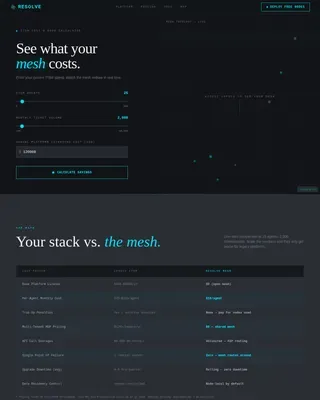
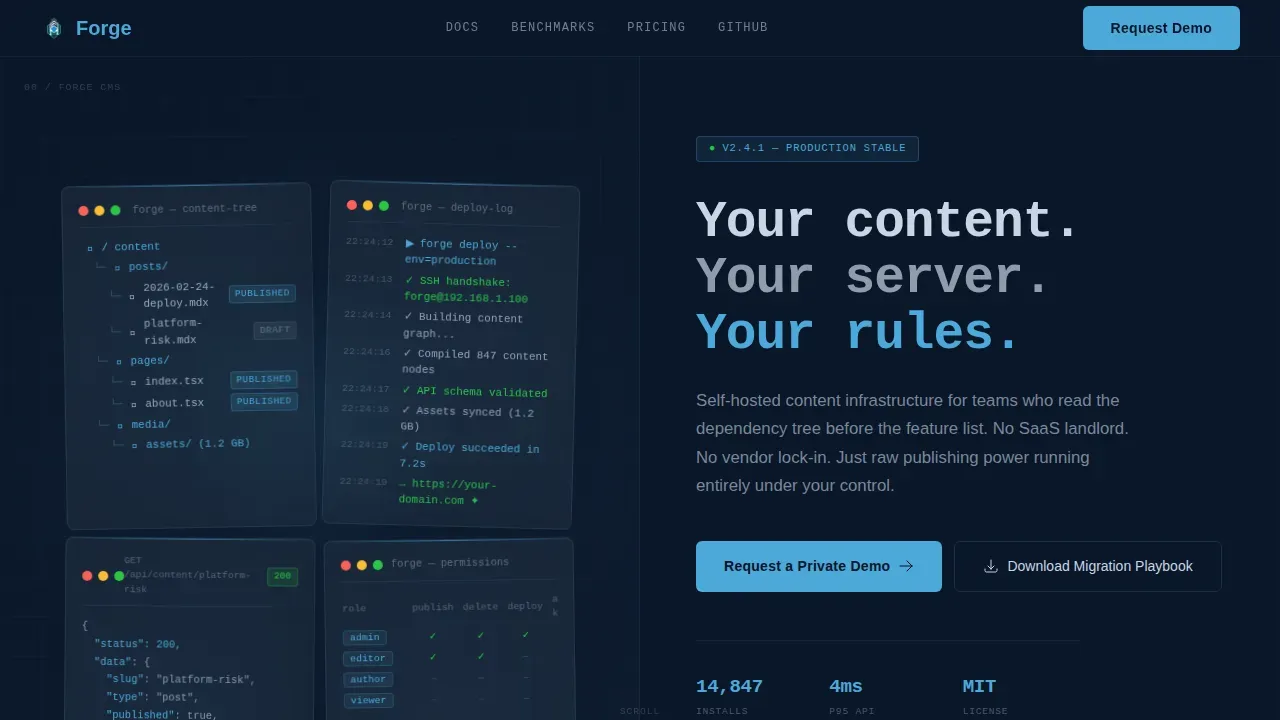
The hero section displays four frosted dark-glass panels over a deep navy background. Each panel shows a different facet of the CMS: a content tree, a deployment log, an API response, and a permissions matrix. A single headline types itself in monospace across the center gap. The hero section delivers a clear value proposition, an attention-grabbing headline, and a primary call-to-action button without a single stock photograph.
Split-Screen Narrative and Data Layout
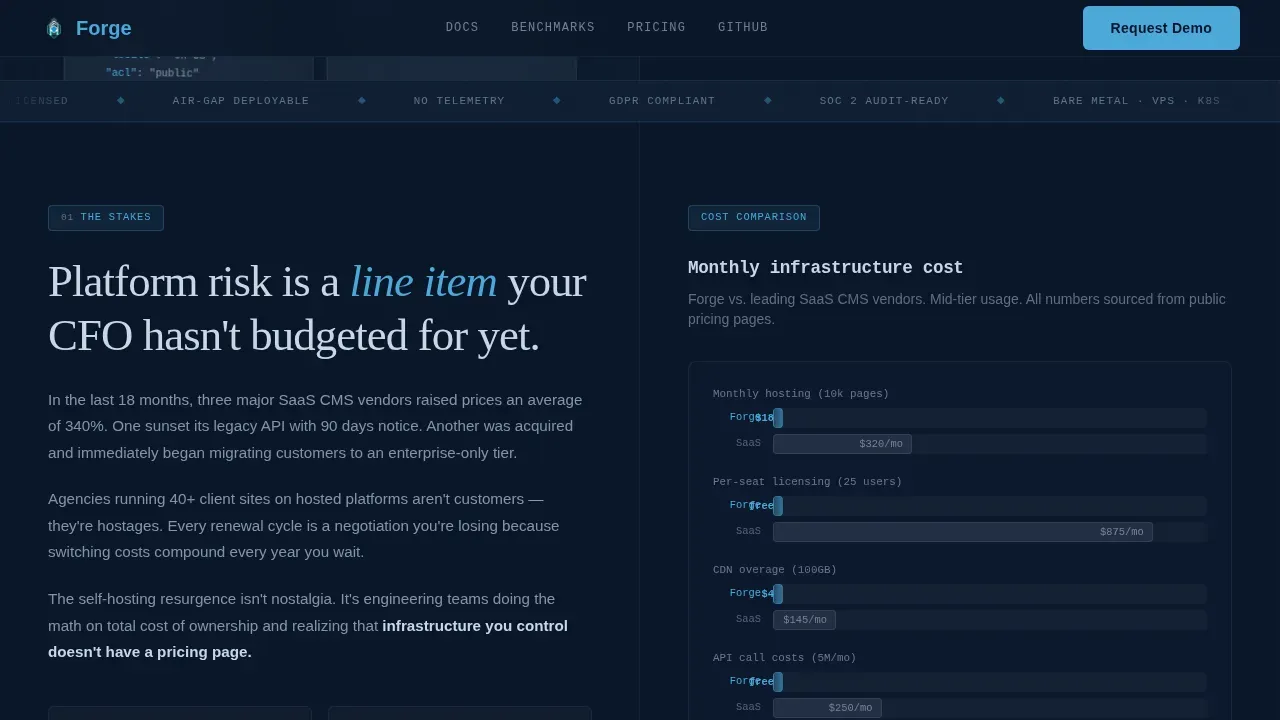
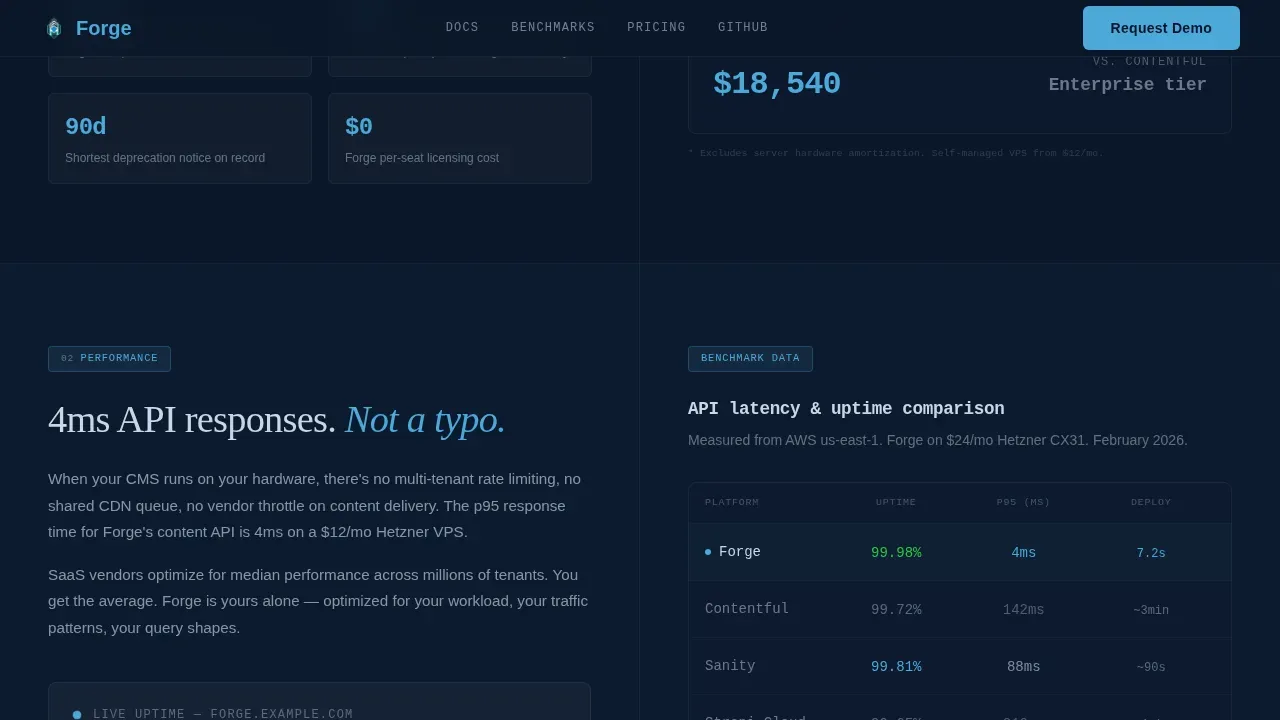
Every content section uses a 50/50 split. The left column carries narrative context about hosting risk, compliance frameworks, and platform lock-in. The right column presents the evidence: animated bar charts of hosting cost comparisons, uptime benchmarks, and a live counter of community installations. This structure mirrors an industry report, which makes the argument feel like research rather than advertising.
Progressive Disclosure Demo Modal
The "Request a Private Demo" call-to-action opens a glass-panel modal that qualifies visitors step by step. It asks for infrastructure type first (bare metal, VPS, or Kubernetes), then current CMS, then team size, then work email. This sequence filters for technical seriousness and improves lead quality before any contact detail is captured.
Sticky Call-to-Action and Secondary Conversion Path
The primary demo call-to-action appears at the fold break and repeats after the final evidence section. A sticky call-to-action keeps the primary button visible as users scroll, which maintains engagement across a long evidence-led page. The secondary path, "Download the Migration Playbook," captures email and current platform only, serving visitors who are not yet ready for a sales conversation.
Animated Data Components
The template includes animated bar charts that fill on scroll, a live-counter animation for community install numbers, and scroll-reveal transitions for each section. These components make benchmark data feel active and credible rather than static. Developers can extend or test each animation independently.
Developer-Minimal Footer
The footer follows a GitHub-style minimal pattern. It is clean, link-focused, and consistent with the infrastructure aesthetic of the rest of the page. It keeps the focus on conversion rather than navigation clutter.
Page sections overview
| Section | Purpose |
|---|---|
| Glass Panel Hero | Establish value proposition and present dual calls to action |
| Stakes and Hosting Costs | Left narrative context paired with right animated cost comparison bar chart |
| Performance Benchmarks | Uptime and response time data displayed against competing platforms |
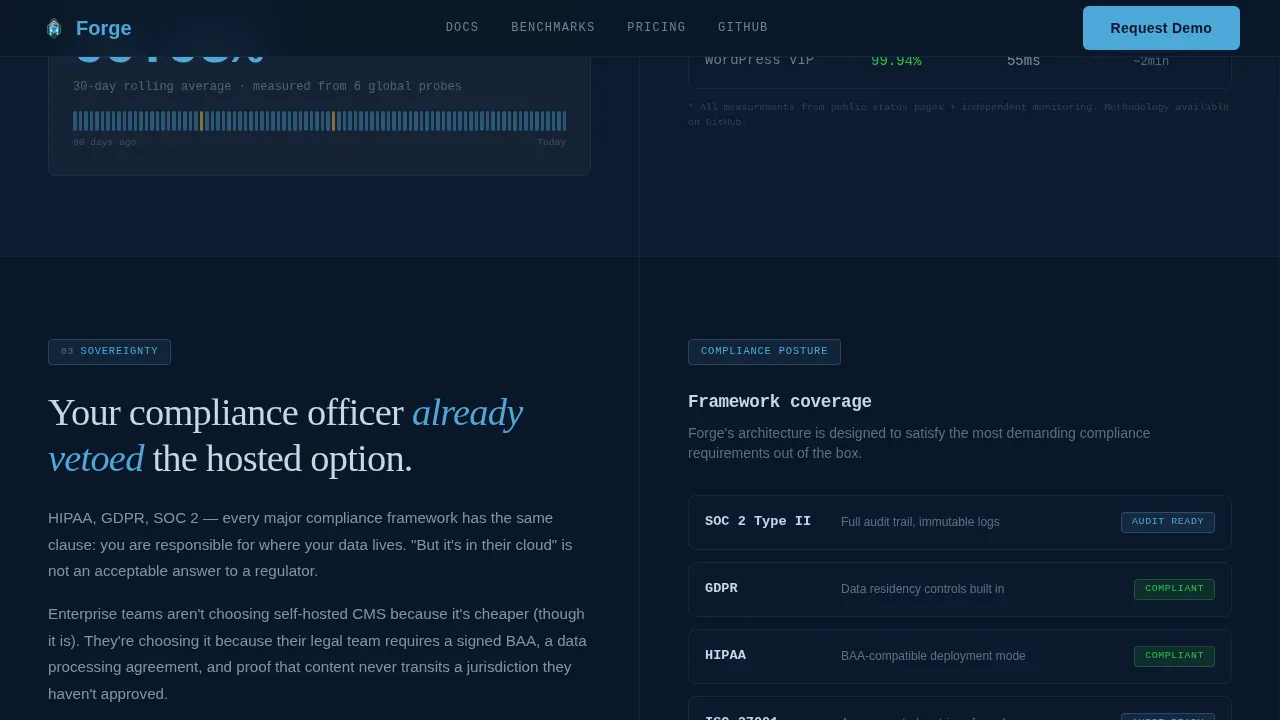
| Compliance and Sovereignty | Security posture, data residency context, and compliance framework badges |
| Migration Path and Community Proof | Live install counter, repeated demo call-to-action, and playbook download offer |
| Developer Minimal Footer | Clean link structure consistent with infrastructure brand identity |
Design & branding system
The visual identity is built on a Midnight Blue color system that feels like the glow of a server rack in a dark room. The palette is deliberately technical rather than decorative, signaling real infrastructure to a discerning audience.
- Colors: deep terminal navy (#0A1628) for primary backgrounds, slate command-line gray (#1E2A3A) for card surfaces, cold phosphor blue (#4DA8DA) for interactive elements and data highlights, and muted silver (#C8D6E5) for body text
- Typography: JetBrains Mono for code labels and terminal-style text, DM Sans for body copy and readable paragraphs, Fraunces for editorial headlines and section titles
- Visual style: Dark Glass Panels theme with frosted translucent rectangles, phosphor-blue glass edge refractions, parallax depth on header panels, and a Directory and Discovery layout structure throughout
Mobile & speed optimization
The template is desktop-first, which matches the large-monitor habits of its target audience. It is responsive down to 768 pixels to cover the full range of devices a technical buyer might use.
- Touch-friendly buttons and fast-loading section images keep the mobile experience functional and consistent with the desktop layout
- Server Components handle static sections to reduce render overhead, while Client Components manage the interactive modal, animations, and parallax panels separately
- The split-screen layout reflows cleanly at tablet widths, preserving readability of both the narrative and data columns across devices
How this template helps you convert
This template is engineered to build trust progressively. Every scroll interaction adds another layer of evidence before asking for a commitment.
- The hero section presents the value proposition immediately with a clear call-to-action at the fold break, then the sticky call-to-action keeps the primary button visible throughout the rest of the page, maintaining constant access to the conversion point
- The progressive-disclosure demo modal qualifies technical buyers before capturing their contact details, which improves the quality of every lead and reduces friction for visitors who recognize that the qualification questions are relevant to their own process
- The secondary "Download the Migration Playbook" path ensures that even visitors who are not ready to speak with sales leave a contact trail, turning a no into a future yes
Other information about this template
This template is well-suited for any project that needs to present a self-hosted headless CMS to a technical buying audience. The open source ecosystem around self-hosted CMS tools is broad and growing, which makes a template like this increasingly relevant for a wide range of publishing infrastructure projects.
- The headless CMS category separates the content management backend from the frontend presentation layer, giving developers freedom to define their own content model and use any frontend framework. The modular architecture of these platforms means teams can add new components or extend functionality without rebuilding from scratch.
- Many open source self-hosted CMS platforms allow content reuse across multiple sites and multiple templates via APIs. Agencies managing many teams across client portfolios can use a single installation to handle isolated projects, each with its own content types, roles, and permissions.
- The template's structure is compatible with projects built on any self-hosted CMS stack. Whether a team chooses a code-first approach for content modeling, a database-first approach, or a flat-file approach, the landing page can represent the product accurately with minimal customization effort.
- Open source landing page templates like this one allow for community-driven improvement over time. Developers can fork, test, and version the template freely, and the free-to-start model means teams can explore the full layout before committing to a production deploy.
- The template ships with full documentation references in the footer and supports collaboration between technical and non-technical team members during the review and launch process. Its pre-built components reduce onboarding time and let a team focus on content and campaigns rather than layout decisions.
- Reliability in a self-hosted CMS context means owning your uptime, your data residency, and your security patches. This template communicates that philosophy through its benchmark sections and compliance badges, which build the case for infrastructure sovereignty without overstating it.
Theme
Directory & Discovery
Creative direction
Industry Report
Color system
Midnight Blue
Style
Split Screen (50/50)
Direction
Lead Generation
Page Sections
Glass Panel Hero with Live Dashboard Aesthetic
Split-screen Evidence-driven Layout
Progressive Disclosure Demo Modal
Sticky Call to Action and Dual Conversion Paths
Animated Data and Counter Components
Developer-minimal Footer
Related questions
What type of project is this template designed for?
Can developers customize the color system and typography?
Does the template include both conversion paths out of the box?
Is this template suitable for agencies managing multiple client sites?
What makes this template different from a generic SaaS landing page template?