Zero Infrastructure PLM Landing Page Template
The Lifecycle Zero Infrastructure PLM landing page template is a dashboard-style, single-page layout built for serverless product lifecycle management platforms. It opens with an animated logo bar and live cost metrics, then scrolls through a problem-to-solution data grid, three versus cards, and a two-step cost calculator that closes with a migration booking flow. Designed for hardware startup CTOs and manufacturing ops leads ready to leave legacy PLM behind.
by Rocket studio
Quick summary
This template delivers a high-motion, dashboard-driven landing page for a serverless product lifecycle management platform. It guides engineering and operations decision-makers from legacy pain points to a clear cost-comparison outcome. The layout combines an animated logo bar, a scroll-triggered data grid, three side-by-side versus cards, and an interactive cost calculator that ends with a migration review booking. Every section earns the next click.
Who this template is for
This template is built for B2B SaaS teams selling serverless PLM software to technical buyers who evaluate on desktop and make decisions based on numbers, not marketing copy. It speaks directly to people who already know what product lifecycle management costs them.
- Hardware startup founders and CTOs who are priced out of enterprise PLM software licenses and need a credible alternative that runs without on-premise infrastructure.
- Mid-market manufacturing operations leads who are stitching together spreadsheets and project boards because established PLM solutions exceed their tooling budget.
- Enterprise transformation architects tasked with migrating off legacy PLM systems without halting production, who need to prove cost and timeline ROI to leadership.
What problem this template solves
Legacy PLM software solutions carry serious overhead: seat-based licensing, server maintenance hours, long deployment timelines, and deep vendor lock-in. The product lifecycle management market is crowded with tools that promise everything but install like a construction project. Teams dealing with silos and disconnected systems face data-sharing roadblocks that complicate any PLM implementation. At the same time, communicating the benefits of change is critical for securing adoption, and understanding the return on investment is nearly impossible without clear baseline metrics. This template solves the marketing layer of that problem by turning complexity into a transparent, numeric comparison.
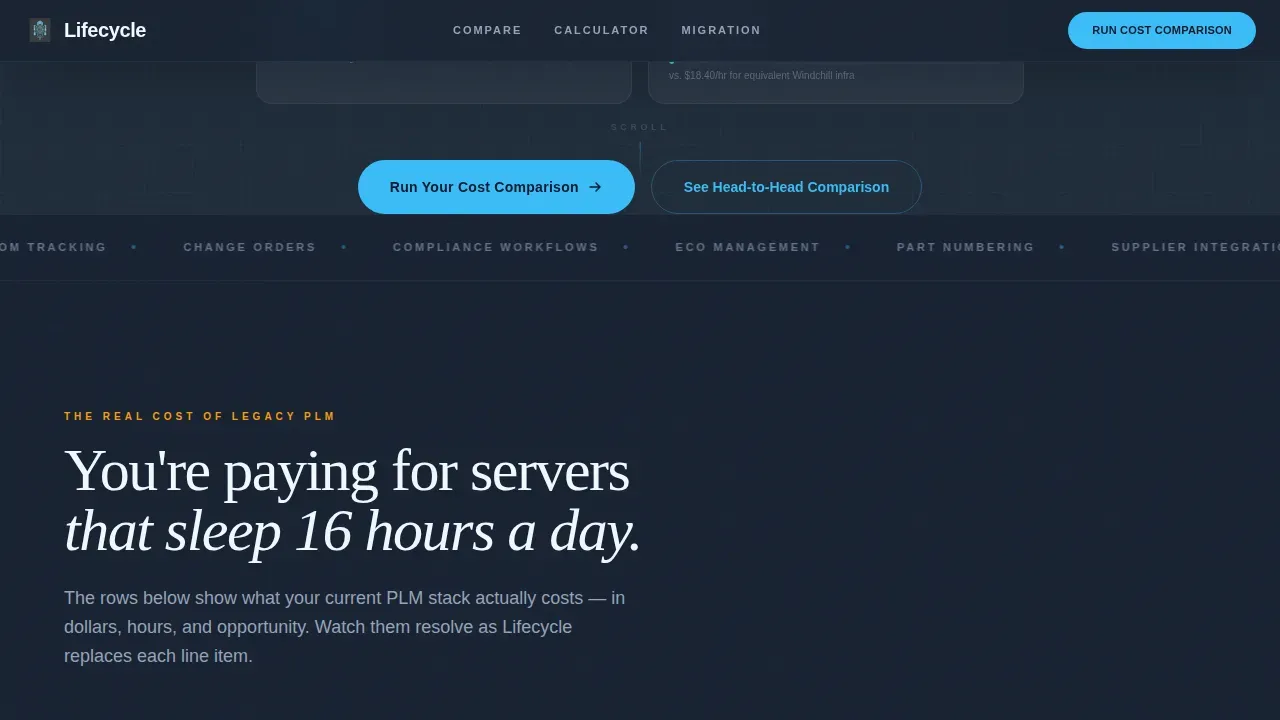
- Visitors arrive already skeptical. The amber-highlighted pain grid makes legacy PLM costs visible and undeniable before a single feature is pitched.
- The scroll transition from amber to sky blue physically mirrors the shift from problem to solution, reducing cognitive friction at the moment of evaluation.
- The two-step cost calculator makes the value proposition personal by using the visitor's own seat count and current PLM system as inputs.
What you get with this template
This is a single-page, section-led landing page template built on a Dynamic Motion theme with a Slate and Sky color system. It includes high-interactivity components powered by GSAP scroll triggers, a two-step calculator with dropdown and PDF output, and a sticky mobile call-to-action bar. The template is structured for desktop-first evaluation flows with a responsive mobile layout.
- A fully structured page from hero through footer, including an animated logo bar, pain data grid, three versus cards, an interactive cost calculator, a migration call-to-action section, and a linear single-row footer.
- Preconfigured scroll animations including a counter tick-up, an amber-to-sky-blue row transition, and a scanning underline beneath the logo strip.
- A two-step cost calculator with PLM tool dropdown, seat count input, side-by-side cost projection output, a downloadable PDF mock, and a calendar embed for migration review booking.
Feature list
This section outlines the core built-in components of the template and what each one delivers for your product lifecycle management marketing page.
Animated Logo Bar with Live Metrics Hero
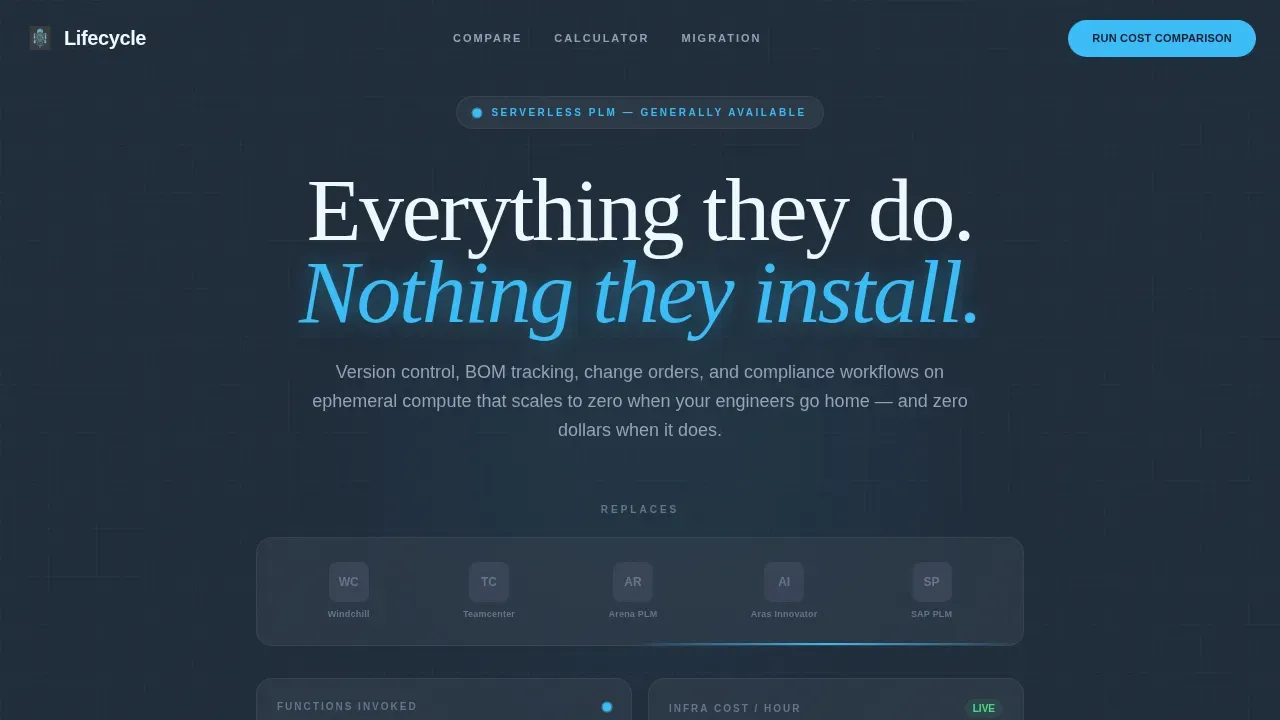
The hero opens with a horizontal strip of muted grayscale PLM and enterprise resource planning tool logos sitting beneath the headline "Everything they do. Nothing they install." A thin sky-blue underline animates left to right beneath the logos, simulating a completed process. Directly below, a live-styled dashboard widget shows a serverless function counter ticking upward and an infrastructure cost gauge sitting near zero. This motion makes the core value proposition numeric before the visitor reads a single paragraph.
Scroll-Triggered Pain-to-Solution Data Grid
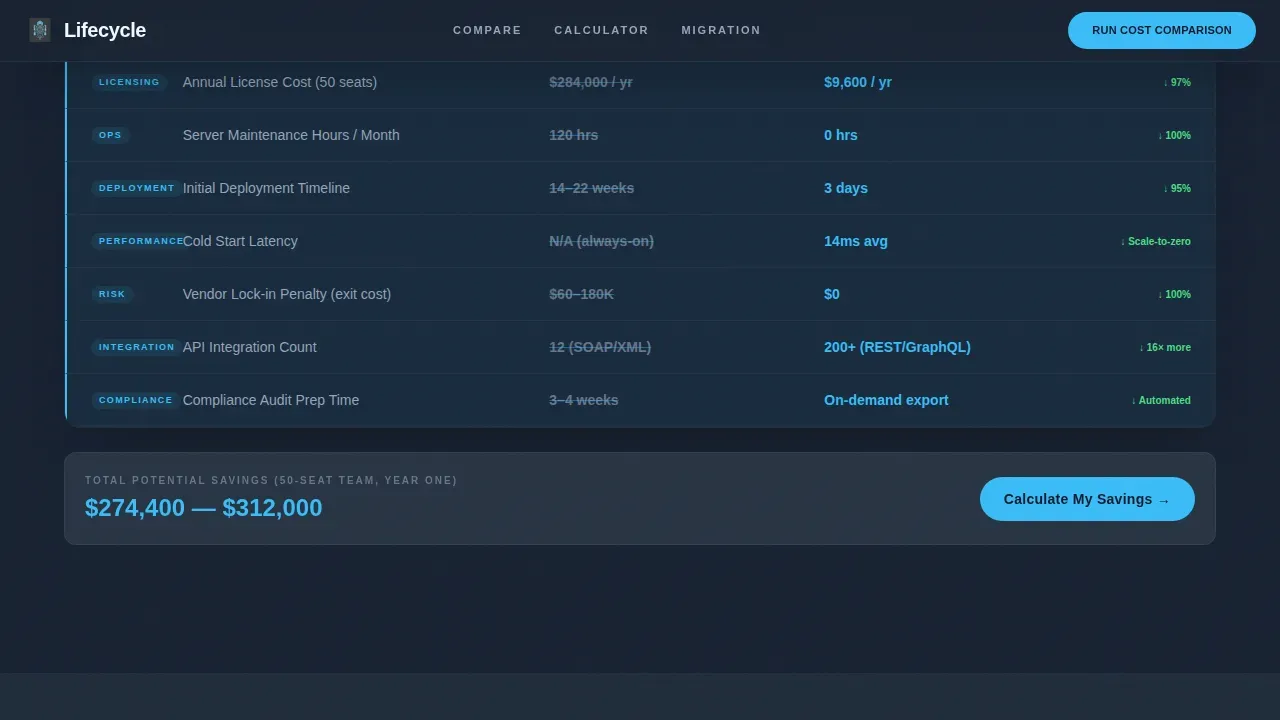
The first major content section displays a data grid showing real product lifecycle management costs: license seats, server maintenance hours, deployment timelines, and vendor lock-in figures. Each row is highlighted in warning amber. As the visitor scrolls into the solution half, GSAP triggers fade each row from amber to sky blue and restructure the grid columns to reflect the serverless architecture view. The same workflows appear lighter, faster, and cheaper. This transition is the emotional and logical core of the page's problem-to-solution arc.
Three Versus Cards for Direct PLM Comparison
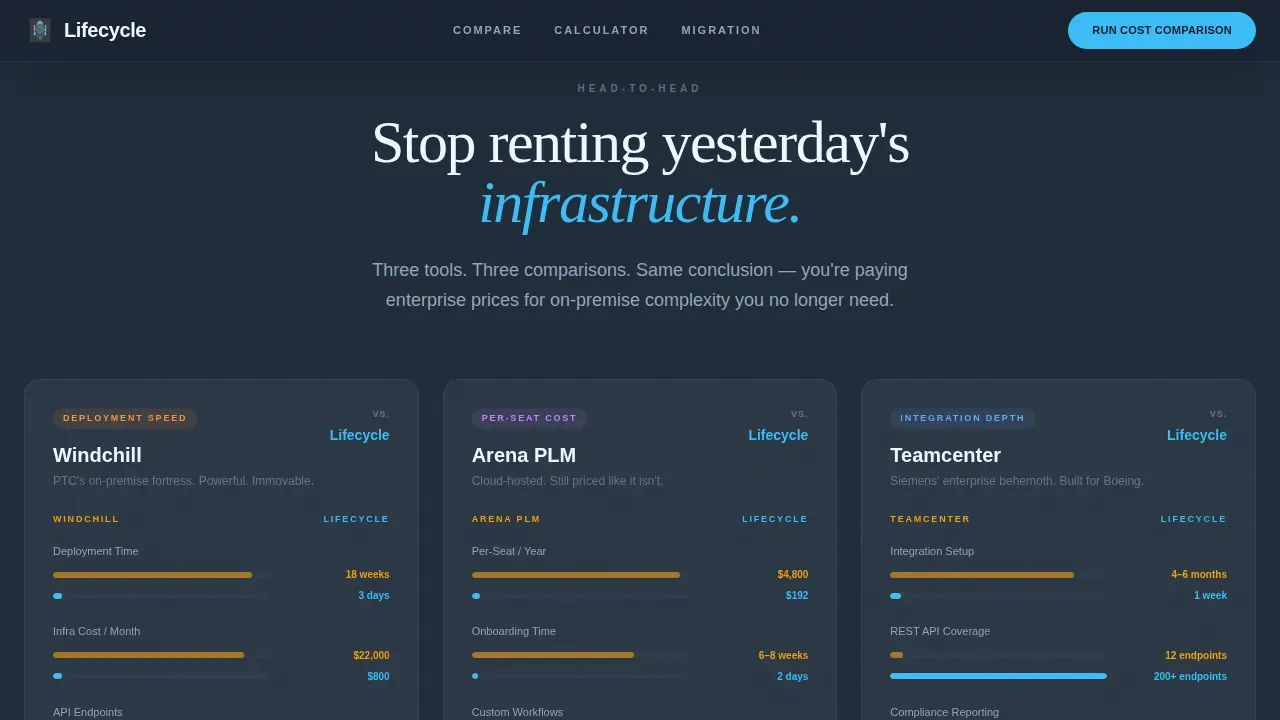
Three side-by-side comparison cards follow the grid. Each card isolates a specific dimension: deployment time, per-seat cost, and application programming interface integration count. The versus structure accelerates visitor confidence. By the end of the third card, the visitor is not comparing anymore but calculating migration timelines. This section is where product lifecycle management plm decisions shift from curiosity to intent.
Two-Step Interactive Cost Calculator
The primary conversion tool opens after the third versus card. Step one asks the visitor to select their current PLM software from a dropdown and enter their approximate seat count. Step two returns a side-by-side cost projection using those inputs, includes a downloadable PDF output, and surfaces a "Book Migration Review" secondary call to action linked to a calendar embed. The calculator transforms generic PLM comparisons into a personal financial case, which is the most effective argument for migration.
Sticky Mobile Call-to-Action Bar
On mobile, a persistent bottom bar keeps the primary "Run Your Cost Comparison" call to action visible at all times. This ensures that users accessing product data on phones or tablets never lose sight of the conversion point regardless of how deep into the page they scroll.
Migration Booking Section with Confidence Metrics
A dedicated section above the footer presents the "Book Migration Review" call to action alongside a set of confidence metrics. This section is designed to close visitors who completed the calculator but have not yet committed. It reinforces data integrity, uptime claims, and the zero-infrastructure deployment model, giving development teams and project managers the last assurance they need before booking.
Page sections overview
| Section | Purpose |
|---|---|
| Logo Bar Hero | Opens with legacy PLM logos, animated underline, and live serverless metrics widget |
| Pain Data Grid | Displays legacy product lifecycle costs in amber rows with scroll-triggered amber-to-blue transition |
| Versus Card One | Compares deployment time between legacy PLM system and serverless alternative |
| Versus Card Two | Compares per-seat cost figures for direct PLM software evaluation |
| Versus Card Three | Compares API integration count to highlight extensibility advantage |
| Cost Calculator | Two-step interactive calculator with dropdown, projection output, and PDF mock |
| Migration Call to Action | Closes with booking embed, confidence metrics, and secondary conversion path |
| Linear Footer | Single-row footer pattern with minimal navigation and legal links |
Design & branding system
The visual identity follows a Dynamic Motion theme grounded in a Slate and Sky color system. The palette is designed to feel like a radar screen at dawn: dark enough to make data glow, light enough to suggest the system is always awake. Typography pairs DM Sans for body copy with Fraunces for display headings, giving infrastructure density a human editorial accent.
- Deep graphite slate (#1E2A38) anchors all primary backgrounds, sidebars, data tables, and modals, making the interface read as infrastructure rather than decoration. Mid-tone steel (#4A5568) surfaces card backgrounds and data grid rows. Open sky blue (#38BDF8) drives all hover states, progress bars, active node indicators, and call-to-action buttons. Pale atmosphere (#F0F9FF) panels provide contrast and whitespace breathing room between dense data sections.
- Sky blue pulses on hover, animates the scanning underline beneath the logo strip, and fills progress bars in the cost calculator output. The amber warning color (#F59E0B) appears only in the pain grid rows and fully fades to sky blue during the scroll transition, making the color shift itself a narrative device.
Mobile & speed optimization
The template is built desktop-first, reflecting the reality that CTOs and operations leads evaluate complex PLM software on desktop. However, mobile access is fully supported with a responsive layout and a purpose-built sticky call-to-action bar. The design separates server-rendered static sections from client-side interactive components to keep initial load weight low.
- Static sections including the logo bar, data grid, and versus cards use server components for fast initial render. Client components handle the cost calculator, GSAP scroll animations, and the sticky mobile bar, keeping interactivity scoped to where it is needed.
- The sticky bottom bar on mobile keeps the primary "Run Your Cost Comparison" call to action persistent, ensuring that users accessing the page on smaller screens always have a clear conversion path without scrolling back to the top.
How this template helps you convert
The Lifecycle Zero Infrastructure PLM landing page template is designed around a single conversion goal: get the visitor to run their cost comparison and book a migration review. Every section is sequenced to build that intent progressively.
- The hero's live metrics widget and animated logo bar create immediate credibility and numeric context. The visitor understands the cost argument before they read a paragraph, which reduces time-to-comprehension and keeps high-intent buyers engaged.
- The versus cards and pain-to-solution grid remove the need for the visitor to do their own competitive research. By the time the cost calculator appears, the visitor is primed to input their own data. The calculator then makes the ROI case personal, which is the final step before a migration review booking.
Other information about this template
This template is a lifecycle-centric, zero-infrastructure PLM landing page template designed to streamline product lifecycle management by offering a ready-made digital interface without complex on-premise hardware. It reflects the principles that designing a landing page for Lifecycle Zero infrastructure requires: a focus on readiness, governance, and rapid deployment. The template supports plm initiatives where the goal is to replace legacy plm systems and move the entire product lifecycle to cloud-based, serverless compute.
- Product lifecycle management plm covers the entire product lifecycle from initial concept and design phase through the development phase, manufacturing, and end-of-life. The template's data grid and versus cards address all of these stages, giving product managers and project managers a clear visual argument for each phase. PLM software solutions that manage the entire lifecycle effectively must handle version control, bom management, change management, configuration management, requirements management, document management, and product data management. This template's section structure reflects all of those workflow dimensions without overpromising on features not present in the prompt.
- PLM software that serves cross functional teams must connect development teams, manufacturing teams, supply chain partners, and external stakeholders through shared product data. Centralized data management provides a single source of truth for all product related data, including bill of materials and computer aided design files. This template supports the narrative that good collaboration plm reduces data errors, improves quality processes, and raises product quality across the development process. The versus cards surface these differences numerically, giving development teams the evidence they need to advance plm initiatives internally.
- PLM integrates with enterprise resource planning, customer relationship management, erp systems, and supply chain management platforms. The template's calculator section can reference these connections as part of the cost projection output, showing how serverless PLM software fits within existing business systems and business operations without requiring a full IT overhaul. Regulatory compliance is simplified when the plm system maintains comprehensive histories and automated documentation, which is a key argument the migration section of this template can carry. Data security and data integrity are reinforced in the confidence metrics block of the migration call-to-action section.
- Cloud-based PLM solutions are transforming product development by enabling real-time collaboration and reducing infrastructure costs. Machine learning and artificial intelligence integration are increasingly expected to enhance PLM by automating tasks, providing predictive insights, and improving decision-making efficiency across the development process. An infrastructure status dashboard provides real-time visibility into environment provisioning across Development, QA, and Production stages. The template's live-metrics hero widget echoes this capability, giving visitors an immediate sense of system awareness. IoT-driven real-time product data, supply chain collaboration, and supplier management are all areas where modern PLM software solutions continue to expand scope. Global manufacturers evaluating cloud PLM solutions will find the versus card structure particularly useful for building internal business cases around development costs, customer satisfaction, customer expectations, and competitive advantage. Successful product development depends on quality control, quality management, quality control measures, and ongoing maintenance of product quality standards. The template supports all of these narratives through its structured, scroll-driven argument. Business solutions that address market demand, reduce risk management overhead, and improve supply chain collaboration are increasingly evaluated on total cost of ownership, and the calculator section makes that argument directly. This template also reflects the principle that plm focuses on people, processes, and product related data across all stages, that plm supports cross functional collaboration and supplier collaboration, and that plm creates a unified digital thread from initial concept to end-of-life. Software releases, business processes, and complex systems all benefit when teams adopt PLM software solution approaches that eliminate infrastructure overhead and let engineers focus on building. PLM processes, plm implementation planning, and IT systems alignment are all topics the migration review booking flow is positioned to address in the post-conversion experience.
Theme
Dynamic Motion
Creative direction
Problem→Solution Arc
Color system
Slate & Sky
Style
Dashboard/Data Grid
Direction
Comparison/Versus
Page Sections
Animated Logo Bar Hero with Live Metrics
Scroll-triggered Pain-to-solution Data Grid
Three Side-by-side Versus Cards
Two-step Interactive Cost Calculator
Sticky Mobile Call-to-action Bar
Migration Booking Section with Confidence Metrics
Related questions
What sections does this landing page template include?
Who is this template designed for?
What animations and interactive elements are included?
Can this template be adapted for other product lifecycle management software platforms?
Does this template handle mobile visitors?