Offshore Analytics Dashboard Landing Page Template
Rig is a split-screen offshore analytics landing page template built for industrial SaaS teams targeting integrity managers, FPSO operators, and drilling supervisors. It opens with a live estimator that generates a personalized dashboard preview from visitor inputs. The dark, heads-up display aesthetic uses sonar green, electric cyan, and hazard amber to keep critical data readable at a glance.
by Rocket studio
Quick summary
Rig is a single-page, split-screen landing page template designed for offshore analytics dashboard products. It puts an interactive estimator front and center, turning visitors into active users within seconds. The design runs on a high-contrast dark palette that mirrors real offshore control environments, and every section follows a Problem-to-Solution arc that builds urgency as the visitor scrolls.
Who this template is for
This template is built for technology companies selling vertical software-as-a-service (SaaS) products to the offshore energy sector. It suits teams who need a lead generation page that qualifies prospects through interaction rather than passive reading.
- Integrity managers at national oil companies (NOCs) overseeing aging offshore jacket structures
- FPSO (Floating Production, Storage and Offloading) operators monitoring mooring fatigue across multiple assets
- Drilling supervisors who need one consolidated screen to inform time-critical operational decisions
What problem this template solves
Offshore SaaS products are complex to explain and harder to demo through a static page. Visitors in this sector are technically literate and skeptical. They need to see the product working, not just described.
- A generic hero image fails to communicate real-time data capability to engineers used to live control systems
- Static pain-point copy does not carry the urgency that unplanned shutdowns, inspection overruns, and regulatory penalties actually represent
- Standard lead forms placed at the bottom of a page lose visitors before they ever reach a call to action
What you get with this template
You get a fully structured, single-page layout that guides a technically demanding audience from first interaction to form submission. Every panel, section, and color choice serves the lead generation goal directly.
- A working header estimator with a live mock-dashboard that responds to visitor inputs in real time
- A scrolling Problem-to-Solution arc with paired left-right panels, each linking a specific operational pain to a corresponding dashboard view
- Two primary call-to-action placements and a secondary gated content path to capture visitors at different stages of intent
Feature list
This template is built around six tightly integrated components drawn directly from the source brief. Each one contributes to the overall lead generation objective.
Interactive Header Estimator
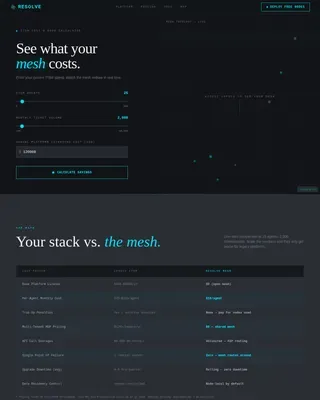
The header is a 50/50 split panel, not a static hero. The left side presents a scenario selector covering platform type, asset age bracket, sensor count, and regulatory region. As the visitor adjusts inputs, the right panel renders a live mock-dashboard: numbers tick upward in sonar green, a donut chart animates into place, and a risk score badge shifts from electric cyan to hazard amber. The visitor is using the product within five seconds of arriving.
Problem-to-Solution Scroll Arc
Below the header, the left panel carries stark, data-heavy pain statements drawn from real operational contexts: unplanned shutdowns per year, inspection cost overruns, and regulatory penalty averages. The right panel answers each statement with a corresponding dashboard view. Motion-tracked transitions slide each solution panel into place as the visitor scrolls, and the hazard amber accent grows progressively across the screen to escalate urgency.
Dual Call-to-Action Placement
The primary call to action, "Build My Dashboard Preview," appears twice. The first placement sits inside the header estimator as the submit action. The second floats at the resolution section, which closes the page with a calm, full-width dashboard panorama rendered entirely in sonar green. Both placements use hazard amber to draw the eye at the moment of decision.
Lead Capture Form
The form captures four fields sequenced to reduce friction: platform type first, then current monitoring stack via a dropdown that includes the option "spreadsheets / manual," followed by fleet size, and finally work email. Placing the easiest field first keeps completion rates higher across a technically busy audience.
Secondary Gated Content Path
A second conversion path offers a downloadable integrity-monitoring benchmark report. It is gated behind email only, requiring no sales conversation. This path catches visitors who are researching rather than buying, keeping them inside the funnel with a lower-commitment offer.
Dynamic Motion Visual System
The template uses a Dynamic Motion theme throughout. Data lines animate, chart fills sweep in, and the risk score badge pulses. Motion is purposeful: it reinforces the idea that the underlying product processes live data continuously, not in batches or on demand.
Page sections overview
| Section | Purpose |
|---|---|
| Header Estimator Panel | Interactive scenario selector with live mock-dashboard response |
| Operational Inefficiency Block | First pain statement with corresponding dashboard solution view |
| Safety Risk Block | Escalated pain statement focused on real-time safety monitoring |
| Regulatory Exposure Block | Highest-urgency pain statement with amber accent at maximum intensity |
| Resolution Dashboard Panorama | Full-width calm close showing complete monitoring coverage |
| Primary Lead Capture Form | Four-field form sequenced for low friction, captures qualified leads |
| Secondary Gated Content Offer | Email-only download path for benchmark report, catches early-stage visitors |
Design & branding system
The visual identity uses the Acid Digital color system applied across a Dynamic Motion theme. Every design decision is grounded in the analogy of a heads-up display projected onto a rain-streaked wheelhouse window: synthetic, luminous, and impossible to ignore against a dark background.
- Abyss black (#0B0E11) covers all backgrounds, keeping every glowing element readable
- Sonar green (#39FF14) traces live data lines, chart fills, and ticking number animations throughout the scroll experience
- Electric cyan (#00F0FF) marks interactive hotspots and hover states, guiding the visitor's cursor through the interface
- Hazard amber (#FFB300) is reserved strictly for warnings, call-to-action elements, and the escalating risk score badge, so the eye always knows where urgency lives
Mobile & speed optimization
The split-screen layout and motion elements are designed with a responsive structure in mind. On smaller viewports, the 50/50 panels stack vertically so the estimator and dashboard preview remain functional and readable without horizontal scrolling.
- Animated elements such as the donut chart and data line traces are lightweight motion components, not video embeds
- The lead capture form and both call-to-action placements remain accessible and fully tappable on touch devices
How this template helps you convert
Every structural decision in this template is oriented toward moving a technically skeptical visitor toward a qualified form submission.
- The interactive estimator creates a sense of ownership before any sales message appears. A visitor who has already configured their platform type and seen a personalized risk score is more likely to submit the form than one who has only read a product description.
- The Problem-to-Solution scroll arc mirrors the mental journey of an integrity manager or drilling supervisor, making each section feel relevant rather than generic, which sustains attention through to the call-to-action placements.
- The secondary gated content path ensures that visitors not ready to talk to sales still convert to a tracked email address, extending the lead generation reach of a single page visit.
Other information about this template
This template is categorized under Technology, specifically the Offshore Vertical SaaS subcategory, and is built for the offshore analytics dashboard niche. It is a strong fit for teams building or relaunching product marketing pages targeting the North Sea, West Africa, and other deepwater and shelf operating regions.
- The template style is Split Screen (50/50), making it well suited for products that benefit from showing both a configuration interface and a live output side by side
- The creative direction follows a Problem-to-Solution Arc, a structure proven to work with technically literate audiences who want evidence before commitment
- The header concept is a Calculator/Estimator, which differentiates this page from standard SaaS landing pages that rely on static screenshots or explainer videos
- The theme is Dynamic Motion and the color system is Acid Digital, both designed to reinforce the impression of a live, continuously operating data environment


Theme
Dynamic Motion
Creative direction
Problem→Solution Arc
Color system
Acid Digital
Style
Split Screen (50/50)
Direction
Lead Generation
Page Sections
Interactive Header Estimator
Problem-to-solution Scroll Arc
Dual Call-to-action Placement
Friction-sequenced Lead Capture Form
Secondary Gated Content Path
Dynamic Motion Visual System
Related questions
Can I customize the estimator fields to match my product's inputs?
Does the template include a real analytics backend or live data connection?
How does the secondary gated content path work?
Is the split-screen layout usable on mobile devices?
Who is this template best suited for?