Signal - Brutalist AI Risk Scoring Landing Page Template
Signal - Brutalist AI Risk Scoring Landing Page Template
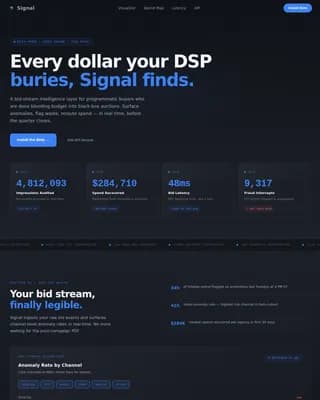
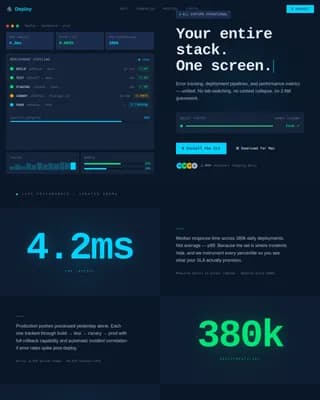
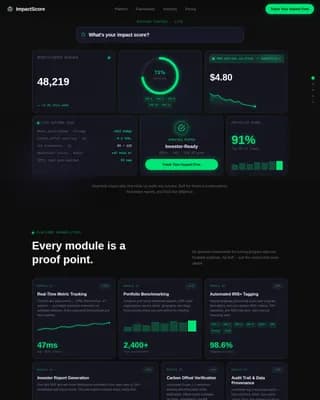
Signal is a Bold Brutalist landing page template built for seed-stage InsurTech platforms that price risk with machine learning. The split-screen layout pairs massive monospaced headlines with a live risk-scoring dashboard screenshot. Every section escalates proof like a classified research dossier, guiding VCs, carriers, and reinsurers toward a gated dataset request form.
by Rocket studio
Loading preview…
Quick summary
Signal is a single-page landing page template designed for AI-powered InsurTech startups at the seed stage. It uses a Bold Brutalist visual identity and an AI Iridescent color system to position algorithmic underwriting platforms in front of enterprise decision-makers. The page structure mimics a proprietary industry research dossier, building an evidence-based case one scroll depth at a time.
Who this template is for
This landing page is built for founders, product teams, and marketing teams operating at the intersection of machine learning and insurance risk pricing. The layout speaks directly to technical buyers who evaluate claims with data, not design flair. If your platform scores risk algorithmically and your sales cycle runs through enterprise procurement, this template fits your market.
The target audience for this page includes:
Seed-stage InsurTech founders who need to convert skeptical enterprise buyers into qualified leads
Product teams building AI-powered underwriting or risk analysis platforms that require proof-first landing page content
Marketing teams pitching to Series A venture capital firms, insurance carriers, and reinsurance executives who respond to hard data over polished brand aesthetics
What problem this template solves
Enterprise insurance buyers do not trust a polished landing page. They trust evidence. Legacy pricing engines built on decades-old actuarial tables have left carriers hungry for proof that a new model actually outperforms the status quo. The problem is that most startup landing pages look like every other SaaS pitch on the entire internet: a hero section, three feature icons, and a contact form. That format does not earn the conversion when the buyer is a reinsurance executive reviewing loss ratios at 2 a.m.
Signal solves that credibility gap by treating the landing page as a research report, not a brochure. Each section adds a harder data point, moving the visitor from skepticism to conviction before the call to action appears.
Legacy InsurTech landing pages bury the proof, leading enterprise buyers to bounce before they reach the conversion point
Generic page layouts produce false positives in the sales pipeline, attracting unqualified leads who do not understand the model's technical depth
Theme
Bold Brutalist
Creative direction
Industry Report
Color system
AI Iridescent
Direction
Lead Generation
Page Sections
Split-screen Hero with Live Dashboard
Brutalist Market Problem Data Wall
Model Architecture and Benchmark Panel
Redacted Carrier Case Study Section
Progressive Disclosure Lead Capture Form
Sticky Call to Action Bar and Scroll Animation System
Related questions
Who is the Signal template built for?
Can I replace the placeholder data and case study content with my own figures?
Does this template support two separate conversion paths?
What technology stack does this template use?
Is this template suitable for AI platforms outside of InsurTech?
Founders lose high-value accounts when the landing page fails to demonstrate competitive intelligence and algorithmic differentiation at first glance
What you get with this template
The Signal landing page delivers a fully structured, brutalist-coded single-page experience optimized for lead generation in a B2B enterprise context. Every section is purpose-built to carry the visitor deeper into the evidence stack, culminating in a progressive disclosure form that qualifies intent before capturing contact details. The page is desktop-first by design, reflecting the reality that venture capital and carrier decision-makers review pitches on laptops, not phones.
Included in the template:
A five-section landing page structure covering the hero, market problem data wall, model architecture and benchmarks, a redacted case study with a primary call to action form, and tiered access paths
A persistent sticky call to action bar that activates after 60 percent scroll depth, ensuring the conversion opportunity is never out of reach
A progressive disclosure lead capture form with three fields: work email first, then company name and role via dropdown, then an optional qualifying question about loss ratio improvement targets
Feature list
This landing page template is packed with purposeful components. Each one is grounded in the brief and built for the specific conversion goals of an InsurTech seed-stage platform. Here is what the feature set delivers in practice.
Split-Screen Hero with Risk Dashboard Screenshot
The header splits 50/50. The left side holds a massive monospaced headline set in titanium white, anchored by a hard data claim about claims parsing speed and loss ratio improvement. The right side displays a raw platform screenshot of the risk-scoring dashboard: a live coastal property exposure heatmap, a probability distribution curve mid-animation, and a confidence interval badge glowing iridescent at 94.6 percent. There is no browser chrome, no device mockup, and no softening of the interface. The visitor feels as if they are already logged in, which is the point of the page.
Animated Market Problem Data Wall
Section one post-hero presents the market problem as a brutalist data wall. Animated counters surface figures such as $47 billion in mispriced United States property risk. The layout is split 50/50: stat blocks on one side, explanatory prose on the other. Thick, solid grid lines organize every data point without decorative imagery. The design avoids soft gradients and shadows in this section, relying on stark contrast and bold monospaced scores to create immediate impact. This section is where the page earns the visitor's attention before asking anything in return.
Model Architecture and Benchmark Panel
Section two reveals the AI model architecture diagram on one side and benchmark results against incumbent pricing engines on the other. Each performance metric pulses with an iridescent effect when it enters the viewport, driven by GSAP ScrollTrigger animation. The analysis is visual and comparative: the model's scores sit alongside legacy engine scores in a format that makes the performance gap undeniable. This section is where the page begins to function as competitive intelligence for the buyer who is already evaluating alternatives.
Redacted Carrier Case Study
Section three is a classified-feel case study: the carrier name is blacked out, but the loss-ratio improvement curve is fully visible and unmistakable. This design choice signals transparency while respecting confidentiality, which is exactly the kind of honesty that AI risk scoring demands from its market. The redacted case study is where the page converts research-mode visitors into request-mode buyers. The primary call to action form sits directly below the curve, positioned at the moment of maximum conviction.
Progressive Disclosure Lead Capture Form
The lead capture form uses a three-step progressive disclosure structure. The first field asks only for a work email, reducing friction for visitors who are still evaluating. The second step reveals company name and a role dropdown covering venture capital, carrier, broker, reinsurer, and other categories. The third step offers a single optional text field asking what loss ratio improvement would change the visitor's portfolio. This approach filters for genuine intent without requiring manual intervention to qualify leads. A secondary conversion path offers a gated research brief requiring only email, catching visitors who want the data before committing to a full conversation.
Iridescent Scroll Animation System
The animation layer is built on GSAP ScrollTrigger and covers scan lines on the hero, iridescent pulse effects on every data point that enters the viewport, staggered section reveals, and animated counters in the market problem section. The animation system is high-density by design, because the page rewards scroll depth with denser proof. Each animation is tied to a data moment, so the visual hierarchy always points the eye toward performance signals and key insights rather than decoration.
Page sections overview
Section
Purpose
Hero Split Screen
Establish the data claim and show the live risk dashboard screenshot
Market Problem Wall
Surface the $47B mispriced risk figure with animated counters and stat blocks
Model Architecture Panel
Compare the AI model against legacy pricing engines with benchmark scores
Redacted Case Study
Show loss ratio improvement from a real carrier while protecting identity
Primary call to action Form
Capture qualified leads via progressive disclosure form post case study
Access Tiers Section
Present research, pilot, and enterprise engagement paths for different buyer stages
Sticky call to action Bar
Persist the dataset request call to action after 60 percent scroll depth
Footer Pattern
Minimal developer-style footer with privacy, terms, and status links
Design & branding system
The visual identity of this landing page is built on a Bold Brutalist foundation with an AI Iridescent color system. The brutalist aesthetic embraces an exposed design philosophy: function, transparency, and data come first. There are no decorative flourishes, no stock photography, and no soft gradients in the structural layer. The palette feels industrial and serious until the iridescent accents catch the light, making every chart and metric shimmer against the concrete typography. Bold, oversized monospaced typefaces create immediate impact and convey data directly, which is the right register for an audience that reads actuarial tables for a living.
Color system: void black (#0B0B0F) as the dominant background; synthetic violet (#7B2FBE) bleeding into holographic cyan (#00E5CC) on gradient data accents; raw titanium (#D0D0D8) for body prose; iridescent pink (#FF3CAC) reserved exclusively for interactive states and data callouts
Typography: JetBrains Mono for all headlines and data labels to maintain monospaced brutalist clarity; DM Sans for body prose to keep reading flow comfortable without softening the overall tone
Layout structure: asymmetric 50/50 split screens throughout, thick solid grid lines for visible section borders, no decorative imagery, and a single-goal focus per section to keep visual hierarchy clean and conversion-oriented
Mobile & speed optimization
This landing page is desktop-first by deliberate design choice. The target audience consists of enterprise insurance executives and venture capital analysts who review investment pitches on high-resolution laptop screens, often late at night. The template layout is optimized for that context. The minimalist brutalist structure, which avoids unnecessary decorative layers, naturally supports faster load performance across modern browsers. The page relies on Server Components for static sections and Client Components only for animated and interactive elements, keeping the render model efficient.
Desktop-first layout prioritizes the 50/50 split-screen experience, full-width data walls, and dashboard screenshot fidelity as they appear on large screens
Animation is handled via GSAP ScrollTrigger, with staggered viewport-entry reveals that keep the page responsive as users scroll through dense data sections
The progressive disclosure form reduces page weight at load time by revealing additional fields only when the visitor advances, which keeps the initial landing experience fast and focused
How this template helps you convert
The Signal landing page is engineered around a single idea: earn the conversion with evidence before you ask for the click. The page structure is modeled on the cadence of a white paper that builds an irrefutable thesis one data point at a time. Every section adds a harder claim, every animation points to a metric, and every scroll reward is a denser proof point. The result is a conversion path that feels inevitable rather than pushy.
The hero section delivers the hardest claim first, using a monospaced data headline and a raw dashboard screenshot to establish that the model is real, the scores are real, and the analysis is already running. Most users who reach the case study section after passing through the data wall are already in a high-intent state, which means the form fields feel like a logical next step rather than an interruption.
The sticky call to action bar activates after 60 percent scroll depth, ensuring that visitors who are deep in research mode never have to scroll back up to request the dataset. This reduces manual intervention in the conversion process and keeps high-intent users on a direct path to the lead capture form without friction.
The secondary conversion path, a gated research brief requiring only an email address, catches visitors who are not yet ready to identify their company and role. This expands the top of the funnel without diluting the primary lead quality, giving the platform two conversion points on a single page.
Other information about this template
The Signal template is built to connect a highly technical AI risk-pricing platform with the enterprise buyers who have the authority and budget to act on what they find. It is worth understanding a few additional details about the template's context, use case, and design approach before you decide if it fits your project.
This is where the Signal Brutalist AI Risk Scoring Landing Page template fits most clearly in the broader landscape of AI-powered page design. It belongs to a specific category of landing page templates designed for SaaS products, AI infrastructure tools, and risk management platforms that target technical audiences. It is optimal for teams building cybersecurity, AI infrastructure, or B2B risk management tools where the brand needs to communicate precision and analytical depth before asking for a meeting.
The template is built on a technology stack using Next.js 16, Tailwind CSS, and Framer Motion, which gives product teams and developers a reliable foundation for launching a high-fidelity page without building from scratch
AI-powered tools like this template allow teams to go from idea to live page far faster than a custom build, which matters when a seed-stage startup needs to move at the speed of its fundraising timeline
The landing page content is structured so that marketing teams and product teams can swap in their own benchmark data, case study curves, and model architecture diagrams without redesigning the layout
The template is designed for teams who want to scale their outreach without scaling their design cost, keeping per-page cost low while maintaining the brand weight of a custom research dossier
AI tools can analyze landing pages across multiple dimensions, including conversion categories and performance metrics, and the Signal template is pre-structured to surface the data signals that those analysis frameworks reward
The page earns social proof through redacted case study data and benchmark comparisons rather than traditional testimonial formats, which is a stronger signal for enterprise buyers who are skeptical of polished brand claims
Leveraging AI for market analysis can provide key insights into buyer intent and market trends, and the Signal template is built to capture and qualify that intent at the moment it peaks during the research phase of the enterprise sales cycle
AI-generated personas can replicate human purchase intent with high reliability, and the form structure on this page is designed to match the way those personas evaluate risk pricing platforms before they reach out
Teams running ads to this landing page will find the single-goal focus and clear visual hierarchy especially effective, because every section reinforces the same thesis without distracting the visitor toward secondary destinations
The page is a strong fit for any marketer or founder who needs a landing page that functions as a competitive intelligence asset: it positions the platform against legacy engines, quantifies the performance gap, and gives the visitor enough proprietary data to understand why the solution is worth a conversation
AI tools can suggest or automatically apply improvements based on engagement and conversion data, and the modular section structure of this template makes it straightforward to iterate on individual sections based on that feedback without rebuilding the entire page
The template supports workflow automation for lead routing by capturing role and company data at the point of form submission, reducing the need for manual intervention in post-submission qualification
An AI agent reviewing this page would find that the landing page content is structured to perform well across multiple analysis dimensions, from performance signals and conversion optimization scores to brand clarity and data density assessments