
This blog explains how to get started in the AI sector using Rocket.new, covering onboarding steps, essential tools, and practical tips to help beginners and professionals transition smoothly into artificial intelligence.
How do consultants quickly understand a new AI sector before stepping in?
They solve a real problem first. That’s exactly where AI Sector Onboarding on Rocket.new comes in. Instead of spending weeks in theory consultants use AI to build, test, and validate ideas fast.
According to research from MIT Sloan School of Management, generative AI can improve a highly skilled worker’s performance by nearly 40% when used within its capabilities. That shift is changing how onboarding works across every market and industry.
So let’s break this down in a simple way how to apply this approach step by step and turn ideas into real working solutions quickly.
Why “Solve Before Entering” Actually Works?
Consultants don’t just read reports anymore. They build something small first. That’s the whole point. When you enter a new AI space, theory only gets you halfway. Real understanding comes from doing.
When you try to build even a basic app, you quickly see:
- Where the gaps are
- What customers actually need
- What competitors are missing
This is where vibe coding starts to shine. Instead of spending months writing code, you use AI powered agents to generate solutions quickly.
And yes, this matters because many consultants face a frustrating experience when switching industries. Too much research, too little action.
What is Rocket.new and Why Consultants Use It?
It’s a platform where users can build and launch apps using AI. No heavy coding background needed. You can go from idea to working prototype using a single prompt.
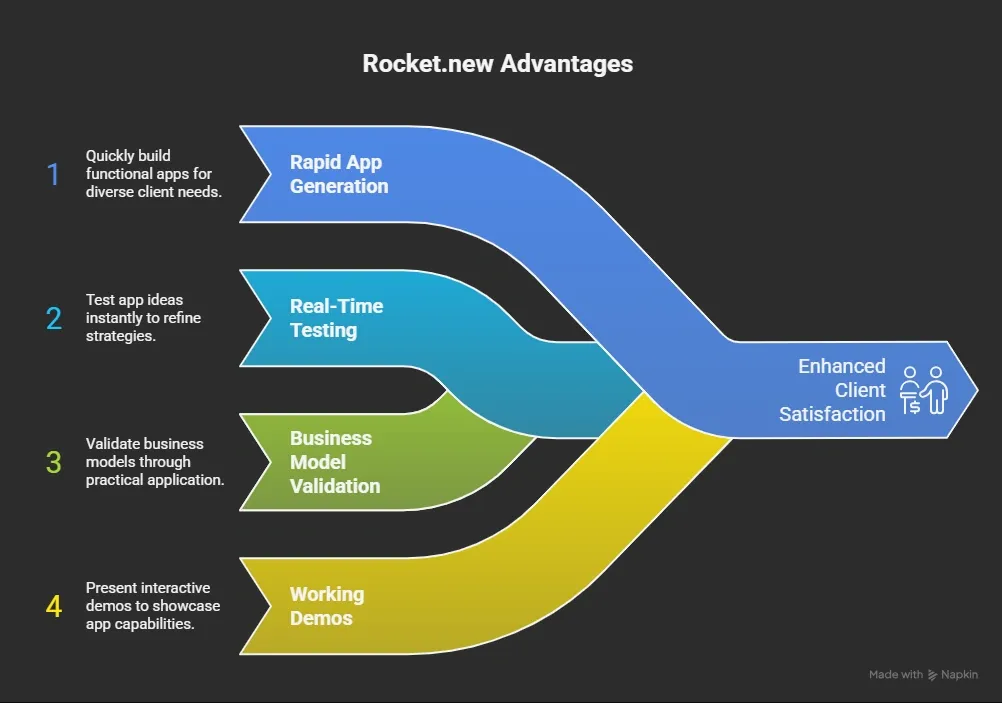
All in one platform. Instead of spending weeks planning, they build first, then refine strategy.
How the “Solve First” Process Looks in Real Life?
Getting into a new AI sector can feel confusing at first. There’s too much information and not enough clarity on where to start.
So, instead of overthinking, consultants follow a simple process. They take action early, build something small, and learn through doing. This approach keeps them focused and avoids getting stuck in endless research.
Here’s how consultants usually approach onboarding using Rocket.new.
Step 1: Quick Research
They start with light research. Not deep, just enough to understand:
- The market
- Key trends
- Main competitors
They don’t get stuck here.
Step 2: Define One Problem
Instead of trying to solve everything, they pick one clear problem. That becomes the focus.
Step 3: Use a Single Prompt
They write a simple prompt describing the idea.
Something like: “Build an AI tool for customer onboarding automation.”
That’s it.
Step 4: Generate the App
Rocket.new uses AI agents to generate:
- Frontend screens
- Backend logic
- Basic features
Now they have something real to test.
Step 5: Test and Fix
They run tests, check errors, and fix issues. This step builds confidence.
Step 6: Refine Strategy
Now the strategy becomes sharper because it’s based on real output, not guesswork.
This process works because it replaces overthinking with action. When you build first, you learn faster. And when you test early, your ideas become clearer, stronger, and more practical.
Old vs New Onboarding
Before jumping into a new AI sector, it helps to understand how things have changed. The traditional way focused heavily on research and planning, while the newer “solve first” method is more action-driven.
This shift is exactly why many consultants now prefer building early instead of waiting.
Let’s look at the difference side by side.
| Approach | Old Method | Solve First Method |
|---|---|---|
| Time | Weeks of research | Hours to first app |
| Tools | Reports, docs | AI tools, Rocket.new |
| Output | Slides | Working app |
| Confidence | Low | High |
| Value | Theoretical | Real value |
The difference is simple. One approach delays action, while the other encourages it. When you build early, you gain clarity faster. And when you see real output instead of just plans, your confidence naturally grows.
The Role of AI Agents in This Workflow
AI agents are the backbone of this entire process. They take care of the heavy lifting so users can stay focused on ideas instead of getting stuck in technical details.
Here’s how they help in real workflows:
- Generate code
- Fix errors
- Handle backend tasks
- Create features
- Support deployment
Instead of manually writing code, users simply guide the agents using clear instructions and prompts. The agents handle the execution in the background.
This approach makes development faster and smoother. It also reduces effort, especially for users who don’t come from a strong coding background.
Why Vibe Coding is Changing Everything?
Let’s talk about vibe coding again. It’s not about perfect code.
It’s about:
- Fast iteration
- Quick validation
- Learning by doing
Consultants use vibe coding tools to stay focused on ideas, not syntax. and yes, it sounds simple. But it works because it removes friction.
Rocket.new Features That Support This Approach
Based on their documentation, Rocket.new provides a full system for solving before entering a new vertical.
Key Features
- AI powered agents for building apps
- Prompt-based app generation
- Built-in deployment options
- Dashboard for tracking progress
- Support for backend logic
- Error detection and fix suggestions
- Multiple screens and pages support
This means users don’t need multiple tools. Everything is in one platform.
How Rocket.new plays a part in AI Sector Onboarding
Now, let’s connect it back in a clear way. When consultants step into a new AI domain.
They usually need three things to move forward with confidence:
- Speed
- Clarity
- Confidence
This is exactly where Rocket.new fits in. The platform helps users move quickly from ideas to action without getting stuck in long planning cycles.
Instead of waiting and overthinking, consultants use Rocket.new to:
- Build a prototype
- Test it in real scenarios
- Refine their positioning based on actual results
This approach shifts the focus from assumptions to real outcomes. As a result, consultants are able to deliver stronger insights and create real value for their clients.
Pricing Plans and Cost Savings
Rocket.new offers different pricing models.
There’s a free plan to start with. This helps users test ideas without risk. Then there’s a pro plan with more features and resources.
For consultants, this means:
- Low entry cost
- High output potential
- Strong cost savings
You don’t need a full dev team to start.
Common Mistakes Consultants Make
Even with the right tools, it’s easy to slow yourself down if the approach isn’t right. Many consultants get stuck not because of a lack of skill, but because of how they start.
Here are a few common mistakes to watch out for:
- Doing too much research before building
- Trying to build a perfect app from the start
- Ignoring user feedback in the early stages
- Not testing ideas early
These habits delay progress and reduce clarity.
Start small, build quickly, and test as early as possible. This keeps the process focused and helps you learn faster with real results.
Why Solving First Changes Everything
Consultants often spend too much time researching without creating anything. This slows progress and reduces clarity. Instead of gaining real insights, they stay stuck in theory. Using Rocket.new, they can build, test, and launch small apps quickly. This hands-on approach improves understanding and speeds up results. It shifts the focus from thinking to doing, which helps teams gain confidence while working on real solutions.
The main takeaway is simple. AI Sector Onboarding on Rocket.new works because it focuses on solving first. When you build early, you understand faster. When you test early, you reduce errors. And when you create real output, you deliver more value. Keep it simple. Build first. Learn faster.
Want to try this approach yourself? Then start building your first solution using a simple prompt only on Rocket.new.
Table of contents
- -Why “Solve Before Entering” Actually Works?
- -What is Rocket.new and Why Consultants Use It?
- -How the “Solve First” Process Looks in Real Life?
- -Step 1: Quick Research
- -Step 2: Define One Problem
- -Step 3: Use a Single Prompt
- -Step 4: Generate the App
- -Step 5: Test and Fix
- -Step 6: Refine Strategy
- -Old vs New Onboarding
- -The Role of AI Agents in This Workflow
- -Why Vibe Coding is Changing Everything?
- -Rocket.new Features That Support This Approach
- -Key Features
- -How Rocket.new plays a part in AI Sector Onboarding
- -Pricing Plans and Cost Savings
- -Common Mistakes Consultants Make
- -Why Solving First Changes Everything