
How can artificial intelligence prompt engineering to guide steady outputs? See how careful phrasing shapes AI responses, helping teams keep output steady as rapid product work reveals how wording shifts model behavior today.
Artificial intelligence keeps pushing product development forward. Teams move faster. Ideas come together in a single afternoon.
Yet as this pace picks up, a quiet challenge shows up in the background. Small changes in wording can shift the output.
Why does this happen?
As apps come together faster, teams start to see how much the right phrasing matters. This is where the field of artificial intelligence prompt engineering comes into play. With a bit of structure and clear direction, responses feel steady and reliable.
In this blog, you will see how models react to different lines, how teams adjust as they go, and how thoughtful prompting strengthens real work.
Why do fast AI apps benefit from clearer prompt structure?
Fast-moving teams often run into slowdowns rooted not in compute, but in unclear prompts. A system might misinterpret complex instructions, drift from the desired output, or misunderstand the desired task. Even a small detail left out creates unnecessary loops of testing and refinement.
Prompts behave more like evolving conversations than static configurations. Tone influences how a large language model interprets instructions. Order shapes how generative AI models apply context. Boundaries determine whether responses stay focused or wander. And as generative AI systems scale into production, clarity becomes a performance factor.
Changing workflows and shifting team habits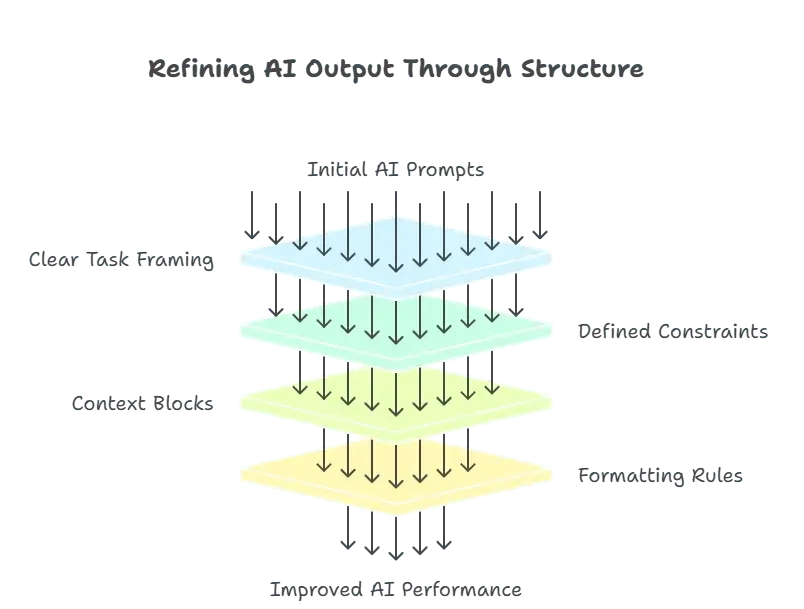
As prompt engineering techniques become more widely used, they reshape how teams collaborate. Developers pay closer attention to phrasing. Writers learn how AI technology interprets direct instruction. Designers treat system messages as part of the product experience.
QA specialists evaluate more than logic; they check tone, clarity, and expected response patterns.
These shifts show up in various ways:
- Engineers refine prompts as carefully as they adjust user prompts in code.
- Content teams look for natural language patterns familiar to AI language models.
- QA reviewers watch for complex reasoning errors or inconsistencies in structured data.
- Product leads track how prompt engineering's important decisions affect new features.
This cross-functional blend strengthens outputs. As generative AI tools become more common, prompts evolve into core building blocks rather than disposable snippets. Teams even treat them like components in a programming language, versioning, testing, and checking them against user queries.
And with generative AI expanding into legal document processing, coding tasks, and natural language processing workflows, prompt engineers help keep responses stable across diverse contexts.
Building prompts for stability and speed
Fast AI apps depend on prompts that reduce confusion rather than complicate it. A reliable structure lets AI tools respond without hesitation, especially when handling complex tasks.
A balanced prompt often includes:
Transitioning between these parts with natural language helps maintain clarity. When prompts feel conversational, models react with more controlled, relevant outputs.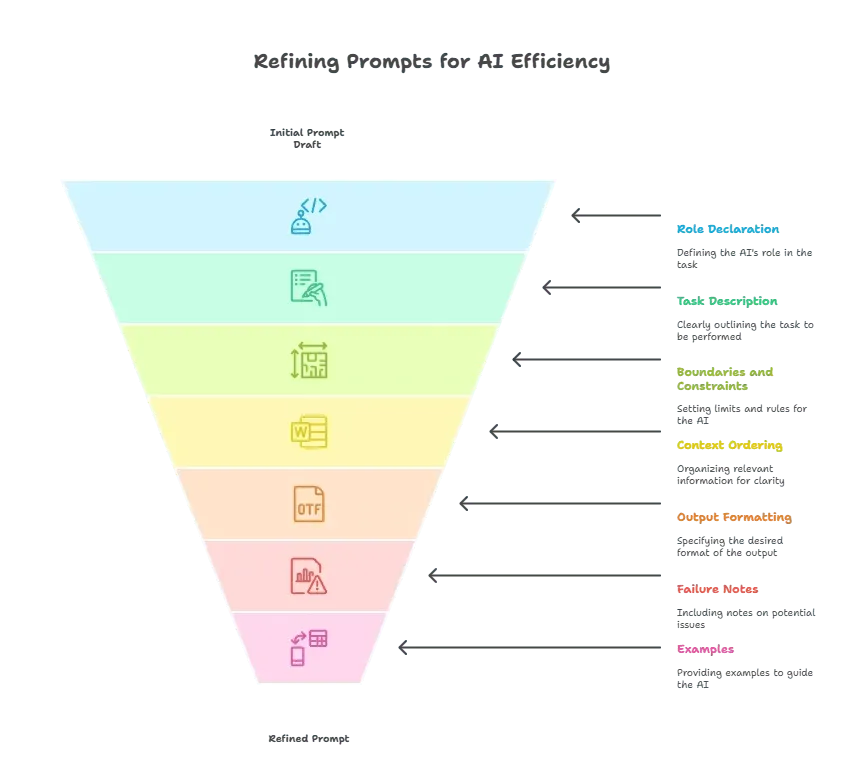
A real example of prompt structure affecting performance
Consider a feedback-analysis tool designed to process messages in real time.
The initial prompt asked the AI model to extract themes and write a summary. The system produced quick responses but lacked consistency.
Tone varied sharply. Categories shifted unpredictably. Some summaries inserted irrelevant facts or fabricated issues.
When the team restructured the prompt, performance changed significantly. The new version separated each instruction, added clear formatting instructions, placed context in a stable block, and listed common errors to avoid.
With this cleaner structure, the AI system produced more reliable results. Latency decreased because fewer retries were needed. No infrastructure updates were required; the improvement came entirely from optimizing prompts.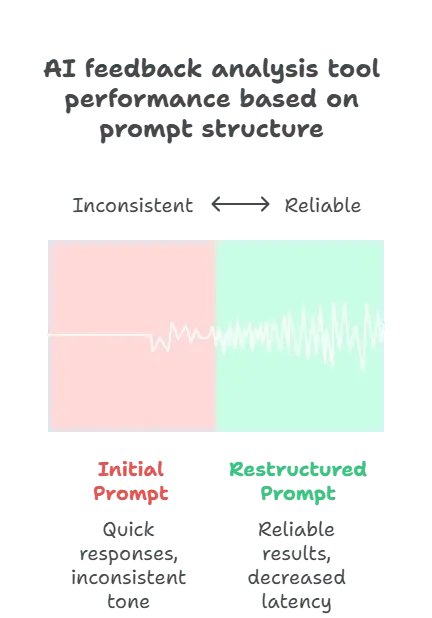
This pattern appears across many AI applications. A refined prompt becomes a lightweight path toward more stable generative AI outputs.
Helpful prompt components and how they shape behavior
| Component | Purpose | Practical Impact |
|---|---|---|
| Role declaration | Sets behavioral tone | Helps maintain consistent voice |
| Task description | Defines the main action | Clears ambiguity |
| Boundaries | Highlights limits | Keeps responses controlled |
| Formatting rules | Shapes output structure | Supports readable, relevant outputs |
| Examples | Guides style | Strengthens pattern consistency |
| Negative cues | Identifies missteps | Reduces unwanted deviations |
This framework helps teams collaborate smoothly, especially as they scale generative ai across multiple workflows.
Community insight
Practitioners frequently discuss the evolving nature of prompting, especially in spaces dedicated to machine learning and generative AI. One comment captures this sentiment well.
In a Reddit discussion, user “arc_splice” shared:
“Prompt writing stopped feeling like instructions and started feeling like shaping conversations. The better the conversation, the more stable the response.”
This reflects a growing understanding that prompting mirrors human intelligence patterns rather than rigid scripting.
Using boundaries without restricting creativity
Some assume boundaries limit creative flexibility. Yet in practice, boundaries support creativity by reducing noise. They help AI models focus on relevant output without veering off track. This is especially helpful when producing code snippets, generating code from existing code, or managing complex instructions.
Refining a prompt’s boundaries often yields the strongest improvement in fast AI applications. With clear direction and precise instructions, large language models LLMs maintain coherence even when handling a user’s query that contains scattered details or unclear expectations.
And when handling additional context such as structured data or references to training data, prompts benefit from a consistent format. This leads to more accurate responses and, in many cases, more accurate responses again when variations occur.
Rocket: supporting faster prompt development
Vibe Solutioning Platforms like Rocket.new help teams test and refine prompts with less friction.
Rocket supports structured workflows that help prompt engineers to compare output versions, track changes, and share insights. This reduces repetitive work and helps teams maintain responsible AI practices as they iterate.
Features of Rocket.new
- Prompt versioning: Compare changes across iterations
- Test snapshots: Track subtle variations
- Role-based editing: Organize system and developer views
- Run history: Detect behavior shifts
- Team visibility: Keep contributors aligned
These features encourage crafting effective prompts that align with the desired outcomes of new features or generative AI systems in development.
Bringing clarity and speed together
Fast apps thrive when prompts reduce confusion and support clean interpretation. A balanced combination of structure and natural tone helps AI tools deliver relevant output quickly. Clear boundaries minimize detours. Organized context helps AI models perform complex reasoning without drifting. And steady formatting supports downstream machine learning processes.
Teams often adopt habits like:
- Clear objectives: Direct the model’s focus
- Predictable structure: Simplifies reading and parsing
- Context separation: Avoid mixing instructions with variable content
- Adaptive wording: Keep prompts natural and readable
These approaches support a promising future in prompt engineering use cases across industries.
Shaping future workflows through AI prompt engineering
Fast AI development depends on structured prompting that lets large language models respond clearly, reliably, and at speed. As teams build new experiences with generative AI, they increasingly rely on well-structured prompts to efficiently produce the final answer. Whether creating text, generating images, or handling a legal document workflow, prompt engineers now stand at the center of reliable output design. With steady prompting strategies, AI models respond more predictably, and teams move with less friction as applications grow.
Table of contents
- -Why do fast AI apps benefit from clearer prompt structure?
- -Changing workflows and shifting team habitsai output.webp (1).png
- -Building prompts for stability and speed
- -A real example of prompt structure affecting performance
- -Helpful prompt components and how they shape behavior
- -Community insight
- -Using boundaries without restricting creativity
- -Rocket: supporting faster prompt development
- -Bringing clarity and speed together
- -Shaping future workflows through AI prompt engineering