
Rocket.new's Vibe Solutioning Platform lets any team member turn plain-language prompts into fully deployed web and mobile apps, no code needed. With Solve for research, Build for app creation, and Intelligence for competitor tracking, teams ship faster, collaborate in real time, and connect 26+ tools from a single chat prompt.
Rocket.new's Vibe Solutioning Platform turns plain-language prompts into fully deployed applications. Through its three core capabilities, Solve, Build, and Intelligence: teams collaborate in real time, connect existing tools instantly, and ship products faster than ever before.
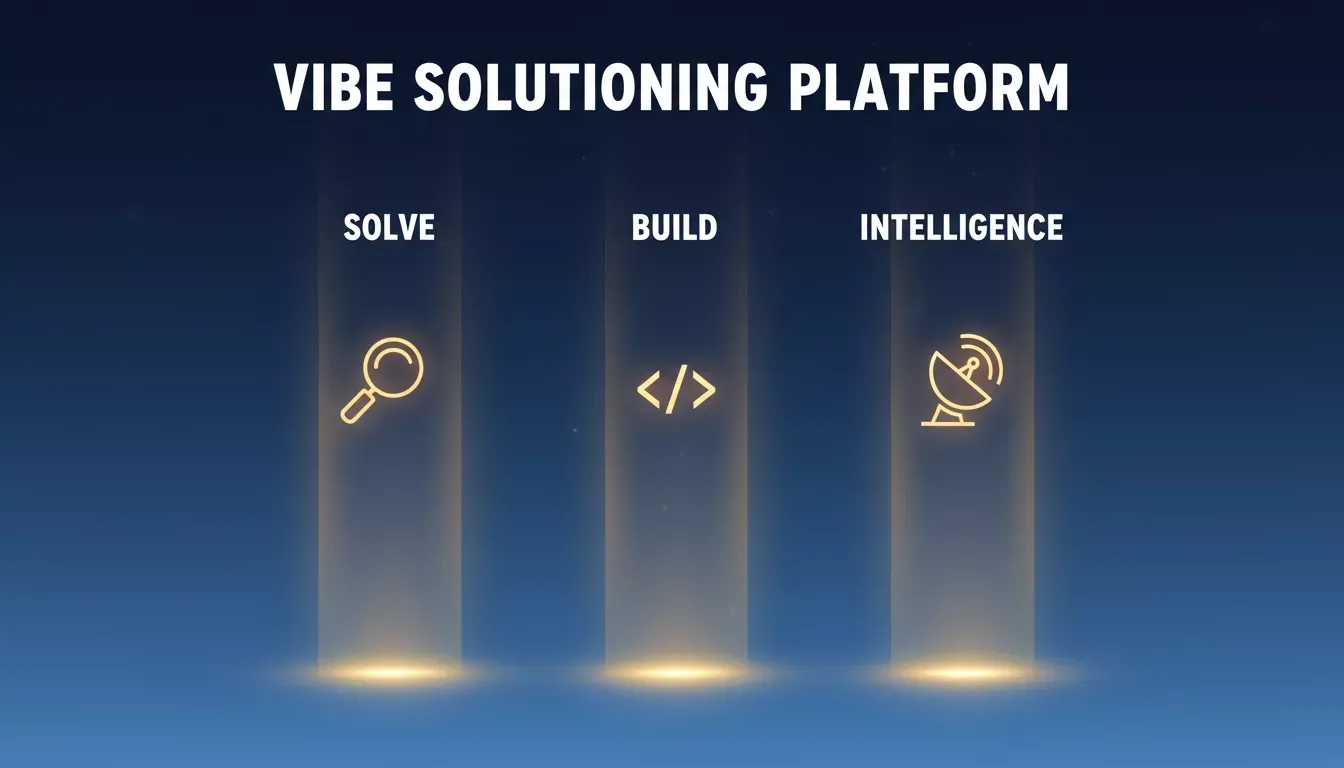
Rocket.new's three core capabilities: Solve, Build, and Intelligence, the foundation of the Vibe Solutioning Platform.
What Is Vibe Solutioning?
Vibe Solutioning is an AI-driven development framework that lets teams describe what they want in plain language and receive working software in return. It's not a low-code tool with drag-and-drop limitations. It understands context, intent, and system dependencies, bridging the gap between ideas and execution.
Developers focus on logic and architecture. Designers, strategists, and marketers contribute directly, without needing to write a single line of code.
Core advantages:
- Intent-driven creation: Natural language becomes functional applications
- Shared understanding: Teams align without technical translation barriers
- Rapid iteration: Prototypes are ready in minutes, not weeks
How Vibe Solutioning Works in Rocket: From Strategy to Deployment
At the heart of the platform is an organizational database engine that links prompts, data, and tasks into a structured, adaptive framework. Every prompt moves through four layers: parsing, AI interpretation, schema mapping, and feature assembly, before being deployed and synced.
Solve Phase
Every great build starts with clarity. The Solve phase is where raw ideas are transformed into structured, actionable direction before a single line of logic is generated.
Rather than beginning from a blank prompt, Rocket.new grounds every project in research. The platform analyzes market context, maps out requirements, and surfaces relevant insights automatically, so the first version of your app already reflects real-world needs rather than assumptions.
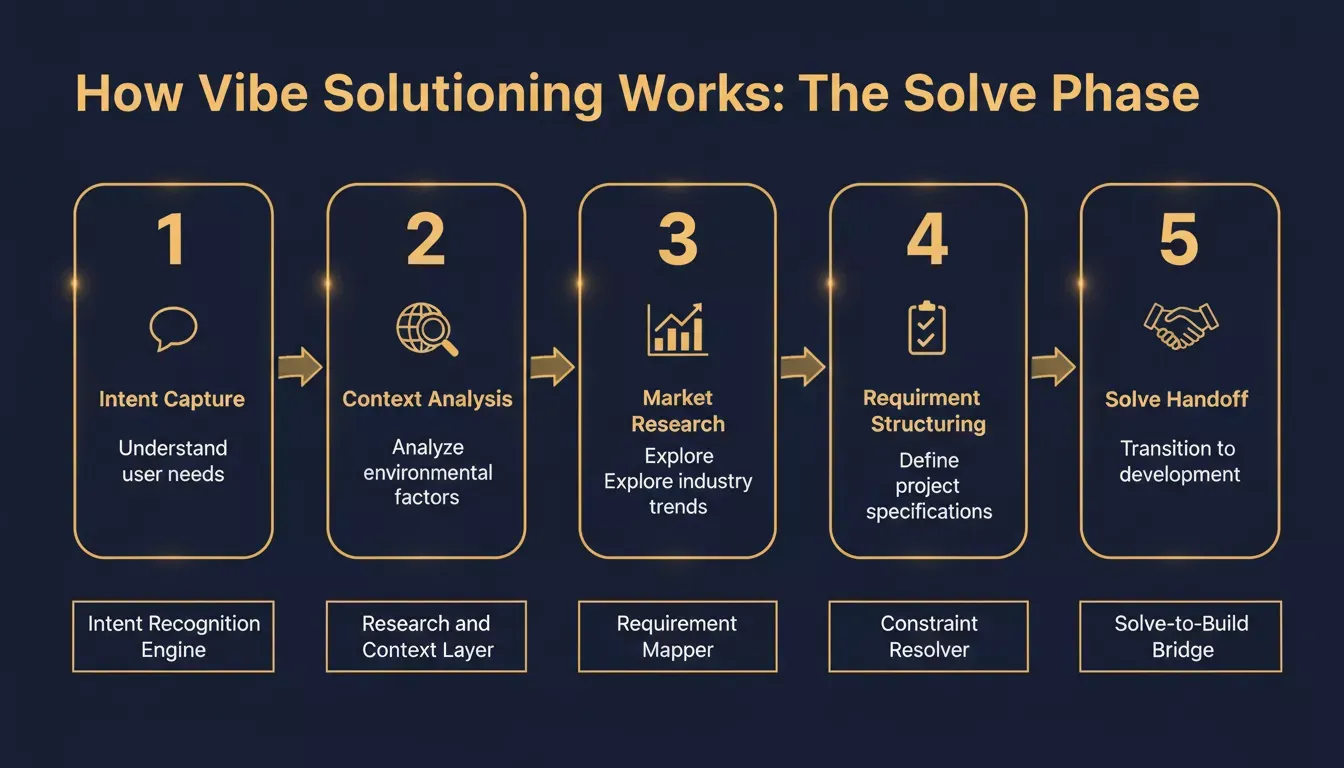
Every solve moves through five stages, from scattered thinking to a clear, buildable plan:
- Intent Capture: The team describes what they want to achieve in plain language
- Context Analysis: The platform interprets goals, constraints, and dependencies
- Market & Data Research: Relevant insights are surfaced automatically, grounding decisions in reality
- Requirement Structuring: Ideas are mapped into a logical, buildable framework
- Solve Handoff: A clear, structured brief is passed directly into the Build phase
Core components that power the Solve phase:
- Intent Recognition Engine: Understands the why behind a prompt, not just the what
- Research & Context Layer: Pulls relevant market data, trends, and competitive signals automatically
- Requirement Mapper: Converts ambiguous goals into structured, actionable specifications
- Constraint Resolver: Identifies conflicts, gaps, and dependencies before build begins
- Solve-to-Build Bridge: Ensures everything discovered in Solve flows seamlessly into the Build phase with full context preserved
The Solve phase eliminates the most expensive problem in software development: building the wrong thing. By the time your team moves to Build, the direction is already validated, structured, and ready to execute.
Build Phase
Every prompt moves through five stages, from plain language to a deployed, synced application.
Once the Solve phase has structured the direction, the Build phase brings it to life. This is where natural language becomes fully functional software, web apps, mobile apps, and backend systems assembled automatically, previewed collaboratively, and deployed instantly without writing a single line of code.
Rocket.new supports both Next.js (web) and Flutter (mobile) outputs, giving teams production-ready applications from a single prompt. Every build starts from the structured brief passed through Solve, which means the first version already reflects validated requirements rather than guesswork.
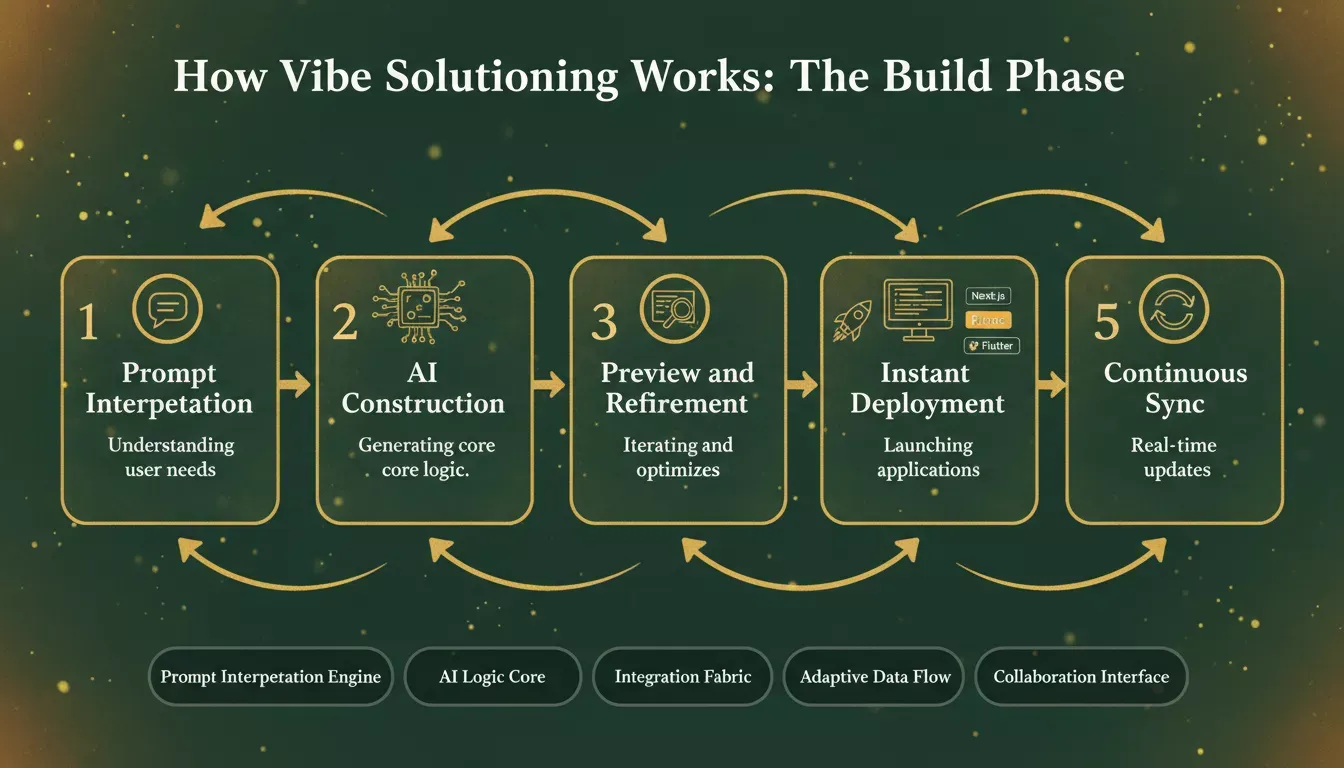
Every build moves through five stages, from plain language to a deployed, synced application:
- Prompt Interpretation: Natural language is parsed and converted into actionable development logic
- AI Construction: The platform assembles the full application structure, frontend, backend, database, and integrations, automatically
- Preview & Refinement, Teams review the generated app in real time, collaborating on adjustments before deployment
- Instant Deployment:The application is published immediately, with SEO optimization, meta tags, structured data, and Core Web Vitals scoring built in by default
- Continuous Sync: Every update, iteration, and team change is reflected across all devices and collaborators in real time
Core components that power the Build phase:
- Prompt Interpretation Engine: Converts natural language into actionable logic, removing coding barriers entirely
- AI Logic Core: Processes and executes development instructions, assembling full-stack applications automatically
- Integration Fabric: Connects legacy systems, modern apps, and databases — including 26+ third-party connectors such as Stripe, Supabase, HubSpot, Notion, and GitHub — all wired from a single chat prompt
- Adaptive Data Flow: Tracks usage patterns and refines features over time, keeping applications aligned with how teams and customers actually use them
- Collaboration Interface: Keeps all team members synced across devices, with version history and one-click rollback built into every build
The Build phase eliminates the gap between intention and execution. What used to take weeks of development cycles now happens in a single collaborative session, from the first prompt to a live, production-ready product.
Intelligence Phase
Building and launching an app is only half the story. The Intelligence phase is where deployed applications become smarter over time, continuously learning from usage, surfacing actionable insights, and helping teams make faster, better-informed decisions.
Rather than relying on separate analytics tools or manual reporting, Rocket.new embeds intelligence directly into every application it generates. Teams don't go looking for data; the data comes to them, in context, when it matters most.
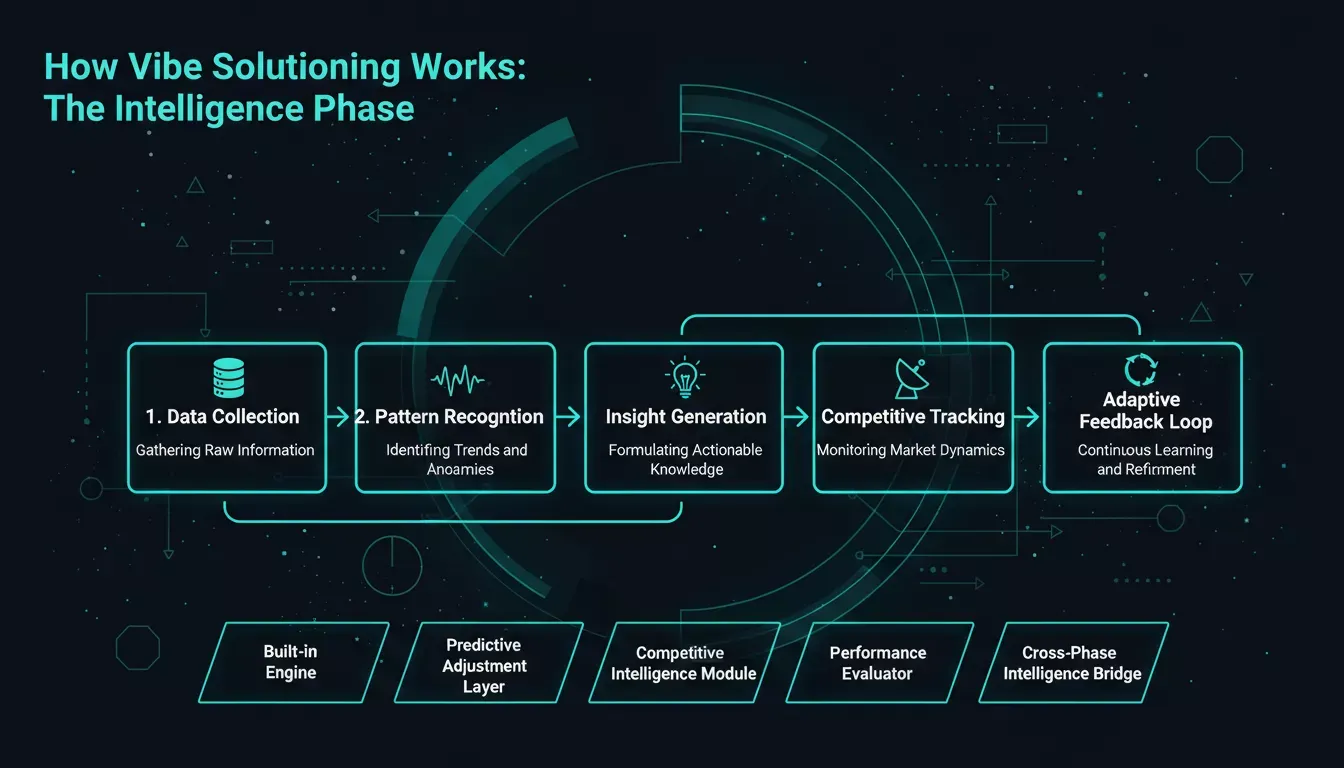
Every intelligence cycle moves through five stages, from raw usage data to strategic action:
- Data Collection: User behavior, traffic patterns, and system performance are tracked automatically with zero setup
- Pattern Recognition: The platform identifies trends, anomalies, and opportunities across all active applications
- Insight Generation: Raw data is translated into clear, actionable recommendations for the team
- Competitive Tracking: Market signals and competitor movements are monitored continuously through Rocket.new's Intelligence capability
- Adaptive Feedback Loop: Insights feed directly back into the Solve and Build phases, keeping applications aligned with evolving business needs
Core components that power the Intelligence phase:
- Built-in Analytics Engine: Tracks visits, bounce rate, and traffic sources across every deployed app with no configuration required
- Predictive Adjustment Layer: Proactively refines features and workflows based on real usage patterns
- Competitive Intelligence Module: Monitors market trends and surfaces relevant signals to inform product and strategy decisions
- Performance Evaluator: Quantifies success metrics across projects, teams, and departments in real time
- Cross-Phase Intelligence Bridge: Feeds insights back into Solve and Build continuously, ensuring the entire platform learns and improves as your business grows
The Intelligence phase transforms Rocket.new from a build tool into a living, adaptive platform. Applications don't just get deployed, they get better. Teams don't just ship faster, they ship smarter.
Together, Solve, Build, and Intelligence form a continuous loop: research informs building, building generates data, and data sharpens the next round of decisions. That is the full power of the Vibe Solutioning Platform.
How It Transforms Team Workflow
Rocket.new supports 26+ third-party integrations, including Stripe, Supabase, HubSpot, Notion, and GitHub, all configurable from a single chat prompt.
Vibe Solutioning changes how teams plan, build, and ship. Workflows with decision-making, not behind it. Marketing, development, and operations share one live environment where updates propagate instantly across the entire system.
What this means in practice:
- Ideas become functional software in real time
- Every team member sees the same live project state
- Applications evolve continuously as business priorities shift
When software emerges from conversation rather than tickets and sprints, teams execute faster, reduce miscommunication, and stay aligned from concept to launch.
Seamless Integration
Integration is no longer a bottleneck. Vibe Solutioning connects directly to existing infrastructure, legacy APIs, internal dashboards, and cloud services, all of which communicate within the same workflow.
Rocket.new's Supabase connector, for example, scaffolds a full backend, database, authentication, file storage, and edge functions from a single chat prompt, without any manual configuration.
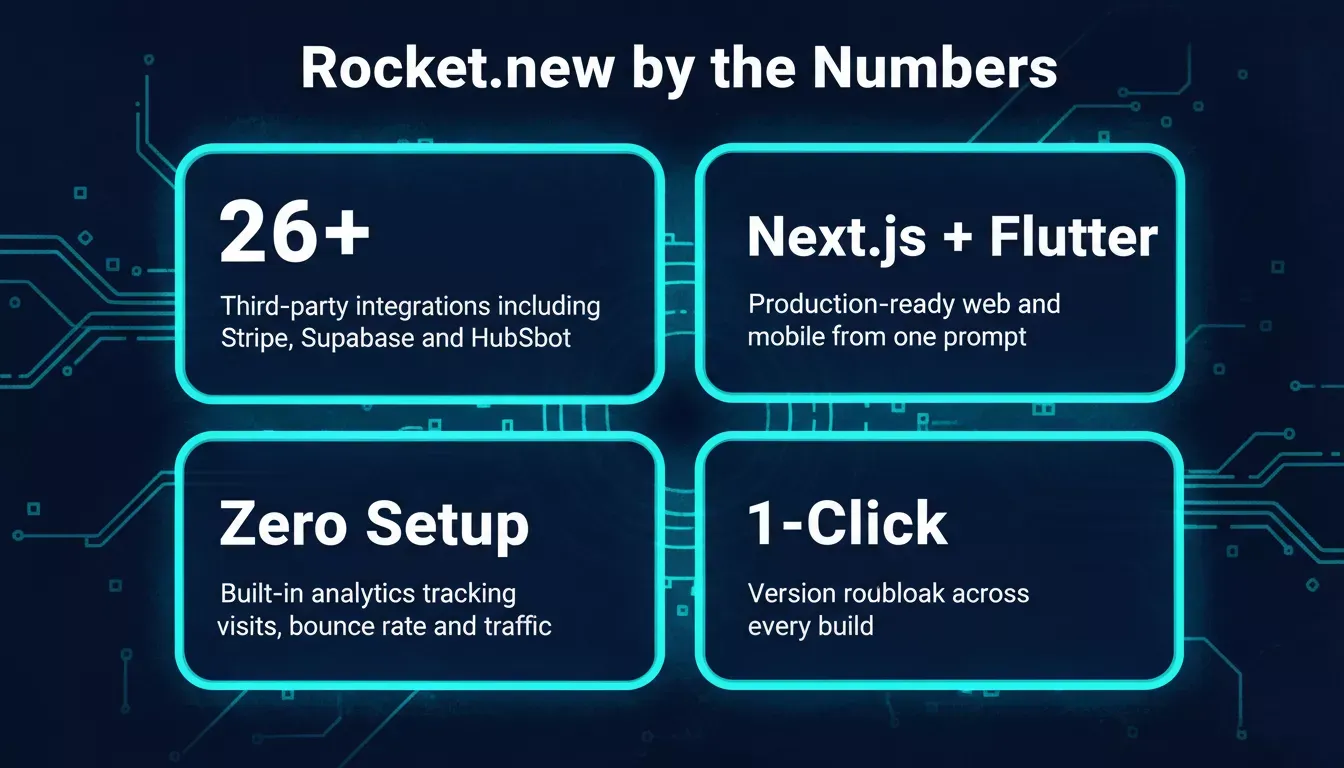
Rocket.new by the numbers: key platform capabilities that make Vibe Solutioning practical at scale.
AI Does the Heavy Lifting. Humans Provide the Direction.
AI handles logic, scaffolding, and repetitive tasks. Humans contribute strategy, judgment, and creative problem-solving. Vibe Solutioning amplifies expertise rather than replacing it.
Rocket.new's built-in analytics dashboard tracks visits, bounce rate, and traffic sources with zero setup giving teams instant operational visibility.
Key insight areas:
- Project velocity: Real-time task completion tracking
- Operational insight: Cross-department impact measurement
- Performance evaluation: Quantifiable success metrics
How It Works on Rocket.new
Rocket.new puts Vibe Solutioning into practice. Users describe what they want, AI generates the structure, and teams preview, refine, and deploy collaboratively. The platform supports both Next.js (web) and Flutter (mobile) outputs, production-ready from a single prompt.
The workflow in five steps:
- Enter a natural language prompt
- AI constructs the base application
- Preview and refine collaboratively
- Deploy instantly
- Iterate continuously
What's included out of the box:
- Full-stack web and mobile app generation
- Real-time collaboration at the workspace or task level
- Version history with one-click rollback
- 26+ integrations (Stripe, Supabase, HubSpot, Notion, GitHub, and more)
- Built-in analytics with zero setup
- SEO optimization by default, meta tags, structured data, and Core Web Vitals scoring
The Bigger Picture
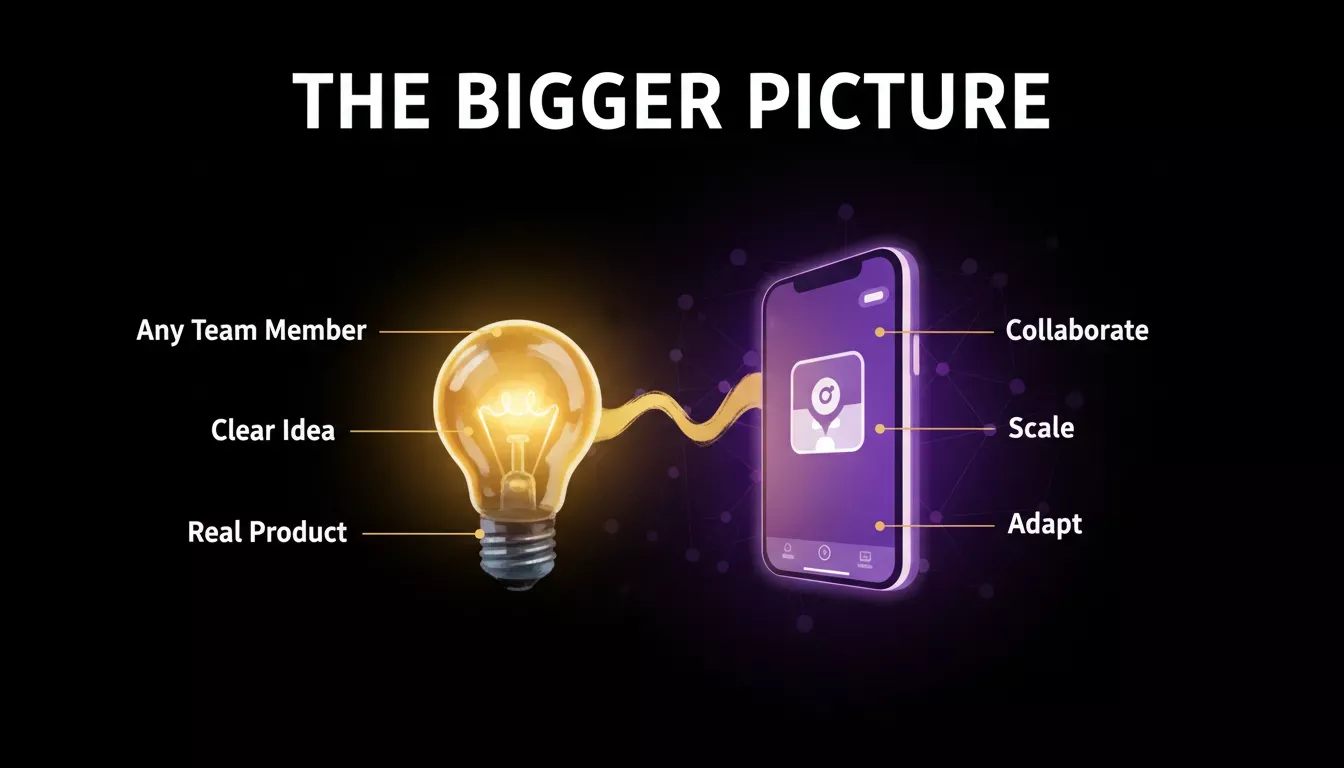
The bigger picture: Vibe Solutioning makes software creation accessible to every team member with a clear idea.
Vibe Solutioning represents a fundamental shift in how software is built. Development is no longer the exclusive domain of engineers. Any team member with a clear idea can contribute meaningfully to building real products.
Teams create collaboratively. Businesses scale efficiently. Customers interact with systems that adapt in real time. The result is a more fluid, aligned, and responsive organization, one where focus stays on impact, not overhead.
Ready to go from idea to live product without writing a single line of code? Sign up for free at Rocket.new and launch your first app in minutes.
Table of contents