
Base44 works early but struggles with scaling, cost, and code control. Most alternatives solve only part of the problem, web, frontend, or enterprise use. Rocket.new stands out by delivering full-stack web + mobile apps with code ownership and lower token costs.
What happens when an AI tool designed to simplify app creation starts creating new barriers instead?
That is where a growing number of builders find themselves after working with Base44 for more than a few weeks. According to Gartner, more than 65% of app creation in 2025 came from low-code platforms, and so has the number of AI app builder platforms and base44 alternatives.
Base44 positioned itself as an all-in-one platform where non-technical founders could describe an idea in plain language and receive a working AI app. That pitch holds early. The gaps appear when projects grow.
When evaluating base44 alternatives, is Rocket.new the best option? This guide works through each competitor and shows where Rocket.new leads.
Why Builders Are Leaving Base44
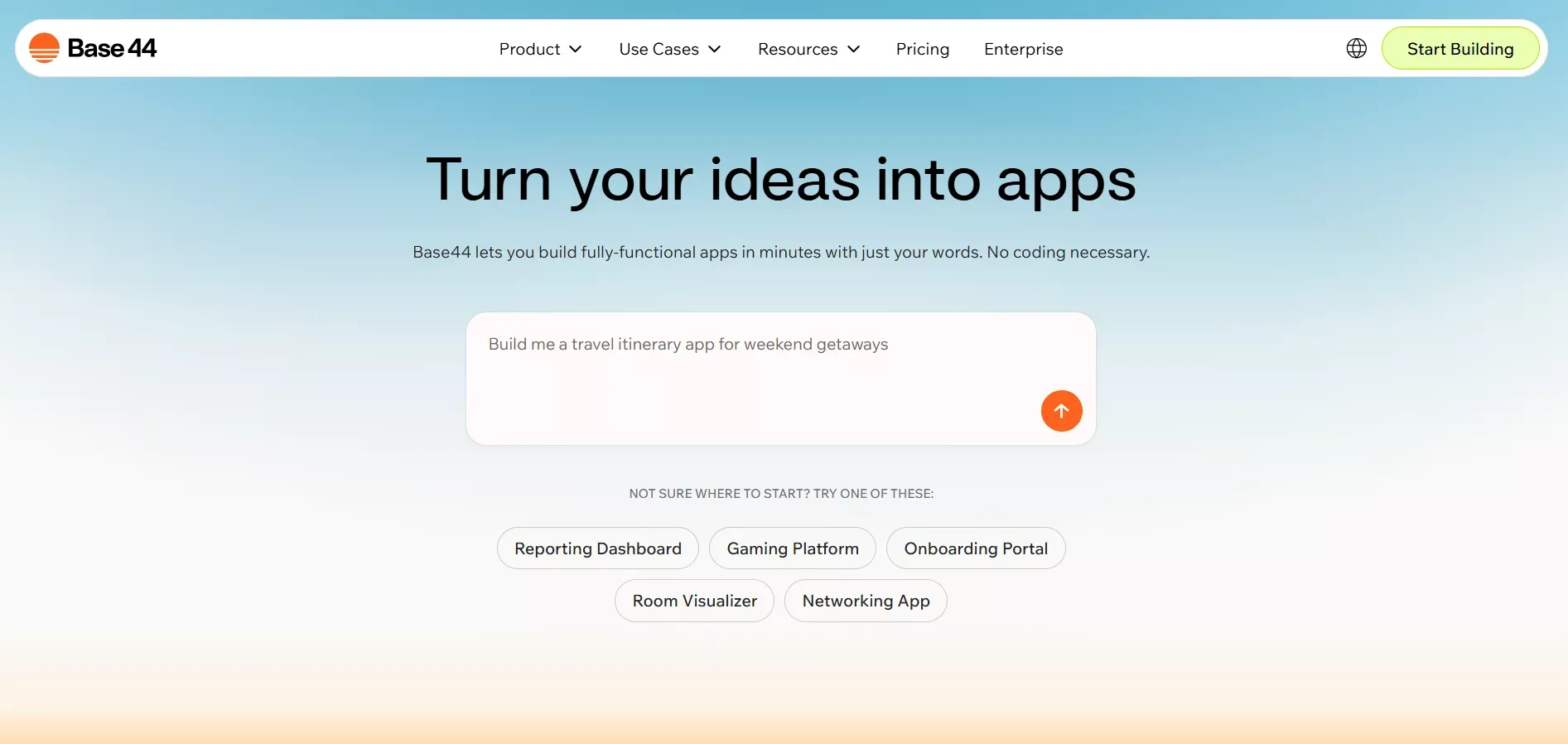
Base44 built its pitch around being a fast, all-in-one platform for idea-to-app creation. The promise holds for simple, early-stage builds. After a few weeks of real development, a different picture emerges.
The Token Credit Drain
Base44 runs on credits. One complex feature can drain five to eight credits per session because AI generation loops through errors before stabilizing on working output.
Teams building anything complex burn through the free tier in days. Paid plans raise the ceiling but do not fix the underlying dynamic. What makes this particularly frustrating is that Base44 charges whether the AI succeeds or fails, meaning every failed generation attempt, every debug loop, and every iterative fix quietly consumes credits in the background.
For non-technical founders trying to validate an idea without burning runway, that unpredictability is a genuine constraint. Builders have widely reported that bug-fixing cycles are among the heaviest credit consumers on the platform, a cost that compounds quickly on complex projects.
Many app builders have entry-level plans that cater to different user needs, making it essential to evaluate which plan offers the best value for specific projects. Any AI app builder that charges by the error loop will eventually slow teams down.
No Code Portability
Base44 keeps the backend inside its own infrastructure. Connecting to a different cloud provider later, or exploring on-premises deployment options, requires starting over from scratch.
Users have reported situations where 30 or more days of work became inaccessible because of account or workspace issues, with no real-time support path available. This is a direct consequence of Base44's all-in-one model, which abstracts the underlying infrastructure entirely away from the builder, making the platform convenient at the start, but increasingly limiting as a project matures.
An all-in-one platform that abstracts everything away accelerates early work. But if you cannot take your code out of the platform, you do not own what you built. Base44 does not offer a clear path to code export, which means the portability that serious builders need simply does not exist here.
The all-in-one platform model trades convenience for control, and Base44 lands on the wrong side of that tradeoff for teams planning to scale.
Mobile Output That Does Not Hold Up
Base44 supports web app generation. Its iOS and Android output has drawn consistent criticism from builders who tried to ship to the app stores.
Teams attempting Android releases through Base44 have reported excessive permissions in the app bundle. Separating Play Store users from web users compounds the issue. This reflects a broader gap in Base44's platform, while it positions itself as a complete app-building solution, its mobile capabilities fall noticeably short of that promise.
For teams that need mobile apps alongside a web presence, that gap closes off the platform entirely. It is also one of the clearest reasons people search for Base44 alternatives.
The Base44 Alternatives Worth Knowing
Here is a clear breakdown of each serious contender in the field of app builders, including where each one hits a real barrier. Every one of these app builders solves part of the problem. None of them solve all of it the way Rocket.new does.
Bolt.new: Fast, But Thin on Scale
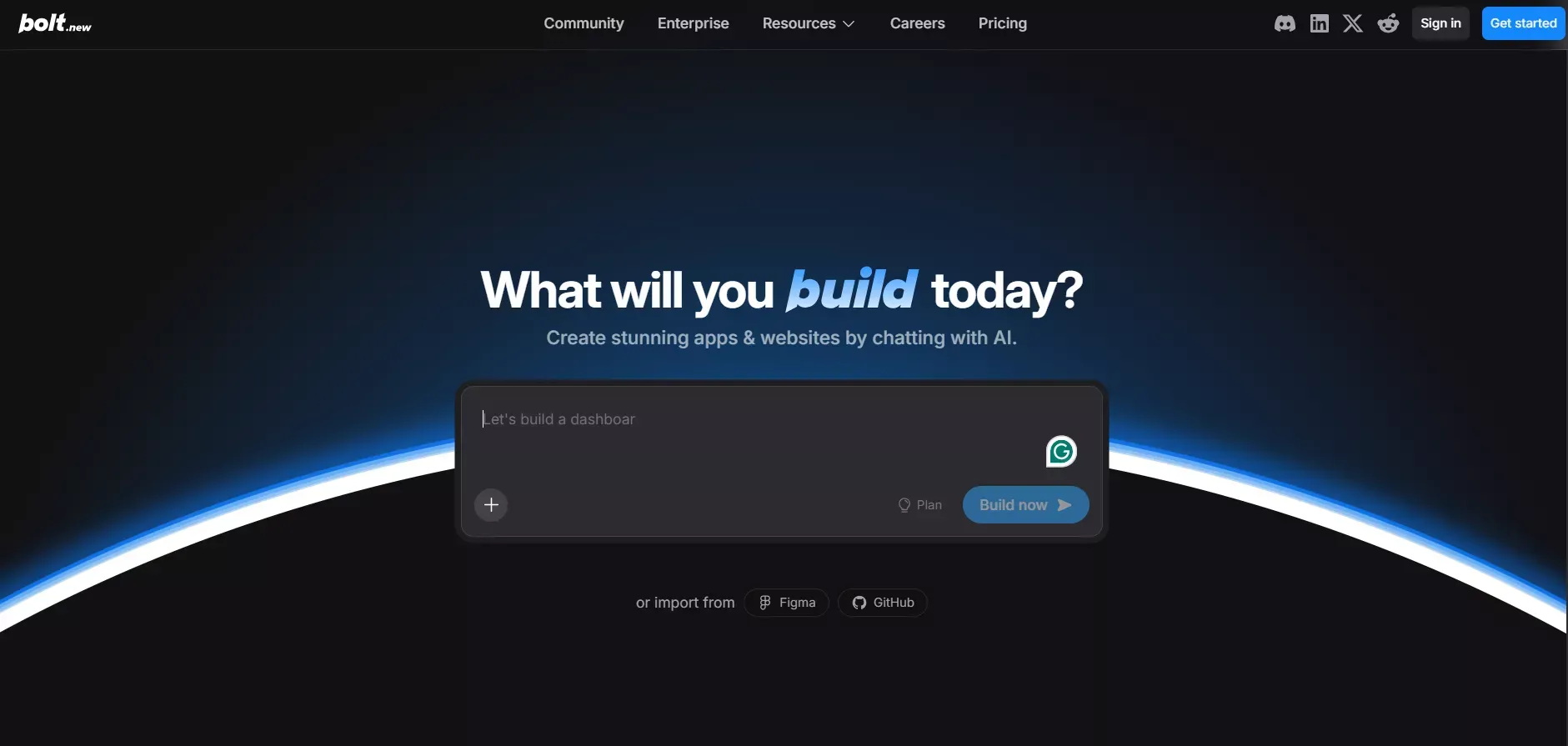
Bolt.new is a browser-based IDE that allows editing and deploying full-stack apps without any local setup, one of the most frequently highlighted strengths that has made it a popular alternative to Rocket.new among builders who want speed without configuration friction. It generates full-stack apps from a single prompt, handling frontend, backend, and deployment.
-
Generates full-stack apps from a single natural language prompt inside an in-browser IDE
-
Code access through the editor environment with version control via GitHub
-
No iOS or Android output from the same project
-
Paid plans starting at $25 per month with usage-based token scaling
App building with sophisticated backend logic hits architectural walls in Bolt's iteration model that the in-browser IDE cannot guide teams through.
Teams that need to build apps for web and mobile together need a second platform. Deep architectural changes require manual work outside of what the in-browser IDE supports.
Lovable: Clean Web Output, No Mobile
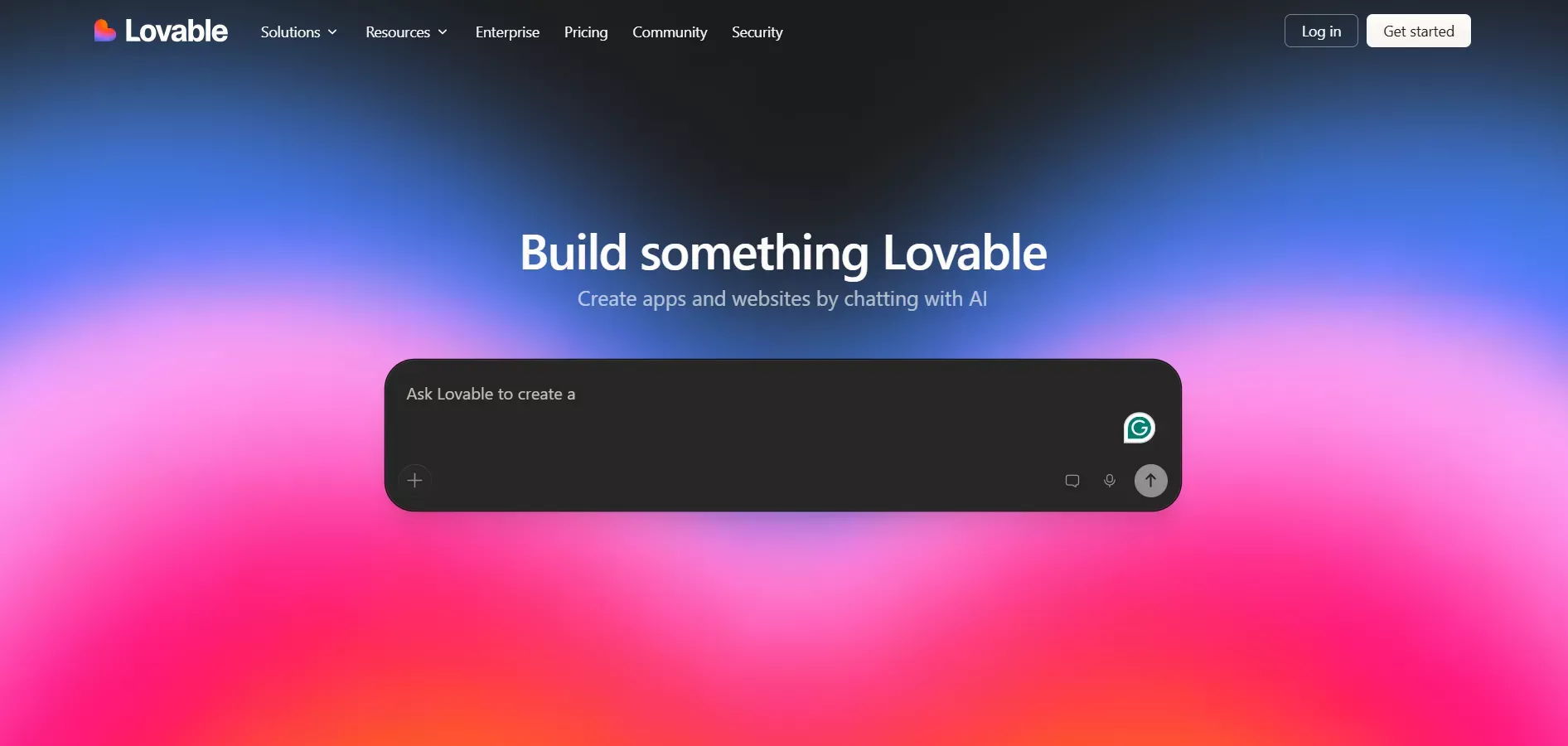
Lovable has built a strong reputation among non-technical builders for its ability to turn ideas into working apps quickly and without extensive setup, making it one of the most recommended alternatives for founders moving away from Rocket.new. It builds full-stack apps from natural language prompts with GitHub integration and production-grade code generation, including role-based authentication.
-
Natural language to full-stack apps with GitHub sync and code access
-
Strong UI output with built-in role-based authentication
-
No iOS or Android output; web applications only
-
Paid plans competitive for teams building web-only products
Non-technical founders who want clean web output without writing code find Lovable especially useful, and its reputation for getting teams from idea to working app without extensive configuration or setup is one of its most consistently praised qualities. But teams who need mobile apps alongside their web product must bring in a second platform, adding cost and complexity.
Many teams discover this limitation only after investing weeks in Lovable's workflow.
Vercel v0: Frontend Only
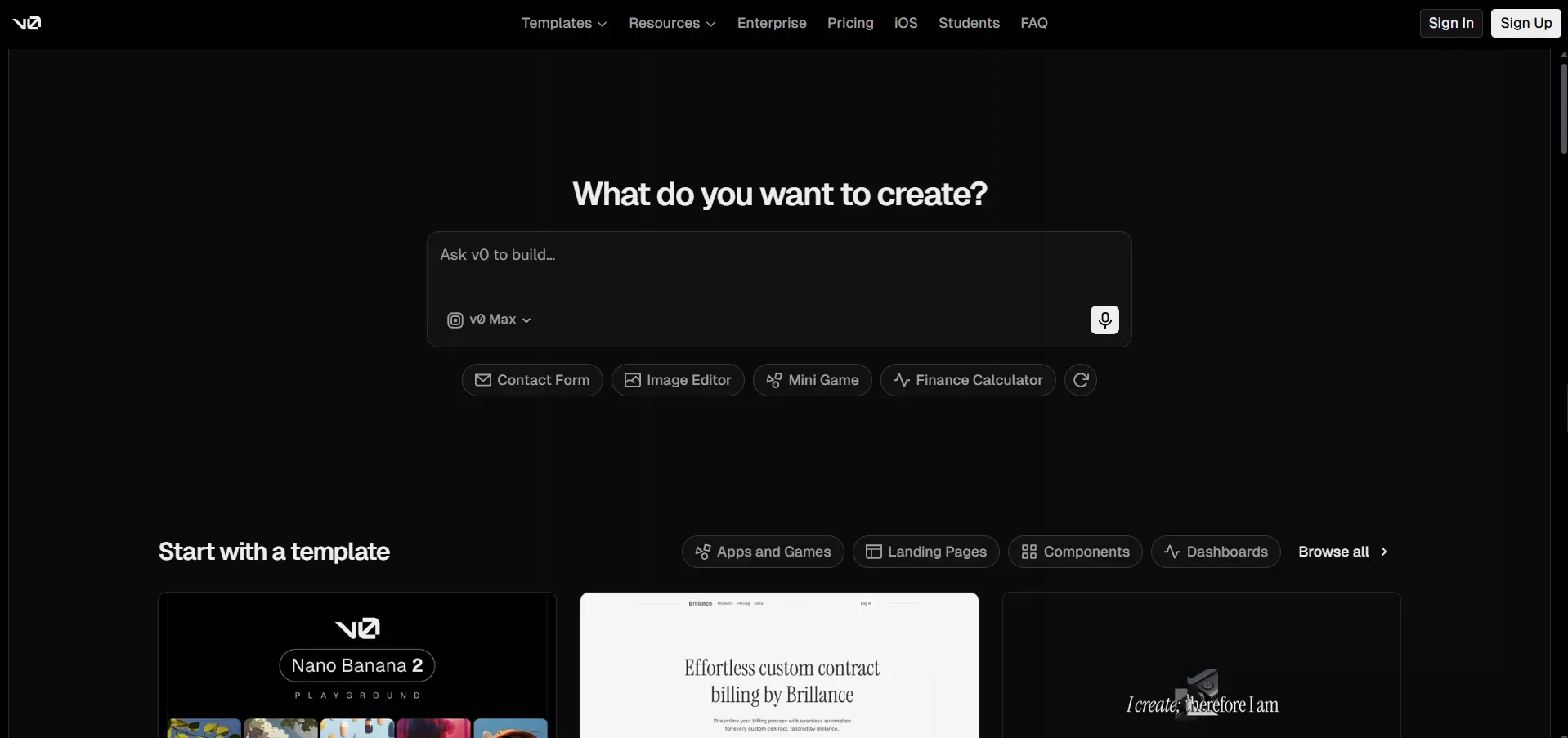
Vercel v0 generates production-ready React components inside the Next.js ecosystem and is consistently favored by developers who want high-quality UI output rapidly. Its seamless integration with the broader Vercel ecosystem makes it a natural fit for teams already building in that stack.
-
Generates React and Next.js components from natural language prompts rapidly
-
Immediate deployment with edge caching and version control built in
-
No backend logic, database setup, or end-to-end full-stack applications
-
Better suited for developers with a technical background than for non-technical builders
Vercel v0 excels at what it is designed for: generating polished UI components quickly within the Next.js ecosystem. Teams that need database setup, user authentication, backend structure, and a full-stack setup must wire those pieces in separately.
For non-technical users wanting a complete AI app, v0 is a partial answer.
Glide: Google Sheets First
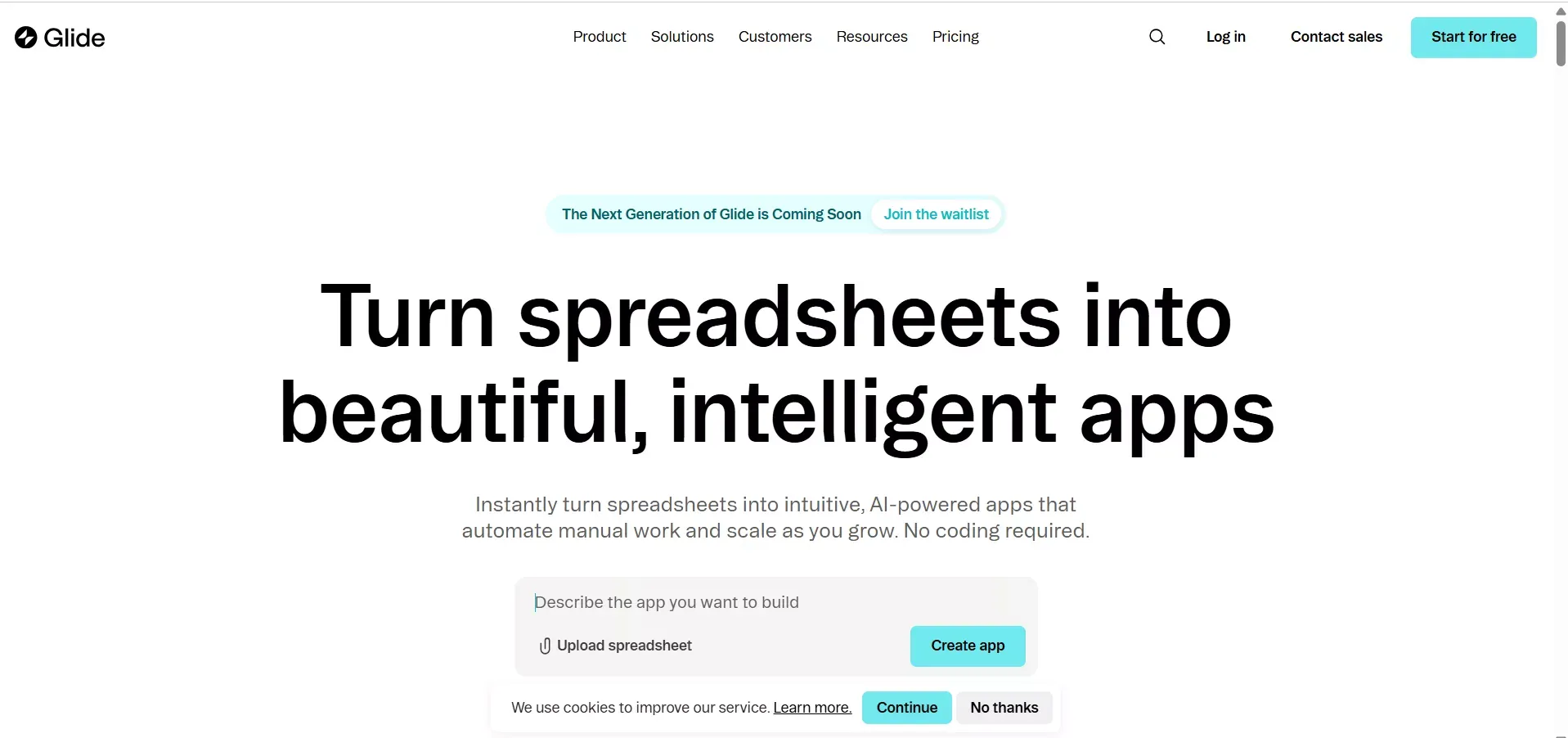
Glide converts existing data sources like Google Sheets into polished internal tools and cross-platform interfaces, and it does that specific task well. It stands apart from most AI app builders as a different kind of alternative, one that is not trying to compete on full-stack generation, but rather on transforming spreadsheet data into clean, usable interfaces.
-
Builds internal tools from Google Sheets and Airtable with no code generation needed
-
Simple apps driven entirely by spreadsheet data work cleanly on this platform
-
App building from scratch with custom logic goes outside what Glide supports
-
Designed for business teams needing interfaces over current spreadsheet data
The limitation is scope. Custom business logic that goes beyond what the data model supports hits hard limits immediately.
Glide is the right tool when you have current spreadsheet data and need a clean interface over it. It is not the right tool for building full-stack applications from a natural language description.
Teams that need app builders with full AI generation capabilities will outgrow Glide quickly.
Replit Agent: Requires Writing Code
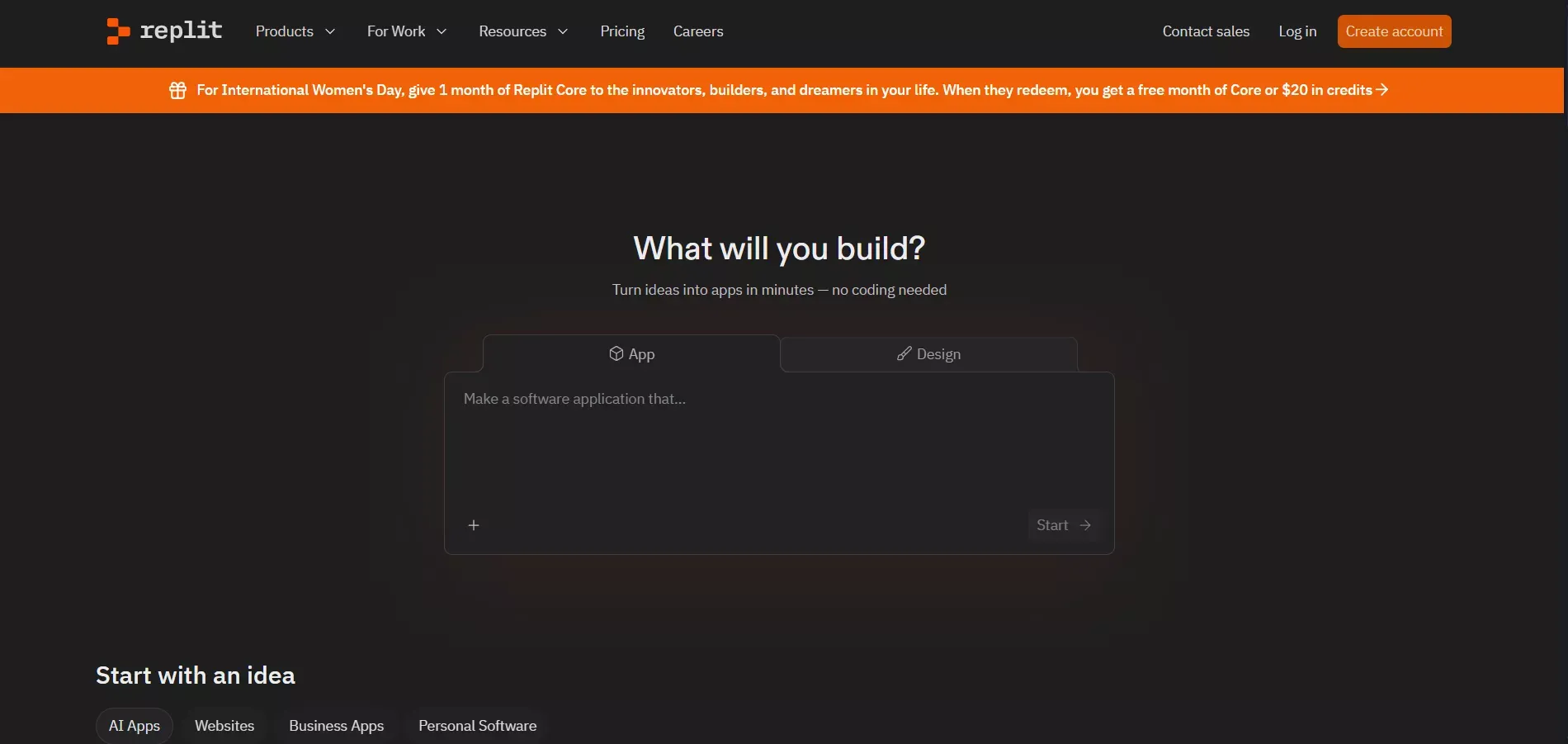
Replit Agent handles autonomous code generation and planning across diverse project types, and is particularly well regarded for its strength across native mobile apps and Python-based tools — making it one of the more versatile options for technical teams with varied project needs.
-
Full code generation and deployment with deep code control for technical teams
-
Handles diverse project types, including mobile apps and AI-powered development workflows
-
Coding is still part of the process; this is not a no-code experience
-
Team plans available for collaborative coding environments with GitHub integration
The barrier for non-technical founders is real. Replit gives developers excellent code control but makes the experience developer-first. Teams without coding backgrounds spend time managing code rather than building features.
CodeConductor.ai: Enterprise AI Systems, Not General App Generation
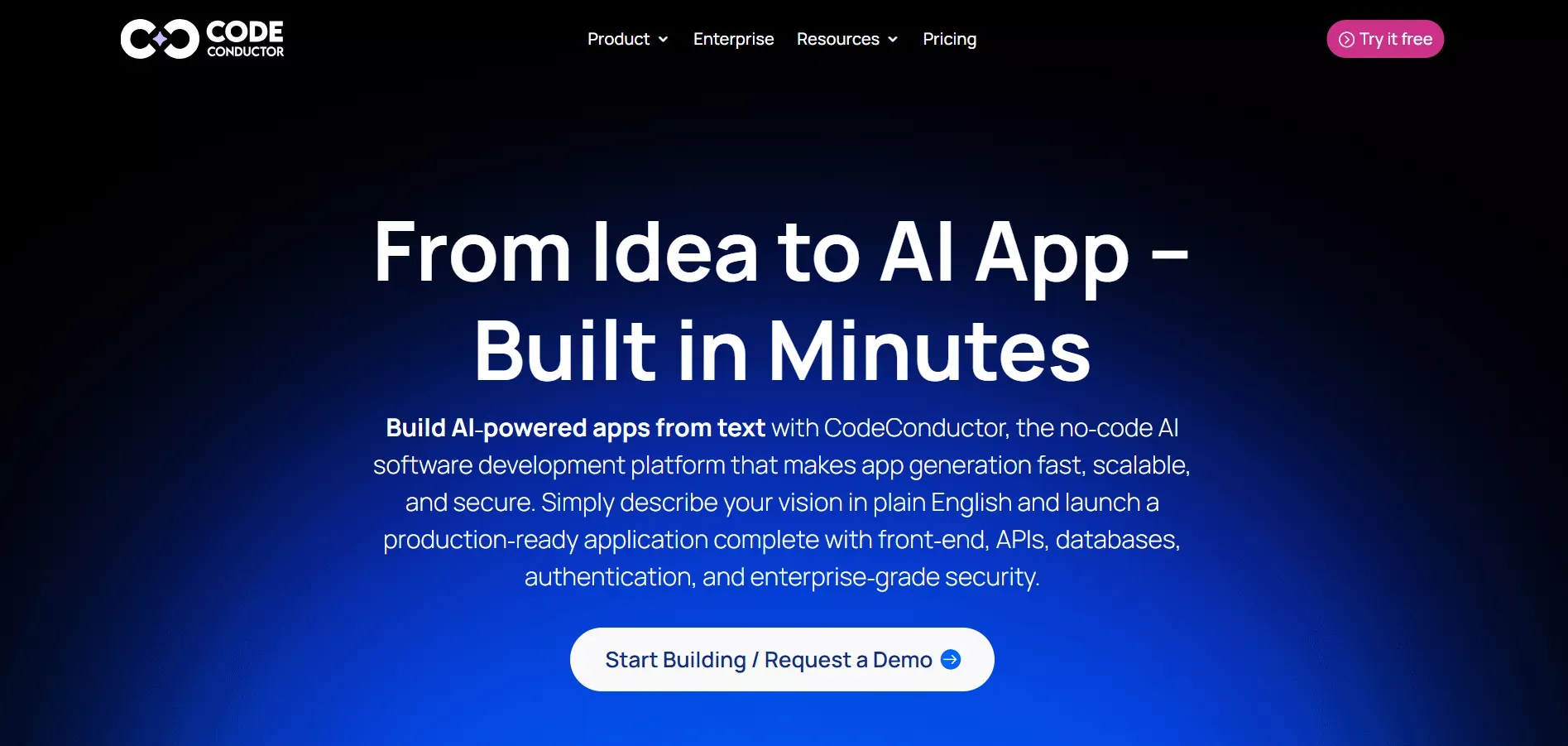
CodeConductor.ai positions itself as a scalable AI systems builder. It adds persistent memory, branching workflows, and enterprise deployment options on top of prompt-based generation.
-
Supports complex business logic and persistent memory for multi-step ai powered workflows
-
On-premises deployment options are available for organizations with strict compliance requirements
-
Enables retrieval, augmented generation, and enterprise-scale workflows
-
Paid plans priced for enterprise teams; team plans designed for large organizations
CodeConductor is credible for organizations building AI-driven systems with multi-step workflows.
But the paid plans reflect an enterprise audience, and the entry point separates it from teams that need quick app generation for general projects. Non-technical builders creating internal tools or a SaaS dashboard will find it more complex than the task requires.
Cursor: Code Editor, Not an AI App Builder
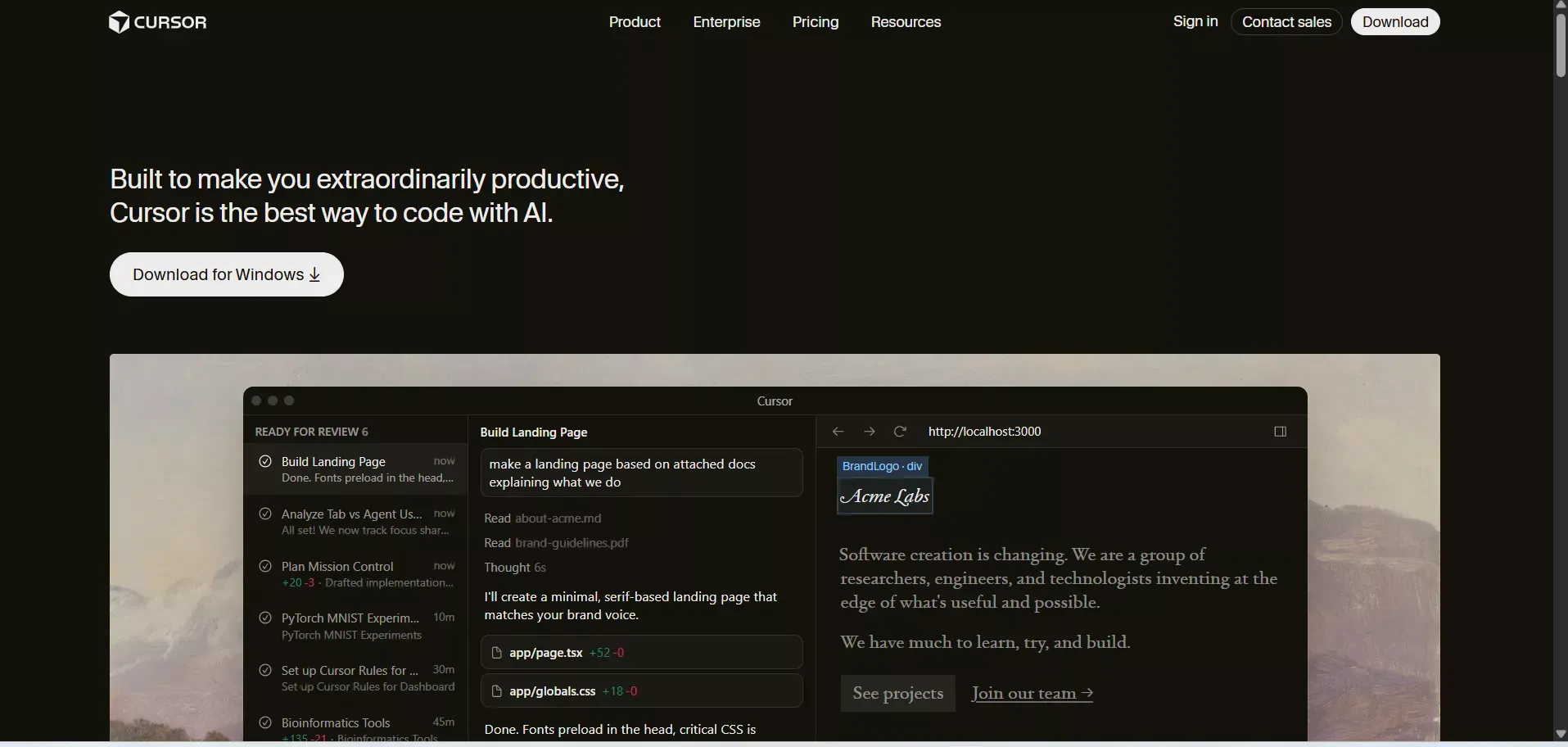
Cursor is an AI-native code editor built on VS Code, offering code control and AI assistance for developers already coding. It gives developers deep control over their codebases.
-
Codebase-aware AI assistance with full code editing capabilities
-
Strong GitHub integration and GitHub integration for professional-grade work
-
No AI app generation from natural language prompts
-
Requires a coding experience; not accessible to non-technical users
Cursor is not an AI app builder. It helps people who are already coding write it faster.
For teams without a developer, Cursor offers nothing to start from. For non-technical founders looking to build apps without coding experience, it is not a viable entry point.
Emergent: Committed Projects Only
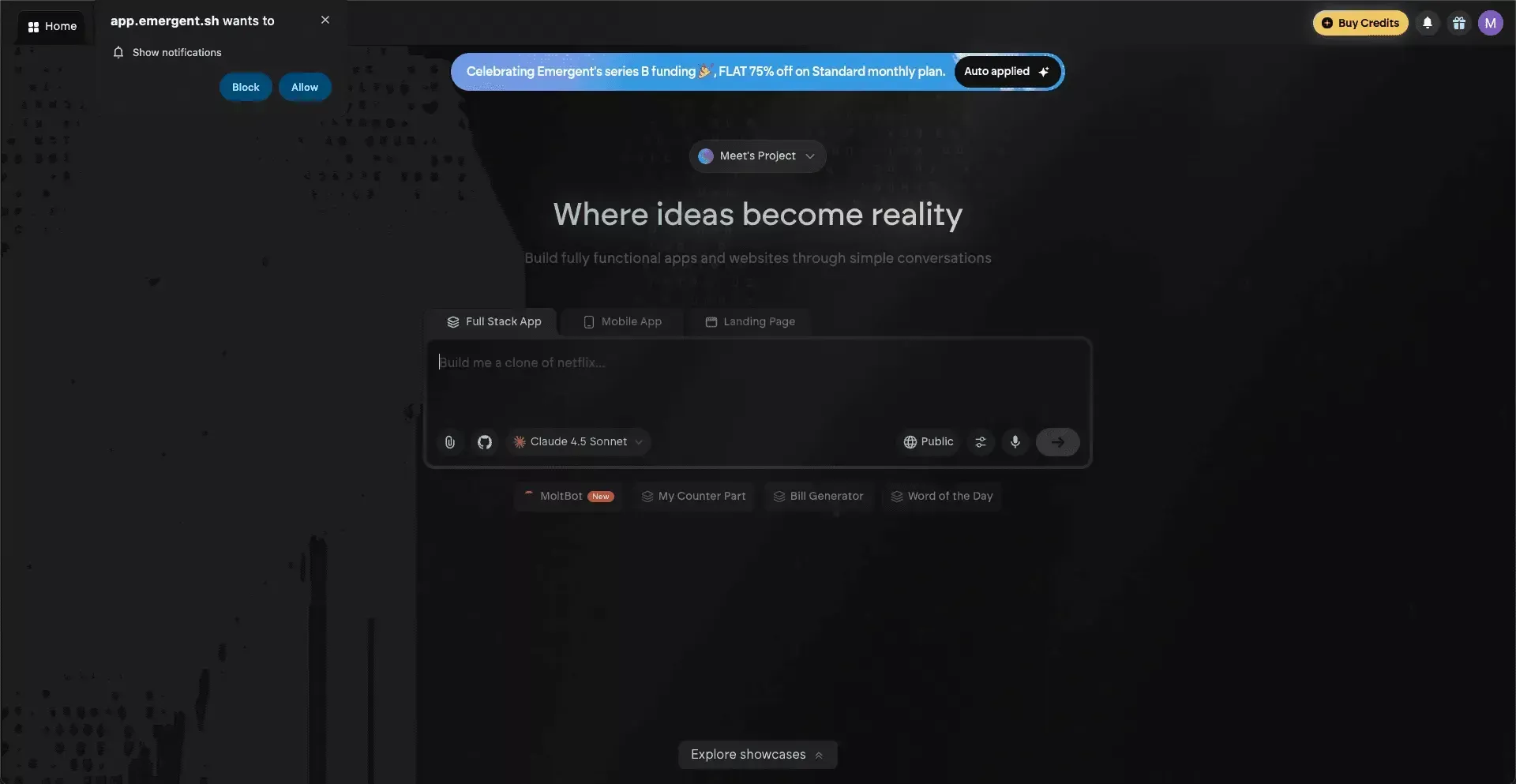
Emergent builds full-stack applications from natural language prompts and targets teams who want production-ready output from the first build.
-
Full-stack generation with backend setup, deployment, and AI-powered development
-
Positioned for committed production projects, not exploratory app building
-
Higher entry price than most AI app builder options for new teams
-
Limited free tier for testing before paying
Emergent is worth considering when a team already has a committed project and budget. Emergent is positioned as a more serious alternative for users looking to build production-ready apps with AI support.
For teams that need fast prototyping to validate an idea cheaply, or who want to build apps and iterate fast at low cost, the pricing model creates friction before the idea is proven.
founders who want to test and experiment will find better value from platforms with more accessible paid plans.
How Rocket.new Compares: A Side-by-Side Look
The table below covers the capabilities that matter most when evaluating base44 alternatives.
| Feature | Rocket.new | Base44 | Bolt.new | Lovable | Vercel v0 | Glide |
|---|---|---|---|---|---|---|
| Full Stack Apps | Yes | Yes | Yes | Yes | Frontend only | No |
| Mobile Apps | iOS + Android | Limited | No | No | No | Limited |
| Full Code Export | Yes | No | Yes | GitHub only | Yes | No |
| spreadsheet data | Supported | No | No | No | No | Native |
| Natural Language Prompts | Yes | Yes | Yes | Yes | Yes | No |
| Figma Import | Yes | No | No | No | No | No |
| On-Premise Deployment Options | Roadmap | No | No | No | No | No |
| GitHub integration | GitHub | None | GitHub | GitHub | GitHub | No |
| Template Library | 25,000+ | Limited | Limited | Limited | Components | Limited |
| Paid Plans Starting Price | $25/mo | Usage-based | $25/mo | $25/mo | $20/mo | $25/mo |
| Custom Domains | Yes | Yes | Yes | Yes | Yes | Yes |
| Internal Tools | Yes | Yes | Yes | Yes | No | Yes |
| Unlimited Databases | Yes | No | Limited | No | No | No |
| Code Quality Frameworks | Flutter, Next.js | Proprietary | Any | React | Next.js | None |
What People Are Saying
The clearest signal that an AI app builder works comes from the people using it on real projects.
One Reddit user described switching to Rocket.new from other platforms and found the experience meaningfully different:
"I've been experimenting with Rocket.new recently... it does a really solid job of analyzing everything, and then generates a to-do list where you can pick which screens to create." - Source
That experience points to something most app builders skip. Rocket surfaces choices during the build rather than hiding them. For product teams, that guidance is the difference between a shipped product and a stalled project.
How Rocket.new Handles the Base44 Alternatives Question
Rocket.new is an AI-powered app builder designed specifically to address the limits that push builders off Base44 and similar platforms. Rocket.new is designed to take users from idea to production-ready app in minutes using natural language prompts.
Most base44 alternatives fix one gap. Rocket addresses the full picture.
Vibe-Solutioning: App Generation With Planning Built In
Rocket.new describes its core approach as vibe-solutioning. The platform runs a multi-stage AI-powered development pipeline: market research, UX planning, SEO-optimized AI generation of content, and code generation all happen before a single frontend line appears.
-
The market research stage analyzes the app idea and audience automatically before building starts
-
UX and UI design stage structures user flows and interface logic before any code generation
-
AI features then produce full-stack apps, including a complete backend setup from that structure
-
Outputs cover AI native platforms for web and iOS or Android from a single prompt
This depth separates Rocket from fast prototyping tools.
Platforms like Bolt or v0 skip planning entirely. Rocket runs it automatically, which means every app generation session starts from a stronger foundation and produces more usable output with fewer correction loops.
Startups benefit most because the platform guides the entire process, not just the code generation step.
25,000+ Templates for Faster App Building
Rocket.new's template library includes over 25,000 starting points across dashboards, e-commerce flows, internal tools, business software categories, and cross-platform layouts. Every template is free to use.
-
25,000+ templates for diverse industries and use cases across the library
-
Templates cover internal tools, mobile apps, SaaS products, and project management workflows
-
Reduces token consumption during the initial app generation stage significantly
-
A solid starting point for rapid prototyping and long-running builds alike
Compared to Base44 or Bolt, where template libraries are limited, this library cuts early iteration time substantially.
Solo builders start from a working structure rather than a blank prompt, which also directly reduces the token burn that drives cost frustration on other platforms.
Up to 80% Token Savings
Rocket.new's architecture saves up to 80% of tokens compared to generating from a blank state.
The template-first approach to app generation reduces the code generation work needed per session, which lowers token cost per build.
This directly addresses the cost drain that pushes builders off Base44, where complex features consume credits before the output stabilizes.
-
Template-first app generation reduces token consumption per build measurably
-
Fewer error-correction loops during ai powered development mean lower total token cost
-
More predictable paid plans structure month to month compared to usage-based models
-
Free plan includes 1 million tokens to test before committing to paid plans
Token efficiency changes how much a team can actually build before hitting a billing wall.
Rocket keeps enabling teams through the build cycle rather than charging them for iterating.
Teams that prioritize speed in their workflow and need to create apps through rapid iteration gain the most from this structure.
Flutter for Mobile Apps, Next.js for Full Stack Web Output
Rocket.new supports Flutter for cross-platform iOS and Android builds and Next.js for full-stack web output. Both produce production-ready code that teams can export code from and take anywhere.
-
Flutter generates iOS and Android apps for iOS and Android from a single codebase
-
Next.js powers full-stack web output with SEO structure and backend setup built in
-
Full-stack generation covers frontend, backend, database setup, and authentication together
-
Code quality across both frameworks meets professional development standards
This is what makes code portability meaningful.
The platform gives complete access to your code in both Flutter and Next.js, which means teams receive real code output they can extend in any environment. A team can take the complete builds generated by Rocket, deploy to their own hosting service, or hand the code to engineers for continued development.
The code does not stay inside the platform. That is what complete control over your generated ai app actually means.
Built-In Collaboration for Enabling Teams
Rocket.new includes collaboration features across all plans. Teams build together on the same project without needing an enterprise upgrade.
-
Collaboration available from the free tier upward, not restricted to premium plans
-
Shared project access enabling teams to work in parallel on the same AI app build
-
Centralized environment without needing external workflow tracking tools
-
Scales from solo builders to agencies managing multiple complete builds
Enabling teams to build together without a complex enterprise contract gives Rocket a structural advantage over app builders that gate collaboration behind paid plans.
For agencies and startups, enabling teams to work in parallel from the start rather than after the project is committed saves meaningful time.
Rocket.new Pricing at a Glance
The pricing structure of app builders can significantly impact the long-term viability of projects, especially for startups and small teams. Rocket.new offers a free plan capped at 1 million tokens for testing, with paid plans scaling from $25 per month for solo creators to $100 per month for high-volume teams.
-
Free plan: 1 million tokens, no credit card, full platform access
-
Personal plan: $25 per month, 5 million tokens, custom domains and private projects included
-
Rocket plan: $50 per month, 10 million+ tokens for ongoing complete applications and client builds
-
Booster plan: $100 per month, high-volume token pool for agencies managing multiple pipelines
-
Annual billing saves 20% across all paid plans immediately, with no long-term commitment
-
A custom plan is available for teams with requirements beyond the standard paid plans
Compared to Base44's usage-based model, where costs scale with error loops, Rocket's paid plans give builders a clear monthly capacity before committing.
Custom domains and private projects are included from the Personal tier.
Deployment workflows, custom domains, and instant deployment to the web are included without needing to configure separate hosting infrastructure.
Who Gets the Most From Rocket.new
Rocket.new works best for founders and creators who need to ship complete builds without a development team, freelancers delivering internal tools under deadline pressure, startups validating an idea before committing to a stack, and agencies building full-stack web and mobile apps from a single AI-powered app builder.
No coding experience required. The platform generates production-ready code that any team can deploy on their own infrastructure or hand to engineers without starting over.
Making the Call on Base44 Alternatives
Every alternative in this space covers part of the picture. Bolt.new and Lovable stop at web. Vercel v0 stops at the frontend. Glide stops at spreadsheet data. CodeConductor is built for the enterprise. Cursor requires coding. Emergent costs more than most early-stage budgets allow.
Rocket.new covers the complete build: full-stack applications from natural language prompts, iOS and Android alongside web from a single project, real code export, and a token-efficient template library of 25,000+. For most builders looking beyond Base44, that combination is the clearest answer available today.
Table of contents
- -Why Builders Are Leaving Base44
- -The Token Credit Drain
- -No Code Portability
- -Mobile Output That Does Not Hold Up
- -The Base44 Alternatives Worth Knowing
- -Bolt.new: Fast, But Thin on Scale
- -Lovable: Clean Web Output, No Mobile
- -Vercel v0: Frontend Only
- -Glide: Google Sheets First
- -Replit Agent: Requires Writing Code
- -CodeConductor.ai: Enterprise AI Systems, Not General App Generation
- -Cursor: Code Editor, Not an AI App Builder
- -Emergent: Committed Projects Only
- -How Rocket.new Compares: A Side-by-Side Look
- -What People Are Saying
- -How Rocket.new Handles the Base44 Alternatives Question
- -Vibe-Solutioning: App Generation With Planning Built In
- -25,000+ Templates for Faster App Building
- -Up to 80% Token Savings
- -Flutter for Mobile Apps, Next.js for Full Stack Web Output
- -Built-In Collaboration for Enabling Teams
- -Rocket.new Pricing at a Glance
- -Who Gets the Most From Rocket.new
- -Making the Call on Base44 Alternatives