
Searching for stronger landing page tools than Lovable? Explore flexible builders like Rocket.new that turn ideas into pages or apps, meeting marketers’ demand for quick, powerful campaign-specific landing page creation.
Looking for the best alternative to Lovable for landing pages?
There are better options if you want more control, faster builds, and real outputs instead of just prototypes. Platforms like Rocket.new stand out by turning simple ideas into working pages and even full apps with speed and flexibility.
Landing pages matter more than ever. According to data, around 48% of marketers build a new landing page for each campaign. That means tools need to be quick, simple, and powerful at the same time.
So, let’s break this down.
What Lovable AI Does Well?
Lovable AI is one of those AI app builders that feels smooth at first. You type natural language prompts, and it tries to turn your idea into a web app or landing page. It’s great for quick demos.
So yes, lovable AI works for:
- Quick app creation
- Early rapid prototyping
- Testing a simple app idea
But then things get tricky.
You might notice:
- Limited backend logic
- Less visual editing control
- Weak handling of complex apps
- Not much freedom with custom domains
And here’s the key part. Many users say these tools feel like they build just prototypes, not production-ready apps. That’s where people start searching for lovable alternatives.
Why People Are Searching for Lovable Alternatives
This shift is real. Builders want actual results. Not just demos that stop halfway. Well, the shift is simple.
Builders want:
- Real working app outputs
- More code ownership
- Better team collaboration
- Faster one click deployment
Also, many non-technical users are entering the space. They don’t want to deal with traditional coding, but they still want control.
So, instead of tools that stop halfway, users now want:
- Full-stack apps
- Strong database integration
- Clean generated code
That’s why the demand for lovable AI alternatives is rising fast. People are choosing tools that help them ship faster. Real output matters more than polished previews.
Meet the Real Contender: Rocket.new
This is where things shift from ideas to real execution. Not just design, but actual working builds.
If you’re serious about landing pages that actually convert, Rocket.new is not just another AI alternative. It focuses on turning ideas into real apps, not just mockups.
It combines:
- AI powered platform
- browser based IDE
- Clean code ownership
So instead of guessing, you actually build.
Key Features
Let’s keep it simple and clear.
- Prompt to App Creation: Builds apps directly from single prompts
- Figma Import: Converts design files into live, editable layouts
- AI-Powered Backend: Automatically handles logic, data, and workflows
- Custom Domain Support: Publishes projects with a branded domain
- Code Export: Allows developers to extend or customize later
- Live Preview: Shows instant updates while editing
- Reusable Components: Speeds up building with ready-to-use elements
- Command-based actions: Use / and @ to run actions and quickly scope edits.
Use Cases
- Startup Landing Pages: Got an app idea? You can quickly turn it into a high-converting landing page. The platform helps you go from concept to a live page fast, which is perfect for testing ideas and getting early users.
- Internal Tools: Teams can build internal tools and apps without extensive development. This makes it easier to manage workflows, dashboards, or simple systems without relying too much on developers.
- Mobile App Previews: If you’re working on mobile apps, you can create landing pages that clearly present features, flows, and value. It’s a simple way to showcase your app before or during development.
- Full Product Builds: You’re not limited to just landing pages. You can expand into a full web app or even a full-stack app, with backend logic and real functionality, all in one place.
Pricing
- Free tier / free plan available
- Core plan for individuals
- Business plan for teams
- Some custom pricing for larger needs
This works well if you're testing ideas or scaling.
Best For
- Founders testing a new app idea
- Creators who want fast landing pages
- Teams building internal tools
- People who want real apps, not just prototypes
- Users looking for more control without deep coding
If you want something that goes beyond simple previews and helps you build real, usable products, Rocket.new clearly stands out.
Lovable vs Rocket.new
This table gives a clear side-by-side comparison. It shows what you actually get from each tool at a glance.
| Feature | Lovable AI | Rocket.new |
|---|---|---|
| Landing Pages | Basic | Strong and flexible |
| Backend Logic | Limited | Solid support |
| Visual Editing | Basic | Advanced with more visual control |
| Code Export | Limited | Full code export |
| Deployment | Moderate | Fast one click deployment |
| App Type | Mostly prototypes | Production ready apps |
| Collaboration | Basic | Strong real time collaboration |
So yeah, in a lovable alternatives compare, Rocket.new clearly feels more complete.
Where Rocket.new Wins Clearly
This is where Rocket.new pulls ahead in real, practical use. It focuses on output that actually works, not just looks good.
Real Apps, Not Just Prototypes
Unlike tools that stop at design, Rocket.new helps you build real apps with backend logic. You’re not stuck with just prototypes.
It gives you something usable from day one, so you can test, launch, and improve without switching tools.
Better Control
You get access to offline files, support for custom domains, and clean generated code. This means you’re not locked in.
There’s more flexibility to edit, scale, and manage your project the way you want.
Developer + Creator Friendly
Even if you don’t enjoy coding, features like AI pair programming and a smart AI assistant make things easier.
And if you do code, it connects smoothly with tools like VS Code for a more comfortable workflow.
In simple terms, Rocket.new gives you more control, more flexibility, and results that go beyond surface-level builds.
Community Insight
Here’s a real perspective from LinkedIn:
“It builds full apps from a single prompt - not just mockups… clean, modular, and ready to scale.”
This matches what many creators feel. They want production-ready code, not just visuals.
What Makes Rocket.new Different?
It stands out by balancing simplicity with real build power, without forcing you into one way of working.
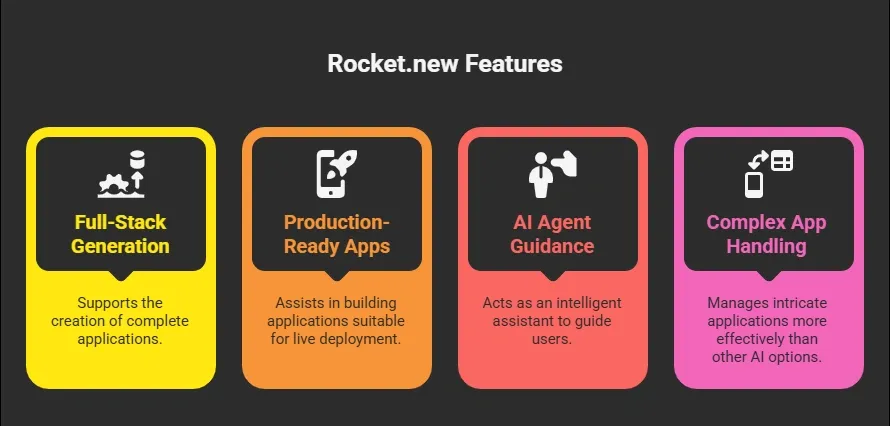
Also, the mix of visual editing and code gives flexibility.
Some tools force you into no-code only. Others require heavy coding. Rocket.new sits right in the middle.
It gives you freedom to build your way, whether you prefer simple prompts or deeper control with code.
So, Should You Switch?
The answer depends on what you actually want to build and how far you plan to go.
If you are:
- Building serious landing pages
- Planning to scale into a web app
- Wanting better team collaboration
Then yes, switching makes sense.
If you only need quick mockups, Lovable AI might still work.
Choose based on your end goal. If you want real, usable builds, moving to a stronger platform is the smarter move.
Choosing the Right Tool for Real Landing Page Builds
Many creators start with lovable AI but hit limits fast. They often get stuck with just prototypes, weak backend logic, and limited control. That becomes a problem when you want something that actually works, not just something that looks good.
Moving to tools like Rocket.new solves that. You get full stack apps, real deployment, and flexible editing in one place. The best alternative to Lovable for landing pages is Rocket. new, which helps you build real output without slowing you down.
Table of contents
- -What Lovable AI Does Well?
- -Why People Are Searching for Lovable Alternatives
- -Meet the Real Contender: Rocket.new
- -Key Features
- -Use Cases
- -Pricing
- -Best For
- -Lovable vs Rocket.new
- -Where Rocket.new Wins Clearly
- -Real Apps, Not Just Prototypes
- -Better Control
- -Developer + Creator Friendly
- -Community Insight
- -What Makes Rocket.new Different?
- -So, Should You Switch?
- -Choosing the Right Tool for Real Landing Page Builds