
Curious how food startups scale delivery apps? Build a business model, reliable app architecture, and smooth ordering. These foundations help platforms attract users, support restaurants, and grow as demand rises.
Starting a food startup and unsure how to build a scalable app?
The short answer is simple. You need a solid business model, smart app development, and a smooth ordering system that works well for users and restaurants. With the right setup, a startup can grow from a small food delivery service to a large platform.
The global online food delivery market is expected to reach more than $1.40 trillion by 2027, according to Statista.
More mobile users order meals through apps every year. Many startups want their own food delivery app rather than relying solely on platforms like Uber Eats. So let's walk through the steps to help startups build a successful, scalable app.
Understanding How Food Delivery Apps Work
So, before getting into app development, let’s quickly understand the basic idea behind a food delivery app. These platforms work like a bridge between customers, restaurants, and drivers.
When all three sides connect smoothly, the whole food delivery service becomes simple and convenient for everyone involved.
A typical delivery app connects three groups:
- Customers ordering meals
- Restaurants preparing food
- A delivery team bringing orders
The platform helps connect customers with multiple restaurants. Users open the customer app, find nearby restaurants, place an order, and track the delivery.
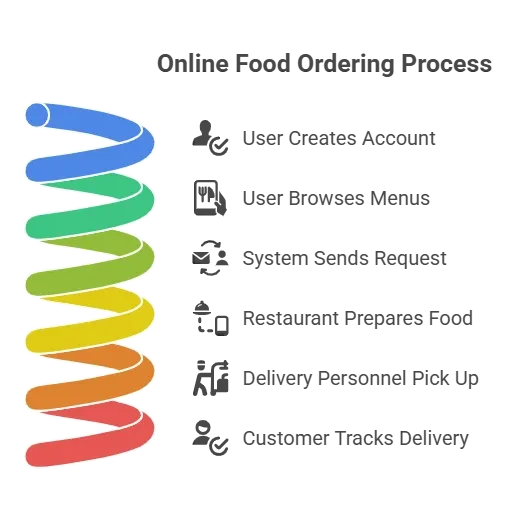
So, before getting into app development, let’s quickly understand the basic idea behind a food delivery app. These platforms serve as a bridge among customers, restaurants, and drivers.
When all three sides connect smoothly, the whole food delivery service becomes simple and convenient for everyone involved.
Start With Market Research
Before jumping into app development, startups should spend time on market research. This step helps you understand the demand, the competition, and what customers actually expect from a food delivery service.
So the first goal is simple. Learn about the market before building the product. This makes the whole development process much smoother.
What You Should Study
During market research, startups usually focus on a few key things:
- Identifying target customers and their ordering habits
- Studying competitor apps like Uber Eats
- Understanding pricing strategies and delivery fees
- Learning what users expect from modern food delivery service platforms
Looking at competitors also helps founders see how successful food delivery apps operate and what features customers enjoy.
Understanding Local Demand
Next, startups need to study local behavior. Not every city orders food the same way.
Some places prefer restaurant meals through online food platforms. Others may show stronger demand for grocery delivery or quick snacks.
This local insight helps startups shape the right business model for their food delivery business.
Why Restaurant Partnerships Matter
Restaurants are a major part of the platform. Many restaurant owners want more control over their online ordering channels.
Large platforms often charge high commissions. Because of that, smaller restaurants are interested in apps that offer reduced fees and fair partnerships.
When startups understand both the customer and restaurant sides, building a scalable delivery app becomes much easier.
Choosing the Right Business Model
The next step is selecting the right business model. The business model defines how the platform works and how it will generate revenue.
Here are three common models.
| Business Model | Description | Revenue Sources |
|---|---|---|
| Aggregator Model | Platform lists multiple restaurants and manages the ordering system | commissions and delivery fees |
| Restaurant Owned Model | Single restaurant or chain runs its own food ordering app | direct sales |
| Hybrid Model | Combines aggregator listing with its own delivery team | commission, ads, and surge pricing |
A clear business model helps a business owner decide pricing, logistics, and marketing. Some startups start small and later expand to such services like catering or grocery delivery.
Planning the Core Features of the App
Next comes feature planning. A scalable delivery app should include the right core features. These features shape the full customer experience and influence customer satisfaction.
Customer Side Features
The customer app is what users interact with daily.
Common key features include:
- Easy user accounts
- Search to find nearby restaurants
- Smart menu management
- Simple ordering system
- Order history
- Multiple payment options
- Push notifications
- Ratings and user feedback
A well-designed food ordering app should keep the ordering process quick. People ordering dinner rarely want to spend ten minutes tapping buttons.
Restaurant Panel
The restaurant dashboard helps restaurant owners and managers control operations.
Important tools include:
- Order management
- Menu updates through menu management
- Tracking incoming online ordering
- Managing food preparation
- Viewing customer data
When the dashboard is simple, food businesses can focus on quality and service.
Delivery Partner App
Drivers or couriers need their own interface. Some startups create separate apps for this.
The delivery side includes:
- Assigned orders
- Maps based on customer location
- Navigation across delivery zones
- Updates on delivery speed
- Earnings and route tracking
This part of delivery app development keeps the logistics organized.
When all these parts work together, the entire delivery app becomes easier for startups to manage.
A thoughtful set of core features helps the platform run smoothly for customers, restaurants, and drivers. With the right setup, teams can focus on improving the customer experience, keeping orders organized, and building a successful app that grows steadily.
Building the Right Tech Stack
Now we reach the technical part of app development. Startups often choose cross-platform tools to support multiple platforms, such as Android and iOS.
One popular option is react native. It allows developers to build a mobile app with shared code.
Typical tech components include:
- Backend servers for order management
- Databases storing customer data
- Payment gateways and payment processors
- APIs for maps and location
- Systems for payment processing
During food delivery application development, teams also connect digital payments systems for smooth checkout.
Startups with limited technical background often hire a small delivery app development team or partner with an agency.
Payment and Revenue Handling
Handling payments properly builds trust with users.
Most food delivery app development projects include:
- Card payments through payment gateways
- Wallet support
- Cash on delivery
- Payment integration for external services
Platforms also need to calculate delivery fees based on distance or demand. Some apps apply surge pricing during busy hours.
A good checkout flow improves the customer experience and encourages repeat business.
Improving Customer Experience and Retention
A scalable delivery app is not only about technology. It is also about long-term users.
To keep people ordering regularly, apps focus on:
- Loyalty points and loyalty programs
- Personalized push notifications
- Rewards for repeat business
- Strong service quality
These tactics improve customer acquisition and long-term customer retention.
Small details matter too. A clear order history helps customers reorder their favorite meals quickly. Apps also collect user feedback to refine the customer experience over time.
Managing Delivery Logistics
Delivery logistics decide whether a food delivery service succeeds.
Startups usually begin with a small delivery team. As orders grow, they expand their delivery zones and hire more drivers.
Good logistics depend on:
- Smart route planning
- Strong communication with delivery personnel
- Tracking systems for delivery tracking
Fast delivery speed keeps meals fresh and protects food quality.
A reliable delivery process keeps customers coming back.
Community Insight
Professionals on LinkedIn often discuss what actually makes a delivery app succeed. In one discussion about startup products, a product manager shared a simple but practical observation.
“The success of a food delivery platform depends less on the app interface and more on the reliability of the delivery network and restaurant coordination.”
This point highlights something many founders learn while building a food delivery app. Teams often spend months on app development and design improvements.
Rocket.new- Makes App Creation Easy as Typing
Rocket.new is a vibe solutioning platform designed to help founders and developers create applications faster. It allows users to describe an idea and generate the basic structure of a mobile app, website, or tool in minutes.
For startups with limited time or small teams, this approach simplifies early app development and helps them launch a working product faster.
How Rocket.new makes a delivery app
Startups building a delivery app often need a working version quickly. Waiting months to test an idea can slow things down. Rocket.new helps generate structure and UI so founders can test their business model and product concept without spending long periods writing code.
This approach is helpful for founders who want to validate a food-ordering app idea before investing in full food-delivery app development.
Top Features
- Prompt to App Creation: Builds apps directly from single prompts
- Figma Import: Converts design files into live, editable layouts
- AI-Powered Backend: Automatically handles logic, data, and workflows
- Custom Domain Support: Publishes projects with a branded domain
- Code Export: Allows developers to extend or customize later
- Live Preview: Shows instant updates while editing
These tools help startups launch early versions of their mobile app and collect user feedback from real users.
Building a Food Delivery App in Minutes with Rocket.new
Rocket.new also speeds up the early stages of app delivery by offering 25,000+ ready-to-use templates. These templates provide startups with a quick starting point for various types of apps, including food delivery platforms.
Instead of building everything from scratch, founders can select a template that already includes common structures used in food ordering app platforms. That means screens for user accounts, ordering system, order history, and payment flows can be generated quickly.
The process usually looks like this:
- Choose a template related to food delivery or online ordering.
- Customize the UI and basic core features.
- Connect tools like payment gateways and notification systems.
- Test the early mobile app version with users.
- Refine the platform using user feedback.
This method allows startups to move from idea to working product very fast. Once the concept proves demand, teams can expand the delivery app with more advanced features and larger-scale infrastructure.
Marketing Strategy for Growth
Once the product works, growth becomes the focus.
A good marketing strategy includes:
- Social media promotions
- Referral discounts
- Partnerships with local restaurants
- Campaigns targeting online food users
Early traction depends on strong customer acquisition. Many startups also collaborate with local influencers to promote their food-ordering apps.
How to Make a Food Delivery App That Scales
Startups often face one big problem. Building a platform is easier than running a full food delivery ecosystem. Logistics, restaurant partnerships, and smooth technology all need to work together.
The solution is planning from the start. Choose the right business model, design a simple ordering system, and invest in good delivery app development. Pay attention to drivers, restaurants, and the full customer experience.
The main takeaway is simple. Learning how to make a food delivery app is not only about code. It is about creating a reliable system that customers trust and that restaurants enjoy using.
Table of contents
- -Understanding How Food Delivery Apps Work
- -Start With Market Research
- -What You Should Study
- -Understanding Local Demand
- -Why Restaurant Partnerships Matter
- -Choosing the Right Business Model
- -Planning the Core Features of the App
- -Customer Side Features
- -Restaurant Panel
- -Delivery Partner App
- -Building the Right Tech Stack
- -Payment and Revenue Handling
- -Improving Customer Experience and Retention
- -Managing Delivery Logistics
- -Community Insight
- -Rocket.new- Makes App Creation Easy as Typing
- -How Rocket.new makes a delivery app
- -Top Features
- -Building a Food Delivery App in Minutes with Rocket.new
- -Marketing Strategy for Growth
- -How to Make a Food Delivery App That Scales